The End of an Era? Why the 2026 Formula 1 Regulations Could Destroy Max Verstappen’s Greatest Weapon
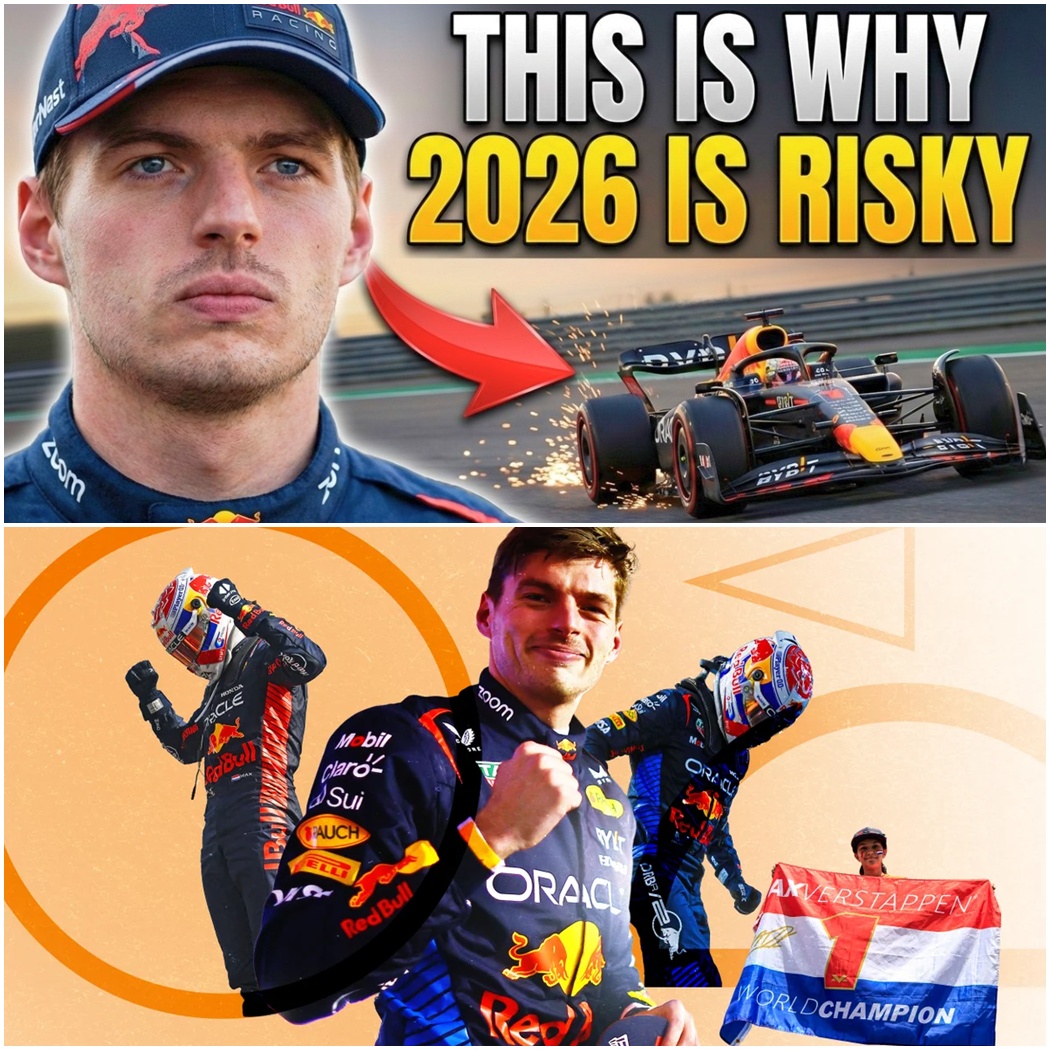
Max Verstappen’s reign over the ground effect era of Formula 1 has been nothing short of terrifying for his competitors. The Dutchman has systematically dismantled his rivals, showcasing a level of dominance that will undoubtedly go down in the history books. His greatest weapon? It isn’t just the sheer speed of his Red Bull machinery; it is the brutal, decisive, and almost arrogant way he attacks the entry of a corner. It is a driving style that borders on the miraculous—bending the laws of physics to his will while leaving other elite drivers scratching their heads. However, a massive storm is brewing on the horizon. The sweeping 2026 regulation changes are hurtling toward the paddock, and they bring with them an uncomfortable, whispered question: will these new rules finally expose the very foundation of Verstappen’s dominance?
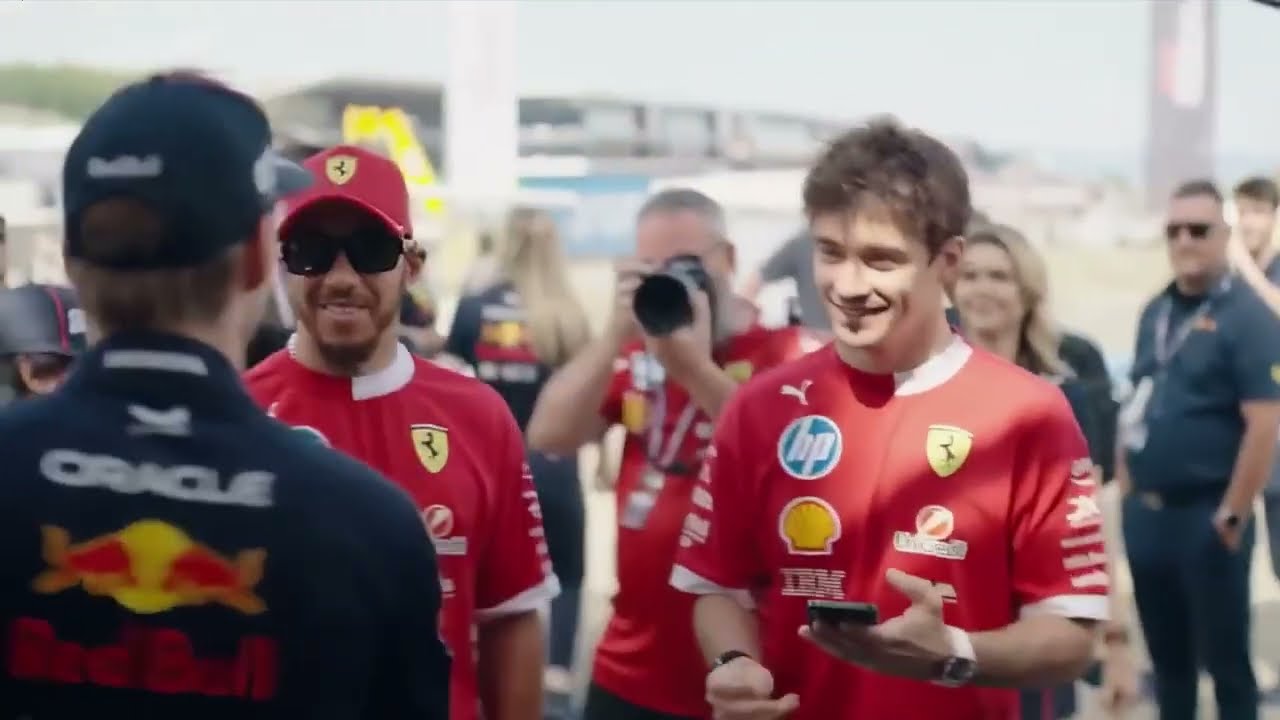
To truly understand why 2026 represents a direct challenge to Verstappen’s driving DNA, we must first strip his technique down to its fundamental physics. Corner entry in Formula 1 is, without a doubt, the most violent transition a car experiences during a single lap. Imagine decelerating from speeds upwards of 300 km/h in mere seconds. Brake pressure peaks at well over 100 bar, causing massive weight transfer to the front of the car [01:05]. The rear end goes dangerously light, the aerodynamic floor stalls slightly as the rake attitude changes, and tire load sensitivity drastically increases. It is a moment of pure chaos. For the vast majority of drivers on the grid, this phase is treated like defusing a live explosive. They seek to stabilize the car first, rotate the chassis second, and protect the rear tires so they can live to fight on the exit.
Verstappen, however, does not defuse the bomb. He uses it to his advantage. If you watch his onboard footage carefully, you will notice that he commits his steering input far earlier than most of the grid [01:40]. The car begins rotating while it is still shedding massive amounts of braking force. He doesn’t wait for full platform stability. Instead, he overlaps his braking and turning phases in a manner that looks reckless to the untrained eye. It is an extraordinary masterclass in trail braking—the delicate art of gradually releasing brake pressure while steering into the corner to keep the weight loaded on the front tires [02:03]. Done correctly, it artificially shortens the corner and provides a massive time advantage. Done poorly, it results in an embarrassing spin into the gravel trap.
Telemetry comparisons over the past two highly successful seasons consistently prove that Verstappen’s brake release curve is extremely progressive but uniquely delayed relative to his peers [02:26]. He carries residual brake pressure much deeper into the turn, intentionally keeping the nose heavily loaded. The rear of the car, now light and somewhat loose, rotates around the front axle. He isn’t waiting for the grip to naturally settle; he is artificially creating rotation through deliberate weight manipulation. But this aggressive philosophy demands absolute, unwavering trust in the front end of the car. And this is exactly where the genius of Red Bull Racing’s design under the 2022 ground effect era perfectly aligned with his unique needs [03:08]. The RB19, in particular, was praised for its incredible aerodynamic efficiency and strong front-end response. While teammates like Sergio Perez heavily struggled with the edgy, unstable rear under braking, Verstappen thrived. He doesn’t fear micro-oversteer upon corner entry; he anticipates it, making microscopic steering corrections before most drivers would even register the slip [03:47].
But dominance is fragile, and the 2026 regulations represent the largest technical reset since the dawn of the hybrid era in 2014. These new rules are not merely aesthetic; they are foundational [04:37]. The complex MGU-H is being completely removed, and electrical power output is increasing significantly to split the combustion and electric contributions to nearly 50/50. The cars are targeted to be lighter, and most importantly, active aerodynamics are being introduced on both the front and rear wings to dynamically balance drag reduction and downforce generation.
It is this active aero component that poses the most significant threat to an entry specialist like Verstappen. Under current regulations, aerodynamic balance through a corner remains relatively stable once the heavy braking phase begins. In 2026, the front and rear wings will constantly adjust modes between straight-line efficiency and cornering downforce [05:22]. Load distribution will actively change depending on specific speed thresholds and complex system mapping. For a driver who relies on conservative braking, this dynamic shift is manageable. But for someone like Verstappen, who intentionally induces rotation under rear lightness, it is an explosive combination. If the rear wing regains its high downforce mode even a fraction of a second after his steering commitment, the rear axle will experience a temporary, devastating load deficit [05:39]. If the razor-thin timing window he has mastered shifts by a mere 0.05 seconds, it could mean the difference between controlled rotation and catastrophic snap oversteer [06:07].
Layered on top of this active aero nightmare is the drastically changing behavior of the braking system itself. Without the MGU-H, the turbo characteristics will shift, and energy harvesting through the MGU-K will significantly increase in importance. Brake-by-wire calibration must seamlessly integrate these different harvesting profiles, meaning the physical pedal feel under deceleration will change [06:27]. Drivers heavily rely on brake pedal feel to judge weight transfer. If rear harvesting torque unexpectedly changes in the middle of a heavy braking zone, rear stability will immediately shift. Since Verstappen’s core weapon is braking while rotating, subtle rear drag variations caused by aggressive harvesting will heavily influence his yaw rate at entry [06:46].
Furthermore, the introduction of lighter cars brings another fascinating dynamic. Lower inertia means quicker direction changes, which theoretically should aid a hyper-aggressive entry driver. The car will respond faster to steering inputs. However, lower inertia also results in dramatically smaller stability margins. Corrections must be significantly quicker, and the crucial reaction window shrinks [07:05]. Will this become a glaring disadvantage, or will it simply provide a new playground for Verstappen’s unmatched reaction speed and anticipation?
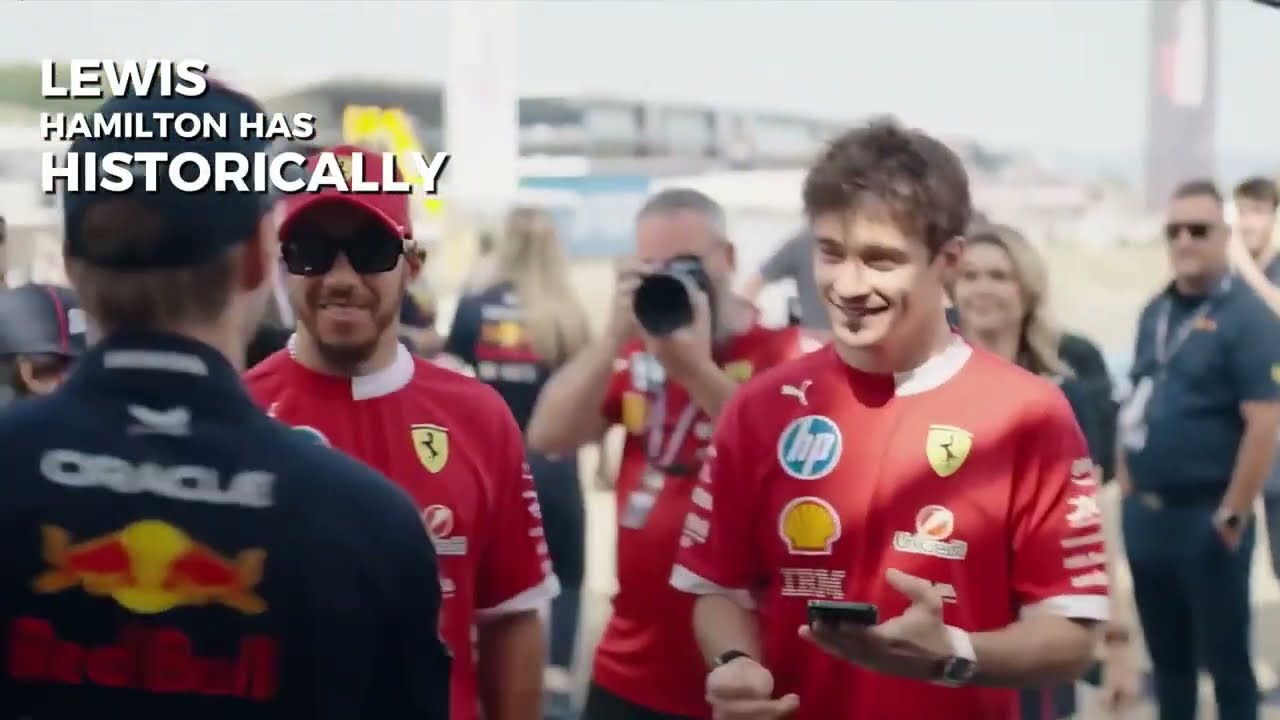
This looming technical revolution inevitably bleeds into the psychological warfare of the Formula 1 paddock. Dominance completely rewires how rivals think and operate. When one driver consistently outperforms the entire field in corner entry, competitors are forced to either copy the style or concede defeat. Many have attempted to replicate Verstappen’s aggressive rotation over the past seasons, but few have matched it consistently, often overstepping the limit and spinning out. However, the 2026 regulations offer something invaluable to the rest of the grid: hope. If rivals like Charles Leclerc, Lando Norris, or Lewis Hamilton genuinely believe that the new regulations will compress Verstappen’s edge, they will attack significantly harder in the braking zones [07:54]. They will defend more aggressively and attempt late lunges, operating under the assumption that the Dutch champion will no longer rotate as comfortably under the unpredictable new aero states [13:04].
Yet, counting out a three-time world champion is a fool’s errand. Critics often underestimate Verstappen’s incredible capacity to evolve. He has successfully navigated regulation changes before, shifting from the raw, unbridled aggression of his early career to the deeply calculated aggression he displays today [09:31]. He adapted quickly to the porpoising ground effect cars while others struggled violently with oscillation instability. Engineers continually praise his remarkable feedback precision; he can intricately describe front grip loss in subtle increments, which massively accelerates the car’s development curve [09:49]. If Red Bull’s active aero mapping requires intense refinement, Verstappen’s precise input may drastically shorten their adaptation period compared to rival teams.
Finally, we must consider the corner exit, as entry and exit are inextricably linked. Verstappen’s early rotation provides him with earlier throttle windows. But throttle application in modern Formula 1 is not a binary switch; it is a beautifully progressive modulation. With the 2026 rules vastly increasing electric torque contribution, throttle maps will become even more critical. Electric torque is violent and instantaneous [10:29]. Managing it flawlessly while the car is still slightly yawed from an aggressive entry requires inhuman precision. Verstappen’s right foot has historically been exceptionally smooth, often showing gradual application even when the car appears wildly sideways [10:38].
The 2026 season guarantees unprecedented technical volatility. Will the active aero shifts, altered energy harvesting, and lighter chassis ultimately neutralize the undisputed king of corner entry? Or will these massive changes simply force Max Verstappen to adapt once again, creating the most complete, lethal version of himself we have ever witnessed? When the new era begins, the true battle won’t be fought on the straights—it will be waged in the brutal violence of the braking zones, right where Max built his empire.








