Hamilton’s Warning Ignored: The Inside Story of Ferrari’s Melbourne Strategy Disaster and the Tactical Flop That Handed Mercedes the Win
The 2026 Formula 1 season was supposed to represent a clean slate for the sport—a new era defined by revolutionary technical regulations, advanced sustainable fuels, and a seismic shift in the driver market that saw the legendary Lewis Hamilton finally don the iconic scarlet of Ferrari. However, as the checkered flag fell over the Albert Park Circuit in Melbourne, the overwhelming sentiment was not one of novelty, but of a hauntingly familiar frustration. Despite the shiny new cars and the star-studded lineup, the Prancing Horse found itself trapped in an old, self-inflicted nightmare. Ferrari didn’t just lose the Australian Grand Prix; they effectively handed it to a revitalized Mercedes team on a silver platter.
The 2026 Australian Grand Prix was a race of “what ifs” and “should haves,” dominated by a strategic paralysis on the Ferrari pit wall that left their newest recruit, Lewis Hamilton, questioning the very systems he has just joined. While George Russell and his young teammate Kimi Antonelli celebrated a dominant one-two finish for the Silver Arrows, the post-race discourse was focused entirely on a single, pivotal moment on lap 12. It was a moment that exposed the widening gap between the elite operational efficiency of Mercedes and the hesitant, gamble-heavy culture that continues to plague Maranello.
To understand the magnitude of the failure, one must first appreciate the complexity of the 2026 regulations. The cars are now technical marvels where power is split equally between the internal combustion engine and a massive 350 kW electrical system. This balance has introduced a phenomenon known as “super clipping,” where a driver who depletes their battery becomes a “sitting duck” on the straights, losing hundreds of horsepower in an instant. The early stages of the race were a masterclass in this new dynamic, with seven lead changes in the first nine laps as Charles Leclerc and George Russell engaged in a high-speed game of energy chess. Ferrari looked strong, Hamilton had climbed from seventh to third, and the Scuderia appeared to have the pace to dictate the narrative.
Then came lap 11. Isaac Hadjar’s Red Bull pulled off the circuit with a terminal power unit issue, triggering a Virtual Safety Car (VSC) on lap 12. In the high-stakes world of F1 strategy, a VSC is a gift—a “free” pit stop that costs significantly less time than a stop under green-flag conditions. Mercedes, operating with the clinical precision that defined their championship years, didn’t hesitate. They double-stacked Russell and Antonelli immediately, fitting them with fresh hard tires. McLaren followed suit. Up and down the pit lane, teams reacted within seconds to the opportunity.
Ferrari, however, remained motionless. Charles Leclerc stayed out in the lead, and Lewis Hamilton remained on track in third. On the Ferrari pit wall, the strategists were playing a different game—a gamble that a second VSC or full Safety Car would appear later in the race, allowing them to maintain track position for now and pit even later. It was a high-risk strategy that ignored the immediate advantage being seized by their direct rivals.
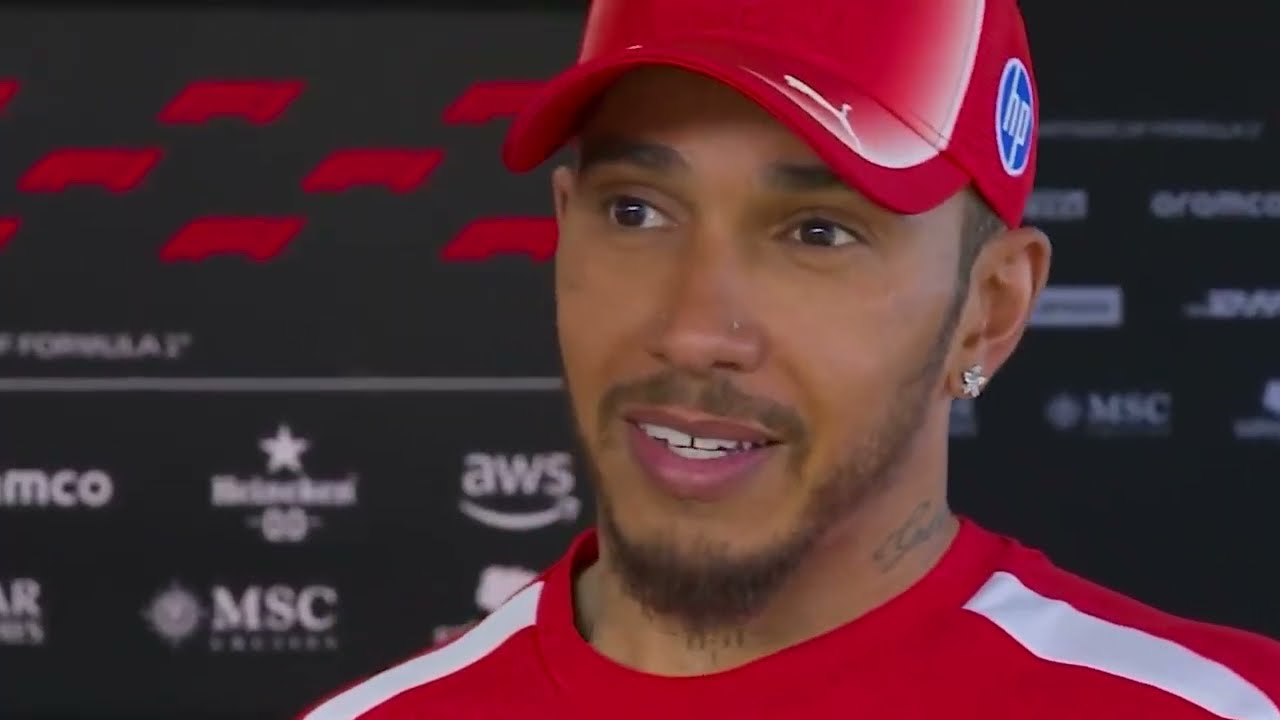
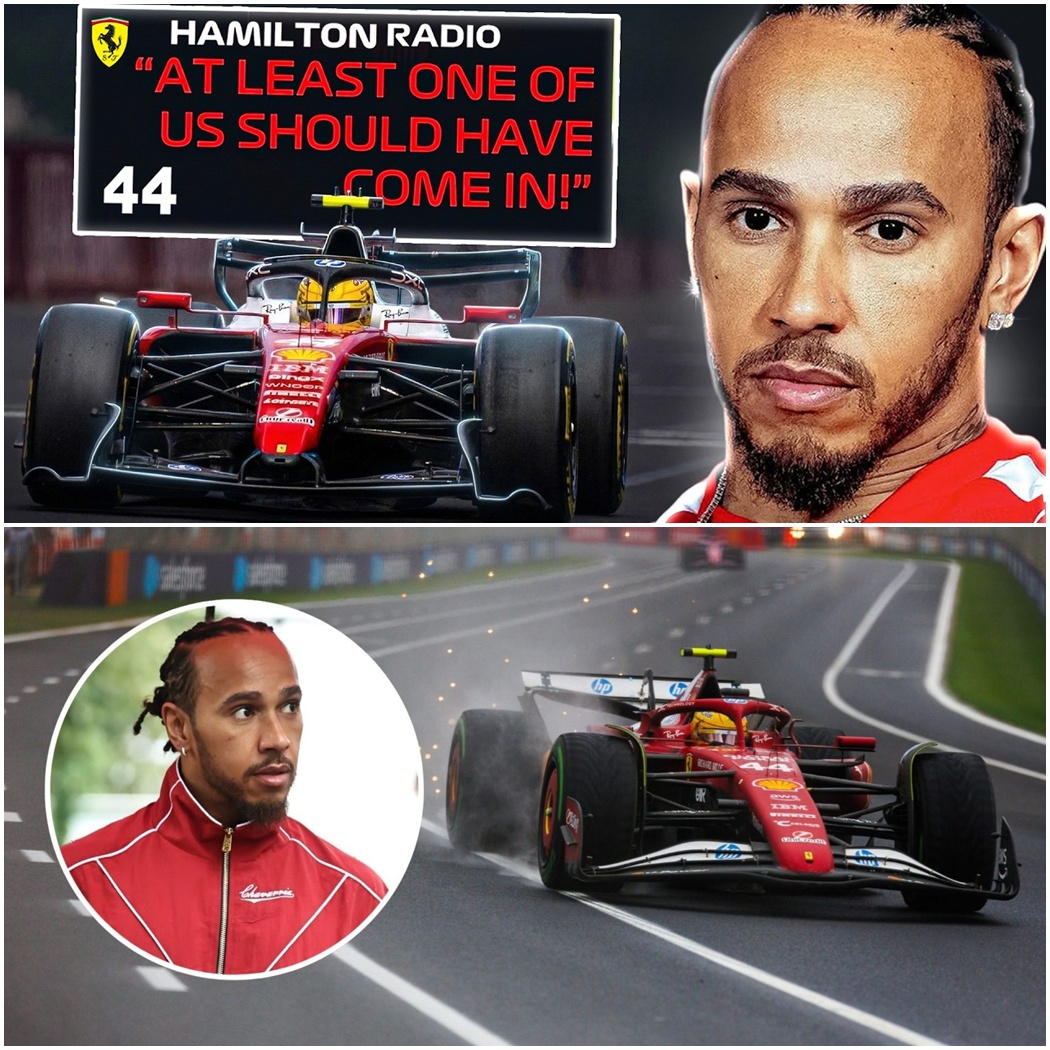
The most damning indictment of the situation came from inside the cockpit of car number 44. Lewis Hamilton, a veteran of over 350 race starts and a man who has won more races than anyone in history, saw the mistake unfolding through his visor. “At least one of us should have come in,” Hamilton stated flatly over the radio. It wasn’t a question or a request; it was a cold, real-time assessment of a tactical blunder. Hamilton knew that by staying out, Ferrari was surrendering the initiative and placing their fate in the hands of luck rather than logic.
For a few laps, it seemed Ferrari’s gamble might pay off. On lap 19, Valtteri Bottas’ Cadillac stopped near the pit entry, triggering a second VSC. This was the moment the Ferrari pit wall had prayed for. The problem? Because the car was positioned near the entrance, race control took the rare step of closing the pit lane for safety reasons. The “window” that Ferrari had gambled on was slammed shut. Ferrari was now stranded on track with rapidly degrading tires, while the Mercedes duo sat comfortably behind them on fresh rubber, waiting for the green flag to unleash their superior grip.
The fallout was predictable and painful to watch. Once racing resumed, George Russell, armed with tires that were seven laps fresher and significantly faster, began carving into Leclerc’s lead at a rate of nearly a second per lap. By lap 25, the gap had vanished. Leclerc was a passenger, his older tires offering no defense against the Mercedes onslaught. When the Monegasque finally pitted on lap 26, he emerged in fourth, 16 seconds adrift of the lead. Hamilton, who had been vocal about his tires still being “okay” but begging for a split strategy to avoid a double-stack disaster, was left out until lap 29—the last driver in the field to change tires.
The final classification told the story of the missed opportunity: Russell 1st, Antonelli 2nd, Leclerc 3rd, and Hamilton 4th. Ferrari had started the race with the pace to win and ended it over 15 seconds behind the leader. In the paddock afterward, the contrast in messaging was stark. Charles Leclerc, ever the loyal soldier, called it a “conscious choice,” though he admitted the pit lane closure was a stroke of terrible luck. Team Principal Fred Vasseur attempted to deflect the criticism by pointing to “pure pace,” suggesting that Mercedes was simply faster on the hard compound.
But pace is only half the battle in modern Formula 1. Strategy is about control, and as legendary commentator Martin Brundle noted, Ferrari gave up track position and lost control of the race. The decision to ignore Hamilton’s radio warning and refuse a split strategy—pitting at least one car to cover the Mercedes move—is a symptom of a deeper operational malaise. This isn’t an isolated incident; it’s a pattern that has haunted Ferrari for years. From the “we are checking” memes to the high-profile disasters in Monaco and Silverstone in 2022, the Scuderia has frequently proven incapable of making rapid decisions in the heat of battle.
Hamilton’s arrival at Ferrari was heralded as the final piece of the puzzle—the driver who would bring the “Mercedes way” of discipline and tactical rigor to Maranello. Yet, just 13 laps into his first race, he found himself being ignored by a system that seems resistant to change. The “we’ll have a look” response he received after the race is Formula 1 code for a serious, behind-closed-doors confrontation.
As the circus moves to Shanghai, the pressure on Ferrari has reached a fever pitch. They have the car, they have the drivers, and they have the passion of the Tifosi. What they lack, it seems, is the courage to listen to their own legends and the agility to react when the world changes in the space of a nineteen-second yellow flag. Melbourne 2026 was a warning shot. If Ferrari wants to end their nearly two-decade title drought, they must stop gambling on the future and start executing in the present. If they don’t, even the greatness of Lewis Hamilton won’t be enough to save them from themselves.








