The Red Dawn: Lewis Hamilton’s Desperate Gamble and Ferrari’s Secret Weapon for the Ultimate Spanish Showdown
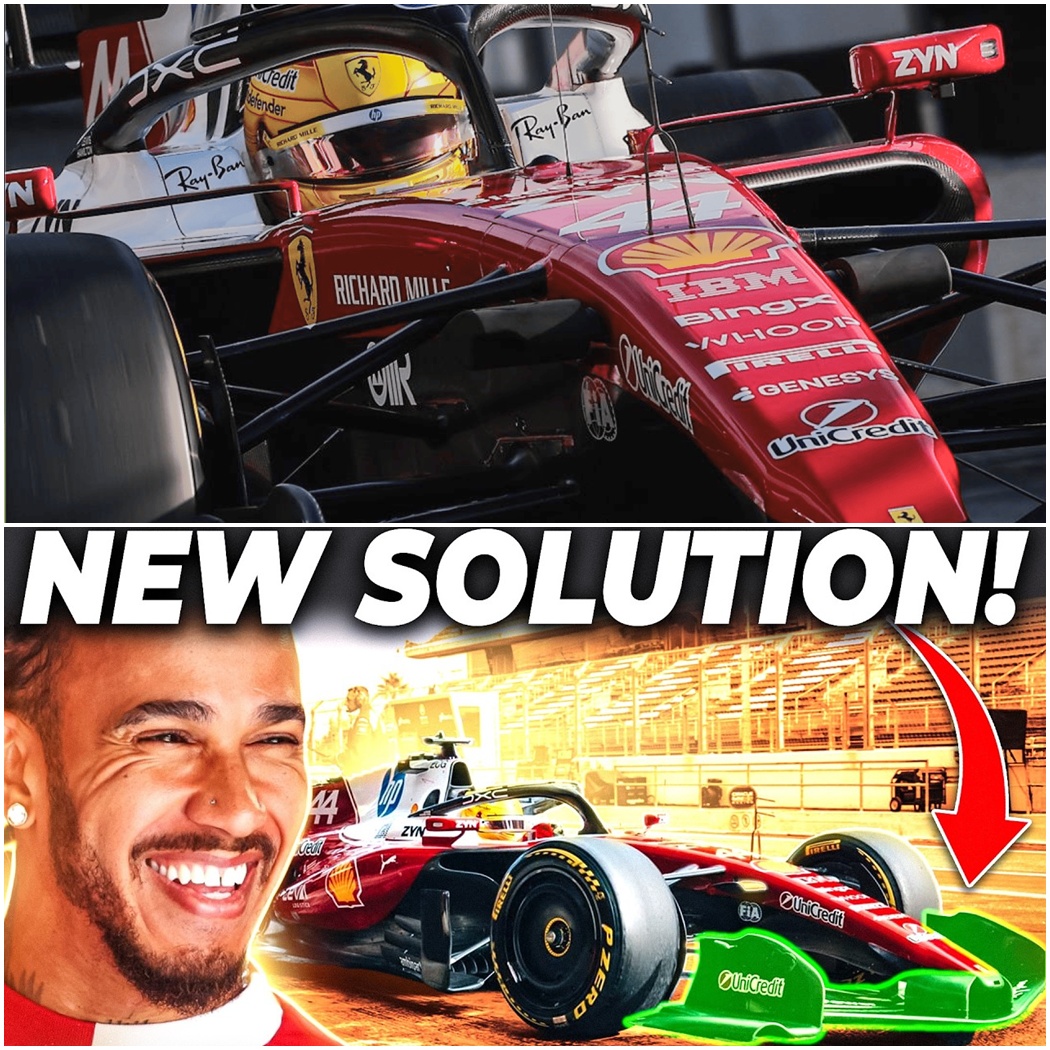
Two consecutive races. Two magnificent second-place finishes. For the very first time since he famously wore the silver overalls of Mercedes, Lewis Hamilton has walked away from the relentless, punishing demands of the Canadian and Monaco Grands Prix with back-to-back podium finishes. Ferrari, the most iconic and scrutinised team in the history of motorsport, finally possesses a profound momentum it has not truly felt in years. And this week, the legendary Italian marquee is arriving in Spain armed with a heavily anticipated, brand-new front wing. They are bringing it to the Circuit de Barcelona-Catalunya—the one unforgiving track every single engineer in the Formula One paddock uses as the ultimate lie detector to judge whether a racing car is genuinely competitive or merely a flattering aerodynamic illusion.
The date is fast approaching June 14th, and by the end of this crucial weekend, Lewis Hamilton wants the one elusive prize that Ferrari has completely failed to pull off since the Mexican Grand Prix of 2024: a sensational race victory.
If we rewind the clock a mere twelve months, absolutely none of this current resurgence looked even remotely possible. Hamilton was living through what was undeniably the most torturous and deeply frustrating season of his entire illustrious career, and frankly, it was not even close. He finished the miserable 2025 campaign without recording a single Grand Prix victory. Worse still, he failed to secure even one solitary podium appearance across the whole punishing year, eventually finishing a staggering 86 points behind his own talented teammate, Charles Leclerc.
The monumental move to Ferrari was originally heavily romanticised as the perfect final chapter for a sporting legend. It was supposed to be the spectacular narrative of the seven-time world champion finally pulling on the famous red race suit, chasing down the one monumental prize that had consistently slipped through his masterful fingers: securing a world championship title whilst driving for the Scuderia. Yet, for the vast majority of his heartbreaking first season in Maranello, the highly publicised transfer played out more like a catastrophic mistake.
He simply could not comprehend the temperamental car beneath him. He fought the aggressive machinery through every single corner, endlessly chasing a familiar feeling of grip and stability that stubbornly refused to materialise. On the darkest, most difficult weekends of that painful year, the most successful and winning driver in the entire history of the sport looked distinctly like a defeated man quietly making his final peace with the fading end of his career.
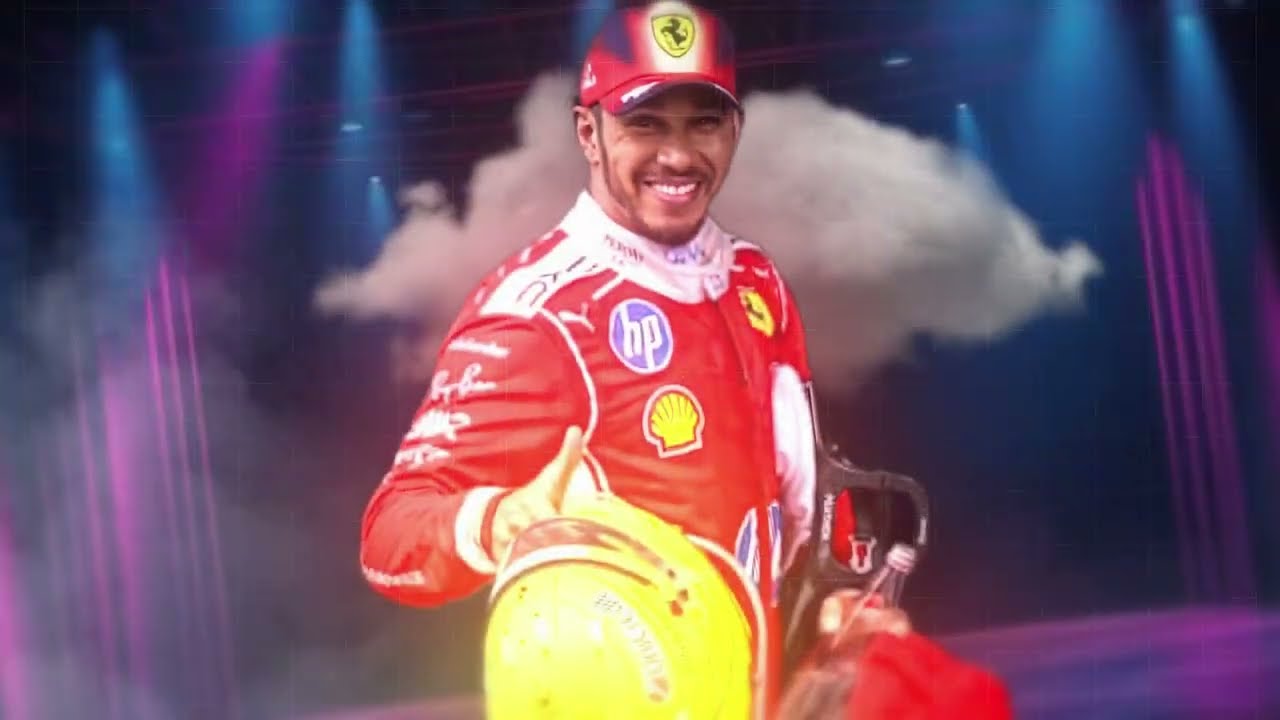
And then, almost inexplicably, the current season abruptly turned on its head.
Today, Lewis Hamilton sits proudly in second place in the world championship standings. This remarkable placement marks his highest spot in the fiercely contested driver standings in nearly five long years. It is the exact same legendary driver, sitting inside the exact same scarlet red car, yet we are suddenly witnessing a completely different, revitalised story.
The dramatic shift officially began on the treacherous tarmac of Canada. Hamilton lined up in fifth position on the grid in Montreal and spent the entire breathless afternoon hunting down his rivals, lap after mesmerising lap. He methodically cut into the time gap ahead until, late in the breathless race, only one formidable car stood directly between him and the highly coveted second step of the podium: Max Verstappen.
On lap 62 of the 68-lap marathon, Hamilton ruthlessly swept up to the notoriously difficult first corner and audaciously threw his car around the outside. It was the long, dangerous way around—the specific racing line that inevitably ends abruptly in the concrete wall if a driver’s timing is even slightly miscalculated. But the sensational move miraculously stuck. He emphatically took the place, secured second overall, and joyously crossed the finish line to record his absolute best result since the momentous day he originally signed his Ferrari contract.
For the first time in an agonising eighteen months, Hamilton sounded exactly like the apex predator the sport distinctly remembered. Pumping with adrenaline over the team radio, he declared: “I love that hunt. That’s what my whole life has been about since I was a kid.”
Behind the heavily guarded garage doors, the dedicated team had quietly moved mountains of data to put him in that fighting position. But crucially, Hamilton had quietly changed something profound within his own process. He consciously stepped away from the highly sophisticated Ferrari simulator, choosing instead to trust the raw, unfiltered data and, most importantly, his own innate gut feeling. That exact same old-school approach had already magically secured him a brilliant podium finish in China earlier in the year. In Canada, it dramatically thrust him right back into a fierce fight he had not genuinely been a part of in a very long time.
A mere two weeks later, the glamorous streets of Monaco handed him another golden opportunity. The prestigious race itself barely held together; it was violently stopped twice behind heavy red flags, restarted into absolute chaos, and aggressively tore the established running order into tiny pieces. Max Verstappen, starting aggressively from the front row, was entirely gone before the thrilling end of the opening lap following a sudden, catastrophic engine failure. Shortly after the late restart, Verstappen sensationally threw his wounded car into the barriers at the final corner, exactly where a home hero desperately dreams of running flawlessly.
Through all of this terrifying carnage, Hamilton simply refused to make a single mistake. He meticulously brought his Ferrari home safely in second place, a little over six seconds directly behind the runaway race leader. In doing so, he proudly picked up his eighth career podium finish on the dangerous, narrow streets of Monaco, remarkably pulling level with the late, great Ayrton Senna for total podium finishes around the principality. Two podiums in a row. It was his first such magnificent run since the dominant Mercedes days. To the British champion, it was concrete proof of a genuine roll—a flashing neon sign that the hard-working team was carefully building towards something massive. He did not pretend it was an outright Ferrari victory, but the momentum was undeniably shifting.
The root cause of this miraculous change in Hamilton directly traces back to a highly strategic change made on the Ferrari pit wall earlier in the season. He officially split from Riccardo Adami, the seasoned race engineer who had bravely walked him through the remarkably rough start to his Ferrari career. With Adami officially moving across to manage the driver academy and the testing programme, into the hot seat came Carlos Santi. Santi is a Marinelo old hand who had once brilliantly run Kimi Raikkonen’s championship-winning car and had recently been successfully managing the team’s complex engineering department back at the Italian factory.
At first, the appointment was widely dismissed as a desperate short-term fix, with external paddock rumours suggesting a bigger outside name was lined up to take the vital role for good. Then, it simply stopped being temporary. The two highly driven men instantly clicked, the lap times plummeted, the podium results naturally followed, and Santi permanently stayed. Within just a few weeks, Hamilton had a warm nickname for his new confidant: his “Italian Bono,” a deeply respectful nod to Pete Bonington, the legendary Mercedes engineer whose notoriously calm voice had expertly guided Hamilton through every single world championship victory at Mercedes.
The change went significantly deeper than comforting radio chatter. The car’s complex mechanical setup was completely overhauled. It was a night-and-day transformation from the stubborn machine he had physically fought all of last year. A man who had spent twelve exhausting months battling his own steering wheel suddenly drove like he believed implicitly in every single carbon-fibre part of it.
And now, Ferrari is eagerly handing him something entirely new. The car arrives in Barcelona outfitted with a radically altered front wing, a completely changed aerodynamic floor, and the very first genuine modification to the main body of the car seen all season. It is a significantly tighter, far more focused aerodynamic package than the huge, sprawling set of changes Ferrari previously rolled out in Miami. This new package comes burdened with a massive job that extends far beyond simply finding cheap lap time. The previous Miami front wing had dramatically failed to deliver what the engineering team desperately hoped for. Barcelona is exactly where Ferrari intends to firmly put that highly publicised failure right, and where Hamilton desperately hopes to seamlessly transform two consecutive second places into something far bigger.
The complex moving rear wing also triumphantly returns in a significantly leaner, lower-drag form—the specific version that strict aerodynamic rules had forced off the car in the incredibly tight, twisting streets of Monaco. Barcelona is the ultimate proving ground to find out if any of this expensive carbon fibre actually works.
For decades, this specific Spanish circuit was Formula One’s ultimate winter testing ground. It is the precise track every single team routinely brought its fresh car to in the cold winter months to ruthlessly learn the honest, brutal truth about its aerodynamic efficiency. The exhausting lap asks a car every possible mechanical question. There are painfully slow corners that fiercely demand perfect mechanical traction. There are blindingly fast, sweeping corners that strictly demand absolute driver nerve. There is a notoriously long, sweeping stretch that violently loads the fragile Pirelli tyres harder than almost anywhere else on the current racing calendar. And finally, there is a massively long straight running aggressively down to the start-finish line.
There is absolutely nowhere to hide here. Turn three, a brutally long, flat-out right-hander, violently leans on the vulnerable front tyres until the rubber literally cries for mercy. The abrasive track surface is rough enough to viciously chew through a fresh set of rubber across a short racing stint. And the dramatic run down to the terrifying first corner—all 600 breathless metres of it—is precisely where raw engine horsepower aggressively writes its name permanently into the overall lap time.
That last specific detail is a monumental problem, because the current Ferrari possesses a glaring hole in its formidable armour, and that painful hole is pure engine power.
The car is genuinely spectacular in the specific places that naturally suit its unique aerodynamic philosophy. It effortlessly finds strong, reliable traction bursting out of the painfully slow corners. It carries immense, gravity-defying grip tearing through the sweeping middle sector of a qualifying lap. Crucially, it is remarkably kind to its delicate tyres over a punishing long run. Those are the precise mechanical traits that previously allowed it to brightly shine somewhere as unique as Monaco, where raw, unadulterated engine power barely matters and the nimble car gets to heavily lean on everything it arguably does best.
But out on the relentlessly long straights, it bleeds valuable ground. And the longer the straight stretches, the more painful time it relentlessly loses. Monaco beautifully masked the severe engine deficit, making the car look like a world-beater. Barcelona will absolutely not offer that same gentle courtesy. That is the towering, invisible wall currently waiting for Lewis Hamilton in Spain. The engine is simply down on peak horsepower, and there is absolutely no hiding from the established grid order. Red Bull’s thunderous engine remains the strongest on the entire grid. Mercedes comfortably sits a close second. Ferrari sadly trails them both.
Hamilton has respectfully never tried to pretend otherwise in front of the flashing media cameras. The Italian team has thankfully been given vital regulatory room to actively chase that performance gap down, but successfully closing it is the painstaking work of eight to ten long months, absolutely not a single miraculous week. Charles Leclerc has already painfully measured the brutal cost, frequently losing close to half a second on one single long straight entirely due to the highly inefficient way the car unfortunately spends its stored electrical energy. If you magically take the power gap away, Ferrari is arguably right there in the intense fight for outright victory. But for one highly anticipated weekend at this specific track of all tracks, that glaring gap is absolutely going nowhere.
There is also something profoundly deep and personal about Barcelona. Because absolutely no driver currently racing on the Formula One grid today knows this specific place quite the way Lewis Hamilton does.
For the vast majority of his glittering career, this dusty Spanish track was unequivocally his personal kingdom. He has remarkably won here an incredible six times—a towering record matched by only one other legendary man in the entire history of the sport: Michael Schumacher. This dominance included a staggering five consecutive victories in a row between the golden years of 2017 and 2021. He has proudly stood on the famous podium here an astonishing twelve times. He masterfully took pole position here six times, and one of those spectacular laps, secured in 2021, was historically the 100th pole position of his unprecedented career—a monumental mark absolutely no driver had ever reached before him. When the mighty Mercedes dynasty ruthlessly ruled Formula One, this was the specific track that repeatedly crowned them, and Hamilton was undeniably the undisputed king of it.
But Barcelona has violently handed him soul-crushing disaster, too.
In the highly toxic atmosphere of 2016, firmly locked in a bitter, season-long title fight with his own teammate Nico Rosberg, the two Mercedes drivers sensationally crashed into each other on the chaotic opening lap, instantly taking each other out of the race. It happened at the very first corner of a dramatic championship that Rosberg would ultimately go on to win by a mere five points. The infamous crash was so financially costly to the team that the two warring drivers, tied by a draconian deal they had previously signed, were forced to personally split the massive repair bill between them—somewhere around a staggering £720,000, split exactly half each.
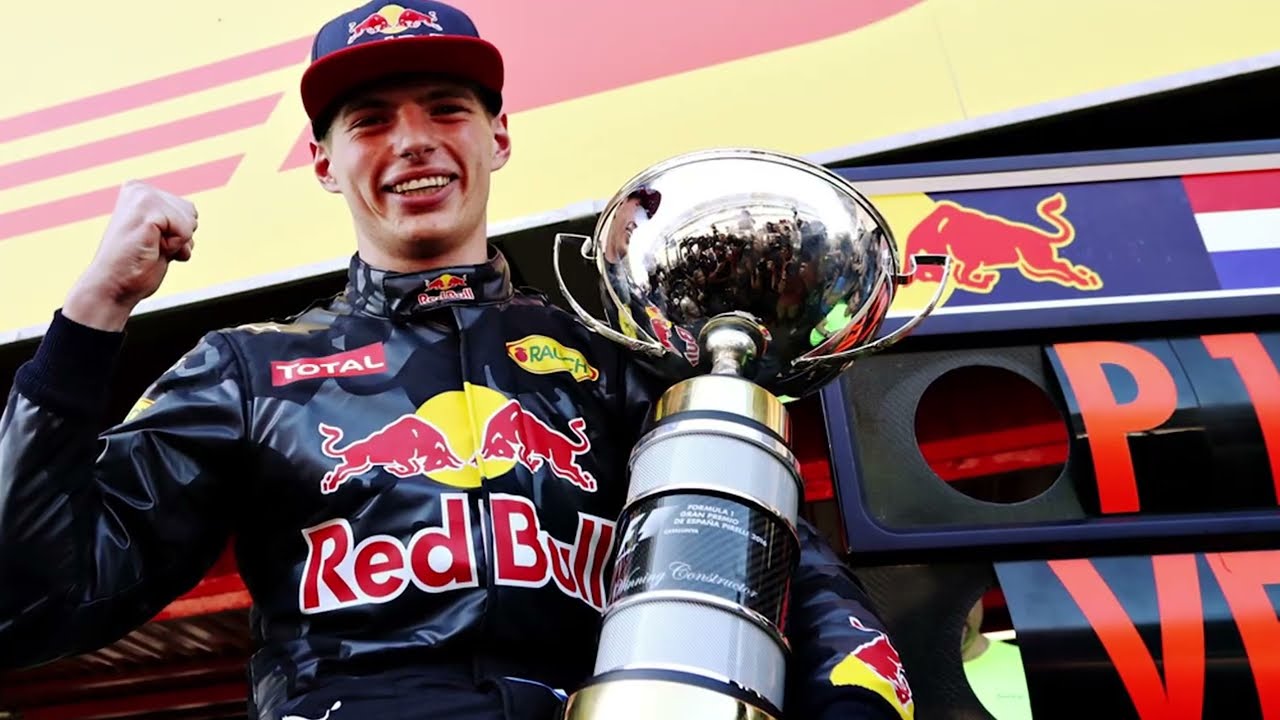
And while the two furious men fighting for the world title sat stranded in the dusty gravel trap, a fresh-faced teenage prodigy named Max Verstappen casually drove off into the Spanish distance to sensationally take his first-ever Grand Prix win on his very first race driving for Red Bull. He instantly became the youngest race winner the sport had ever seen.
That is the incredibly strange, heavy psychological weight this specific place constantly carries for the British veteran. His absolute greatest weekends and one of his most deeply painful sporting moments are all permanently written on the exact same stretch of scorching Catalan tarmac. And then, painfully, came last year. In his very first Spanish Grand Prix dressed in Ferrari red, the six-time winner of this prestigious race shockingly qualified and finished a miserable sixth. It was his absolute worst result here in nearly ten long years, and he was comfortably beaten by his own teammate. Leclerc proudly took the podium that day while Hamilton miserably trailed home behind him, wrestling with a difficult car whose unpredictable rear end gave him absolutely no confidence. The undisputed king of Barcelona had tragically become a mere passenger at it.
Ferrari’s own long history here painfully runs the exact same dramatic way: spectacular glory a very long time ago, followed by relentless let-downs ever since. Absolutely no team has won more often at this historic track than Ferrari, boasting an incredible eight wins in total. This stretches all the way from Schumacher’s brilliantly masterful drive in the torrential rain back in 1996—his famously dominant first win for the team, won by the better part of a full minute—through four straight dominant victories in the early 2000s.
But the very last time a scarlet Ferrari actually won at Barcelona, it was the legendary Fernando Alonso driving it. The packed grandstands were deafeningly roaring for a beloved home hero, and the year was incredibly all the way back in 2013. It would ultimately turn out to be the final Grand Prix win of Alonso’s entire spectacular career. Thirteen painfully long years have completely passed, and Ferrari has shockingly not won here since.
The heartbreaking near-misses predictably cut deep into the team’s soul. In 2022, Charles Leclerc brilliantly put his blisteringly fast Ferrari on pole position and effortlessly led the race with total ease, only for the fragile engine to violently fail beneath him, cruelly handing the easy win directly to Verstappen. It painfully took until last year for the proud team to even reach this specific podium again, when Leclerc finally came home in third. It was undeniable progress, but still a desperately long way from the coveted top step.
And this track, far more than anywhere else on earth, is the specific circuit that ruthlessly decides whether an expensive upgrade package is genuinely real.
Barcelona possesses a cruel, relentless habit of violently splitting the aerodynamic parts that genuinely work from the flashy parts that only theoretically worked inside a highly controlled computer wind tunnel. When Mercedes were helplessly drowning in their violently bouncing, shaking car back in 2022, it was a brand-new floor specifically brought to Barcelona that finally fixed the devastating porpoising issue. For the very first time all season, the silver car smoothly ran down the massive straight without literally hammering itself and its driver apart, and that single transformative weekend officially became the foundation of their entire heroic comeback. Barcelona ultimately gave them the definitive answer, because Barcelona always gives a brutally honest answer.
If a team brings something that genuinely works, it immediately shows brightly on the glowing timing screens within a single hour of practice. If they bring something that only looks highly impressive on an engineer’s computer screen, there is absolutely nowhere to safely bury the embarrassing truth.
Even Ferrari’s own cautious team boss will currently not publicly promise anything more than a small foundational step forward. The prevailing mood radiating from the top management is incredibly careful. They acknowledge the incredibly good signs radiating from the last two thrilling weekends but readily admit there is a massive mountain of hard work still to do. They are a deeply focused team firmly set on strictly keeping its own eyes on its internal data, rather than desperately staring at the incredibly fast cars operating ahead. There is a quiet, desperate hope that sunny Spain represents a solid step forward—a vital step, but perhaps not an outright win.
Because the championship that Lewis Hamilton fiercely races into on Sunday afternoon is absolutely brutal.
Mercedes currently leads the lucrative constructor’s standings with a commanding 244 points. Ferrari sits in second place on 165 points. It is a massive 79-point gap that sadly keeps steadily growing rather than rapidly closing. And the primary reason for this dominance sits firmly inside the second silver Mercedes cockpit, and astonishingly, he is only eighteen years old.
Kimi Antonelli has unbelievably won the last five Grand Prix races in a row. He is a phenomenal teenager ruthlessly rewriting the established rules at the front of the competitive field in his very first real run at the championship. He comfortably leads the prestigious drivers’ championship with a staggering 156 points. In Monaco, he brutally destroyed the opposition in the most complete, devastating way possible, flawlessly leading from pole position straight to the chequered flag. The fearless teenager is doing far more than simply winning races; he is systematically burying the entire field of seasoned veterans.
Hamilton bravely holds onto second place in the standings with 90 points, and even that impressive gap is only as visually close as it appears because George Russell, driving the other incredibly fast silver car, has unfortunately slipped into a deeply frustrating cold streak of his own. Across the unpredictable season, Hamilton’s miraculous climb back to relevance is incredibly easy to visually trace: a solid fourth in Australia, a brilliant third in China, aggressively fighting into the lower points in Japan, a significantly quieter sixth in Miami, and then the spectacular back-to-back second-place finishes across Canada and Monaco. It is this precise, dogged run of consistency that proudly carries him right back into the top two of the world championship for the very first time since the highly controversial showdown in Abu Dhabi back in 2021.
Charles Leclerc sits menacingly right alongside him in the garage, the two highly competitive Ferraris split by almost absolutely nothing across the timing sheets.
The rest of the familiar racing grid has essentially been violently flipped completely on its head this dramatic year. McLaren sensationally won this very Spanish race just last season, securing a famous one-two finish. They were the very first team other than the dominant powerhouses of Mercedes or Red Bull to officially win at Barcelona since Alonso famously did it for Ferrari. Now, a mere twelve months later, the reigning constructors’ champions have disastrously fallen to third in the overall standings. They have been brutally undone by relentless mechanical breakdowns that cruelly keep aggressively dragging both Lando Norris and Oscar Piastri out of highly promising races, heavily compounded by a fundamentally flawed car that is consistently running several vital tenths of a second short on pure pace.
Red Bull, the former undisputed kings of the sport, currently sits languishing in a shocking fourth place. The established world order everyone comfortably took entirely for granted has been violently turned upside down. And through absolutely all of this chaotic turmoil, for all the genuine, tangible progress currently happening in the red garage, Ferrari has shockingly still not officially won a Grand Prix since Mexico in 2024.
That is the painfully long dry spell Lewis Hamilton specifically drove to Marinelo to finally end. And the incredibly complex new front wing currently sitting in the Spanish garage could genuinely be the vital mechanical lever that finally shifts the stubborn momentum. A car that aerodynamic corners significantly better can naturally claw back some of the precious lap time it painfully loses roaring down the long straights. At a highly demanding track exactly like Barcelona, that aerodynamic efficiency could legitimately be the vital difference between finishing a frustrating fourth place and triumphantly standing on the glorious podium.
For the very first time in a remarkably long while, Hamilton arrives at a tense race weekend with a profound, real reason to genuinely believe the spectacular car sitting beneath him can actually carry him all the way there.
However, there is one final, incredibly dramatic twist securely locked in place before any of the racing action even officially begins. On the very tense Friday morning when the highly anticipated new aerodynamic upgrade physically turns a wheel in anger for the very first time, Lewis Hamilton will shockingly not be the crucial driver operating it.
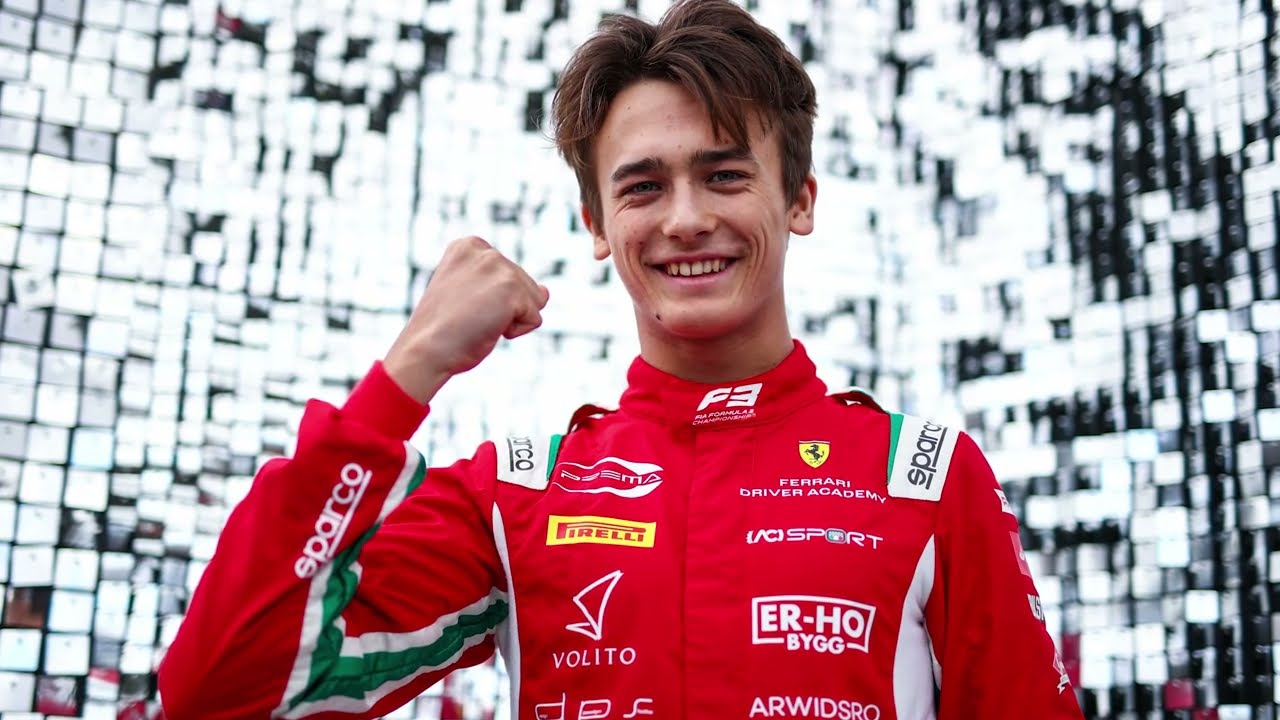
Ferrari is heavily forced to hand the opening first practice session entirely over to its young academy junior, Dino Beganovich. This is strictly to successfully meet the mandatory FIA regulation that fiercely forces every single team to actively run an inexperienced rookie in a live session, and incredibly, most of the leading competitive teams are strategically doing the exact same risky thing across the demanding weekend in Spain. Beganovich absolutely loves this sweeping circuit, especially ever since the painfully slow, clunky old chicane was joyously torn out and the incredibly fast, free-flowing final corners were triumphantly brought back—a breathtaking stretch of tarmac where a driver genuinely feels the terrifying raw speed and the immense, neck-snapping G-forces.
But the fiercely competitive veteran driver who absolutely desperately needs every single possible lap this vital weekend is tragically confined to intensely watching the glowing data screens from the back of the garage, while someone completely else takes the very first, highly critical read on the expensive upgrade package he is entirely counting his championship life on.
Everything, absolutely everything, then ultimately comes aggressively down to the pressure-cooker of Sunday afternoon.
If the scarlet Ferrari magically out-qualifies a dominant Mercedes or successfully beats one in a straight fight during the gruelling race, it instantly becomes the very first piece of hard, undeniable proof that the massive championship gap is genuinely, truly closing. Conversely, if the highly touted upgrade tragically falls completely flat on its face, in the exact embarrassing way the expensive Miami package did, the dark, familiar clouds of internal doubt will instantly come fiercely flooding right back into the garage. And the one specific thing that could genuinely, truly alter the entire destiny of this championship—the highly anticipated engine work Ferrari has finally been permitted to rigorously chase—sadly does not miraculously arrive in sunny Spain. That vital horsepower comes much later in the long season.
Barcelona is merely the very first, brutal real test of the monumental championship climb, absolutely not the glorious end of it.
So, the breathless narrative completely returns directly to exactly where it originally began. The date is June 14th. There is a brand-new, highly secretive front wing sitting quietly in the garage. There is an agonizingly desperate hunger for a Ferrari win that has not been gloriously tasted since 2024. The tangible momentum roll is undeniably real. The temperamental car finally eagerly listens to its master. The brilliantly calm engineer finally perfectly fits the demanding driver’s intense psyche.
And yet, that menacing, incredibly long straight is still patiently sitting there, silently waiting at the furious end of every single punishing lap, ruthlessly measuring exactly how much painful ground is still left to desperately make up. This is the very track that once gloriously crowned Lewis Hamilton a staggering six times over. It is the exact same track that aggressively broke his sporting heart into tiny pieces in 2016. It is the precise track that brought him miserably low just last year while dressed in Ferrari red.
Barcelona has always relentlessly told him the brutal, unvarnished truth. And on Sunday afternoon, it will definitively tell him exactly how fiercely close the true front of the Formula One grid really is.








