The Collapse of McLaren’s Dream Team: Why F1’s Next Driver Market War Is Already Here
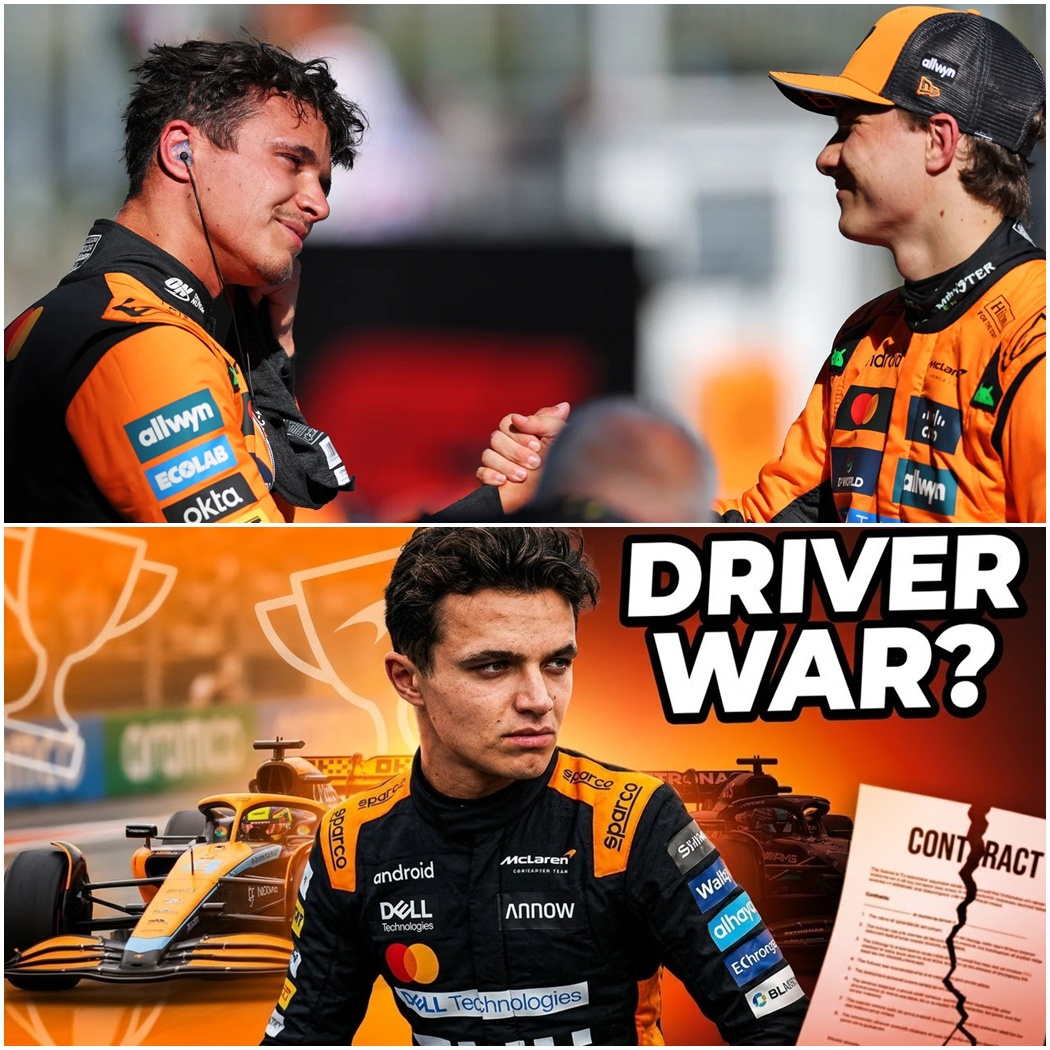
In the high-stakes, hyper-competitive theatre of modern Formula 1, perfection is a remarkably fragile commodity. Just a matter of months ago, McLaren Racing appeared to have achieved the impossible. Emerging triumphantly from the ashes of a notoriously difficult and painful decade of rebuilding, the historic Woking-based outfit had meticulously constructed what was universally regarded as the ultimate Formula 1 future. They possessed arguably the most formidable driver pairing on the grid: a newly crowned champion in Lando Norris, whose 2025 title campaign solidified his status as a generational great, and Oscar Piastri, the ice-cold Australian prodigy whose meteoric rise mirrored the early days of the sport’s most legendary figures. Backed by brilliant leadership, harmonious internal dynamics, and ruthless aerodynamic innovation, McLaren had finally outsmarted Ferrari, out-developed Mercedes, and pushed the mighty Red Bull Racing into a state of visible panic. They were the undisputed kings of the paddock. But in Formula 1, golden eras can end just as swiftly as they begin. The dawn of the 2026 regulation reset has not just exposed mechanical weaknesses within the papaya-coloured cars; it has laid bare a terrifying existential threat. McLaren may have accidentally built a team too successful, too ambitious, and too talented to keep together.
The 2026 regulations were fundamentally designed to level the playing field, but they have radically rewritten the laws of physics and engineering that govern the sport. The FIA mandated a drastic shift towards sustainable power, demanding smaller, more agile chassis, completely revised aerodynamic profiles, and a mammoth increase in electrical energy deployment. The internal combustion engine was simplified, leaving the MGU-K and the battery systems to produce nearly fifty per cent of the car’s total power output. Suddenly, mechanical grip and traditional downforce were no longer the sole differentiators of a championship-winning car. Software integration, complex energy harvesting algorithms, and sophisticated electrical deployment mapping became the new battlegrounds. And this is precisely where McLaren found themselves brutally exposed on the wrong side of the reset.
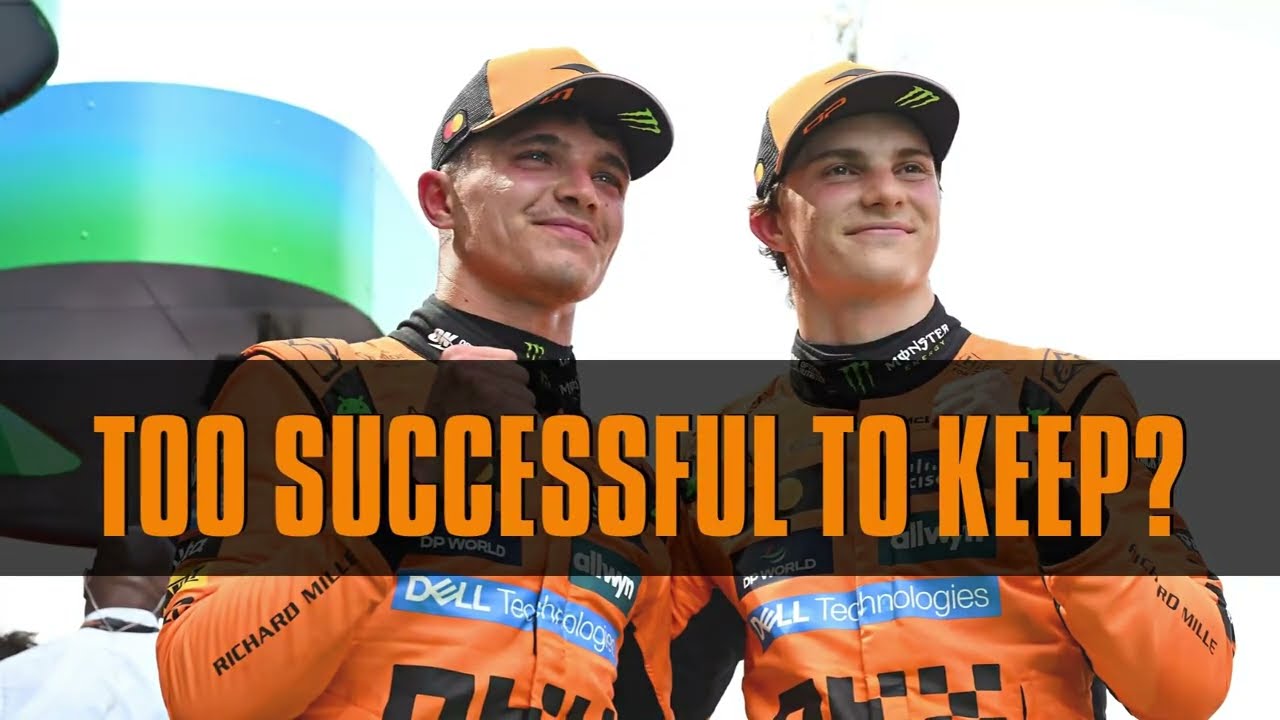
McLaren proudly operates as a customer team, purchasing their power units from Mercedes High Performance Powertrains. In the previous regulatory era, this relationship was more than sufficient to challenge for race victories and world titles. But in 2026, the sheer complexity of the electrical systems means that purchasing hardware alone is completely inadequate. The factory Mercedes team, based in Brackley, enjoys an omnipotent view of the entire development ecosystem. They possess the proprietary optimisation layers, the intricate calibration knowledge, and thousands of hours of exclusive validation mileage that they do not share entirely with their customers. The difference on the track has been glaringly obvious and utterly painful to watch for the McLaren faithful. Telemetry data from the opening rounds painted an alarming, unarguable picture. The Mercedes factory cars were deploying their electrical power smoothly, aggressively, and seamlessly out of the slow-speed corners. The McLaren MCL40, by stark contrast, looked hesitant, uneven, and dangerously nervous under acceleration. The energy delivery was erratic. In modern Formula 1, a nervous rear end under traction destroys lap time across every single sector of a circuit.
These theoretical engineering fears morphed into a very public nightmare during the Chinese Grand Prix, a race weekend that permanently altered the conversation surrounding the team’s immediate future. The Shanghai International Circuit, with its punishing long straights and demanding traction zones, was supposed to be a vital litmus test for the new regulations. Instead, it became a graveyard for McLaren’s championship ambitions. Both papaya cars suffered catastrophic failures before the race had even properly begun. This was not a double DNF born out of first-corner overexuberance, driver error, or a strategic miscalculation on the pit wall. These were terminal, synchronised system failures. The cars simply shut down. For a racing driver, there is absolutely nothing more psychologically damaging than a systemic mechanical failure. Elite drivers can tolerate losing a tenth of a second in aerodynamic pace because they inherently believe their sheer talent and race craft can compensate. What they cannot, and will not, tolerate is losing fundamental trust in the machinery beneath them.
At first, the devoted fan base hoped this was a temporary blip—a mere setup issue characteristic of a new regulatory phase that could be quickly remedied back at the factory. But the deeper analysis sweeping through the paddock became incredibly uncomfortable. If Mercedes continues to hold a distinct, insurmountable advantage through their factory integration, why would any elite driver choose to waste their prime years in a customer team? This terrifying question brings us directly to the precarious situation regarding Oscar Piastri. Publicly, McLaren presents a united, impenetrable front, boasting about iron-clad, long-term contracts. However, the inner workings of Formula 1 are rarely dictated by optimistic press releases. Piastri’s recent contract extension was celebrated as a massive coup for the team, but highly placed paddock insiders indicate that the agreement is heavily laced with strict performance escape mechanisms. This makes complete logical sense when you consider the men managing his career. Mark Webber, a man who understands the brutal, uncompromising politics of Formula 1 better than almost anyone, guides Piastri. Webber knows all too well that promising careers can completely evaporate while waiting for a midfield team to resolve fundamental engineering flaws.
If McLaren fails to deliver a chassis and power unit combination capable of fighting for the world championship by the end of the 2026 season, Piastri will undoubtedly have lucrative options at his disposal. The most terrifying of those options for McLaren is the omnipresent shadow of Red Bull Racing. Team Principal Christian Horner has admired Piastri for years, and he has not exactly kept his admiration a secret. From public praise to private monitoring, Red Bull views the young Australian as the quintessential modern racing driver: cold, incredibly precise, relentlessly analytical, and completely devoid of the emotional volatility that can derail a title campaign. He is exactly the type of psychological operator that survives and thrives in grueling championship wars. If the perpetual rumours surrounding Max Verstappen’s long-term commitment to the sport ever materialise into a shock departure, Piastri immediately becomes the most valuable asset in global motorsport, and Red Bull has the financial and competitive muscle to easily trigger his exit clauses.
Yet, as terrifying as the prospect of losing Piastri is for the Woking executives, retaining Lando Norris might prove to be an even more impossible task. The narrative surrounding the British superstar has irreversibly changed following his 2025 triumphs. Before reaching the pinnacle of the sport, Norris was the ultimate team player. He was inherently patient, willing to suffer through the painful rebuilding phases, deeply invested in the long-term project, and endlessly loyal to the organisation that gave him his grand prix debut. However, the psychology of a World Champion operates on a completely different frequency. Once a driver proves to themselves and the watching world that they can conquer the sport, their tolerance for systemic failure vanishes instantly. Historical precedent in Formula 1 is crystal clear on this matter. Fernando Alonso ruthlessly changed teams in a desperate chase for competitiveness. Lewis Hamilton shocked the world by leaving McLaren for Mercedes when the former began to stagnate. Sebastian Vettel abandoned Red Bull for Ferrari when the hybrid era left him uncompetitive. World Champions simply do not wait around for a multi-year rebuild.
Norris now knows exactly what it feels like to win consistently, and that addiction changes a driver’s psyche permanently. If McLaren plummets into a prolonged period of midfield obscurity, every top-tier team with a vacancy suddenly becomes a highly relevant threat. The most obvious and dangerous destination is Mercedes. George Russell’s future at the Silver Arrows continues to carry a lingering sense of uncertainty beyond the current regulatory cycle. If Mercedes truly asserts dominance over this new engine era, team principal Toto Wolff would be foolish not to pursue Norris aggressively. A proven World Champion, possessing immense experience under the most intense pressure, commercially brilliant, widely beloved by fans, and still entering the absolute prime years of his career—that combination is the holy grail for a team boss. The deeply uncomfortable reality for McLaren is a cruel paradox: the better Lando Norris becomes, the harder it will be to keep him contained in an uncompetitive car.
Furthermore, the ultimate catalyst for this impending collapse might not come from external poachers like Red Bull or Mercedes; it might be generated entirely internally. McLaren built its modern renaissance upon the foundation of absolute equality. There was no defined number one driver, no toxic political favouritism, and an open, collaborative atmosphere. The phrase “Papaya Rules” became the endearing symbol of a team operating in perfect harmony. But equality is a luxury afforded only to winning teams. It is remarkably easy to maintain a harmonious garage when the cars are securing front-row lockouts and the drivers are spraying champagne every Sunday. It is infinitely harder when the car becomes a nervous, unstable liability. Right now, both Norris and Piastri are fighting the exact same frustrating battles. They are enduring identical reliability failures, the same intense development pressures, and the same strategic compromises designed to mask the car’s aerodynamic deficiencies.
Eventually, elite drivers stop accepting this shared suffering. When two fiercely competitive men inherently believe they are capable of leading a championship-winning project elsewhere, patience morphs into resentment. The tension inside the McLaren motorhome may be subtle at this very moment, but the history of the sport dictates that it rarely stays subtle for long. The legendary rivalry between Ayrton Senna and Alain Prost famously exploded under the McLaren roof, tearing the team apart from the inside. The relationship between Lewis Hamilton and Nico Rosberg disintegrated into open, bitter warfare at Mercedes. Even internally balanced, culturally healthy teams eventually have to choose a definitive direction when resources become scarce and pressure mounts to an unbearable degree.
The profound tragedy for McLaren is that they may reach this internal boiling point at the precise moment rival teams start unlocking their chequebooks and opening up premium seats. What once looked like the most secure and formidable driver lineup in the history of the sport could rapidly become the most volatile and unstable situation on the grid. The clock is already ticking with deafening volume, and that is what makes the 2026 season so incredibly dangerous for the Woking squad. This is no longer just about salvaging one lacklustre campaign; it is a desperate race against time. Formula 1 windows close with brutal, unforgiving speed. A single botched regulation cycle has the power to destroy half a decade of painstaking momentum, and the rival sharks are already circling the wounded prey.
Mercedes is relentlessly hungry for total dominance in the electrical era, seeking to recreate the supremacy they enjoyed in 2014. Red Bull is desperately searching for its next long-term, generational superstar to carry the mantle into the next decade. Ferrari, revitalised and aggressive, never sleeps when elite talent becomes available on the open market. This reality means that every single race weekend from this point forward carries monumental consequences that extend far beyond the constructors’ points tally. Every reliability issue matters. Every failed aerodynamic upgrade matters. Every frustrated, expletive-laden radio message broadcasted to the world matters. Somewhere deep inside the Formula 1 paddock, rival team principals are watching, waiting, and calculating their next ruthless move. If McLaren cannot orchestrate a miraculous engineering recovery, the team that flawlessly built the perfect future could end up losing every single piece of it. The ultimate question is no longer if the driver market will explode, but rather who lights the match. If the decline continues, who walks away first? Will it be Lando Norris seeking championship redemption at Mercedes, or Oscar Piastri answering the siren call of Red Bull? Formula 1 is undeniably hurtling towards its next massive driver market war, and the first shot fired could completely redefine the entire grid for 2027 and beyond.