The Mercedes Civil War: How a 19-Year-Old Prodigy is Dismantling George Russell’s Formula 1 Dream
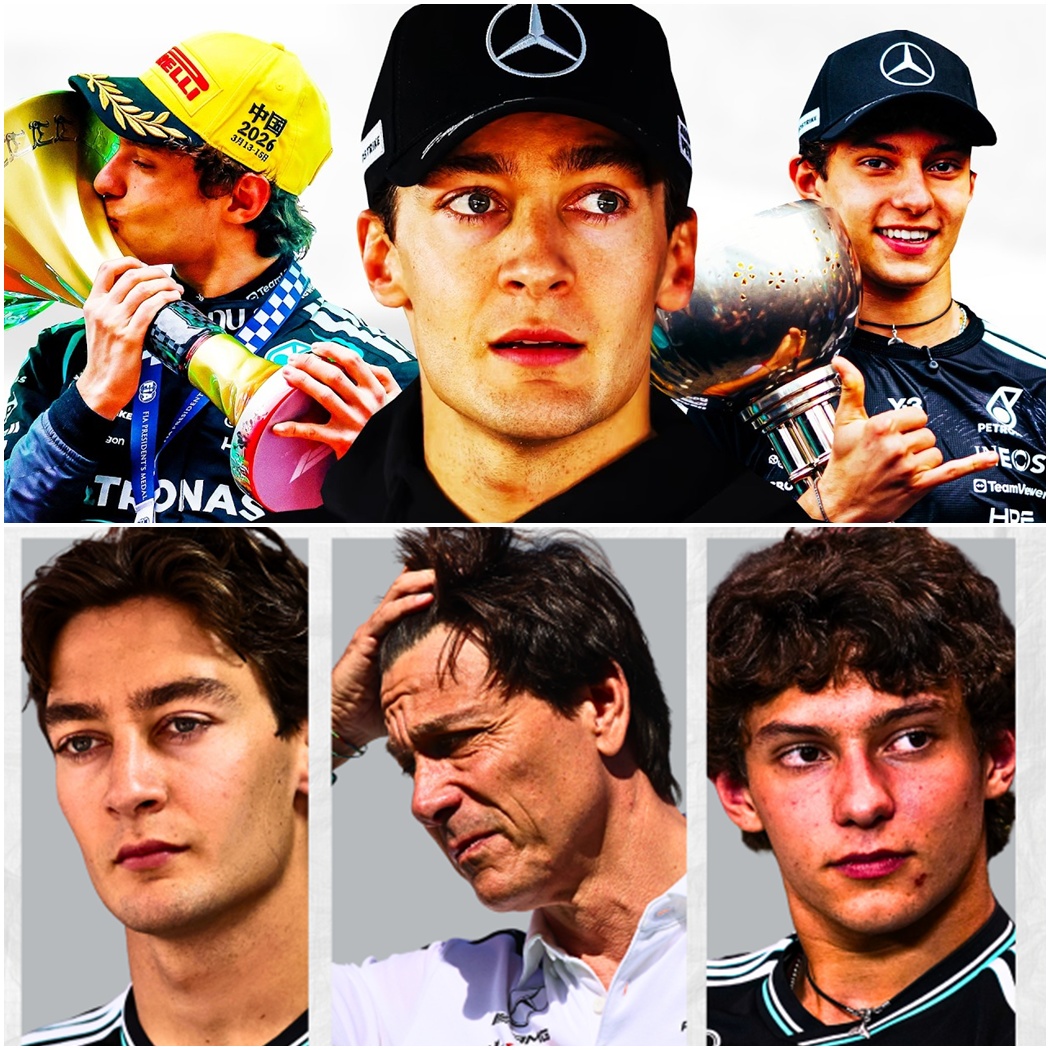
When the curtain lifted on the 2026 Formula 1 season, the narrative seemed practically written in stone. After years of turbulent development, unpredictable aerodynamics, and relentless chasing, Mercedes finally brought a genuine rocket ship to the grid. The pre-season sandbagging couldn’t hide the undisputed truth: they possessed the fastest car. For George Russell, this was the moment he had agonized over for his entire racing life. He was the established team leader, the heir apparent to Lewis Hamilton’s legendary dynasty, and the undeniable favorite to cruise to his maiden World Championship. Yet, just a few races into this highly anticipated season, the script has been violently torn to shreds.
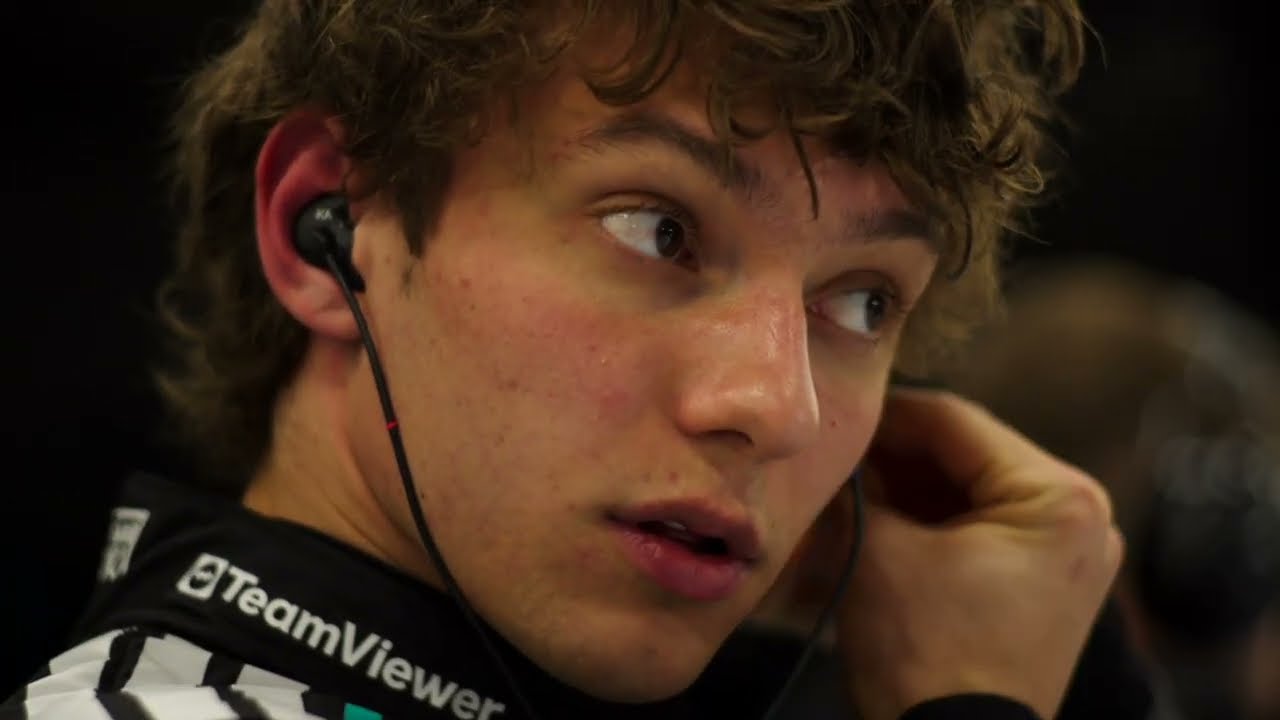
Instead of a comfortable, season-long coronation for Russell, the Formula 1 world is currently witnessing one of the most unexpected, dramatic, and high-stakes intra-team battles in modern racing history. The biggest threat to Russell’s championship aspirations isn’t coming from Ferrari, McLaren, or Red Bull; it’s coming from the other side of his very own Mercedes garage. Nineteen-year-old prodigy Kimi Antonelli, competing in only his second full season in the sport, has completely flipped the hierarchy. Antonelli isn’t just challenging his senior teammate—he is beating him, actively leading the drivers’ championship, and sparking loud murmurs that Russell’s long-term future at the Silver Arrows might be in serious jeopardy.
Everything started exactly as planned for the British driver. The season opener in Australia was a textbook execution of dominance. Russell comfortably placed his Mercedes on pole position and drove a flawless, controlled race to take the checkered flag. Meanwhile, Antonelli was left scrambling, forced to mount a grueling recovery drive that made him look every bit the inexperienced youngster he was supposed to be. For a fleeting moment, the F1 paddock nodded in collective agreement: George Russell was undeniably the man to beat.
However, Formula 1 is a brutal sport where momentum shifts at the speed of a DRS overtake. Fast forward just three races, and that early sense of comfort has completely vanished into thin air. The teenager has staged a breathtaking comeback, seizing back-to-back victories in China and Japan with a level of maturity and raw pace that has left seasoned analysts utterly speechless. Antonelli isn’t just winning; he’s making a profound statement of intent. In Japan, he outqualified Russell by nearly three-tenths of a second—an absolute eternity in equal machinery and the largest qualifying margin between the two drivers so far. While the overall average qualifying gap remains a razor-thin 0.016 seconds in Russell’s favor, the recent momentum is undeniably resting in the hands of the Italian teenager.

The fascinating aspect of the 2026 season so far is that the pole-sitter has won every single race. But that simple, seemingly predictable statistic drastically masks the chaotic reality unfolding on the tarmac week after week. Mercedes has routinely struggled off the starting line, getting consistently beaten to the first corner and forcing their drivers to rely on superior race pace, immaculate battery management, and aggressive racecraft to carve their way back to the front. The new, highly complex technical regulations introduced this season have fundamentally reset the playing field, presenting a steep learning curve involving intricate deployment, harvesting, and overtake mechanisms.
This is where Kimi Antonelli has shockingly shined. While Russell has historically been viewed as a sharp tactician who carefully manages his stints, it is the 19-year-old who is consistently getting his elbows out, making early overtakes stick, and decisively slicing through the field with a natural, relentless aggression. Deep analysis from motorsport experts into their clean-air race pace reveals incredibly tight margins—Antonelli had roughly a one-tenth per lap advantage in Australia during a marathon 37-lap stint. In China, once Russell finally cleared the Ferraris, their pace was virtually identical across 26 laps. However, when it comes to navigating the turbulent dirty air of other cars and executing high-pressure passes, Antonelli looks like a hardened veteran. For instance, in Australia, despite having a massive car advantage, Russell struggled to overtake until a Virtual Safety Car strategy from Ferrari handed him track position. In China, after a safety car restart, Russell bizarrely lost positions to both Hamilton and Leclerc, forcing him to fight his way back into second place.
To be completely fair to Russell, luck has not been his ally. In China, a crippling battery issue at the start of Q3 robbed him of a crucial second run, heavily compromising his ultimate starting position. In Japan, the agonizing timing of a safety car—deployed just one lap after Russell had pitted—allowed Antonelli to jump him in the pits and snatch the race victory. While we can assume Antonelli had the underlying pace to win regardless, the cruel twist of fate denied fans a genuine on-track battle. But in the ruthless arena of Formula 1, the record books don’t care about bad luck. They only care about points, and right now, Antonelli is hoarding them.
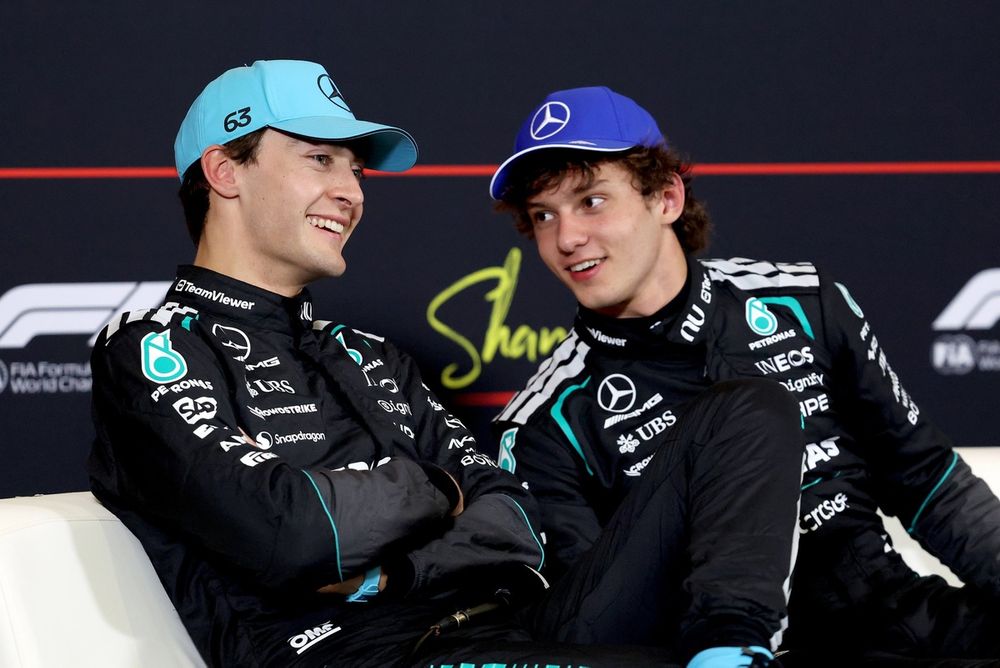
Perhaps the most captivating element of this unfolding drama is the psychological toll it is undoubtedly taking on George Russell. You simply cannot ignore the underlying context of their respective journeys. Russell spent three grueling, character-building years wrestling an uncompetitive Williams at the back of the grid, followed by four years at Mercedes just as their championship-winning dominance abruptly ended. He has paid his dues in full, weathered the storm, and waited patiently for a car capable of winning a title.
Enter Kimi Antonelli. A teenager who entirely bypassed the years of midfield suffering, jumping straight into a Mercedes as a rookie and finding himself strapped into a championship-caliber car by year two. The stark contrast in their career trajectories has to be a bitter pill for Russell to swallow. It becomes even more agonizing when you consider the Lando Norris factor. Russell and Norris came up through the junior ranks together, but it was Norris who lifted the World Championship trophy last year. Russell undoubtedly believes he is a superior, or at least equal, driver to Norris, making his current predicament an agonizing reality check. To finally get the machinery to emulate his rival, only to be upstaged by a teenager, is the ultimate test of his mental fortitude.
Adding premium fuel to this highly combustible fire is Mercedes Team Principal Toto Wolff. While the team publicly insists they are providing equal machinery, avoiding team orders, and giving both drivers a fair shot at the title, the emotional atmosphere inside the garage tells a completely different story. When Antonelli wins, there is an undeniable electricity—a palpable sense of vindication and an inflated ego for Wolff. After Kimi’s maiden victory in China, Toto aggressively took to the team radio, loudly proclaiming his triumph to anyone who ever doubted his controversial decision to promote the teenager straight into the Mercedes seat. For Toto, Kimi’s success feels profoundly personal. It is a validation of his managerial genius and his bold risk-taking. When George wins, it’s treated as standard business protocol. For a driver like Russell, realizing that your boss might quietly prefer your teammate is a devastating psychological blow that can permanently erode trust within the team.
As the championship battle intensifies, the pressure on Russell is reaching critical mass. Until now, Antonelli has been riding a massive wave of positivity and zero expectations. He has had nothing to lose and everything to gain. But as the season progresses and the reality of a potential World Championship looms closer, the psychological pressure on the teenager will inevitably mount. We saw a similar narrative unfold with McLaren last year, where early invincibility crumbled as the title pressure intensified, leading to crucial mistakes from both the drivers and the pit wall. The real test for Kimi will be whether he can maintain his flawless execution when the stakes are at their absolute highest.
The upcoming calendar provides a fascinating battleground. The next few races feature Miami and Canada—venues where Antonelli secured his first sprint pole and podium last year. His confidence there will be sky-high. However, the true turning point will be the traditional European leg of the season. Last year, Antonelli struggled significantly on the classic European circuits, particularly failing to adapt to a major suspension upgrade introduced at Imola, while Russell maximized the car’s potential with his superior technical feedback. If those ghosts return to haunt the young Italian, Russell could absolutely claw his way back to the top of the standings.
But if he doesn’t, the consequences could be catastrophic for the Brit. It is an open secret in the Formula 1 paddock that Toto Wolff was prepared to discard Russell last year if it meant securing the services of reigning champion Max Verstappen. Russell’s recent contract extension—a heavily conditional deal laden with performance clauses—felt uncomfortably similar to the token contracts handed out to Valtteri Bottas during the Hamilton era. It was a stopgap measure rather than a long-term declaration of loyalty. If George Russell—the man groomed for years to lead Mercedes into a new dynasty—loses the World Championship to a 19-year-old teammate, his position within the team will be critically compromised.
This is no longer just a battle for a trophy. It is a fight for survival, reputation, and legacy. Every qualifying session, every race start, and every strategic pit stop is now loaded with career-defining stakes. Kimi Antonelli has inadvertently transformed what was supposed to be George Russell’s dream season into an absolute nightmare. Whether Russell can dig deep, overcome the bad luck, adapt to the new regulations, and reassert his dominance remains to be seen. But one thing is absolutely certain: the civil war inside the Mercedes garage has only just begun, and the fallout will inevitably change the landscape of Formula 1 forever.








