The Unbreakable Spirit: Motorsport Mourns as Alex Zanardi, the Man Who Defied Death and Redefined Human Resilience, Passes Away at 59
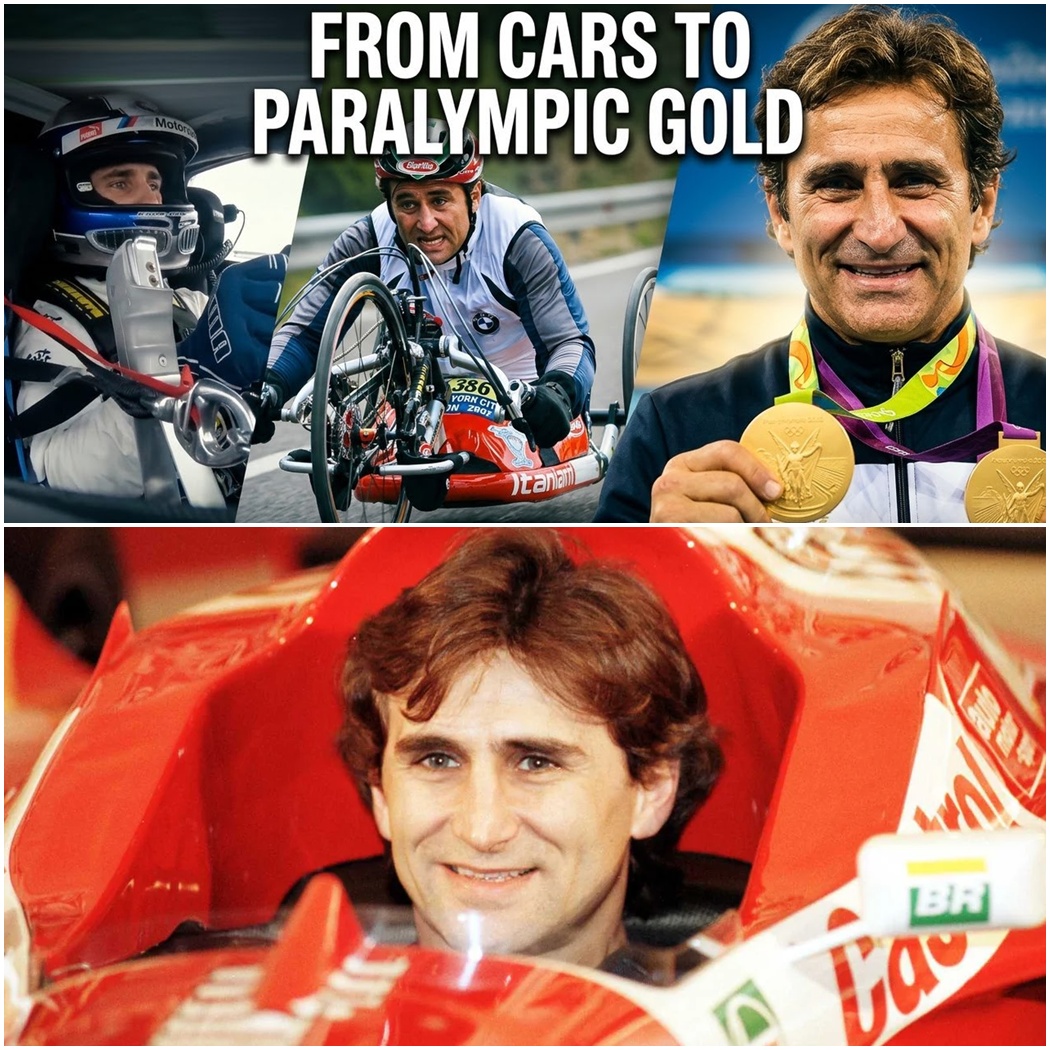
The 2026 Miami Grand Prix was supposed to be a weekend entirely defined by shifting momentum, fierce technological rivalries, and the relentless pursuit of championship glory. McLaren was rapidly rising, Lando Norris had snatched a brilliant sprint pole, Mercedes was finally showing signs of vulnerability, and a literal and figurative storm was brewing over the race day narrative. But suddenly, before the five red lights could even dictate the chaos of the weekend, the deafening roar of the hybrid V6 engines felt profoundly hollow. The bustling, glamorous paddock fell into a deeply reverent, heavy silence. On May 1, 2026—a date already permanently scarred into the collective memory of motorsport fans as the haunting anniversary of Ayrton Senna’s tragic death thirty-two years prior—another monumental, irreplaceable figure left this world. Alessandro “Alex” Zanardi passed away at the age of fifty-nine.
He did not leave us in a blazing, high-speed crash on live television, nor did he depart under the glaring spotlights of a global media frenzy. His departure was painfully quiet, marking a serene and devastatingly silent end to a life that was historically, famously, and defiantly loud. Alex Zanardi was not a multi-time Formula 1 World Champion. He started forty-one Grand Prix races and scored only a single championship point. But evaluating Zanardi by standard statistical metrics completely misses the profound truth of his existence. If Formula 1 measures pure speed, Alex Zanardi fundamentally redefined human strength. This is not merely a career retrospective of a racing driver; this is the chronicle of the greatest comeback in the history of sports, a story about brutal survival, astonishing reinvention, and a spirit that proved vastly more powerful than mere talent.
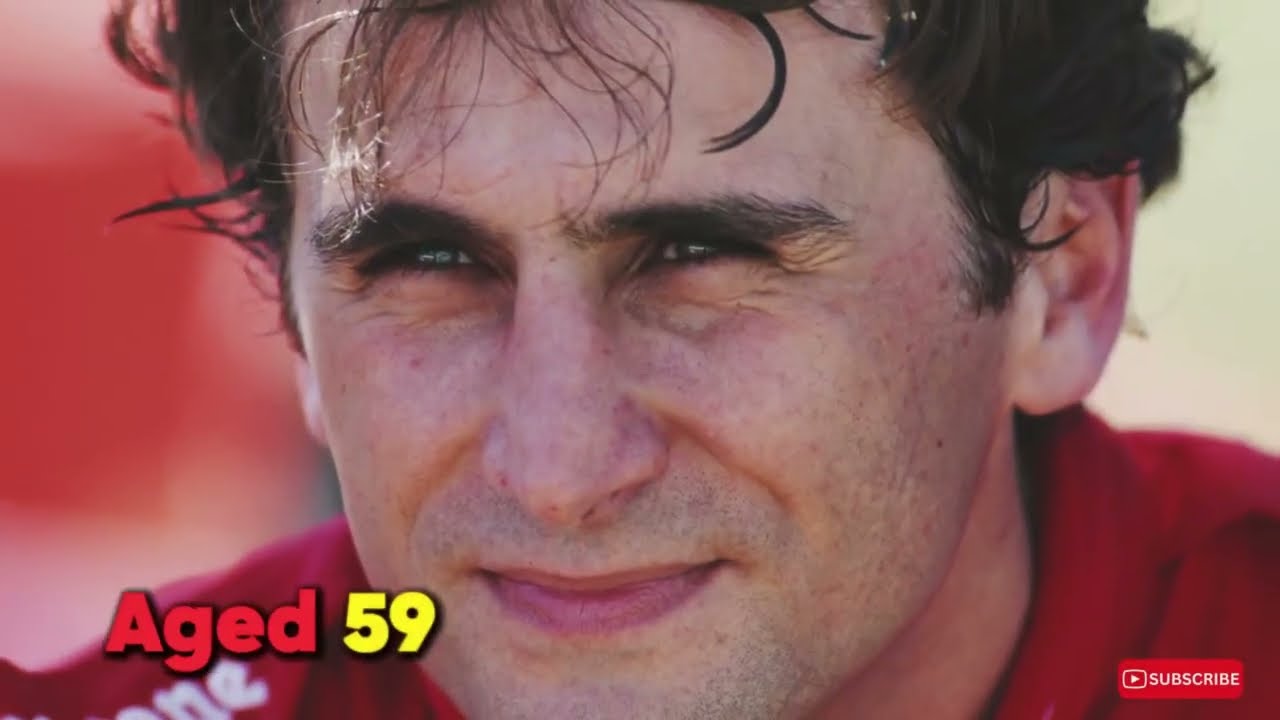
The foundation of this unbreakable will was poured in Bologna, Italy, where Alessandro was born in the autumn of 1966. Growing up in Castel Maggiore, his early life was devoid of luxury or the traditional, expensive stepping stones that pave the way for modern racing prodigies. There were no shortcuts for the young Italian. His very first go-kart was a masterclass in raw passion and mechanical ingenuity, built completely from scrap metal, discarded dustbin wheels, and metal pipes. It was a machine powered by pure, unadulterated instinct. However, the true crucible of his character arrived when he was just thirteen years old. Tragedy struck his family with brutal suddenness when his older sister, Christina, was killed in a devastating road accident. For most, an event of such profound trauma extinguishes the fire of youth. For Zanardi, it mysteriously hardened something deep within his soul. It ignited a burning, relentless desire to live fiercely.
By 1987, that fierce drive manifested on the asphalt. He utterly dominated the CIK-FIA European Karting Championship. Every single round, every single race, he exhibited a level of total, frightening control. He quickly ascended the traditional European motorsport ladder, transitioning through Formula 3 and Formula 3000. Everywhere he raced, he was undeniably fast. But more importantly, he was vibrantly, magnetically alive. He possessed a charismatic aura that drew people toward him. When he finally reached the pinnacle of Formula 1 in 1991, driving for a carousel of teams including Jordan, Minardi, Lotus, and eventually Williams, the machinery rarely matched his boundless potential. On paper, a best finish of sixth place looks entirely forgettable. Yet, inside the intensely political and insular F1 paddock, Zanardi was unforgettable. Race engineers implicitly trusted his feedback, the global media followed his every word, and rival teams profoundly respected his racecraft. Zanardi understood a fundamental truth that many elite drivers completely ignore: racing isn’t just about cold machinery; it is inextricably about people. His raw talent was always tragically bigger than the cars he was given to drive. Formula 1 was not his peak; it was merely the turbulent prologue to his legend.
The true awakening of Alex Zanardi the racing deity occurred when he crossed the Atlantic. Joining Chip Ganassi Racing in the fiercely competitive American CART series, the stars finally aligned. For the first time in his professional career, the car underneath him truly matched the ferocious predator behind the steering wheel, and instantly, everything changed. Zanardi was unleashed. He drove with an aggressive, highly creative, and beautifully unpredictable style. He wasn’t just winning motor races; he was executing overtakes that defied the laws of physics, utilizing a brand of racecraft that felt deeply deliberate, calculated, and almost entirely artistic.
He finished as the championship runner-up in his 1996 rookie campaign, before capturing back-to-back championships in 1997 and 1998 with an aura of total authority. He amassed fifteen victories in a staggering display of dominance. But his American legacy was forever cemented at the iconic Laguna Seca circuit. Chasing down race leader Bryan Herta on the final lap, Zanardi approached the infamous, plunging “Corkscrew” corner. There was absolutely no space to pass. There was no mathematical chance of making a move stick. Zanardi sent the car anyway. With dirt violently flying into the air, his wheels completely off the traditional racing line, and gravity seemingly suspended, he muscled his way past Herta in what is universally regarded as one of the single greatest overtakes in the history of global motorsport. This was not a lucky lunge; this was a man asserting absolute control at the very ragged edge of mechanical chaos.
The magnetic pull of Formula 1 inevitably returned, and Sir Frank Williams called him back to Europe in 1999. But the fairy tale did not continue. The rhythm was glaringly absent, the car was uncooperative, and the results never materialized. Recognizing the mismatched dynamic, he walked away, returning to his spiritual home of American racing with Mo Nunn Racing in 2001. He was a veteran fighting once again for relevance, for victories, and for the sheer, intoxicating thrill of the sport.
Then came September 15, 2001. The Lausitzring in Germany. On lap seventy, the world stopped turning.
Exiting the pit lane on cold tires, navigating a track surface slick with fluid, Zanardi’s car snapped violently. He spun, slid uncontrollably, and came to a dead stop sideways, positioned directly on the high-speed racing line. There was zero time to react. Fellow competitor Alex Tagliani, traveling at an astonishing speed, violently T-boned Zanardi’s stationary chassis. The impact was an instant, catastrophic explosion of carbon fiber and horrific kinetic energy. The nose of Tagliani’s car tore entirely through the front of Zanardi’s tub. Both of Zanardi’s legs were instantly, brutally severed above the knee.
The resulting blood loss was massive and immediately life-threatening. Medical crews performed desperate, frantic emergency surgery directly on the track surface just to keep his fading pulse active. He was airlifted to a specialist trauma center in Berlin, his life hanging by the thinnest of threads. He endured fifteen grueling operations. His heart reportedly stopped beating multiple times. Medical professionals administered his last rites. The racing paddock, paralyzed by shock and grief, did not expect him to survive the weekend. The world-class surgeons operating on him did not expect him to survive the night.
But Alessandro Zanardi survived.
What followed is where the narrative completely breaks from the boundaries of human logic. He did not merely survive to live a quiet life of reflection. A mere two years after the crash that stole his legs and nearly took his life, he returned to the very same Lausitzring circuit. Driving a specially modified, hand-controlled car, he completed the thirteen laps he never got to finish in 2001. He didn’t just casually cruise around the track; his lap times were fast enough to have qualified fifth on the professional grid. He then unstrapped himself, climbed the starter’s gantry using his prosthetic legs, and waved the starting flag for the race. In that singular, breathtaking moment, the entire sporting world realized that they were not witnessing a medical recovery; they were witnessing an act of pure, unfiltered defiance.
Zanardi did not come back to adapt; he came back to conquer. By 2005, driving for BMW in the World Touring Car Championship, he achieved the impossible. Utilizing intricate hand controls that he helped design and engineer, he won a professional motor race at Oschersleben. As he crossed the finish line, his voice crackled over the team radio, heavy with tears and disbelief: “Tell me this isn’t a fairy tale.” It wasn’t a fairy tale; it was a testament to the absolute pinnacle of human determination. During a subsequent Formula 1 test with BMW Sauber, engineers awkwardly asked if they needed to drastically adjust the pedal box for him. Zanardi simply laughed and replied, “Just change the length of my prosthetic legs.” He was adapting to the machinery faster than the elite engineers could adapt the car to him.
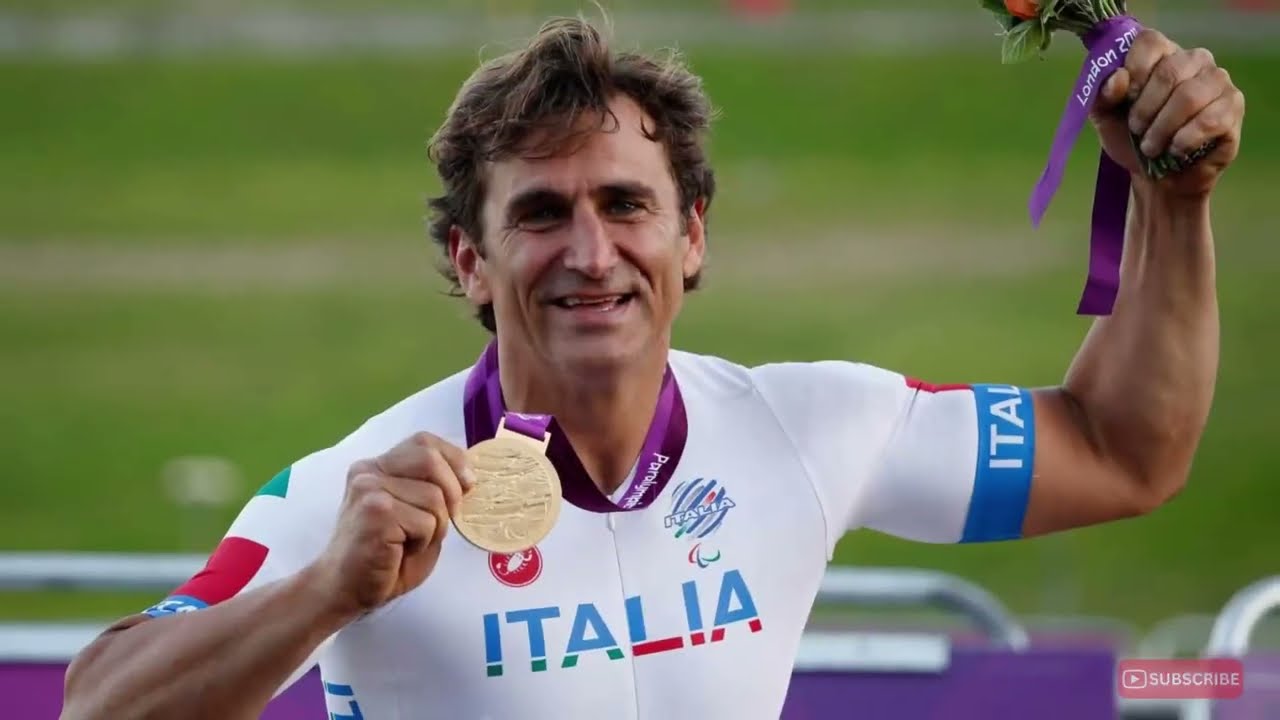
Yet, incredibly, his second life was only just beginning to accelerate. Seeking a new physical challenge, Zanardi discovered the grueling sport of hand-cycling. He applied the exact same obsessive dedication, the same ferocious work ethic, and the same tactical brilliance that made him a motor racing champion to this entirely new discipline. The results were nothing short of mythological. At the 2012 Paralympic Games in London, racing on the iconic Brands Hatch circuit where he had previously raced cars, he captured two glorious gold medals and a silver. He followed that up at the 2016 Rio de Janeiro Paralympics by winning two more gold medals on the eve of the fifteenth anniversary of his Lausitzring crash.
He amassed a staggering twelve world championship titles in hand-cycling. In 2018, he entered an Ironman triathlon in Serbia, absolutely smashing the world record for a disabled athlete by swimming, hand-cycling, and racing a racing wheelchair for hours on end, entirely without the legs he was born with. This was no longer a comeback story. This was a man establishing total, global dominance in a completely second life. Through every podium, every interview, and every exhausting victory, his message to the world remained beautifully consistent: Do not cry for me, for I am here, and I am thriving.
But even the most invincible warriors cannot win every battle. On June 19, 2020, while participating in the Obiettivo Tricolore national handbike relay in Italy, tragedy struck a second time. While descending a hill, Zanardi lost control of his handbike and crossed into the oncoming lane, colliding violently with a large truck. The impact caused incredibly severe head injuries and massive facial trauma. Another desperate fight for his life began in the intensive care unit. But unlike his triumphant return in 2001, this battle was tragically different. It was slower, much quieter, and hidden entirely from the public eye. There would be no grandstand comebacks. There were no television cameras, no podiums, and no cheering crowds. For six agonizing years, updates on his medical condition from his fiercely protective family were rare, heavily fragmented, and deeply uncertain. The man who had spent his entire life loudly defying the impossible was now forced to fight in the absolute silence of medical facilities.
And then, on May 1, 2026, the fight finally ended.
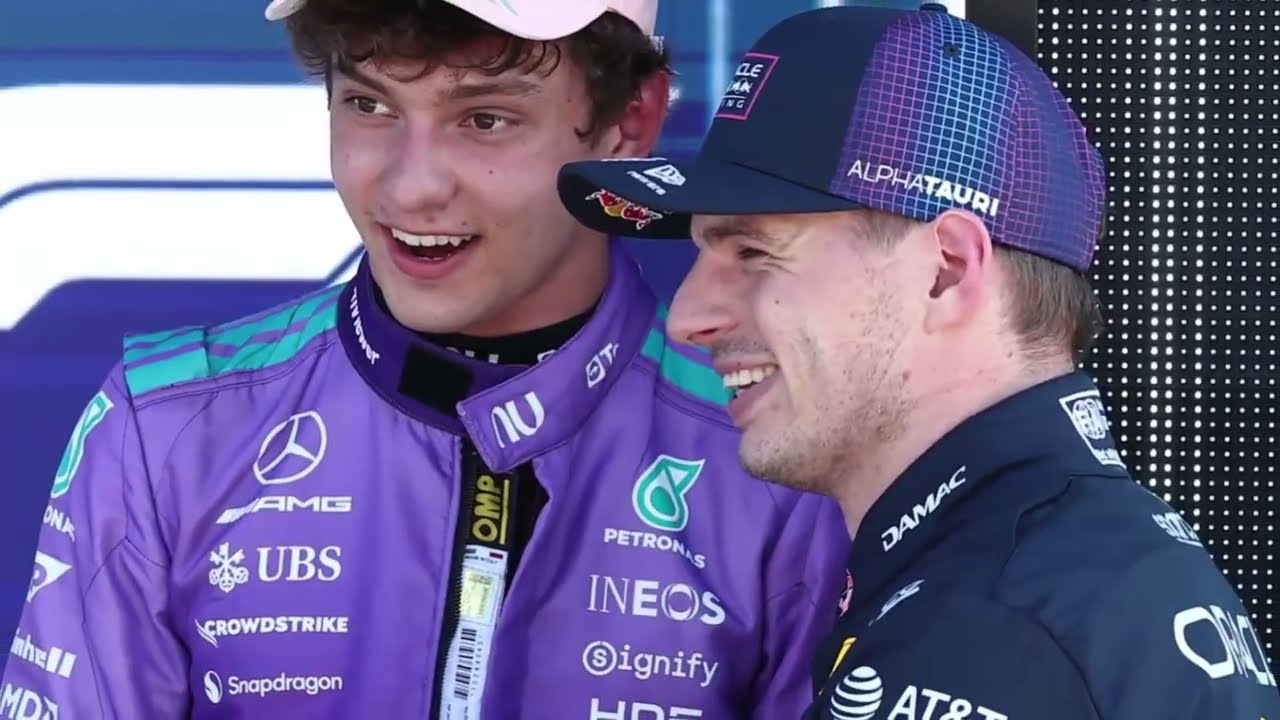
The news permeated the Miami Grand Prix paddock like a shockwave. Formula 1 CEO Stefano Domenicali emotionally labeled him as “relentless.” Italian Prime Minister Giorgia Meloni called his life “extraordinary.” Drivers across completely different generations—from Lewis Hamilton to Max Verstappen to Lando Norris—responded with deep, genuine reverence. This was not merely the standard respect given to a fellow competitor; it was the profound recognition that Zanardi was not just a racer. He was the ultimate benchmark for human limits, and he had permanently moved that benchmark for the rest of our species.
When Ayrton Senna tragically died on this exact same date in 1994, his passing fundamentally changed Formula 1 structurally, resulting in massive overhauls to safety barriers, car design, and medical protocols. Alex Zanardi’s life, and his eventual passing, changed something far less visible but arguably vastly more powerful: our collective perspective. He violently shattered the concept of limitations. He made our everyday excuses look utterly weak and pathetic. He proved that massive, life-altering setbacks are merely temporary roadblocks, and he demonstrated that the absolute limits of the human body are completely negotiable if the mind refuses to surrender.
Motorsport has produced an array of undeniable legends over the decades—Schumacher, Prost, Senna, Hamilton, Verstappen. But when we look beyond the narrow confines of motor racing and examine the broader spectrum of the human experience, Alex Zanardi stands entirely alone on a pedestal of his own creation. As the engines fire back up in Miami, and the 2026 championship fight violently resumes amidst shifting power balances and technical upgrades, the sport moves forward while carrying an incredibly heavy weight. They are racing in the shadow of a man who literally redefined what moving forward even means.
Alessandro Zanardi once famously said, “We all have hidden energies.” He spent fifty-nine years on this earth proving that profound statement to be absolute truth. He leaves behind an impossible legacy: forty-one Grand Prix starts, two legendary CART championships, four glittering Paralympic gold medals, and a life story so beautifully chaotic and triumphant that no Hollywood scriptwriter could ever justify it. It feels completely impossible, yet every single miraculous second of it happened. The man has left this world, but the unbreakable spirit he showed to millions of people will never, ever leave us.








