Aston Martin’s Hidden Crisis: Fixing the Engine Uncovered a Nightmare for Fernando Alonso
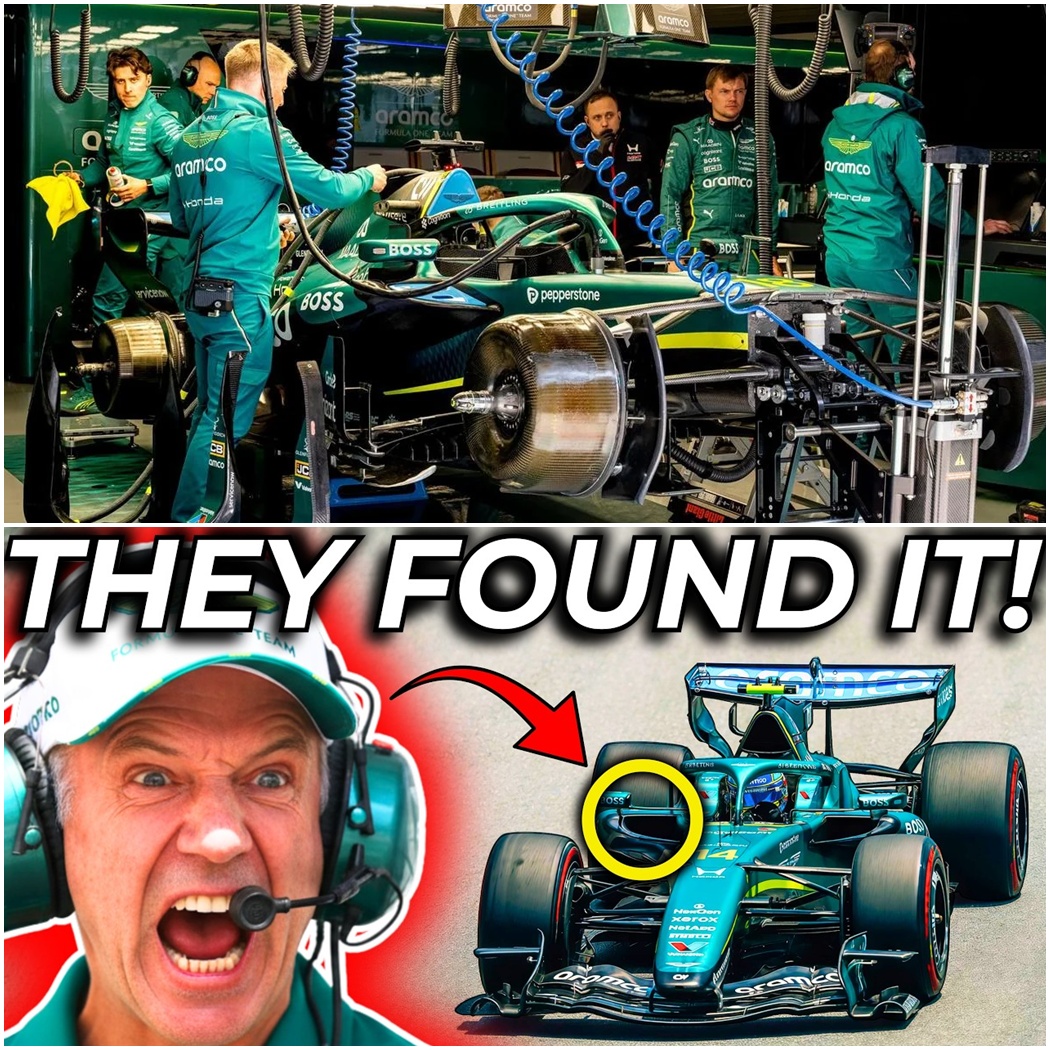
The Miami Grand Prix was supposed to be the glorious turning point for Aston Martin’s highly publicised and hugely expensive 2026 campaign. After a disastrous opening stanza to the season, characterised by catastrophic mechanical failures and horrific vibrations that left Fernando Alonso with numbed hands and feet, the team finally managed to complete a full race weekend without their car effectively self-destructing. The crippling vibrations that forced high-profile retirements in Australia and China were emphatically declared “gone” by a seemingly relieved Alonso. However, the momentary sigh of relief echoing through the Silverstone-based factory was brutally short-lived. In solving their headline-grabbing engine crisis, Aston Martin inadvertently unmasked a deeply systemic, potentially far more dangerous technical flaw—one that their legendary driver has explicitly labelled as being fundamentally “worse.”
As the Formula 1 circus rapidly descends upon Montreal for the Canadian Grand Prix, Aston Martin finds itself trapped in a bizarre, uncomfortable purgatory. The car is no longer an immediate, explosive disaster, but it is entirely devoid of genuine performance. The core of this new nightmare does not lie within the highly scrutinised Honda power unit, but rather within the intricate, highly stressed components of the team’s brand-new, completely bespoke gearbox.
Following the chequered flag in Miami, Alonso did not mince his words. He was brutally specific regarding the nightmare unfolding inside his cockpit. The two-time World Champion described the gearbox behaviour as “very weird on the downshifts and upshifts,” bluntly concluding that he was simply “not in control.” For an elite Formula 1 driver, this is the ultimate, terrifying red flag. An F1 car demands absolute, unflinching precision. When a driver aggressively hits the brakes to decelerate from 300 km/h, the sequential downshifts must be executed with microscopic, perfect timing. If the gearbox shifts too early, the car loses vital momentum. If it shifts too late or too harshly, it massively unsettles the aerodynamic platform, leading to severe rear-end snapping or sudden wheel lock-ups. When the transmission behaves inconsistently—shifting at completely different rates on consecutive laps despite identical driver inputs—trust evaporates instantly. In Formula 1, destroyed driver confidence inevitably translates to massive chunks of lost lap time; a deficit that absolutely no amount of fancy aerodynamic wind-tunnel upgrades can ever hope to recover.
To truly comprehend the depth of this technical crisis, one must trace the timeline back to a monumental strategic decision made long before the 2026 season ever commenced. For years, operating as a loyal customer team, Aston Martin (and its previous iterations) heavily relied on purchasing an entire, proven rear-end package from Mercedes, which conveniently included a highly reliable, bulletproof gearbox and sophisticated rear suspension architecture. However, the ambitious switch to becoming the exclusive ‘works’ partner for Honda meant the immediate, brutal severing of that comfortable Mercedes umbilical cord.
For the very first time in their modern history, Aston Martin was forced to completely design, engineer, and manufacture their own complex gearbox entirely in-house. Building a transmission for the radical 2026 Formula 1 regulations is an incredibly daunting, highly specialized challenge. The massively upgraded MGU-K (Motor Generator Unit – Kinetic) now delivers and recovers significantly more electrical power than ever before, creating violent, sudden torque loads in both directions that the delicate internal gears must effortlessly handle in mere fractions of a millisecond. Aston Martin’s newly formed transmission department was attempting to summit this engineering Mount Everest on their very first attempt. The painful result, as Alonso so vividly described, is a transmission that works sporadically, lacking the critical reliability demanded by elite motorsport.
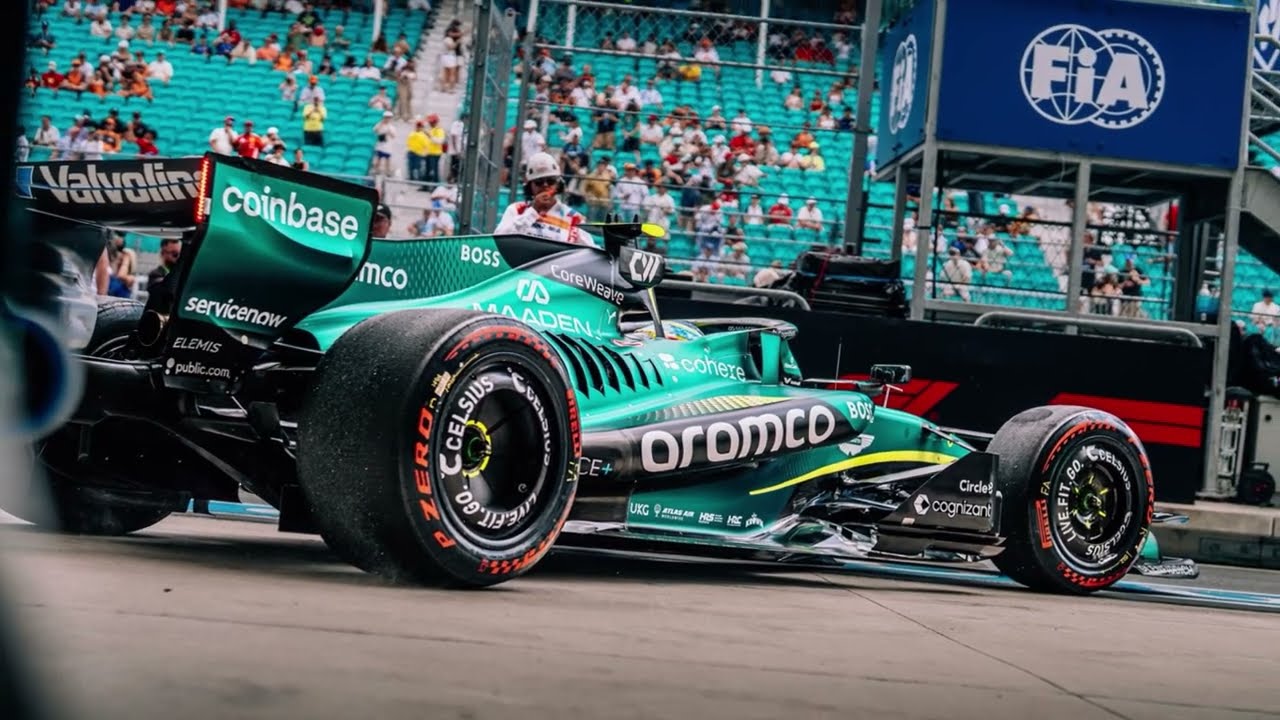
This glaring weakness could not possibly be exposed at a worse venue than the Circuit Gilles Villeneuve in Montreal. The iconic Canadian track is brutally famous for its extremely heavy, punishing braking zones. Long, high-speed straights violently terminate into incredibly tight, aggressive chicanes and slow-speed hairpins. The legendary hairpin, L’Epingle, forces drivers to aggressively scrub their speed from well over 300 km/h down to a crawling 80 km/h in an astonishingly short distance. This specific manoeuvre demands multiple, incredibly rapid, and violent downshifts in lightning-fast succession—the exact, high-stress scenario where Aston Martin’s wildly inconsistent shifting behaviour instantly transforms from a frustrating performance deficit into a genuine, highly dangerous safety hazard.
Furthermore, the pressure in Canada is exponentially magnified because it is a designated Sprint weekend. This compressed, high-stakes format means Alonso and his teammate, Lance Stroll, will be granted exactly one single, frantic sixty-minute Free Practice session before immediately plunging into the intense pressure of Sprint Qualifying. They will have just one hour to desperately decipher if the emergency electronic fixes implemented by Honda’s engineers in Sakura have actually cured the erratic gearbox behaviour. If the car remains dangerously unpredictable during those crucial braking phases, there is absolutely no second practice session available on Friday afternoon to desperately tweak the mechanical setup. The AMR26 must roll out of the garage completely ready to fight; if it doesn’t, the weekend is effectively ruined before it has even properly begun.
Yet, peeling back the layers of this immediate gearbox crisis reveals a much deeper, more troubling narrative regarding the highly publicised transition of the entire Aston Martin organisation. The switch from being a safe Mercedes customer to a prestigious Honda works team was universally heralded as a massive, championship-winning upgrade on paper. After all, this was the exact same Honda organization that had just flawlessly powered Red Bull Racing to four consecutive World Championships. However, what the glossy press releases conveniently omitted was the sheer, brutal cost of this massive transition.
Beyond losing the proven reliability of the Mercedes rear-end, highly credible Italian reports have recently highlighted a crucial factor largely ignored by the mainstream English-speaking media: Honda’s absolute best, most experienced engineers were simply not available for this project. When Honda initially announced their shocking withdrawal from Formula 1 at the end of 2020, their elite, top-tier engineering talent was swiftly reassigned to other highly advanced automotive projects. When the Japanese automotive giant ultimately reversed their decision and decided to return for the 2026 regulations, the incredibly complex challenge of the new power unit was allegedly handed down to a capable, yet distinctly “second tier” group of engineers. Consequently, the massive gap between what was optimistically promised in boardrooms and what actually arrived in the pit lane was always destined to be far larger than anyone within the team was willing to publicly admit.

Compounding this issue were severe early integration problems. Reports indicate that Andy Cowell, the highly respected former Mercedes engine chief who recently took over as Aston Martin CEO, reportedly failed to quickly establish a seamless, close-knit working relationship with the new partners at Honda during the crucial early development phases. The horrific vibrations that plagued the opening rounds, and the current, terrifying gearbox instability, are widely viewed as the direct, painful consequences of two massive organizations essentially working in parallel isolation rather than functioning together as a single, unified, championship-contending entity. Even the highly anticipated arrival of legendary designer Adrian Newey has not provided an instant magical cure; he reportedly arrived to find a factory still heavily in transition, struggling to establish a winning culture amidst rapid, chaotic expansion. Newey’s initial design for the AMR26 is undeniably innovative, featuring extreme aerodynamic concepts, but such radical designs require immense time, flawless infrastructure, and perfect integration to actually mature into performance. Aston Martin currently possesses none of these crucial elements.
Despite this overwhelming negativity, Fernando Alonso’s reaction has been fascinatingly stoic. Following the misery of Miami, where he qualified a dismal 18th and finished a staggering 78 seconds away from the points-paying positions, Alonso calmly declared he was “at peace” with the team’s dire situation. This is certainly not the fiery, explosive reaction typically expected from the fiercely competitive Spaniard. However, Alonso has painfully walked this exact road before during his notoriously disastrous stint at McLaren-Honda. He intimately understands the excruciating timeline required when a complex power unit relationship starts from absolute rock bottom and must be painfully rebuilt from the foundational level upwards.
Alonso has clearly accepted the harsh reality: the 2026 season is effectively a write-off. He knows the underlying vibrations are fixed, the gearbox is currently being addressed, and genuine aerodynamic performance—the kind that might actually allow them to catch the midfield—will not arrive until well after the summer break. However, he also issued a stark, chilling warning: while Aston Martin is entirely focused on desperately fixing basic mechanical survival issues, every single other team on the grid is relentlessly introducing performance upgrades. Aston Martin is not just standing still; they are actively plummeting backward, at severe risk of being caught by the currently last-placed Cadillac squad.
The Canadian Grand Prix will not miraculously save Aston Martin’s season. It will, however, brutally expose whether their desperate attempts to fix their terrifying, unpredictable gearbox have actually worked, or if Fernando Alonso is destined to spend another weekend completely out of control, fighting a chaotic, un-drivable machine in the heaviest braking zones on the calendar.








