Formula 1’s Midnight Sabotage: The Shocking 2026 Rule Change That Upended the Grid Before Australia
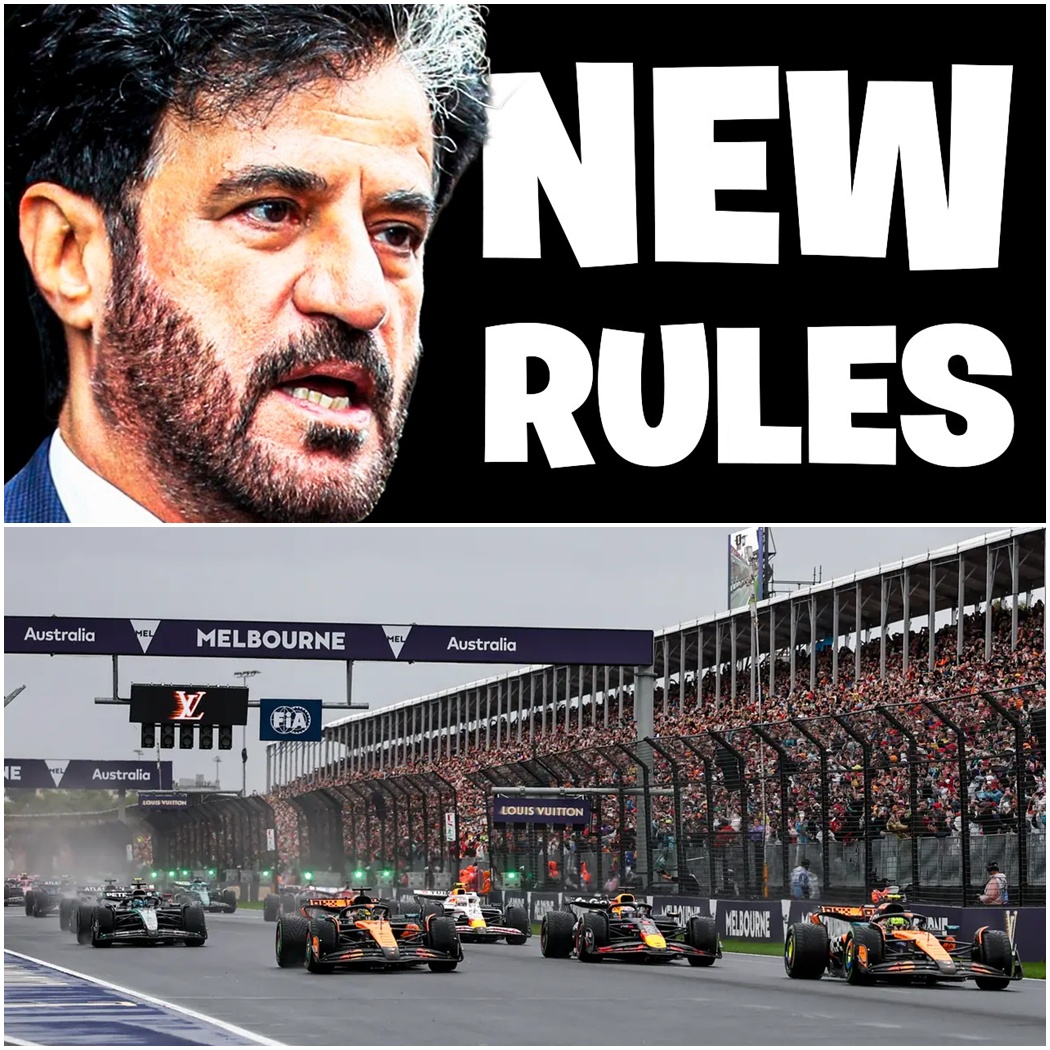
The dust has barely settled on the sun-baked tarmac of the Bahrain International Circuit. Pre-season testing is officially over, the massive transport crates have been packed, and the Formula 1 circus is making its long journey down to Melbourne for the highly anticipated Australian Grand Prix. The cars are locked in, the massive development budgets have been spent, and the teams believed they finally understood the competitive pecking order of the brand-new 2026 regulation era. But in an unprecedented and deeply dramatic twist, the FIA has just dropped an absolute bombshell.
Days before the first lights are set to go out at Albert Park, the governing body pulled the trigger on a massive, sweeping rule change. This is not just a minor administrative tweak or a subtle clarification of the wording. This is a fundamental tightening of the core 2026 regulations that strikes directly at the heart of car performance. For the brilliant engineers who spent years and millions of dollars meticulously crafting their aerodynamic and electrical concepts, this late-stage intervention is nothing short of a total nightmare. The rules of engagement have been violently altered, and the entire championship landscape may have just shifted overnight.

To truly understand the incredible gravity of this situation, we have to look closely at the three specific areas the FIA has aggressively targeted. First, they have completely banned the use of the low-drag “straight mode” at the race start. Under the original framework, teams had the capability to launch their cars off the starting grid with significantly reduced aerodynamic drag, allowing them to reach the crucial first braking zone at terrifying, unprecedented velocities. Now, every single car on the grid must start the race in a maximum downforce configuration. While this naturally provides more grip and stability off the line, it entirely neutralizes the raw, explosive top speed that some teams had built their entire launch strategies around.
Second, the FIA has implemented incredibly strict new controls over the active aerodynamics systems. The highly complex active aero elements are now governed by heavily tightened lateral G-force thresholds. If the car’s sensors detect a significant amount of cornering force, the low-drag configuration will automatically and forcefully close much earlier than previously permitted. This completely eliminates the tempting strategy of stretching the low-drag window through high-speed, sweeping corners, severely limiting the performance that can be extracted from those borderline aerodynamic transitions.
Finally, and perhaps most impactfully, mid-lap electrical energy deployment limits have been drastically cut. The maximum deliverable energy per lap has been aggressively adjusted downward, and the activation thresholds have been significantly tightened. This effectively outlaws the massive, sudden surges of battery power that teams were utilizing late on the straights to achieve staggering top speeds.
Why did the FIA feel compelled to intervene so drastically and so late in the game? The answer lies in the terrifying data generated during the Bahrain test and the highly sophisticated team simulations. The initial 2026 framework, when pushed to its absolute limits by the brightest engineering minds in motorsport, was producing a deeply alarming speed differential. Simulations and real-world telemetry revealed that the closing speed between a car with a fully charged battery running in low-drag mode and a heavily depleted car was exceeding a staggering 60 kilometers per hour.
In the high-stakes, millimeter-perfect world of Formula 1, a 60 km/h speed delta is not just a competitive nuance; it is a profound and terrifying safety hazard. Drivers were becoming increasingly vocal about the harsh reality of these closing speeds. Approaching a heavy braking zone while rapidly closing in on a much slower car at those differential velocities creates a massive risk of violent rear-end collisions and severe braking instability. The sheer unpredictability of the closing gaps made wheel-to-wheel combat dangerously erratic.

The FIA reviewed the telemetry, carefully listened to the panicked feedback from the drivers, and realized that the overtaking mechanics they had designed were creating an unbalanced and highly dangerous dynamic. They did not act blindly before testing; they waited to see the real-world numbers. Once those numbers confirmed their absolute worst fears, they dropped the hammer. This strict intervention forces the teams to completely smooth out their electrical deployment curves. The era of dramatic, video-game-style energy peaks and extreme straight-line speed differentials has been forcefully shut down before it even truly began.
The psychological and financial toll of this late-stage intervention cannot be overstated. When the FIA changes a fundamental rule after pre-season testing has firmly concluded, they trap the teams in a highly precarious position. The garages are closed. There is no extra track time allocated to validate these massive software and operational changes. Everything must now be entirely recalibrated through computer simulations and wind tunnel data alone.
If a specific team had secretly built their entire 2026 concept around a highly aggressive energy release profile and razor-thin aerodynamic timing, this single announcement just erased a massive portion of their hard-earned competitive advantage. Millions of dollars spent developing specialized engine mappings, torque delivery calibrations, and driver confidence protocols have been rendered completely useless in the blink of an eye.
Engineers are now scrambling in dark rooms in Milton Keynes, Maranello, and Brackley, desperately trying to rewrite their complex software codes to comply with the new tightened thresholds. But simulations are notoriously imperfect. A computer program simply cannot perfectly replicate the shifting track temperatures, the unpredictable crosswinds, or the bumpy, abrasive reality of a real-world street circuit. When the cars finally roll out of the pit lane in Australia, they will be running on software configurations that have never been physically tested under live, competitive conditions.
This lack of real-world validation makes the upcoming Australian Grand Prix the ultimate, brutal stress test. Albert Park is not a smooth, forgiving permanent race track. It is a characterful, notoriously bumpy street circuit lined with unforgiving concrete walls and absolutely zero margin for error.
To survive and thrive in Melbourne, a driver needs absolute, unwavering trust in their machinery. They need to know exactly how the heavy car will behave when they slam on the carbon brakes at 300 kilometers per hour. But now, that vital trust has been severely compromised. Does the driver genuinely trust that the active rear wing will automatically close at the precise right moment under the new lateral G regulations? Do they fully trust that their heavily modified energy deployment map will not suddenly leave them stranded and vulnerable on the main straight?
If the newly recalibrated software behaves unpredictably under heavy braking, a driver’s confidence will vanish instantly. We are going to witness a fascinating psychological battle inside the cockpits. The drivers who can adapt the fastest, who can absorb the shock of these regulatory changes without losing their nerve, will gain an invisible but massive advantage. Melbourne will not merely be a test of raw automotive speed; it will be a definitive test of human and mechanical adaptability in the face of sudden, massive uncertainty.
Beyond the immediate technical headaches, there is a much deeper, highly strategic element to the FIA’s timing. The governing body is not just reacting to a safety concern; they are actively shaping the commercial and competitive narrative of the entire 2026 era.
This new regulation cycle was heavily billed as a total reset for the sport. It is meticulously designed to introduce a fresh power balance, a completely new aerodynamic identity, and attract massive new automotive manufacturers. Audi is preparing its highly anticipated full factory entry, Ford is seamlessly aligning its massive branding with Red Bull Powertrains, and Honda is continuing its deep, successful involvement. These global titans are tying their prestigious reputations and marketing budgets to the success and fairness of this specific regulation cycle.
If one clever team had emerged from the Bahrain test with a massive, insurmountable advantage hidden within the gray areas of energy deployment or active aero timing, it could have instantly killed the excitement of the new era. Dominance at the very start of a regulation cycle dictates the entire storyline. It shifts investment, heavily influences sponsorships, and completely demoralizes the competition. By ruthlessly tightening the framework right now, the FIA has significantly reduced the probability of one team running away with the championship on debut. They are aggressively protecting the “show” and ensuring that the massive brands investing in the sport feel they have a legitimate fighting chance.
As the Formula 1 world holds its collective breath ahead of the Australian Grand Prix, the underlying tension is absolutely palpable. The smartest automotive engineers in the world have just had their wrists publicly slapped, and the clever gray areas they so brilliantly exploited have been aggressively sealed shut. When the red lights finally go out in Melbourne, we will discover the absolute truth. Will this unprecedented, late-stage intervention successfully level the playing field and deliver the thrilling, close-quarters racing we were promised? Or will it simply reveal that the truly dominant teams possess a structural brilliance that no sudden rule change can ever erase? The countdown to the ultimate reality check has officially begun.