The Death of DRS and the Dawn of Electric Warfare: Inside Formula 1’s Radical 2026 Revolution

For over a decade, the Drag Reduction System, universally known as DRS, has been the absolute defining feature of modern Formula 1 overtaking. It has been the guaranteed highway pass, the simple push of a button that famously flips open a rear wing flap, sheds crucial aerodynamic drag, and propels a chasing car past its helpless rival on a long straight. It was introduced to artificially spice up the racing show, but for many purists, it sanitized the art of the battle. It made passing too easy, too predictable, and heavily reliant on sheer top speed rather than daring late-braking maneuvers. But what if I told you that Formula 1 has just effectively killed the easiest way to overtake? The highly anticipated 2026 regulations are officially tearing up the established rulebook, replacing the familiar DRS flap-and-fly routine with a radically complex system that promises to plunge the sport into an era of unpredictable, high-stakes electric warfare. The upcoming season is not merely a technical evolution; it is a complete, foundational revolution that threatens to upend the entire grid hierarchy and redefine what it means to be a Grand Prix driver.
The sweeping changes begin fundamentally with the physical footprint of the cars themselves. For years, fans and drivers alike have consistently complained that modern Formula 1 machines have become far too heavy, excessively wide, and hopelessly cumbersome, resembling high-speed limousines rather than agile racing cars. The governing body has listened, mandating a drastic structural diet. The 2026 challengers will be noticeably shorter, significantly narrower, and a crucial thirty kilograms lighter. The sport has officially dubbed this the “nimble car” concept. This long-awaited reduction in mass and dimensions is designed to make the cars far more reactive, infinitely more spectacular to watch through tight inner-city street circuits, and much more responsive to the visceral inputs of the athletes sitting inside the cockpit. But while a lighter car is inherently a better racing car, the true, mind-bending innovation lies in how these new vehicles will aggressively slice through the air.
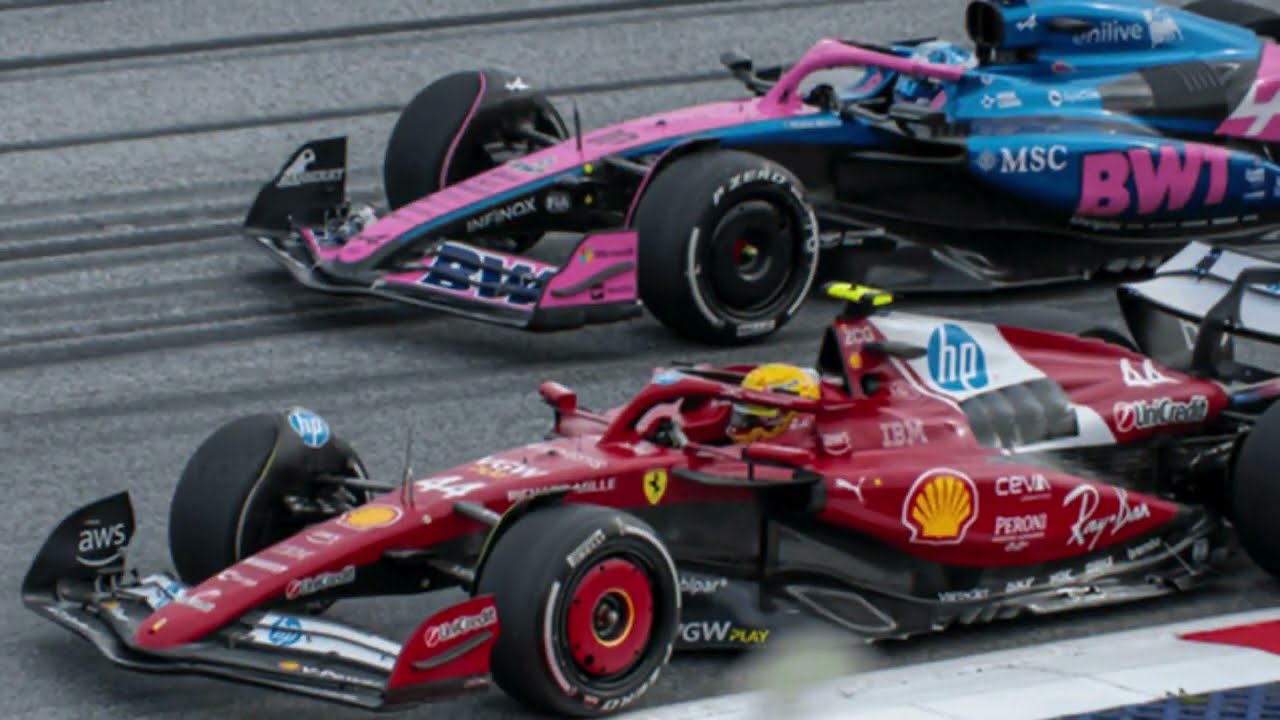
Welcome to the unprecedented era of fully active aerodynamics. Imagine a racing car that fundamentally changes its aerodynamic shape depending on what part of the circuit it is currently navigating. It sounds like something pulled directly from a science-fiction movie or a futuristic video game, but in 2026, it becomes reality. Through complex hydraulic and electronic actuators, the cars will feature shape-shifting front and rear wings. When plunging into the terrifyingly fast, sweeping corners, the cars will automatically engage “Z-Mode.” In this configuration, the wings become deeply angled and heavily aggressive, generating maximum aerodynamic downforce to glue the tires securely to the asphalt. Then, as the driver violently accelerates out of the corner and onto a massive straightaway, the car fundamentally transforms. It seamlessly transitions into “X-Mode,” completely flattening the wing elements and instantly dropping aerodynamic drag by an astonishing fifty-five percent.
The major twist that fundamentally alters the racing dynamic is that, unlike the old DRS rules which only granted a speed boost to a car within one second of the vehicle ahead, this new active aero system is available to every single driver, on every single lap, regardless of their track position. The artificial lottery of the one-second DRS window is dead. Because everyone inherently possesses the exact same straight-line aerodynamic configuration, you can no longer simply rely on shedding drag to breeze past a defending champion. You need something vastly more explosive. You need a weapon.
This brings us to the introduction of the brand new “Overtake Mode,” a feature that is poised to turn Grand Prix racing into a ruthless, 300-kilometer-per-hour game of strategic poker. Under the new engine regulations, if a pursuing driver is measured to be within one second of the car ahead at a specific detection point, they do not get a free aerodynamic pass. Instead, they unlock the ability to manually trigger a massive, full-electric surge. We are talking about an instantaneous deployment of 350 kilowatts of pure electrical energy—roughly translating to an astonishing 470 horsepower—propelling the car all the way up to speeds of 337 kilometers per hour.
Picture the terrifying intensity of this scenario: You are hunting down your bitter championship rival, sitting precisely zero point eight seconds behind their gearbox. The dashboard light aggressively flashes, signaling that the system is armed. You slam the overtake button, and the car violently launches forward with the brutal torque of a modern electric hypercar. But there is a massive, incredibly punishing catch. If you succumb to the adrenaline and deploy the electrical surge too early on the straight, you risk completely draining your battery reserves before you even reach the braking zone. If you hesitate and deploy the boost too late, the precious overtaking opportunity instantly vanishes. This is entirely distinct from the DRS autopilot of the past. It demands absolute precision, intense psychological calculation, and nerves of absolute steel. It pits the aggressive instinct of the attacker directly against the cold, calculating defense of the strategist.

To fully understand the magnitude of this challenge, we must look beneath the engine cover. The 2026 regulations enforce an earth-shattering shift in power unit philosophy. The most deeply complex and wildly expensive component of the current hybrid era—the Motor Generator Unit-Heat, or MGU-H—is being completely banned and removed from the sport. For years, the MGU-H has worked silently in the background, brilliantly harvesting waste heat energy directly from the roaring exhaust gases and using it to keep the turbocharger constantly spooled up. It effectively eliminated the archaic concept of “turbo lag” and smoothed out the incredible power delivery, making the cars remarkably driveable despite their monstrous horsepower outputs.
With the MGU-H permanently gone, that seamless power delivery is shattered. Brutal, unpredictable turbo lag could ferociously return, violently snapping the rear wheels under heavy acceleration and severely testing the reflex capabilities of the world’s greatest drivers. Without the constant harvesting of the exhaust heat, the drivers are suddenly tasked with an overwhelming mental workload. They will no longer just be managing rapidly degrading tires and maintaining complex racing lines; they will be actively juggling finite battery reserves, meticulously timing their electric boost deployments, and frantically managing massive kinetic energy recovery under heavy braking. If a driver miscalculates their deployment strategy and entirely runs out of electrical energy midway down a massive straight, their engine will aggressively derate, essentially turning their multi-million-dollar racing machine into a helpless sitting duck. In this new era, a single mathematical miscalculation inside the cockpit means your race is completely finished.
This entire revolution is built around a staggering new engineering philosophy: for the very first time in modern Formula 1 history, the total power output of the vehicle will be split nearly fifty-fifty between the traditional internal combustion engine and the electrical hybrid systems. The remaining kinetic electrical motor, the MGU-K, is seeing its power output nearly tripled to compensate for the engine changes. This seismic shift in powertrain dynamics drastically alters the competitive hierarchy of the current grid. Entire empires could easily fall, and dormant giants could rapidly awaken.
Consider the intensely specialized engineering profiles of the top teams. The mighty Mercedes-AMG Petronas Formula 1 team has historically been the undisputed master of hybrid engine technology. They dominated the dawn of the current turbo-hybrid era, and a regulatory shift that heavily prioritizes massive electrical deployment and extreme battery efficiency plays directly into the hands of their brilliant engine department located in Brixworth. Conversely, a team like Red Bull Racing, which has built its recent, crushing dynasty entirely upon the genius of unparalleled aerodynamic downforce and structural chassis mastery, is suddenly forced to completely adapt. Their historical trump card—aerodynamic perfection—is significantly muted by the sheer, terrifying importance of the new electric power war. Then there is the deeply passionate Scuderia Ferrari, a team historically capable of producing explosive, class-leading raw engine power, but often found violently struggling with strategic discipline. The 2026 regulations demand a perfect harmony between brutal speed and clinical, calculated energy management.
Ultimately, this incredible technological war will expose the unique psychological profiles of the drivers themselves. The sport will demand a fascinating new skillset that heavily rewards deep intelligence over sheer bravery. We will witness breathtaking intellectual battles on the asphalt. The reckless, hyper-aggressive attacker will constantly risk entirely draining their vital battery reserves in a desperate, early lunging maneuver, while the patient, calculating strategist will calmly wait, effortlessly harvest their electrical energy, and brutally strike only when their opponent is completely defenseless. Imagine the raw, unbridled, emotional aggression of a Charles Leclerc going head-to-head with the legendary, clinical, calculating precision of a seasoned Lewis Hamilton under these exact conditions. With significantly less “dirty air” disturbing the pursuing cars and a massive, overarching reliance on dynamic energy strategy, raw racing speed is simply no longer enough to guarantee a world championship.
As the motorsport world rapidly hurtles toward this massive regulatory reset, the global fanbase finds itself deeply and passionately divided. Is this the dawn of a brilliant, innovative new era that will finally produce the most spectacular, unpredictable, and intellectually demanding on-track racing in history? Or is it a step too far into the terrifying realm of over-engineered, artificially managed chaos? Whether you are a dedicated purist longing for the screaming V10 engines of old-school simplicity or a modern technophile entirely embracing the shape-shifting, electric-surging future of the X-Mode, one undeniable fact remains clear. The year 2026 is not simply the start of a brand new season. It is the violent, spectacular birth of a completely new Formula 1.








