The Dawn of a New Era: Chaos, Miracles, and the “Yo-Yo” Racing of the 2026 Australian Grand Prix
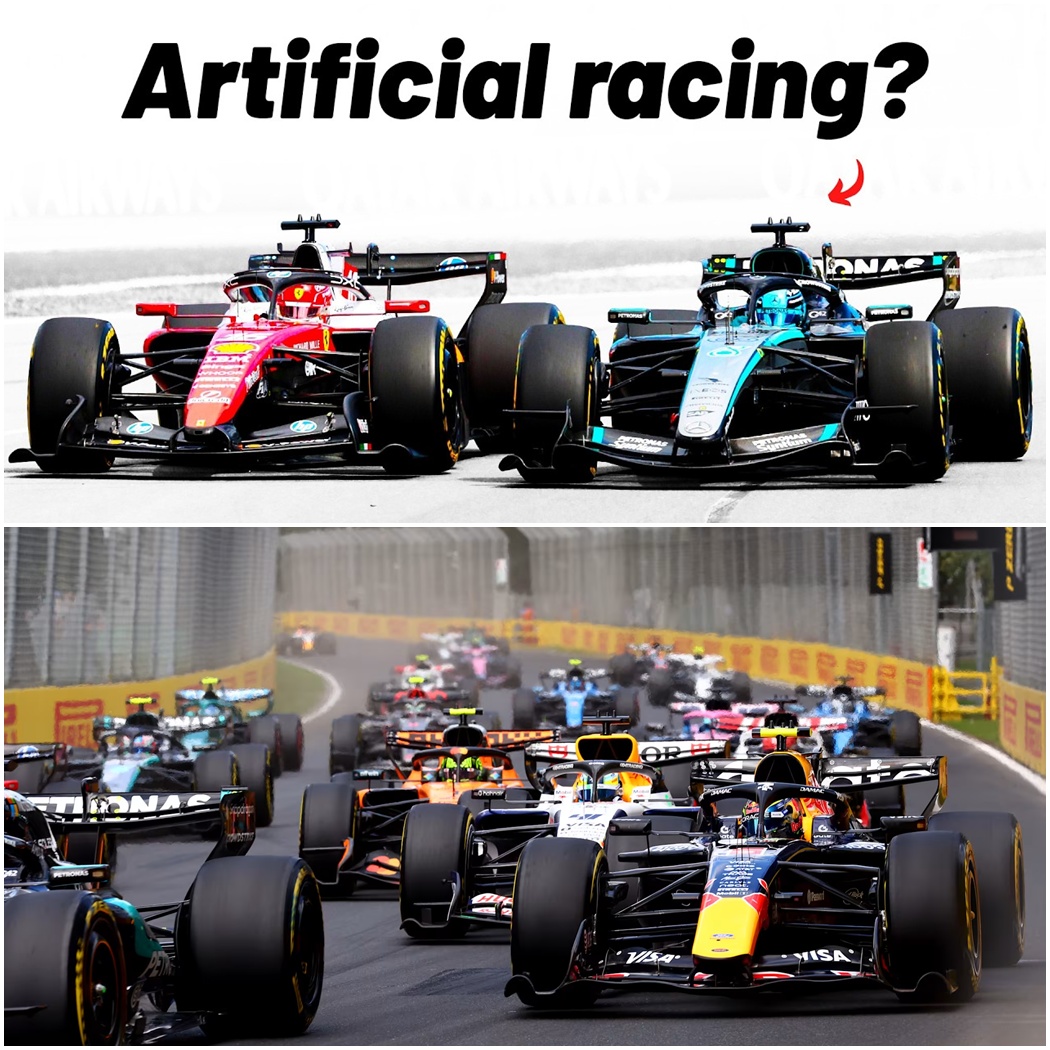
The roar that echoed across Albert Park this past Sunday wasn’t just the sound of twenty Formula 1 cars screaming toward the first corner; it was the sound of a sport reinventing itself. The 2026 Australian Grand Prix was more than just a season opener—it was a journey into the unknown. After years of speculation, technical deep dives, and grueling preseason testing, the new era of Formula 1 has finally arrived, and if the debut in Melbourne is anything to go by, we are in for a season of unprecedented unpredictability, technical wizardry, and a fair share of controversy.
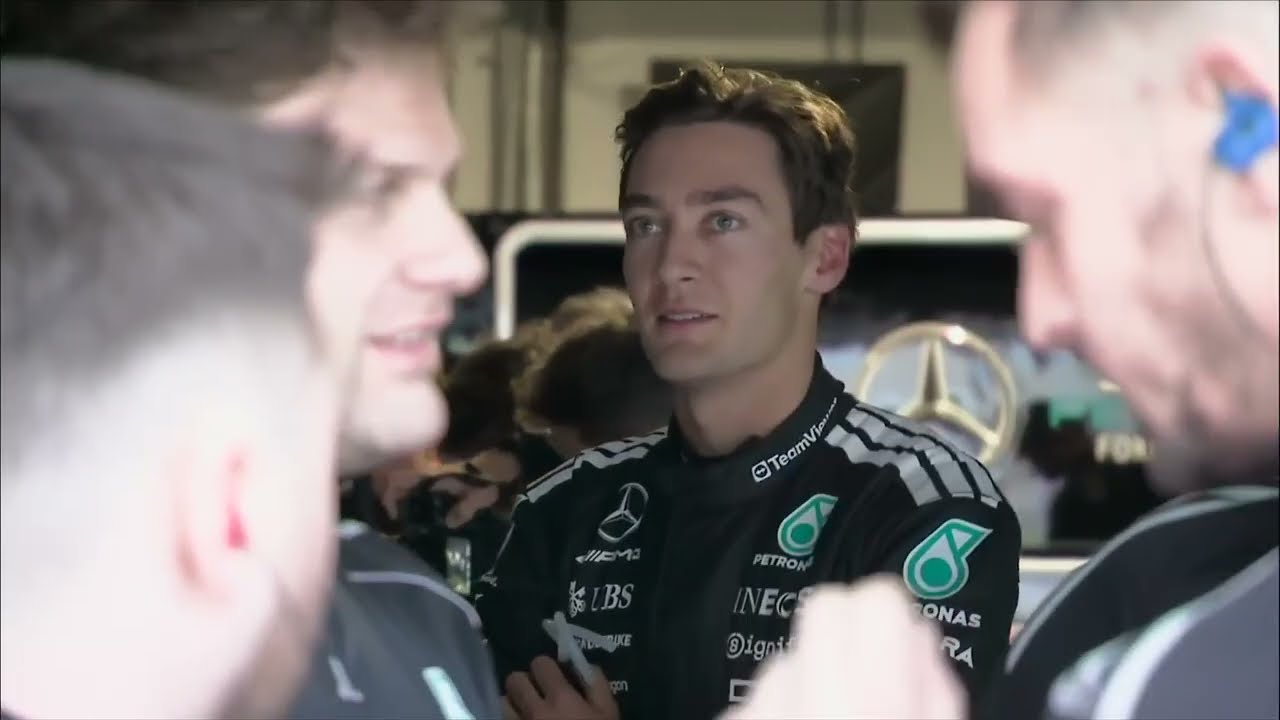
The atmosphere in Melbourne was electric, but underneath the celebration was a palpable sense of anxiety among the teams. The 2026 regulations represent the most significant shift in power unit technology in a generation, prioritizing a 50/50 split between internal combustion and electrical energy. As the lights went out, that anxiety transformed into pure, unadulterated chaos. The launch itself was a mess of “bogged down” engines and electrical glitches. Ferrari’s Charles Leclerc provided the early highlight, utilizing a smaller turbo design to rocket from fourth to first. It was a masterclass in optimization, yet it highlighted the steep learning curve for everyone else. George Russell, the eventual winner, revealed that his Mercedes almost failed him at the start due to an uncharged battery—a glitch that left him and his teammate, Kimi Antonelli, fighting from the back of the leading pack.
However, the most heart-stopping moment of the afternoon didn’t happen at the front of the field. It happened in the middle of the pack, where Liam Lawson’s car virtually anchored itself to the grid. While those immediately behind him managed to swerve, Franco Colapinto was essentially blindsided. In a moment that will be replayed for years, Colapinto exhibited what can only be described as superhuman reaction times to avoid a high-speed, static-car collision. It was a “near-miss” that could have turned the celebration of a new era into a somber reflection on safety. It served as a stark reminder that while these cars are marvels of engineering, the integration of such complex electrical systems still poses significant risks during the most vulnerable part of the race.
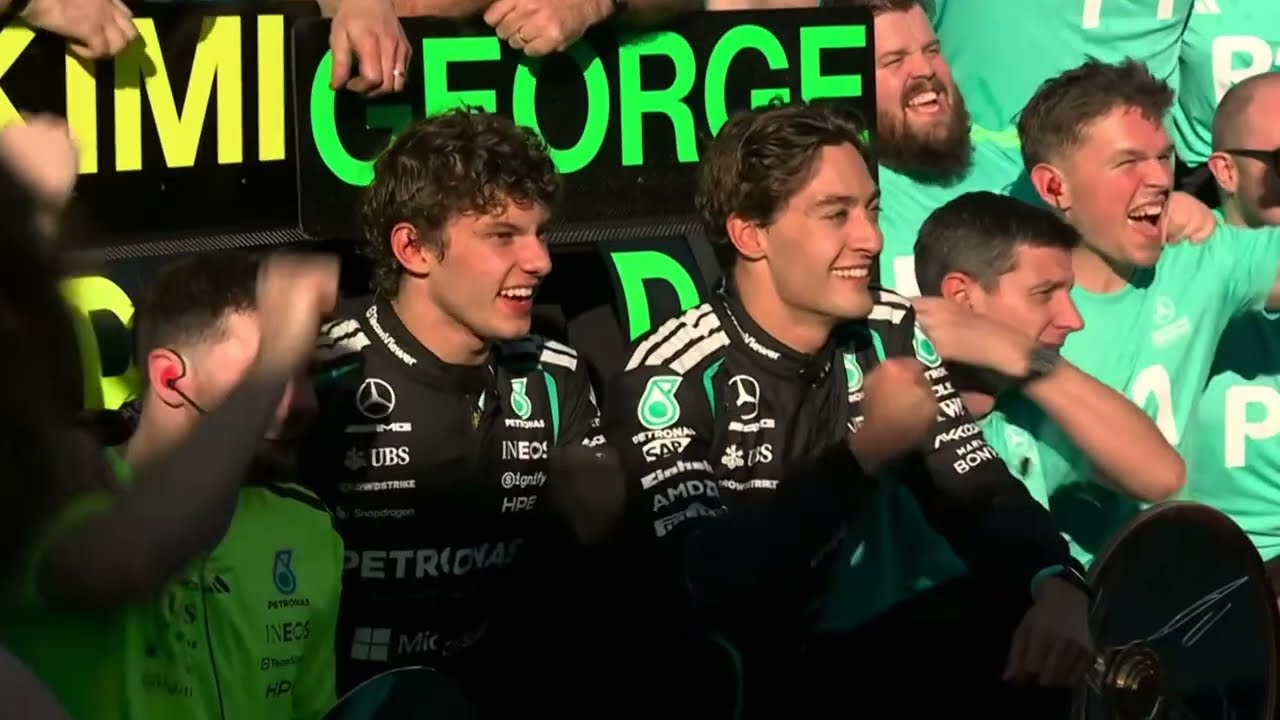
As the laps ticked down, it became clear that Mercedes had done their homework better than anyone else. Despite the early battery scare, the W17 proved to be a monster of efficiency. George Russell’s victory, backed by a stunning second-place finish from the rookie Antonelli, signaled a return to the dominant form of the early hybrid era. But should the rest of the grid be “doom and gloom”? Not necessarily. While Mercedes enjoyed an eight-tenth advantage in qualifying, much of that gap appears to be down to optimization rather than raw mechanical superiority. The development race for 2026 is a marathon, not a sprint, and Ferrari’s ability to hang onto the Mercedes’ coattails suggests that the “Silver Arrows” aren’t quite out of reach just yet.
Perhaps the most intriguing subplot of the weekend was the widening chasm between manufacturer teams and their customers. For the past several years, we’ve grown accustomed to seeing customer teams like McLaren challenge and even beat the factory Mercedes squad. In 2026, that parity has vanished. McLaren’s Andrea Stella looked visibly perplexed after qualifying, unable to explain why his cars were losing significant time on the straights despite running the exact same Mercedes power unit. It appears that the “secret sauce” of 2026 lies not just in the hardware, but in how the energy is harvested and deployed—a dark art that the factory teams seem to have monopolized for now.
Reliability, the great bogeyman of the 2026 regulations, was surprisingly less of a factor than many predicted. While we didn’t see the double-digit retirements some feared, the “casualty list” was still significant. Oscar Piastri’s home race ended in heartbreak before it even started, as a bizarre surge of electrical energy sent him into the wall on the reconnaissance lap. Cold tires and unpredictable power delivery are a lethal combination, and Piastri was its first high-profile victim. Meanwhile, the Aston Martin-Honda partnership looked less like a race team and more like a mobile laboratory, with Fernando Alonso and Lance Stroll treating the Grand Prix as an “extended preseason” to gather data for their struggling power unit.
Then, there is the question of the “racing” itself. Lap one was arguably one of the most chaotic and thrilling spectacles in the history of the sport. Drivers were playing with their “new toys”—the various electrical deployment modes—and the result was a flurry of overtakes. Lewis Hamilton, in his first outing with Ferrari, looked like a man possessed, slicing through the field with clinical precision. But as the race settled, a new phenomenon emerged: “Yo-Yo” racing.
The 2026 cars allow for frequent overtaking, but there is a growing debate about whether these passes feel “earned.” With “super clipping”—where a car ahead runs out of energy and becomes a sitting duck on the straights—overtaking sometimes felt a bit too easy. George Russell noted that the racing felt a bit “artificial” at times, as drivers simply waited for their opponent’s battery to drain before moving past. It’s a philosophical hurdle that Formula 1 will have to clear: do fans want more overtakes if they come at the expense of the “heroic” defensive stands that defined the sport’s history?
By the second half of the race, the “experimentation” had ended. The field settled into a rhythm as drivers defaulted to similar energy-recharge strategies, and the gap between the leaders and the midfield stabilized. Charles Leclerc finished over 15 seconds behind the Mercedes duo, a gap that Ferrari’s strategic gambles couldn’t bridge. While the Scuderia opted not to split their strategy under the Virtual Safety Car, the reality is that Mercedes had more than enough performance in reserve to dictate the terms of the engagement.
As the sun set over Albert Park, the paddock was left with more questions than answers. Is the Mercedes engine compression ratio trick real? Can McLaren solve their straight-line deficit? Will Honda ever find the reliability they need to compete? Most importantly, how will the FIA respond to the safety concerns surrounding grid launches?
The 2026 Australian Grand Prix wasn’t a perfect race, but it was a fascinating one. It was a raw, unfiltered look at the future of motorsport—a world where the winner is determined as much by the lines of code in their software as by the line they take through a corner. We saw flashes of brilliance, moments of terror, and a glimpse of a championship battle that, despite the Mercedes 1-2, is far from over. Formula 1 is back, it is different, and it is undeniably exciting. The journey of discovery has only just begun, and the next stop on the calendar can’t come soon enough.








