The Silent Succession: Has Toto Wolff Already Moved On From George Russell at Mercedes?
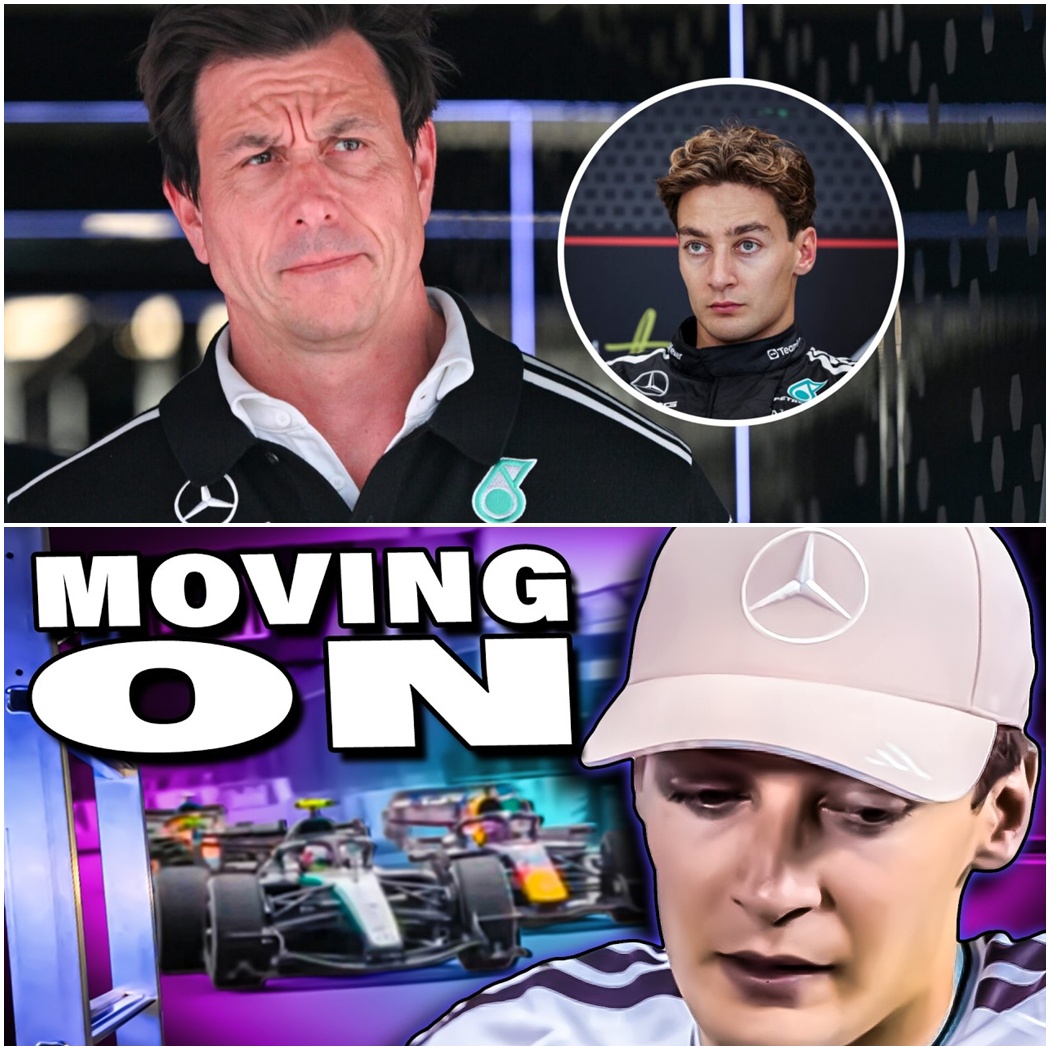
Formula 1 is a sport fundamentally built on the concept of succession. For decades, fans and pundits have watched the delicate, often brutal transition of power from established veterans to hungry newcomers. Yet, even by the ruthless standards of elite motorsport, the unfolding drama within the Mercedes-AMG Petronas Formula 1 Team during the early stages of the 2026 season feels remarkably cold, meticulously calculated, and incredibly fascinating. The central question echoing through the paddock is no longer about whether George Russell will eventually lead the Silver Arrows. Instead, observers are beginning to ask a far more chilling question: Has Toto Wolff already mentally moved on from George Russell?
This is not an exaggeration designed to generate cheap controversy, nor is it an attempt to prematurely dismiss Russell’s undeniable talent. But the facts on the ground are impossible to ignore. Just four races into the highly anticipated 2026 season—a year many assumed would be a straightforward coronation for Russell as the undisputed team leader—the narrative has been completely hijacked. Teenage sensation Kimi Antonelli has not just arrived; he has absolutely dominated. With three victories, three consecutive pole positions, and a commanding lead in the drivers’ championship, Antonelli is rewriting the script. No one, perhaps not even Wolff himself, expected the young Italian to look this comfortable, this quickly.
Back in January, the prevailing sentiment across the motorsport community was that the 2026 regulation changes might lead to a somewhat predictable season, at least within the Mercedes garage. With Lewis Hamilton having officially departed for Ferrari, the kingdom was finally supposed to belong to Russell. He was the proven race winner, the loyal company man who had bided his time at Williams, and the established star ready to carry the legacy forward. Antonelli was viewed as a bright prospect, certainly, but one who would need a year or two to find his footing against the heavyweights of the grid.
Instead, Antonelli currently sits over 20 points ahead of his highly experienced teammate. This is a staggering margin this early in the calendar. It represents a paradigm shift that has left Russell facing arguably the most disorienting and stressful period of his entire career. Former world champion Damon Hill recently offered a poignant observation, noting that the fiercely confident, razor-sharp version of George Russell we saw in previous years seems to have mysteriously gone missing. Juan Pablo Montoya echoed a similar sentiment, suggesting that Russell’s mindset might be in the wrong place. But to blame this purely on psychology is to miss the structural reality of what is happening inside the garage. The truth is that Antonelli is simply performing at a level that is forcing the entire team to orbit around him.
The recent Miami Grand Prix offered a perfect microcosm of this shifting power dynamic. The Miami Autodrome is a circuit that Russell openly admits he does not love, while Antonelli clearly thrives on its technical complexity. Despite this, Russell fought hard to secure a respectable fourth-place finish. However, he freely admitted that had Max Verstappen and Charles Leclerc not suffered late-race issues, he would have likely finished an anonymous sixth.
But the most telling detail from Miami was not the final classification; it was how Russell found his pace. Midweek, Russell and his side of the garage made significant changes to the car’s differential and brake bias, unlocking a crucial chunk of lap time. In one sense, this is the hallmark of a great driver adapting under immense pressure. But the underlying reality is a tough pill to swallow: Russell found that critical lap time by moving his car’s setup much closer to Antonelli’s direction.
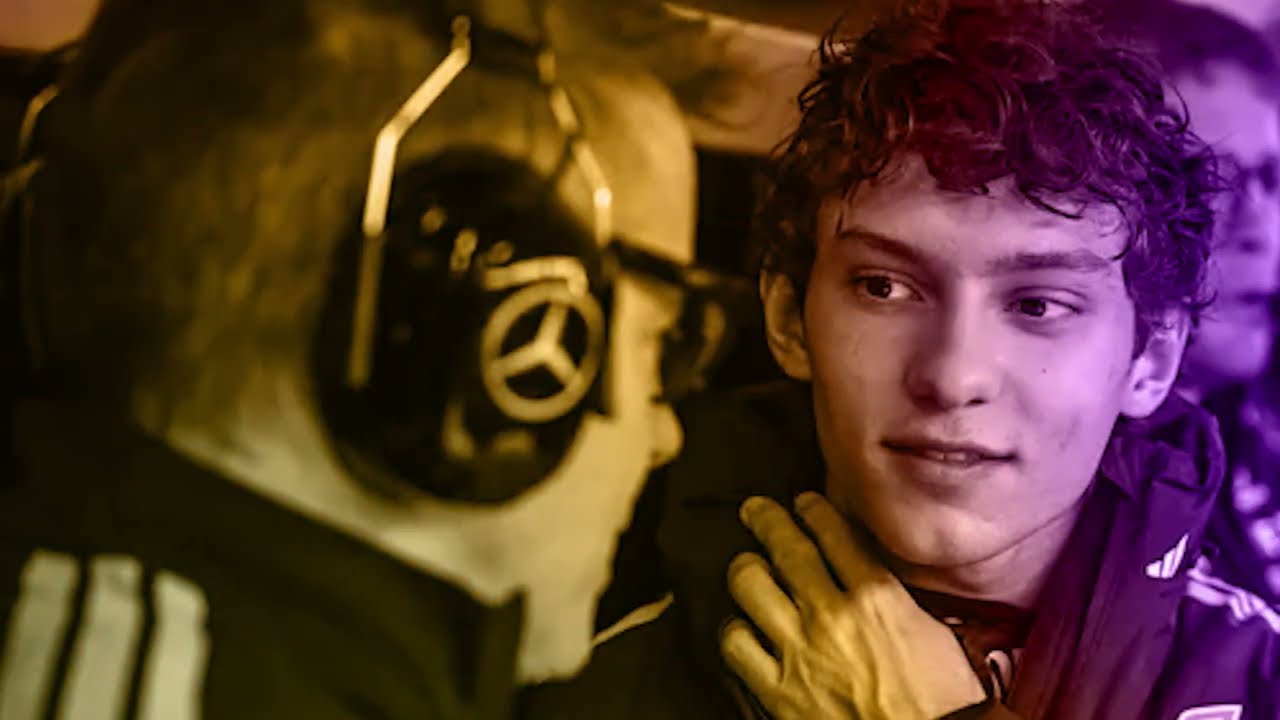
When Russell finally executed the lap, his radio message was incredibly revealing: “Yeah, that was weird.” Here we have two drivers in identical machinery, with access to the exact same data, telemetry, and simulator facilities. The vastly more experienced driver, the presumed team leader, was forced to abandon his own development path and adopt the rookie’s setup to find competitive pace. This tells us two things. First, Antonelli might simply possess a more natural read on the 2026 car. Second, and more importantly, it shows that the engineering trend and the core developmental hope of the Mercedes garage are already firmly aligning with the Italian teenager.
If you want to understand precisely when Toto Wolff might have made his choice, you have to rewind to 2024, to the exact moment Lewis Hamilton shocked the world by announcing his defection to Ferrari. Amidst the chaos of that announcement, the media focused heavily on who would replace the seven-time champion. Would it be a seasoned veteran or a bold rookie? But the most critical piece of the chessboard was barely discussed: What would happen to Peter “Bono” Bonnington?
Bonnington is not just any race engineer. He is an absolute institution within the sport. Having guided Michael Schumacher and then partnering with Lewis Hamilton for six world championships, Bono has spent a decade and a half operating inside the minds of the greatest drivers in history. When Hamilton left, Toto Wolff fiercely locked Bono down, ensuring he did not follow his long-time friend to Maranello.
But here is where the story gets structurally vital. When the dust settled, Wolff did not assign his most valuable, championship-winning engineering asset to George Russell, the man who was supposed to be the new team leader. Instead, he commissioned Bono to work with the complete rookie, Kimi Antonelli.
This was a profoundly loud statement of intent. Russell was left with his existing engineer, Marcus Dudley, who is perfectly capable but lacks the legendary pedigree of Bonnington. Wolff looked at his organization, determined where the biggest return on investment would be, and pointed his ultimate weapon directly at the 18-year-old. Bono himself noted the stark difference in assignments. With Hamilton, Bono knew exactly what the driver was thinking without a word being spoken. With Antonelli, Bono was handed a blank page—a terrifying but thrilling construction project. Bono’s methodical, firm guidance has accelerated Antonelli’s development at a terrifying pace. Wolff didn’t just give Antonelli a seat; he gave him the absolute best architect in the business to build his foundation.
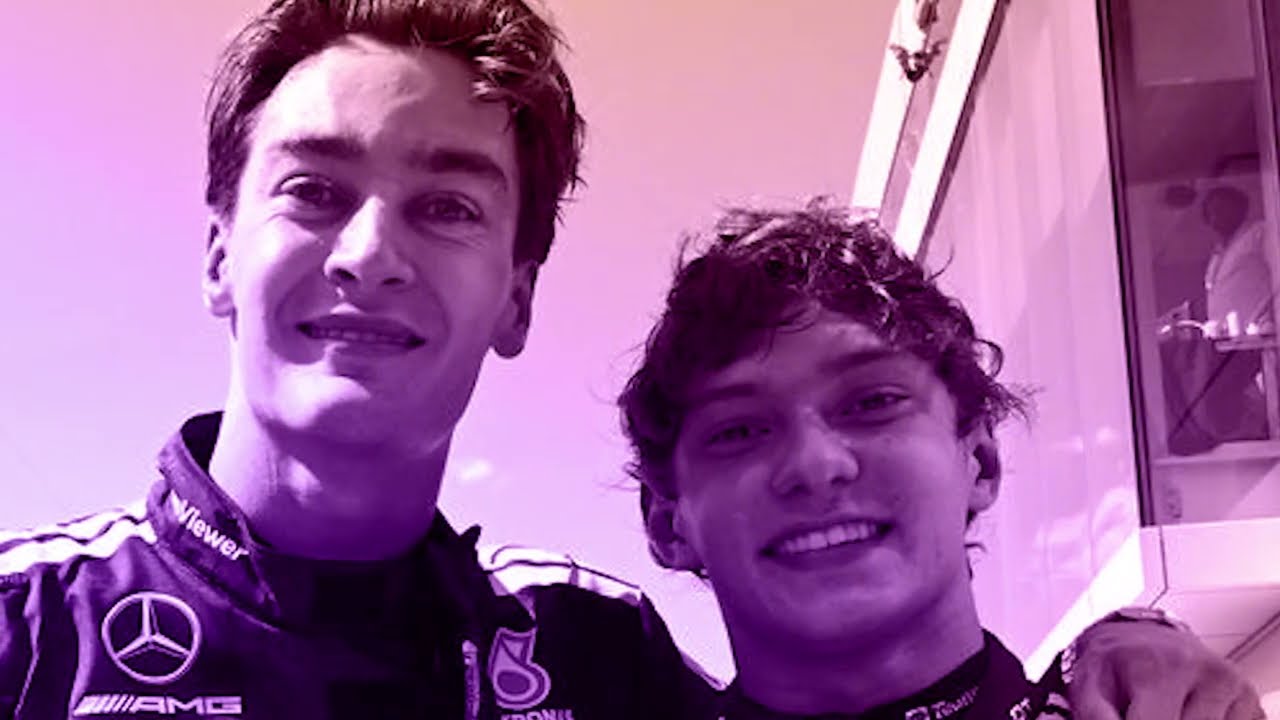
Beyond the engineering assignments, the contractual situations at Mercedes reveal a cold, hard truth about Wolff’s management style. After months of public dilly-dallying, both Antonelli and Russell were announced for the 2026 season only. There were no long-term, multi-year guarantees publicly cemented for Russell. Instead, Russell was left to explain to the media that he has an option for 2027, provided he hits specific, undisclosed performance targets in 2026.
If Russell entered this season assuming that Antonelli would need a full year to find his feet, making those performance targets easily achievable, he miscalculated terribly. Wolff operates on a philosophy of optionality. He despises having his hands tied by long-term, emotional commitments. By keeping Russell on a tight leash, Wolff retains the ultimate power in the driver market.
This optionality also plays perfectly into the ever-present specter of Max Verstappen. While the reigning champion is currently enduring a surprisingly winless start to 2026 with a struggling Red Bull, reports of an exit clause around the summer break refuse to die. Wolff keeps floating complimentary quotes about Verstappen to the media, keeping the door perpetually ajar. Whether Verstappen actually walks through that door, or prefers to race GT cars in his spare time, is almost irrelevant. The mere threat of Verstappen—or even wild, farcical rumors of a Hamilton return—serves Wolff’s purpose. It floods the media zone, keeps the pressure squarely on his current drivers, and ensures that Mercedes holds all the leverage. Wolff is not building a team around Russell’s feelings; he is building a flexible empire ready to capitalize on the best available option at a moment’s notice.
This brings the entire narrative to a critical boiling point: the upcoming Canadian Grand Prix. Historically, Montreal has been a phenomenal hunting ground for George Russell. He secured a brilliant victory there last year from pole position and grabbed a hard-fought podium the year before in a vastly inferior car. He has openly described his qualifying laps at the Circuit Gilles Villeneuve as some of the most exhilarating of his life.
However, Canada also holds profound significance for Antonelli. It was on this very podium that the young Italian tasted his first top-three finish, fending off McLaren’s Oscar Piastri in a breathtaking display of defensive driving that earned him massive respect across the paddock.
The stakes for the upcoming sprint weekend in Montreal could not possibly be higher for Russell. The current points gap between the two teammates is hovering dangerously close to the 25-point mark—a full race victory. In the mathematical and psychological warfare of a championship fight, a 25-point deficit to your teammate is a narrative cliff. Once a gap becomes that large, the team naturally, almost unconsciously, begins to prioritize the leading driver in strategy, upgrades, and development focus.
If Antonelli goes to one of Russell’s favorite circuits and defeats him cleanly, the momentum shift might become irreversible. It would signal to the entire paddock that the torch has not just been passed, but forcefully taken. Furthermore, with massive aerodynamic upgrades expected from rival teams like Ferrari, Audi, and Honda following the Canadian race, Mercedes’ absolute dominance may narrow. Russell has a rapidly closing window of opportunity to capitalize on front-row lockouts before the competition catches up.
Has Toto Wolff explicitly stated that he has moved on from George Russell? Absolutely not. A political operator of Wolff’s caliber—one of the last true heavyweight dinosaurs of the paddock—never announces such things out loud. He will continue to offer public praise, call Russell a “killer” on track, and speak warmly of their future together.
But in Formula 1, actions have always spoken louder than press releases. Wolff engineered a contract that offered no absolute guarantees. He took the team’s most legendary race engineer and gifted him to the rookie. He watched as his experienced veteran was forced to copy the teenager’s setup just to keep pace.
If George Russell is to survive this internal coup, he cannot rely on team loyalty or past promises. He must channel the ruthless, singular focus that originally earned him his seat, put his head down, and start delivering undeniable results, starting immediately in Montreal. If he complains, if he hints at internal sabotage, or if he allows the pressure to consume his public persona, Wolff will simply exercise his cherished optionality. The transition may have already silently begun, and if Russell blinks now, he will find himself written out of the Mercedes dynasty just as it begins its next golden era.








