It Wasn’t the Kennedy Curse—It Was Kennedy Carelessness SS
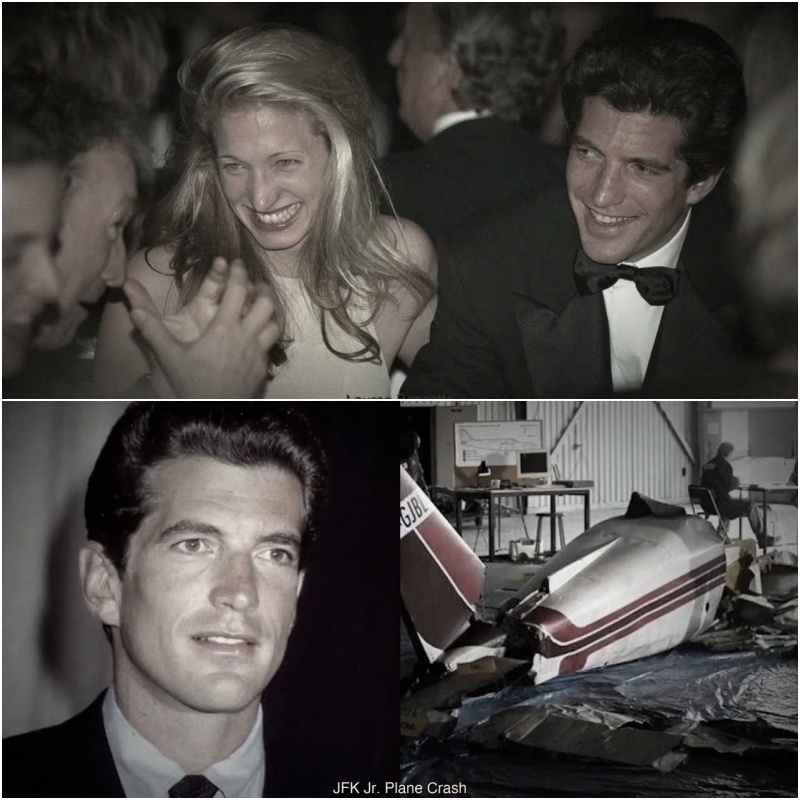
On July 16th, 1999, Anne and Richard Bet lost both of their daughters in a single night. Lauren was 34. Carolyn was 33. [snorts] The world covered the story for weeks, but it covered it as a Kennedy story, and the pilot’s last name swallowed everything else, including the two women who died because of his decisions.
This is about a specific chain of choices made by one unqualified pilot that killed three people. And it’s about what those choices cost a woman named Carolyn Bet Kennedy, someone the media reduced to a fashion footnote and a famous man’s wife when she was a victim of someone else’s recklessness who deserved far better from history.
Carolyn grew up in Greenwich, Connecticut, the youngest of three daughters raised by Anne Freeman and Richard Bet. The family was close-knit and grounded. Achievement mattered. Spectacle didn’t. After Anne and Richard divorced, Anne remarried, but the framework around those three girls held firm.
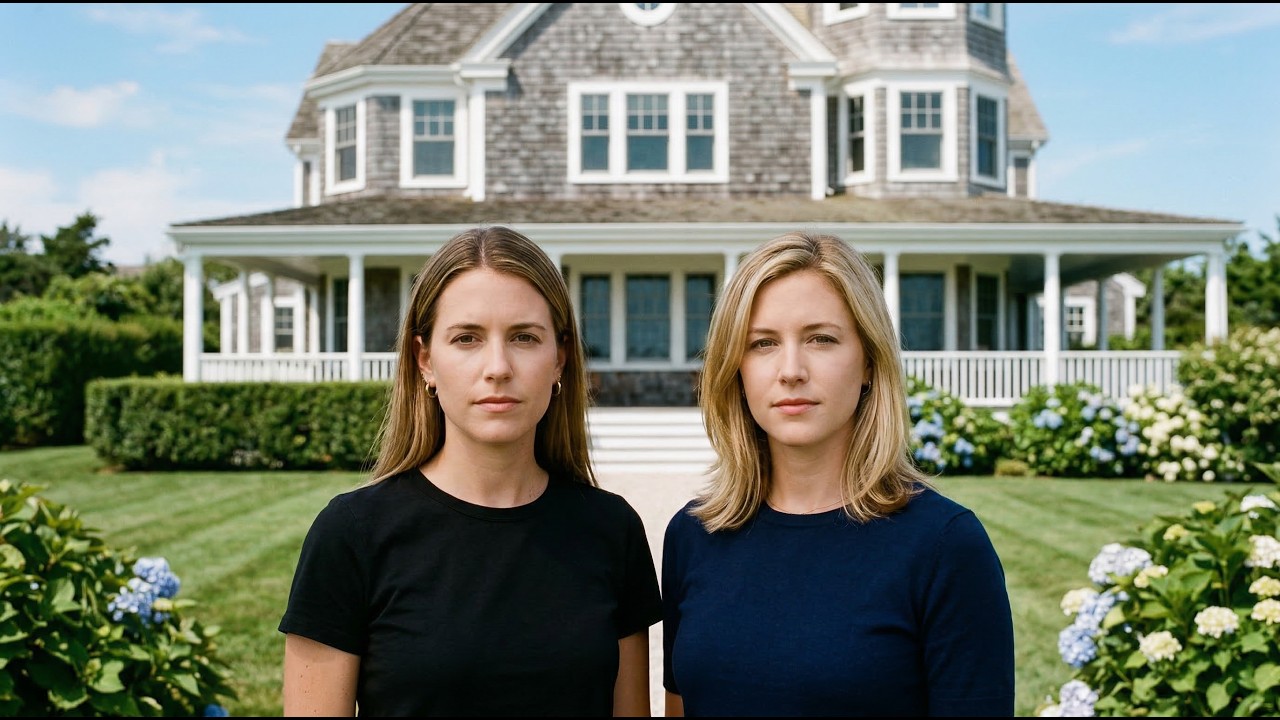
Lisa the eldest, Lauren the middle child, Carolyn the youngest. They attended good schools and moved into professional lives with the confidence of women who’d been given real advantages and intended to earn their own way. Caroline’s career at Calvin Klein, where her intelligence and composure made her effective in the demanding world of fashion publicity, brought her into the orbit of New York’s most visible people.
What shaped the last 3 years of her life, though, had nothing to do with clothing or celebrity. It was a marriage and the machinery of fame that came permanently attached. She and John F. Kennedy Jr. married on September 21st, 1996 in a secret ceremony on Cumberland Island, Georgia. The island is accessible only by boat, and they chose it for one reason, desperation for a single day the cameras couldn’t reach.
That desperation tells you everything about what Carolyn’s daily existence had already become by the time she said her vows. Paparazzi trailed her through the streets of Tribeca on foot. Photographers stationed themselves outside their apartment on North Moore Street like centuries pulling permanent shifts. Walking to get coffee meant being photographed, cataloged, and dissected.
Her outfits became headlines. Every appearance was processed through whatever tabloid narrative was running that particular week. Her personhood erased in favor of her image. A woman stepping out to run errands in lower Manhattan became public property, tracked, appraised, consumed. Carolyn didn’t choose fame.
She married a man she loved, and fame swallowed her as a consequence. The distinction matters because it shapes everything about what happened on July 16th. She entered a world she hadn’t built and couldn’t control. And by 1999, the toll of that world was visible to anyone close to the couple. Friends and family could see the strain that relentless media surveillance had carved into their marriage.
Unverified tabloid claims about Carolyn’s private health or habits have no place in a factual account of that evening, and they won’t appear here. The documented record shows a woman enduring extraordinary sustained pressure. Scrutiny that would have broken most people far sooner with diminishing space to breathe and no obvious exit.
Her husband, meanwhile, was chasing a very different kind of escape. John Fitzgerald Kennedy Jr. had spent 38 years building an identity larger than his inheritance, and nothing he built could outrun the shadow. George Magazine, the glossy political publication he’d founded, attracted attention more for its creators bloodline than its journalism.
Universally described as handsome, charming, and genuinely kind, Kennedy also carried the particular restlessness of a man told since birth he was destined for greatness without anyone specifying what that meant. He kayaked. He paraglided. He rollerbladed through Manhattan traffic with the obliviousness of someone who’d never been told no by anyone except his mother.
and his mother had told him no about one thing above all else, flying. Jacqueline Kennedy Onasses died of non-hodkin lymphoma on May 19th, 1994. While she lived, Jon stayed out of cockpits. She forbade it. Jackie had buried a husband assassinated beside her. She’d buried a brother-in-law shot in a hotel kitchen.
She understood with the hard clarity of someone who’d survived more violent loss than most people can fathom that the men in her family weren’t stalked by supernatural misfortune. They were drawn to risk. They moved through the world wearing an inherited sense of invincibility that she recognized as lethal. She saw that same quality in her son.
the paragliding, the adventure sports, the push against every edge of safety. So she told him to stay on the ground and while she drew breath, he obeyed. Four years after her death in April 1998, he earned his private pilot certificate. The restraint evaporated the moment the person enforcing it was gone.
Kennedy didn’t ease into flying with the humility of someone who grasped why his mother had been afraid. He chased it with appetite, upgrading from a simpler Cessna to the more complex Piper Saratoga 2HP in under two years, pressing into conditions that tested the limits of his modest training. Jackie had been right.
She’d been dead 4 years, and she was still right. But a private pilot certificate isn’t an instrument rating. That gap, technical sounding, bureaucratic, is the single most important fact in this entire story. And it’s the fact that every Kennedy curse narrative exists to conceal. A private pilot certificate under visual flight rules allows a pilot to fly when they can see the horizon, the ground, the line where Earth meets sky that keeps the human brain oriented in three-dimensional space.
An instrument rating certifies a pilot to fly blind using cockpit gauges alone to maintain altitude, heading, and attitude when the world outside the windshield has dissolved into featureless gray. Kennedy held the first. He never obtained the second. In aviation’s blunt terminology, he was a fair weather pilot.
His total flight time at the time of the crash sat at roughly 310 hours. Flight instructors call the window between 200 and 500 hours the killing zone. A range where pilots have accumulated enough experience to feel confident and nowhere near enough to handle genuine emergencies. More broadly, pilots with between 100 and 500 hours account for a disproportionate share of fatal general aviation accidents because they’ve shed their beginner’s caution without replacing it with real skill.
Kennedy sat squarely in that statistical danger zone, and his time in the specific aircraft made the picture worse. He’d owned the Piper Saratoga registration N9253N for roughly 2 months. It was a step up in complexity from his Cessna, a high performance machine that demanded more from the pilot in workload management and situational awareness.
Crucially, the Saratoga came equipped with a functioning autopilot system. Properly engaged, that autopilot could maintain altitude and heading through exactly the kind of disorientation that would kill everyone aboard. Postc crash analysis confirmed that nothing about the airplane failed on July 16th.
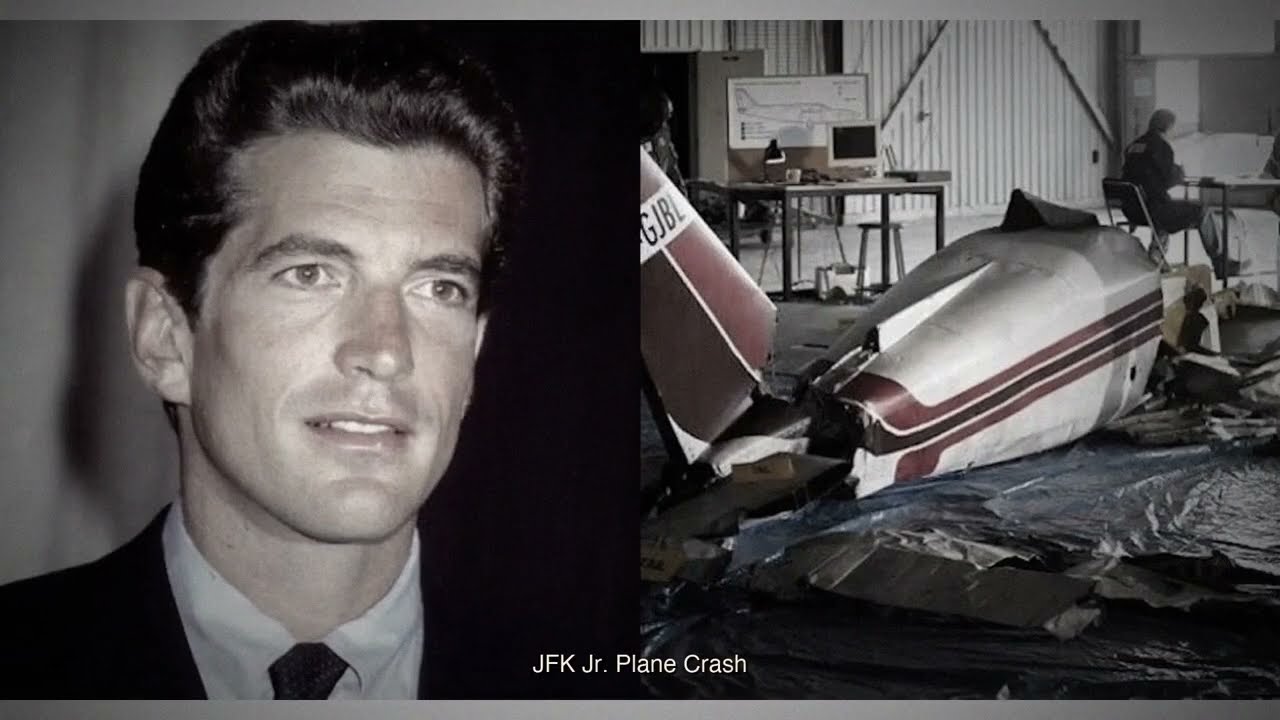
The engine was running at impact, the instruments worked, the autopilot was available, and never switched on. Kennedy had also broken his ankle in a paragliding accident weeks before and was wearing a cast, a detail that matters on two levels. The cast likely compromised his feel on the rudder pedals during precision flying, and the ankle injury was the specific reason his flight instructor had been riding along on recent trips, sitting in the right seat, because Kennedy was physically compromised.
On the evening of July 16th, that instructor offered to come along for the flight to Martha’s Vineyard. Kennedy said no. From the right seat, an experienced instructor could have monitored the instruments, caught the first tremor of spatial disorientation, taken the controls, or simply reached over and engaged the autopilot.
Any one of those interventions would almost certainly have kept everyone alive. Kennedy turned the offer down. He wanted to make the flight alone. Carolyn had no say in that decision. Neither did Lauren. Two women’s lives hung on one man’s refusal to accept help, and neither was asked. On the same day, a second warning came from a separate source, an experienced pilot who learned of Kennedy’s plan and advised against it.
Summer haze over the New England coastline was expected to be heavy that Friday evening. Visibility over open water, where no ground lights or terrain features exist to anchor a pilot’s eye, would degrade severely after sunset. This experienced aviator recognized the conditions as unsuitable for a VFRON flight and said so.
Kennedy heard the assessment and dismissed it. his mother’s lifelong prohibition. A fellow pilot’s direct warning, his own instructor’s offer to sit in the right seat, three separate off-ramps, each one clearly marked, each one leading to survival. He walked past all three. Then the weather itself, observable to anyone standing on the tarmac at Essex County Airport in Caldwell, New Jersey that Friday evening, became a fourth.
Warm air and stubborn haze had blanketed the region all day and weren’t improving as evening crept in. Sunset in the New York New England corridor on July 16th, 1999 fell at 8:14 p.m. local time. By the time Kennedy’s departure window arrived, civil twilight was fading and the last usable natural light was draining from the sky.
Along the planned route over Long Island Sound and Buzzard’s Bay toward Martha’s Vineyard, the atmosphere carried layered summer haze of exactly the type that erases the boundary between ocean and sky. No defined horizon, no separation between air and water. For a VFRON pilot, these conditions were functionally equivalent to flying blindfolded.
The departure had already been delayed, pushing the flight deeper into darkness. Conflicting accounts attribute the delay to different causes. Some sources point to Caroline’s late arrival at the airport, others to Kennedy’s scheduling, and the specific cause matters less than the consequence.
Every additional minute on the ground meant worse visibility, less residual light, and conditions growing steadily more lethal for a pilot without instrument certification. The delay didn’t cause the crash, but it tightened the margins within which disaster could still be avoided. And by 8:38 p.m., there were no margins left at all.
For Caroline, the hours before boarding remain contested in ways that demand honesty rather than dramatic invention. Multiple accounts suggest she may have been reluctant to fly that night, and that version resonates powerfully as yet another warning Kennedy overrode. But the available accounts of her behavior that evening directly contradict each other.
One holds she didn’t want to go. Another claims she delayed departure by going shopping. A third indicates she was willing to fly even at the late hour. These versions can’t all be accurate and none has been verified by NTSB investigators or by named on therecord witnesses with direct knowledge of those final hours.
What can be stated with certainty is that Carolyn bet Kennedy boarded the aircraft. Whatever she felt in that moment, trust in her husband, resignation, fear, exhaustion, love belongs to her and to her alone. Claiming to know her mind is something the tabloids did to Carolyn for 3 years straight. It won’t happen here.
Lauren Bet was already aboard. She was on the plane for the most mundane reason imaginable. The flight plan included a stop at Martha’s Vineyard to drop her off before Jon and Carolyn continued to Hyannisport for a Kennedy family wedding the next day. Lauren needed to get to the vineyard. Her sister and brother-in-law were heading there.
She accepted the ride the way anyone would accept a ride from family. There was no reason for an investment banker to evaluate a pilot’s instrument rating to check the coastal weather forecast to calculate the risk of flying VFR over open water after dark. She was a passenger. She trusted family. Lauren Bet had earned her MBA from the University of Michigan and built a career at Morgan Stanley Dean Witter in New York.
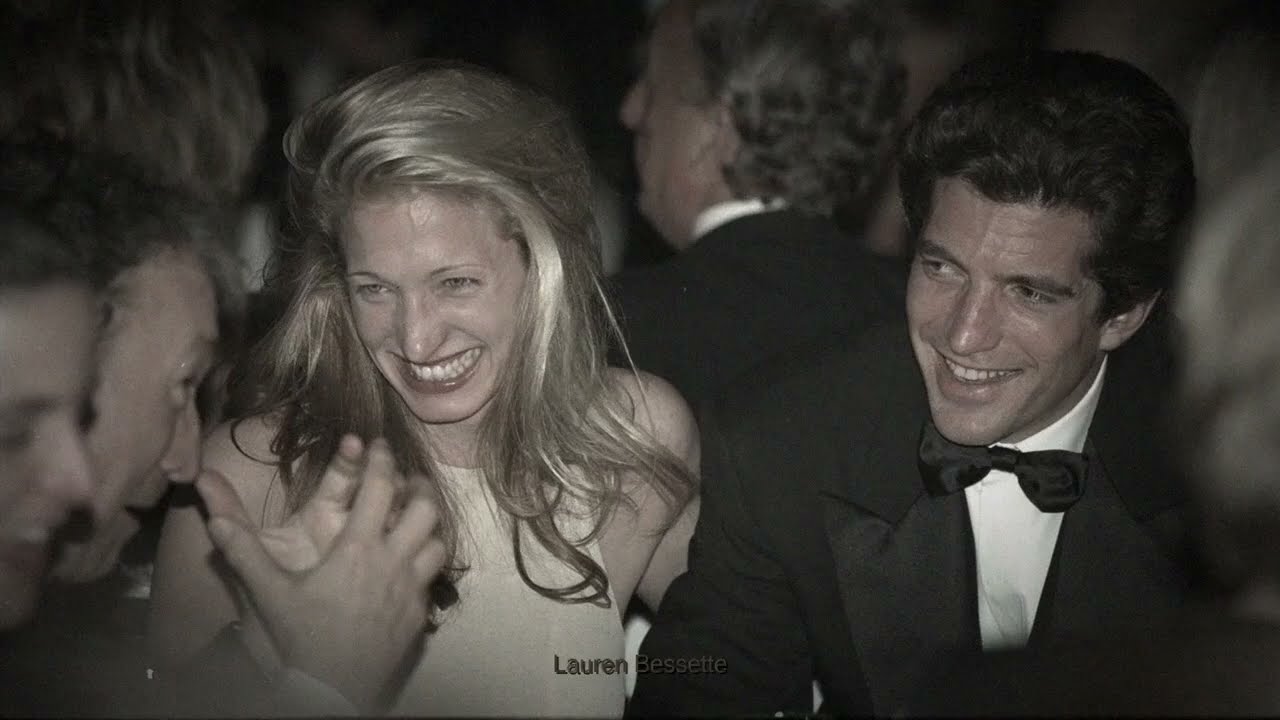
In a male-dominated field that didn’t hand women anything in the late 1990s, colleagues described her as brilliant and focused, someone who’d ground through the punishing hours and relentless deal cycles of investment banking and was beginning to see those early sacrifices compound into real professional authority. She was 34 years old.
She was building something formidable under her own name, in her own right, through her own ability. None of that mattered to the narrative machine that would process her death. In the coverage that followed, Lauren became a parenthetical, and her sister Lauren tacked on to sentences about more famous people. N9253N departed Essex County Airport at 8:38 p.m.
Eastern Daylight Time on Friday, July 16th, 1999. Carolyn and Lauren were aboard as passengers. Haze was thickening as temperature differentials between land and water condensed moisture into a translucent curtain that smeared every edge of the visible world. For the first portion of the route, ground references held. Lights along the Connecticut shoreline gave Kennedy something to navigate by with the faint glow of Long Island visible to the south.
He was flying through haze, but haze with landmarks. That distinction is critical to understanding why these conditions were so insidious. Visibility didn’t collapse from clear to zero in one dramatic moment. It degraded gradually, almost gently. the way a room dims when someone slowly turns a dial. And by the time the pilot realized the horizon had disappeared, the airplane was already deep into a situation from which his training offered no way out.
Once the Saratoga crossed the coastline and moved over open water on approach to Martha’s vineyard, every visual anchor vanished simultaneously. No shoreline lights, no terrain contours, no differentiation between water below and sky above. Haze merged with ocean, merged with darkening air into a uniform gray envelope that enveloped the aircraft from every direction.
For a pilot trained only in visual flight rules, the world outside the windshield had become meaningless. Everything now depended on instruments, and Kennedy didn’t have the training to rely on them. Spatial disorientation is a trap engineered into human biology and it’s the mechanism that killed Carolyn Lauren and John Kennedy Jr.
The vestibular system the delicate architecture of the inner ear evolved for life on the ground where gravity provides a constant reliable reference. In flight, without a visible horizon, the semic-ircular canals lose their ability to distinguish between a banked turn and level flight. Fluid in those canals adapts to sustained motion and stops registering change.
A pilot entering a gradual bank will feel absolutely level. Every nerve ending reports stable, wings level flight. The instruments mounted 6 in from the pilot’s face tell a completely different story. Altitude dropping, bank angle increasing, air speed climbing. If the pilot hasn’t been drilled through hundreds of hours of instrument training to trust gauges over physical sensation, drilled until the response is reflexive and automatic.
They will believe their body. Their body is lying. What follows is called a graveyard spiral. A tightening descending turn that accelerates catastrophically. The aircraft, already banked, steepens and descends faster, corkcrewing toward the surface. The pilot, still feeling level, can’t arrest what he can’t perceive. The spiral winds tighter.
The FAA’s own data on VFR into IMC accidents, pilots flying under visual rules into instrument conditions, shows a fatality rate of approximately 75%. Three out of four times, everyone dies because the pilot is actively fighting against the correct response for the entire duration of the emergency. Radar data from N9253N’s final minutes recorded this pattern with merciless precision.
As the Saratoga approached Martha’s Vineyard over open water, the aircraft began descending, not smoothly, not in a controlled way, but erratically, with brief attempts to climb, followed by further descent, as though Kennedy was receiving conflicting signals from his body and his instruments, and couldn’t reconcile them.
In the final moments, the aircraft entered a graveyard spiral, a tightening descending turn that accelerated the rate of descent catastrophically, captured in data points that would later fill pages of the NTSB investigation. The Saratoga plunged from 2,200 ft to the surface in approximately 60 seconds, reaching a descent rate that may have exceeded 5,000 ft per minute.
Fast enough to convert a mechanically perfect aircraft, engine at full power, instruments working, autopilot sitting idle and unused into wreckage the instant it met the Atlantic Ocean southwest of Martha’s Vineyard. Carolyn Bet Kennedy, Lauren Bet, and John F. Kennedy Jr. died on impact. The aircraft struck the water with force sufficient to destroy it. Carolyn was 33 years old.
Lauren was 34. Kennedy was 38. The NTSB probable cause statement released nearly a year after the crash under case number NYC178 left no room for mythology and no space for a curse. The finding was clinical. The pilot’s failure to maintain control of the airplane during a descent over water at night which was a result of spatial disorientation.
Investigators examined the wreckage recovered from the ocean floor and ruled out mechanical failure. They ruled out sabotage. They ruled out structural deficiency. The aircraft was airworthy. Kennedy had flown into conditions his certification and experience didn’t cover, lost spatial orientation over open water in haze, and driven a perfectly functional airplane into the Atlantic with his wife and her sister aboard.
No flight plan had been filed. No contact with air traffic control was established during the flight. Kennedy was operating entirely on his own judgment. Judgment that a fellow pilot, his own instructor, and his dead mother had all in different ways and at different times warned him not to trust. When the Saratoga failed to arrive at Martha’s Vineyard and was reported overdue, the response laid bare the gulf between the two families one final time.
The United States Navy, the Coast Guard, and the Air Force mobilized assets. President Clinton reportedly authorized the use of military resources. The USS Grasp, a Navy salvage vessel, was deployed to the crash area. Military divers entered the water. Resources and personnel far exceeding anything a standard private aircraft accident would receive were mobilized at extraordinary speed.
An operation driven not by protocol but by the weight of a single last name. The wreckage of N9253N was located on the ocean floor off Martha’s Vineyard and the bodies of all three occupants were recovered days after the crash. The remains of Kennedy and Carolyn were cremated and their ashes scattered at sea in a ceremony aboard the USS Brisco attended by Kennedy family members.
Lauren was returned to her family in Greenwich, Connecticut. The betettes buried their daughter privately away from cameras in the silence that had been their family’s way long before tragedy made silence the only refuge left. Within hours of the crash, before the wreckage was even located, the media framing had already locked into place.
Major outlets across the country reached for the Kennedy curse, the same Gothic template they’d been recycling for four decades. President Kennedy’s assassination in 1963. Robert Kennedy’s assassination in 1968. Ted Kennedy and Chapaquitic 1969. David Kennedy’s overdose in 1984. Michael Kennedy’s skiing accident in 1997. Each prior event was stacked into a narrative of cosmic inevitability, as though some invisible hand had swatted this particular plane from this particular sky.
Coverage centered almost exclusively on Kennedy as a fallen prince. The last hope of Camelot extinguished. [snorts] Barely any real-time reporting framed it as what the NTSB would later confirm. It was pilot error, pure and preventable. The curse arrived first and claimed the narrative. The facts came months later to an audience that had already absorbed the mythology and moved on.
That framing does something specific and deeply corrosive. It elevates Kennedy’s suffering into legend while rendering everyone else in the wreckage invisible. It strips accountability from a man who lacked an instrument rating, who ignored a fellow pilot’s explicit warning about the weather, who turned down his own instructor’s offer to fly, who took off into haze over open water after dark with a broken ankle and 310 hours in his log book.
And it tells Anne Freeman that her daughters were supporting characters in someone else’s epic, background figures in a dynasty’s mythology, barely worth naming in the headline. Caroline was trapped in that mythology long before she boarded the airplane. Trapped by a media apparatus that tracked her movements, speculated endlessly about her marriage, reduced her to a catalog of outfits and paparazzi snapshots.
She entered the Kennedy world through love and found no way back to the private life she’d had before. People who knew Carolyn described her poise and her intelligence. Cameras never captured any of that. 25 years later, they still haven’t. Even sympathetic retellings of her story default to the fashion angle, to Calvin Klein and style icon narratives, as though the most important thing about a woman who was killed by someone else’s incompetence was what she wore.
Lauren had even less protection from eraser. She was a working professional with an MBA, a career she’d built through years of effort and a future she would never reach. She boarded the plane because her brother-in-law offered a routine ride. She had no way to know that the man at the controls lacked the certification to fly in the conditions ahead, that he’d been warned and refused to listen, that his instructor had offered to come along and been turned away. Lauren trusted family.
That trust killed her. The NTSB does not deal in curses. What does appear in its report in meticulous detail is a record of every compounding factor that produced the crash. Kennedy’s 310 total flight hours, his absent instrument rating, his two months of experience with the Saratoga, the cast on his broken ankle, the instructor’s declined offer, the experienced pilot’s unheated warning, haze and darkness over open water.
Each factor was knowable before departure, and each one pointed toward a single conclusion that required no mythology to explain. Anne Freeman lost two daughters on July 16th, 1999. Richard Betett lost two daughters. Their family grieved privately while the nation mourned a Kennedy. Carolyn bet Kennedy was someone who loved a man whose name became her cage, who withstood years of relentless public harassment with a composure the world never acknowledged and who died in a plane flown by a husband the media has spent a quarter century excusing. Lauren
Bet was an investment banker at Morgan Stanley with decades of work ahead of her. A woman in full, not a footnote, not a parenthetical, not and her sister. The pilot who killed them wasn’t cursed. He was careless. Subscribe for more stories like