The 50G Wake-Up Call: How Oliver Bearman’s Terrifying Suzuka Crash is Forcing Formula 1 to Rewrite the Rules Before Miami
Before the engines even fired up for the Japanese Grand Prix, seasoned veteran Fernando Alonso delivered a chilling assessment that would soon transform from a pessimistic observation into a terrifying, real-world prophecy. Speaking to the media, Alonso stated with grim certainty, “Overtakes in 2026 are not really overtakes; they are evasive maneuvers. A car with more battery finds itself closing on the car ahead at a speed that leaves no time for a real attacking move, only a desperate attempt to avoid a collision.” At the time, it sounded like the typical grumbling of a veteran adjusting to new machinery. But on lap twenty-three of the race at the legendary Suzuka circuit, Alonso’s grim description materialized into a horrifying reality that has completely shaken the foundation of the sport.
As the pack navigated the incredibly demanding, high-speed approach to the famous Spoon Curve, young Oliver Bearman found himself tucked into the slipstream of Franco Colapinto. What happened next unfolded in a terrifying fraction of a second. Colapinto’s car entered a severe energy-harvesting mode, a deliberate and necessary function of the new 2026 engine regulations. Bearman, however, was not harvesting; he was deploying maximum power. In the blink of an eye, the physical distance between the two incredibly fast machines violently vanished. Bearman found himself closing in on the rear wing of the car ahead with an astonishing, highly dangerous speed differential of fifty kilometers per hour.
This was not a slight misjudgment of a braking point. This was a catastrophic closing speed that left absolutely zero margin for human reaction, let alone a calculated overtaking maneuver. Faced with the immediate threat of a lethal rear-end collision, Bearman had no choice but to violently wrench his steering wheel to take emergency evasive action. His car instantly snapped to the left, launching off the racing line and violently skipping across the grass at speeds exceeding 190 miles per hour. The car shot diagonally across the track and slammed heavily into the tire barriers. The telemetry sensors recorded a sickening impact force of 50G.
The immediate silence over the team radio was agonizing. When Bearman finally climbed out of the smoking wreckage, he was visibly limping and in immense physical discomfort. Subsequent medical evaluations revealed no broken bones, only a severe knee contusion. The collective sigh of relief that swept through the pit lane was palpable. Bearman was incredibly lucky to walk away from an impact of that sheer magnitude, and every single driver standing in the paddock knew exactly why. The sweeping, generous grass and gravel run-off areas of the old-school Suzuka circuit had scrubbed off just enough kinetic energy to save his life. But the underlying issue that caused the crash remains an active, ticking time bomb, and the entire sport is now in a state of absolute emergency.
To understand why this horrifying incident occurred, one must dive into the highly complex and controversial 2026 Formula 1 technical regulations. The closing speed problem is not a theoretical concern or a result of poor driver etiquette; it is a direct, mechanical consequence of how the new power unit architecture fundamentally operates. Under the current rules, the cars carry roughly 350 kilowatts of electrical power, which astonishingly accounts for nearly half of the vehicle’s total power output. Managing this massive electrical energy across a grueling racing lap requires constant, highly strategic decisions initiated by complex software and driver inputs regarding exactly when to harvest energy and when to aggressively deploy it.
When a Formula 1 car enters a harvesting phase on a long straight, it effectively acts as a massive, invisible parachute. The engine’s sophisticated electrical system violently pulls power away from forward kinetic motion and reroutes it to be stored in the heavy battery pack. Visually, to the fans in the grandstands and the drivers following closely behind, the car appears to be traveling completely flat out. The driver’s foot is firmly pinned to the throttle pedal, the engine note screams at high RPMs, yet the actual speed of the vehicle is dropping dramatically. This terrifying phenomenon is known in the paddock as “super clipping,” and it has absolutely no equivalent in any previous era of Formula 1 history.

It creates a uniquely lethal scenario where two cars can approach the exact same high-speed corner, with one aggressively harvesting and the other fully deploying. One car slows dramatically while visually appearing to maintain maximum velocity, while the pursuing car closes the gap at a terrifying rate that the following driver simply cannot predict, cannot mathematically judge, and cannot physically react to in time. Bearman described the incident precisely: the fifty-kilometer-per-hour speed differential was so incredibly massive that by the time his brain registered the visual anomaly, there was no time to brake, only to blindly swerve and pray for the best.
The most infuriating aspect of the Suzuka disaster is that it did not happen without immense, repeated warnings. The drivers have been actively raising the alarm regarding this exact safety hazard since the very first pre-season testing sessions in Bahrain. Andrea Stella, McLaren’s highly respected team principal, publicly flagged the super clipping danger well before the opening race of the season. The Grand Prix Drivers’ Association (GPDA) had spent hours discussing the terrifying closing speeds in collective safety briefings. Individual drivers across the grid had vividly described experiencing horrifying near-misses during the free practice sessions of the first three race weekends.
Most damning of all, Bearman himself explicitly stated that the drivers had specifically warned the FIA about this exact corner and this exact scenario during the mandatory Friday safety briefing, a mere forty-eight hours before the Grand Prix commenced. The governing body was fully aware that the closing speeds were lethal, yet the race proceeded without any meaningful intervention to mitigate the danger in race conditions. The FIA’s only prior response had been to implement minor band-aid fixes specifically for qualifying sessions—such as slightly reducing the energy recovery limit and extending the straight-mode zones. While these tweaks altered car behavior during a controlled, single fast lap, they completely failed to address the chaotic reality of race conditions, where cars operate on vastly different energy management cycles and dynamic strategies.
Following the crash, Carlos Sainz, acting as a director of the GPDA, delivered a stark, chilling warning that has focused the minds of every executive in the sport. He emphasized that the drivers had been extremely vocal that accidents of this exact nature were an inevitable consequence of the current regulations. Then, he pointed directly to the looming future: “Imagine this happening in Baku, or Singapore, or Las Vegas. Because those circuits will come, and they do not have Spoon Curve’s run-off area. They have solid concrete walls.”
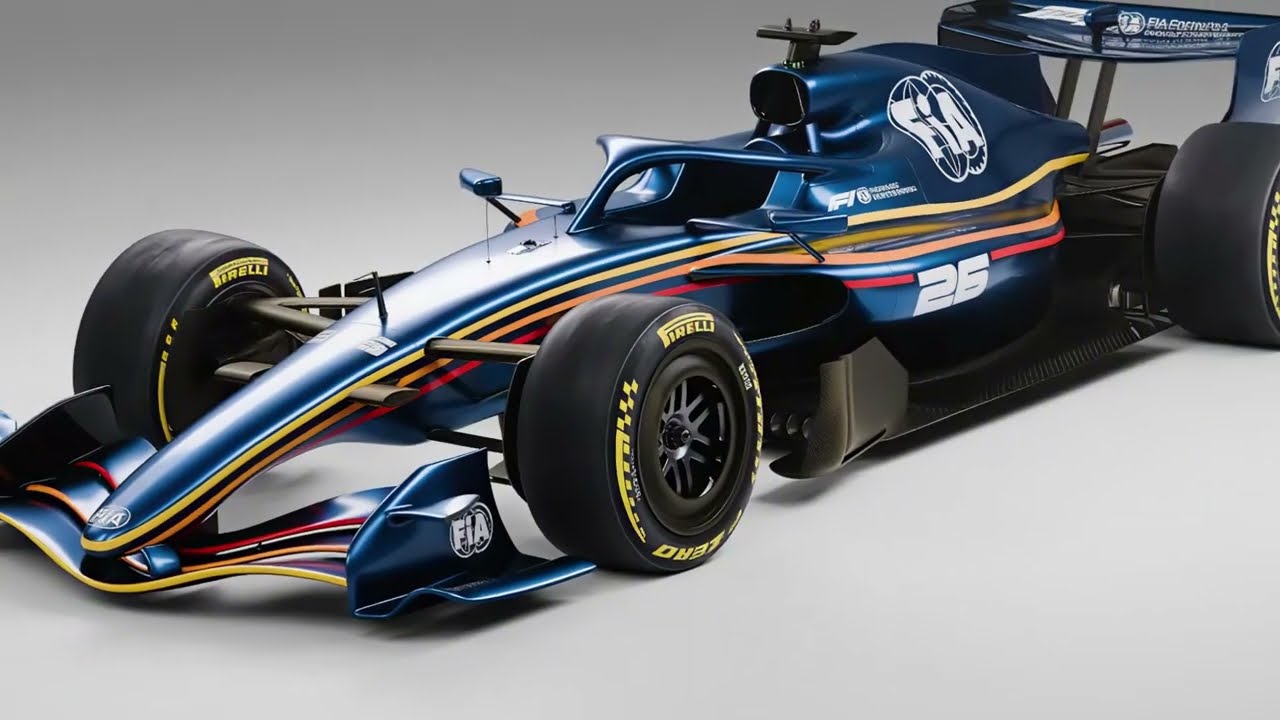
The FIA’s official statement in the immediate aftermath of Bearman’s crash was a masterclass in careful, non-committal public relations language. The governing body confirmed that urgent meetings are scheduled for April, utilizing the unprecedented five-week gap in the calendar created by early-season cancellations. The stated goal is to formally assess the operation of the 2026 regulations and determine if refinements are strictly required. However, the political reality behind closed doors is vastly different from the sanitized press releases. Carlos Sainz confidently confirmed that the FIA’s single-seater director, Nikolas Tombazis, privately assured the drivers in a heated Suzuka meeting that concrete changes will indeed be implemented before the next race in Miami.
This five-week break is no longer merely a strategic development window for aerodynamic upgrades; it has transformed into a high-stakes, frantic negotiation period to save lives. But the engineering solutions being actively debated are incredibly complex and heavily fraught with deep political friction. Every single parameter in the 2026 energy management system is intricately connected. Changing one seemingly minor detail fundamentally alters the entire competitive landscape, requiring massive simulation analysis and sparking intense negotiations among teams with fiercely competing self-interests.
Experts in the paddock, including former strategy engineers, have outlined a few viable options. The first involves significantly reducing the total amount of battery that can be charged and depleted throughout a single lap. This would effectively bring the energy management behavior much closer to the safer, more predictable dynamics of previous seasons. However, the massive trade-off is a drastic reduction in overall lap time, making the highly touted 2026 cars noticeably slower. A second proposal involves heavily increasing the mandated fuel flow limits, shifting the burden of power delivery back toward the traditional internal combustion engine and reducing the extreme dependency on the electrical harvesting systems. The major political roadblock here is that such a profound change would unfairly benefit certain engine manufacturers over others, creating clear winners and losers and making unanimous agreement nearly impossible. Andrea Stella has proposed a more targeted technical band-aid: implementing a strict 350 km/h “super clip limit,” which would physically prevent the software from executing the most extreme forms of energy harvesting at the absolute highest speeds on the circuit.
As the Formula 1 circus prepares to cross the Atlantic, one undeniable truth remains: Oliver Bearman’s horrific 50G impact at Suzuka was not an isolated, freak incident. It was the violent, dramatic symptom of a set of fundamentally flawed regulations that are terrifyingly being calibrated in real-time, using twenty-two human lives as high-speed test subjects. The upcoming Miami Grand Prix is a sprawling, unforgiving street circuit lined with merciless concrete barriers. There are no expansive grass run-offs to forgive a fifty-kilometer-per-hour speed differential mistake. The FIA, the teams, and the power unit manufacturers are now locked in a desperate race against the clock. The April meetings must produce a definitive, functional solution, because safety in motorsport cannot simply wait for a scheduled end-of-year review. Miami is not just the next race on the calendar; it is a hard, uncompromising deadline by which Formula 1 must prove it values the lives of its drivers more than the complexity of its rulebook.








