The Rotisserie Revolution: Ferrari Unveils Radical ‘Macarena’ Wing in Desperate Bid to Dethrone Mercedes in Shanghai
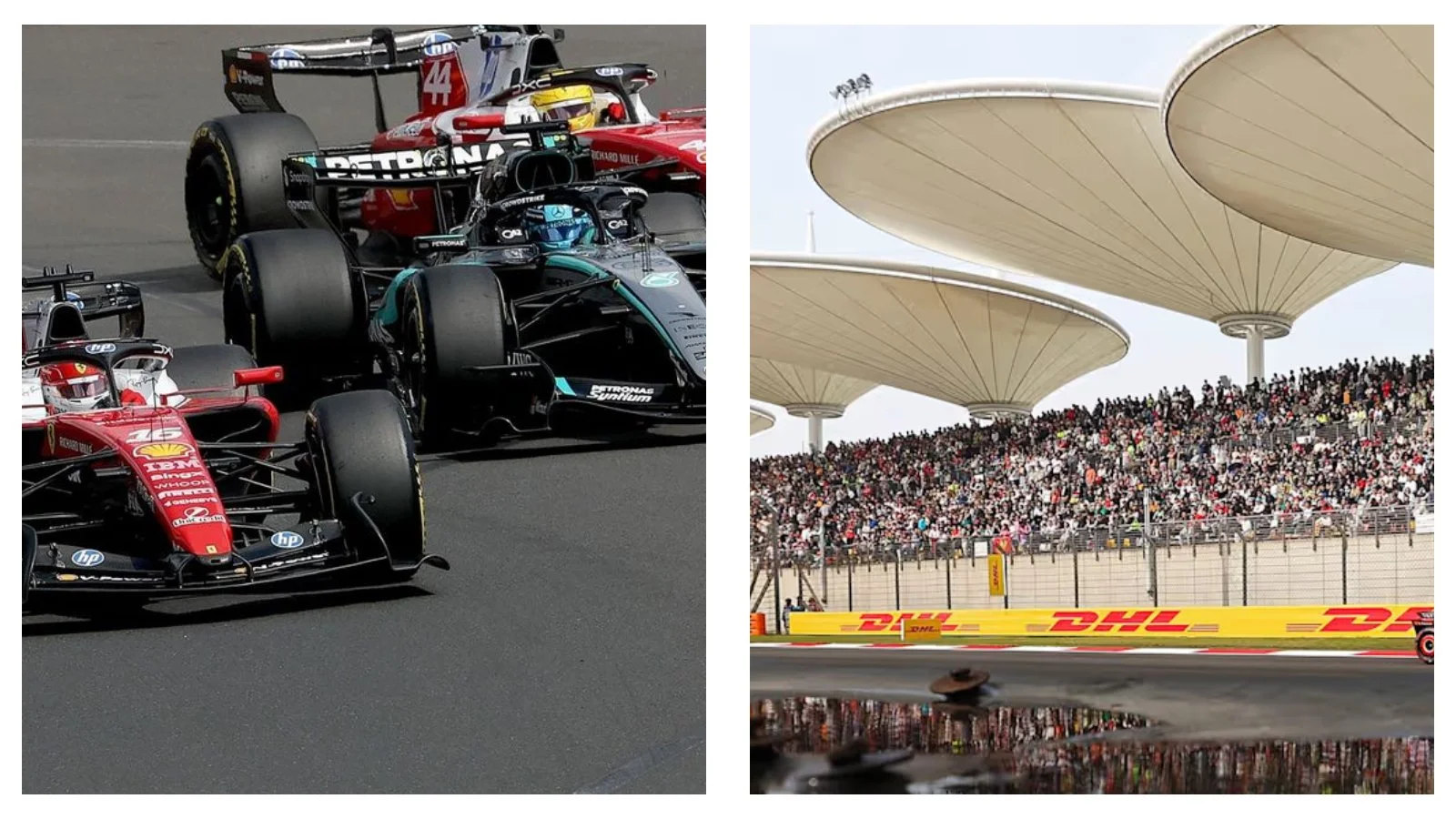
The Formula 1 paddock has arrived at the Shanghai International Circuit for the 2026 Chinese Grand Prix, and the air is thick with more than just the morning mist of the Yangtze Delta. There is a palpable sense of desperation and technological fever gripping the grid. While the 2026 season is still in its infancy, the battle lines have been drawn with a sharpness we haven’t seen in decades. After a dominant showing by Mercedes in the opening rounds, the rest of the field—led by a revitalized and aggressive Scuderia Ferrari—has realized that playing it safe is no longer an option. If you want to beat the silver cars in this new era of active aerodynamics and complex energy recovery, you have to be willing to tear up the rulebook and build something that looks like it belongs in a science fiction novel.
As the crates were unpacked in the Shanghai pit lane, all eyes were on the “team in red.” Ferrari had publicly downplayed their upgrade package for China, suggesting that the tight logistics of a back-to-back race schedule would force them to wait until Japan for major changes. But the Prancing Horse has never been good at keeping secrets, especially when they’ve built something as radical as the “Rotisserie Wing.” Known affectionately by the engineers as the Macarena wing, this piece of carbon fiber engineering is currently the most talked-about component in the world of motorsport.
The technical brilliance of the Rotisserie Wing lies in its defiance of traditional aerodynamic logic. Most teams utilize a central actuator to flip their rear wing flaps—a design that has been the standard for years. Ferrari, however, has completely eliminated the central actuator. By moving the mechanical hardware to the reinforced side endplates, they have cleared the airflow in the middle of the wing, allowing for a cleaner, more efficient stream that feeds directly into the car’s wake. But that’s just the beginning. The wing is designed to rotate nearly 200 degrees, essentially flipping the flap into a “zero-drag” configuration that rumors suggest could shred anywhere from 5 to 8 kilometers per hour off their top speed. In a sport where championships are won by thousandths of a second, an 8 kph gain on the massive Shanghai back straight is nothing short of a nuclear option.
What makes this upgrade even more significant is the timing. Ferrari chose to hold this wing back in Australia, fearing that the reliability of the side-mounted actuators wasn’t quite up to the task of a full race distance. The version seen today in Shanghai is a “Specification 2” design, visibly more reinforced and rugged. It is a clear signal that Ferrari is no longer just experimenting; they are ready to go to war. The team’s technical director has pushed for an “aero-first” philosophy that hasn’t been seen in Maranello for a generation. This is evidenced by the SF26’s unique two-step floor—a design that remains the only one of its kind on the grid—and a front wing footplate that manages outwash with a sophistication that has rival designers scratching their heads.
But Ferrari isn’t the only team bringing heat to the Chinese GP. The technical war is escalating across the entire pit lane. Red Bull Racing, the perennial giants of the ground-effect era, are facing their own set of challenges. While their car remains a masterpiece of packaging, Max Verstappen has been vocal about the car’s struggles with tire degradation when caught in dirty air. Interestingly, the Red Bull upgrade in China is more subtle but no less telling. The team has replaced their typical crypto-sponsorship on the rear wing with the iconic Red Bull logo, but beneath the paint, the side impact structures are bulging in a way that suggests a massive amount of aerodynamic development is happening around the car’s midsection. They are searching for that elusive clean-air performance that would allow Max to break away from the pack and manage his tires in the way only he can.
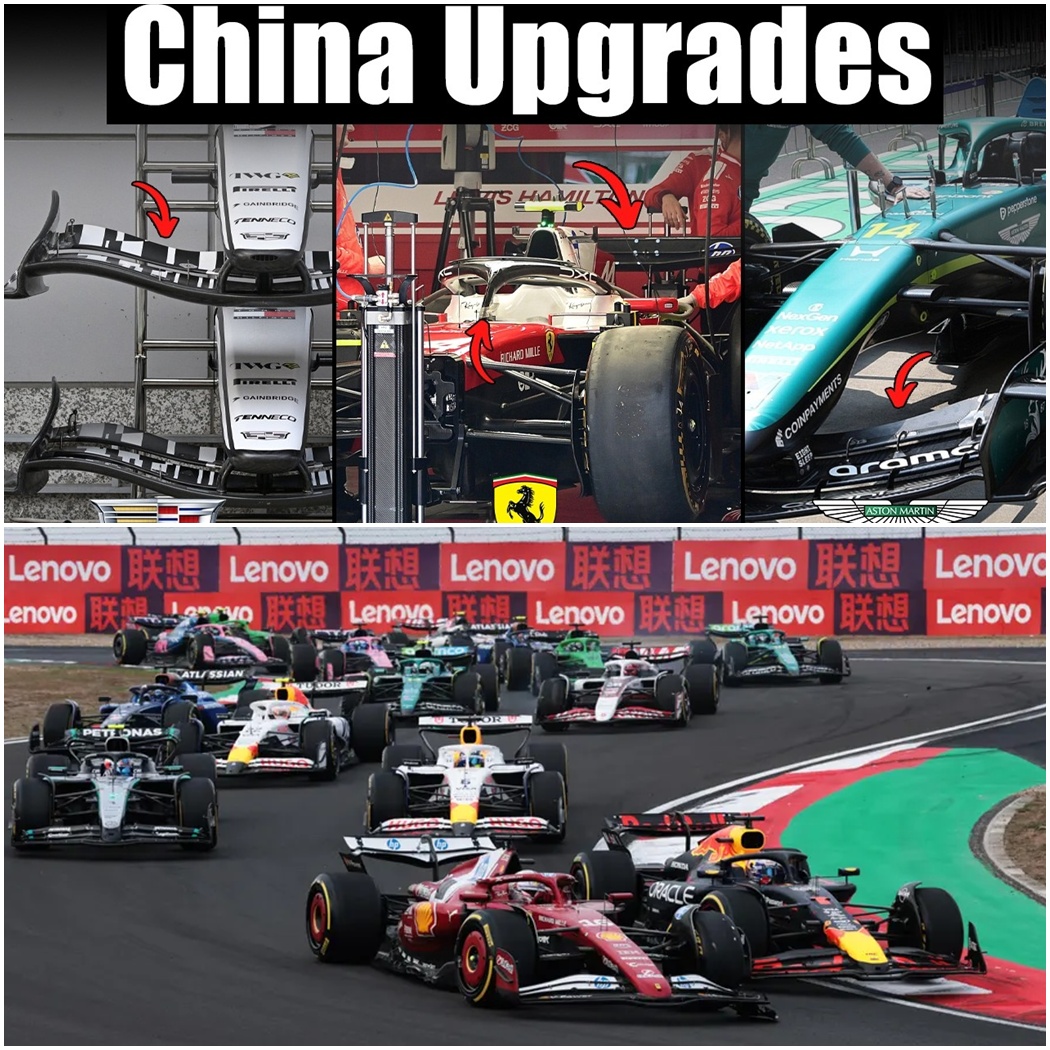
Meanwhile, the newcomer Cadillac and the ever-improving Aston Martin have brought circuit-specific front wings. The Chinese Grand Prix, with its unique blend of high-speed straights and the tightening spiral of Turn 1, requires a delicate balancing act. Cadillac’s new front wing features a significantly revised third element, cut down towards the nose to reduce drag without sacrificing the front-end bite needed for the technical first sector. Aston Martin has taken a similar approach, slimming out the highest flap of their wing to find a better top-speed compromise.
Even the teams further down the grid are showing the rapid pace of 2026 development. Alpine, despite struggles with high-speed understeer, has arrived with a front wing that is arguably one of the most developed on the grid, featuring intricate strakes and endplate details that show they are leaving no stone unturned. The new Audi entry, while still finding its feet, has turned heads with a front wing assembly that looks more like a piece of high-tech jewelry than a car part. The level of detail in the 2026 wings is a testament to how much performance is being found in the “micro-aero” of these cars.
However, the real drama remains centered on the human element. The pressure on the Ferrari drivers is immense. They are sitting in a car that is arguably the best chassis on the grid, backed by an engine that has finally closed the gap to Mercedes. The “Macarena” wing is the final piece of the puzzle, the “X-factor” that could turn a podium contender into a race winner. But as any F1 veteran will tell you, radical innovation comes with radical risk. If the side actuators on the Rotisserie Wing fail at 330 kph, the results could be catastrophic.
Ferrari has also introduced a series of “halo winglets”—tiny aerodynamic flicks mounted on the safety structure that direct air into the airbox and over the driver’s helmet. While seemingly minor, these upgrades represent a team that is obsessed with the finer details. They aren’t just looking for big chunks of downforce; they are looking for the small efficiencies that add up over a 56-lap race.
As we look toward Friday’s lone practice session, the tension is sky-high. With only one hour to dial in these complex new parts before the cars are locked into Parc Fermé, the margin for error is zero. Engineers will be poring over telemetry, looking for that 8 kph gain, while rivals will be sending their photographers to get every possible angle of the Ferrari’s “flip-flop” wing.
This isn’t just about the Chinese Grand Prix. It’s about the soul of the 2026 season. If Ferrari’s gamble pays off, we could see a shift in the power balance that defines the rest of the year. If it fails, Mercedes will likely tighten their grip on the championship, leaving the rest of the world to wonder what might have been. But for now, the “team in red” is daring to dream, daring to innovate, and daring to throw everything they have at the giants of the sport. The rotisserie is turning, the Macarena is playing, and the world is watching to see if Ferrari can finally dance their way back to the top of the podium. With a major chassis upgrade already slated for Japan, China isn’t just a race—it’s the first shot in a revolution.








