The Alternate Reality of Lewis Hamilton: The Victories Stolen and the Championships Inherited
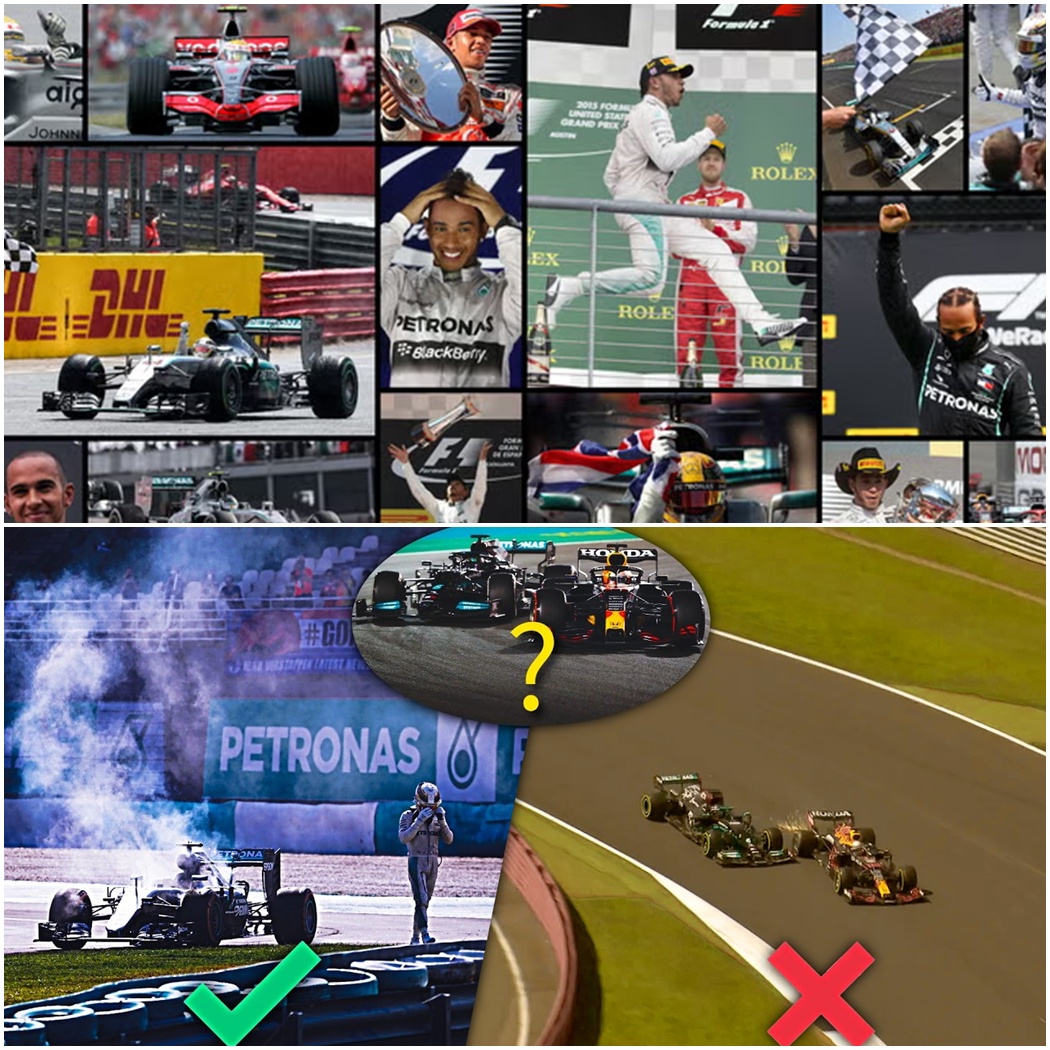
With seven Formula One World Championships, one hundred and five Grand Prix victories, and two hundred and three podium finishes to his name, Lewis Hamilton possesses a trophy cabinet that is virtually unrivaled in the entire history of global motorsport. The raw statistics heavily suggest a career of unrelenting dominance and almost mathematical perfection. However, those polished numbers only tell a fraction of the true story. In the ruthlessly unpredictable realm of Formula One, the fastest driver on the circuit does not always cross the finish line first.
Hidden amongst his record-breaking number of Grand Prix victories are the phantom races—the agonizing moments where catastrophic mechanical failures, devastating strategic blunders, or sheer, unadulterated bad luck violently robbed Hamilton of a win that was rightfully his. These are the grueling Sunday afternoons where he was undeniably the fastest man on the asphalt, yet the glittering winner’s trophy ended up sitting comfortably on a rival’s shelf. Conversely, the racing gods are occasionally generous. Looking objectively at the races he did win, there are several dramatic instances which even Hamilton himself would quietly concede practically fell directly into his lap, gifted through perfectly timed safety cars or the sudden, heartbreaking mechanical failures of his closest rivals.
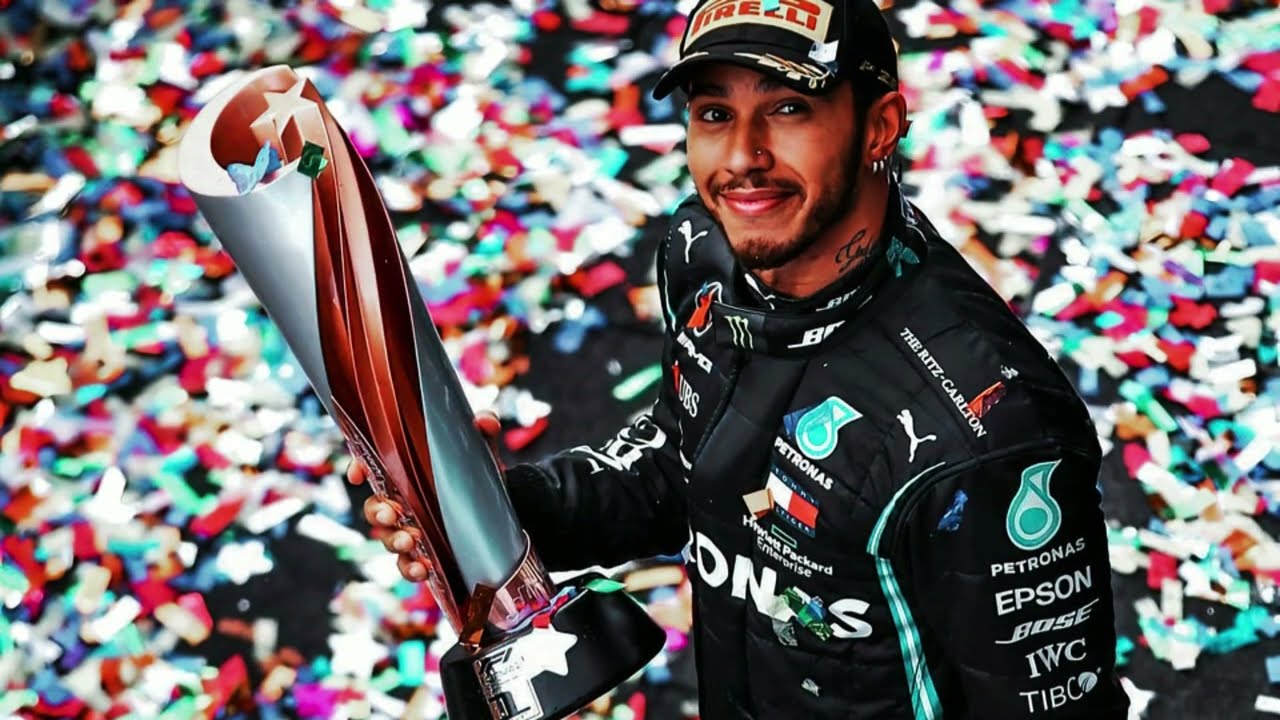
If we take a step back and examine both sides of this fascinating coin, we can begin to reconstruct an entirely alternate timeline of Lewis Hamilton’s legendary career. By meticulously going through the races which he absolutely should have won, and balancing them against those which he arguably should not have won, we uncover a deeply compelling narrative that radically alters the history of the sport.
The long list of agonising near-misses truly begins during his notoriously rocky 2008 championship campaign. While Hamilton did eventually prevail to win his maiden title in dramatic fashion, the journey was fraught with bitter controversy, most notably at the Belgian Grand Prix. The sweeping, majestic curves of Spa-Francorchamps set the stage for an epic duel. In the closing laps of the race, Hamilton was relentlessly chasing down Ferrari’s Kimi Raikkonen for the race lead. On the anti-penultimate lap, the heavens opened, and rain began to heavily saturate the circuit. Hamilton boldly lunged at the Bus Stop chicane, momentarily overshooting and cutting the corner. He immediately relinquished the position back to Raikkonen on the main straight, only to masterfully out-brake the Finnish driver into the La Source hairpin seconds later.
As the torrential rain intensified, Raikkonen ultimately crashed out of the race, leaving Hamilton to skillfully hold on and claim what appeared to be a brilliant, hard-fought wet-weather victory. However, hours after the champagne had dried, the FIA stewards controversially decided that Hamilton had gained an unfair advantage during the chicane incident. They declared a retroactive interpretation of the rules and awarded Hamilton a crushing twenty-five-second time penalty. This brutal bureaucratic decision stripped him of his victory, handing the win to his fierce title rival, Felipe Massa, and demoted Hamilton to third place behind Nick Heidfeld. It was a staggering blow that completely evaporated his championship lead, setting the stage for a highly stressful season finale.
The following year, defending his crown proved to be an incredibly frustrating endeavor as McLaren heavily struggled to adapt to the sweeping aerodynamic rule changes of 2009. Yet, there was a brief glimmer of brilliant light at the European Grand Prix in Valencia. Hamilton brilliantly secured pole position and comfortably maintained his lead throughout the first stint. However, absolute disaster struck when he entered the pit lane for his second scheduled stop. The McLaren mechanics were entirely unprepared; the replacement tyres were astonishingly still wrapped securely in their heated blankets. Hamilton was forced to sit stationary in his pit box for an agonizing thirteen seconds, helplessly watching his race slip away. Rubens Barrichello pitted flawlessly three laps later, emerging comfortably in front, aggressively relegating Hamilton to a deeply disappointing second-place finish.
If 2009 was frustrating, the 2012 season was a prolonged exercise in pure mechanical agony. It was a highly turbulent year marked by a disintegrating relationship with McLaren and a car that was blisteringly fast but incredibly fragile. The heartbreak reached its absolute zenith under the artificial lights of the Singapore Grand Prix. Hamilton secured his fifth pole position of the season and flawlessly controlled the race from the front. He comfortably maintained his lead after the first round of pit stops, totally dictating the pace. But on lap twenty-three, his gearbox suddenly gave up the ghost, completely seizing and forcing him to retire, gifting the victory to Sebastian Vettel.
The misery continued at the Abu Dhabi Grand Prix. Once again, Hamilton had aggressively placed his McLaren on pole position. He perfectly retained the lead following an early safety car restart and was absolutely dominating the proceedings until a catastrophic fuel pump failure abruptly halted his car on lap twenty. Seeking to end his long, emotional tenure with McLaren on a high note, he arrived at the season finale in Brazil and snatched his seventh pole position of the year. In wildly tricky, changing weather conditions, Hamilton masterfully dueled for the early lead before strategically navigating a complex sequence of pit stops for intermediate and hard tyres. An impeccably timed safety car eventually brought him right back into contention, allowing him to brilliantly retake the lead on lap forty-eight. However, as the rain began to fall again, Nico Hulkenberg aggressively chased him down. Attempting a wildly optimistic overtaking maneuver, Hulkenberg violently hit a wet patch and completely lost control, slamming directly into Hamilton’s left front suspension. The tragic collision instantly took Hamilton out of his final race for McLaren, inadvertently handing the emotional victory to his teammate, Jenson Button.
Transitioning to Mercedes in 2013 brought new challenges. The early iterations of the silver cars were incredibly fast over a single lap but notoriously devoured their Pirelli tyres during the race. At the British Grand Prix, Hamilton triumphantly secured his first pole position at Silverstone since 2007. He quickly built a commanding early lead to the absolute delight of the home crowd. But on lap eight, absolute terror struck as he suffered a massive, explosive left-rear tyre delamination while screaming down the high-speed Wellington straight. He miraculously managed to crawl his heavily damaged car back to the pits, minimizing the floor damage, but rejoined the race in dead last. Through an epic display of sheer determination, he carved his way entirely through the field to finish fourth, while his teammate Nico Rosberg capitalized on the chaotic situation—and Sebastian Vettel’s subsequent gearbox failure—to win the race.
Even the dawn of the heavily dominant turbo-hybrid era in 2014 was not immune to severe mechanical teething issues. Hamilton aggressively took pole position at the season opener in Australia, completely ready to stamp his authority on the new regulations. However, an immediate engine misfire on the formation lap effectively reduced his powerful V6 engine to a struggling V5. He instantly plummeted down the order at the start, quickly passed by Nico Rosberg, Daniel Ricciardo, and rookie Kevin Magnussen. The Mercedes pit wall ultimately ordered him to retire the severely crippled car on the third lap, forcing him to watch Rosberg claim the inaugural victory of the new era.
Perhaps the most famous strategic robbery occurred at the glamorous 2015 Monaco Grand Prix. The tight, twisting streets of the principality had historically been one of Hamilton’s weakest circuits, representing a major blind spot on his impressive resume. Yet, he completely silenced his critics by securing a brilliant pole position. He drove an absolutely flawless race, methodically building a colossal twenty-one-second lead over Rosberg. The victory was completely guaranteed until Max Verstappen violently speared his Toro Rosso into the back of Romain Grosjean on lap fifty-four. This massive collision triggered the first-ever deployment of the Virtual Safety Car, which swiftly transitioned into a full Safety Car period.
In a moment of sheer strategic panic, the Mercedes pit wall inexplicably called Hamilton in for fresh tyres, believing they had a sufficient gap to safely pit and retain the lead. They had catastrophically miscalculated. Because Hamilton had to wait momentarily to allow Felipe Nasr to pass safely before leaving his pit box, he tragically rejoined the circuit in third place, trapped behind both Rosberg and Sebastian Vettel. Despite possessing a massive grip advantage on fresher rubber, overtaking in Monaco is notoriously impossible. Hamilton was forced to cross the line in a deeply bitter third place. A visibly furious and completely heartbroken Hamilton controversially drove his car directly into the third-place marker board upon returning to the pit lane, a stark visual representation of a victory brutally stolen by his own team’s mathematical incompetence.
However, to maintain complete journalistic integrity, one must also acknowledge the races where the scales of justice tipped heavily in Hamilton’s favor. The most explosive example occurred during the incredibly toxic 2021 World Championship battle. At the British Grand Prix at Silverstone, Hamilton and Max Verstappen engaged in a terrifying, high-speed duel on the opening lap. Desperately attempting to seize the lead, Hamilton missed the apex at the notoriously fast Copse corner, resulting in heavy contact with Verstappen’s right-rear tyre. The massive impact sent Verstappen violently hurtling into the tyre barriers at a staggering 51G.
The resulting red flag completely saved Hamilton’s race, allowing his mechanics to freely repair the terminal suspension damage his Mercedes had sustained in the massive crash. Furthermore, he was issued an incredibly lenient ten-second time penalty by the stewards for causing the collision. He easily served the penalty during his pit stop, rejoined the track in fifth, and utilized his vastly superior machinery to aggressively hunt down Charles Leclerc, stealing the lead and the victory with less than three laps remaining. In the eyes of many purists, it was a race he absolutely had no right to win given the severity of the initial incident.
When we meticulously calculate the entirety of his career, analytical models suggest there are roughly eleven clear races Hamilton absolutely should have won, balanced against fifteen races he arguably should not have won. If we apply these fascinating amendments to his official career record, his total drops from one hundred and five victories down to one hundred and one. But the true shock lies in how this alternate timeline radically reshapes the World Championship history books.
The dramatic 2008 championship would have been completely stripped of its famous final-lap tension in Brazil, as Hamilton would have comfortably secured the title at the penultimate round in China without the unjust Spa penalty. The chaotic 2012 season would have seen Hamilton remain deeply entrenched in a fierce title fight against Vettel and Fernando Alonso all the way to the United States Grand Prix, rather than fading away prematurely due to crushing unreliability.
However, the most profound and historic change occurs in the 2016 season. If Hamilton had not suffered the devastating engine blowout while comfortably leading the Malaysian Grand Prix, the massive points swing would have entirely altered the championship narrative. Instead of Nico Rosberg claiming his sole world title, Hamilton would have arrived at the season finale in Abu Dhabi with a commanding nine-point lead. He would have comfortably secured the 2016 World Championship, officially making him a staggering eight-time Formula One World Champion today.
Conversely, the bitter controversy of the 2021 season finale in Abu Dhabi might never have happened. If Hamilton had received a more severe penalty at Silverstone—such as a ten-second stop-and-go penalty—the massive time loss would have dropped him significantly further down the finishing order. This point deficit would have ultimately allowed Max Verstappen to mathematically clinch the 2021 title before they ever reached the desert. But crucially, in this alternate reality, Hamilton would already possess his record-breaking eighth world title from 2016, rendering the modern disputes entirely moot.
Ultimately, motorsport is an incredibly cruel and beautifully unpredictable beast. The cold, hard numbers will forever stand etched in the official record books, but the deeply emotional stories behind them—the agonizing defeats, the miraculous inheritances, and the profound “what-ifs”—are precisely what make Formula One such a captivating global spectacle.








