Ferrari’s Secret Weapon: The Classified Monza Test That Could Flip the 2026 F1 Season
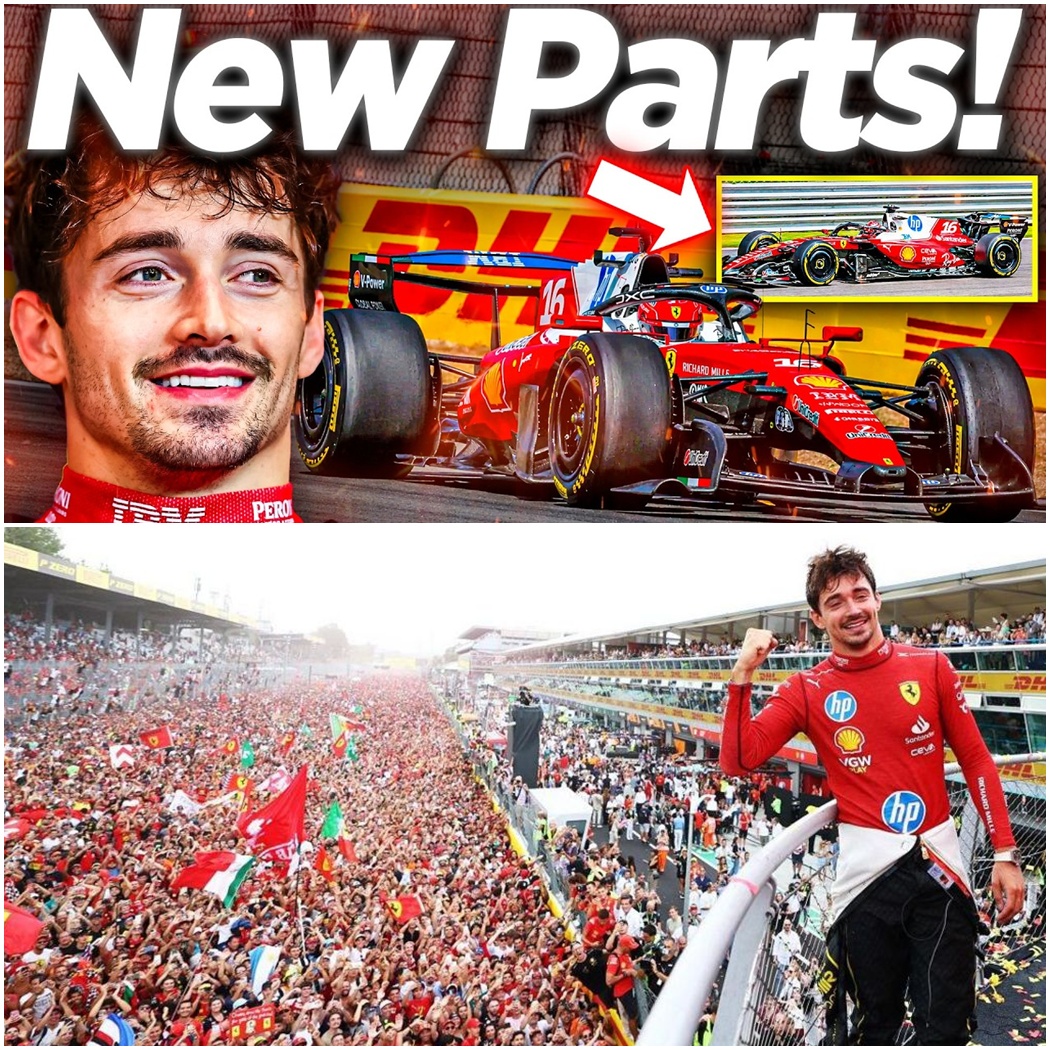
Imagine having a sudden, unexpected five-week break in the middle of a high-stakes Formula 1 season. What do you do with that time? If you are Scuderia Ferrari, you certainly do not sit back and relax. Instead, you launch one of the most secretive, ambitious, and cunning test sessions the sport has witnessed in recent years. Following the sudden cancellation of the Bahrain and Saudi Arabian Grand Prix, the 2026 calendar experienced a massive void. Ferrari, however, used this rare gap to their absolute advantage. In a brilliant exploitation of the rulebook, the iconic Italian team took to the hallowed asphalt of Monza for what was officially billed as a standard “filming day.” But make no mistake—this was no mere promotional photo shoot.
What transpired at the Temple of Speed was a full-blown, highly classified testing session cleverly disguised under the guise of filming. With an incredibly crucial Miami Grand Prix fast approaching, Ferrari utilized their allotted 200 kilometers of track time to gather critical data on a massive, highly anticipated upgrade package. Both Charles Leclerc and Lewis Hamilton were summoned to get behind the wheel of a heavily updated SF26, giving us a fascinating glimpse into a master plan that could entirely reshape the 2026 Formula 1 championship battle.
The day at Monza began extremely early, with Ferrari ensuring they had the entire circuit to themselves. They went to extraordinary lengths to keep their new secrets hidden from the prying eyes of the paddock. The team imposed incredibly strict restrictions, completely blocking visibility and access across all key areas of the circuit to maintain total confidentiality. The primary goal was obvious: they absolutely did not want their fierce rivals at Mercedes or Red Bull getting an early look at the aerodynamic innovations they were about to unleash.
However, we live in the age of smartphones, and keeping a screeching Formula 1 car entirely hidden from the public at a track like Monza is virtually impossible. Predictably, grainy footage soon emerged online, revealing Charles Leclerc taking the newly updated SF26 out onto the track. Leclerc was given the morning session duties, and the first significant footage of him emerged around 11:00 AM. Fans were treated to the sight of the roaring SF26 running at full throttle along the legendary straight leading into the Ascari chicane.
Leclerc completed a solid 19 laps in total, covering just over 100 kilometers. This carefully calculated distance was exactly half of the 200-kilometer limit allowed by the FIA for official filming days. His fastest recorded lap time of the morning was a 1:27.138. Now, before anyone starts analyzing that specific time, it is vital to put it into the correct context. This was not a qualifying simulation by any stretch of the imagination. Under stringent FIA rules for filming days, F1 teams are strictly forbidden from using actual racing tires. Instead, they are required to bolt on specially designed Pirelli demonstration compounds. These tires are incredibly hard, offer significantly less grip, and are much slower than the real race tires. Therefore, that 1:27.138 lap is purely an indicative benchmark, rather than a true show of the car’s ultimate pace.
The real value of Leclerc’s morning run was never going to be found on the stopwatch. The true prize was the vast amount of telemetry data being fed directly back to the anxious engineers at the factory in Maranello. During his 19 laps, Leclerc also performed multiple standing start tests. This is an incredibly crucial detail because the FIA has introduced new, highly specific regulations for Miami regarding energy deployment and a brand-new low-power start detection system. Ferrari urgently needed to understand exactly how the revised SF26 behaves off the line under these new parameters. Getting the launch procedure perfect under these revised rules could easily be worth several track positions, especially during a high-pressure sprint weekend like Miami.
Once Leclerc concluded his meticulously planned program, the afternoon driving duties were handed over to the seven-time world champion, Lewis Hamilton. If you thought the morning session was secretive, Ferrari locked down Hamilton’s afternoon run even tighter. Absolutely no official lap times or lap counts were released to the public for his stint, a move that is entirely deliberate. Ferrari is not in the business of handing out free information to their competition. What we do know for certain is that Hamilton completed his allocated 100 kilometers and focused heavily on the exact same vital objectives: validating the massive aerodynamic upgrades and refining the highly complex energy management software ahead of the trip across the Atlantic.
So, what exactly was Ferrari testing that required such immense secrecy? The short answer is: almost half of the entire car. The most significant and impactful upgrade in this package is the brand-new floor. In the current era of ground-effect Formula 1 cars, the floor is unequivocally the single most important aerodynamic component on the vehicle. It is responsible for generating the vast majority of the car’s downforce by channeling air underneath the chassis, creating a powerful low-pressure zone that literally sucks the car to the tarmac. Ferrari’s completely new floor specification features a myriad of modifications, with a very specific focus on the FTM winglet. This small but vital aerodynamic device, positioned just in front of the exhaust, helps efficiently manage the airflow exiting from underneath the car as it feeds directly into the diffuser. Enhancing its efficiency directly and dramatically increases the total downforce the SF26 can generate.
But the upgrades did not stop there. Alongside the floor, Ferrari debuted a completely redesigned front wing. While the central section of the wing remained largely identical, virtually everything else was brand new. The movable flaps, the end plates, and the main profile have all been radically re-sculpted. Furthermore, the geometry of the front wheel corner was also heavily revised. A perfectly balanced front wing is essential for dictating how the car enters high-speed corners and how the immense aerodynamic load is distributed between the front and rear axles. If the front wing fails to work in perfect harmony with the new floor, the car will suffer from vicious understeer or unpredictable oversteer—neither of which is acceptable when you are chasing fractions of a second.
We also witnessed the highly anticipated return of the halo winglets. These tiny but clever aerodynamic elements were first spotted on the SF26 during the Chinese Grand Prix earlier in the year. However, they were abruptly removed after the FIA deemed that the specific material used did not comply with strict safety regulations. Ferrari’s engineers have clearly been busy, as they have now fully rebuilt these winglets using a fully compliant carbon laminate. They are officially back on the car and ready to perform.

Additionally, the engine cover has been smartly revised to maximize cooling efficiency. The upcoming Miami Grand Prix is notoriously hot, humid, and deeply punishing on the cars. Managing the extreme temperatures of both the internal combustion engine and the complex hybrid systems is an absolute necessity. A more aerodynamic and efficient engine cover allows the power unit to breathe freely, which directly translates to sustained performance and bulletproof reliability over a grueling race distance. Ferrari has also put the SF26 on a strict, aggressive diet. Numerous internal components have been re-manufactured using lighter, highly advanced materials. According to sources in the Italian media, this specific weight reduction program alone is expected to deliver an impressive gain of around one-tenth of a second per lap compared to the car that competed in the first three rounds. In the hyper-competitive world of Formula 1, one-tenth of a second is an absolute eternity.
Yet, amidst all these fascinating upgrades, the undisputed star of the show at Monza was the return of the revolutionary “Macarena” rear wing. Ferrari initially debuted this wild, ground-breaking concept during preseason testing in Bahrain, and it made a fleeting appearance during practice at the Chinese Grand Prix. It was swiftly removed in Shanghai after it caused severe aerodynamic balance issues under heavy braking zones, with Lewis Hamilton himself openly admitting that introducing the wing in China was a “little bit premature.”
The Macarena wing operates fundamentally differently from any rear wing design we have seen before. In normal cornering modes, the wing sits in a standard, fixed position to generate maximum downforce. However, as the car blasts down the straights, the entire wing actually rotates and physically flips upside down. In this aggressive inverted position, the physical gap between the wing elements opens up dramatically, allowing turbulent air to pass through far more cleanly. This drastic reduction in aerodynamic drag allows the car to achieve a significantly higher top speed. Advanced team simulations suggest that the Macarena wing can deliver an astonishing 8 to 10 kilometers per hour of additional top speed when in straight-line mode. On a circuit like Miami, which features incredibly long, power-hungry DRS zones, this wing is a lethal weapon that could entirely dictate the outcome of the race.
The primary objective for running this wing at Monza was to definitively solve a nagging legality issue that had hovered over the design since China. F1 technical regulations explicitly state that any movable aerodynamic element must physically close within four-hundredths of a second. The earlier iteration of the Macarena wing struggled slightly to meet this unbelievably strict timing window. Consequently, Ferrari spent the last several weeks frantically redesigning the entire actuation system—the physical mechanism that rotates the wing—to guarantee it snaps shut fast enough to satisfy the FIA scrutineers. Leaked footage from the Monza main straight clearly showed the wing activating flawlessly, providing strong early signs that the revised version is functioning exactly as intended and is 100% legal.
The sheer scale, ambition, and cost of this upgrade package genuinely cannot be overstated. Team Principal Fred Vasseur previously teased the media by describing it as a “package and a half,” and the comprehensive Monza test absolutely confirms that he was not exaggerating in the slightest. By creatively combining the updates originally planned for Bahrain with the brand-new parts developed specifically for the demands of Miami, Ferrari is essentially bringing a completely transformed, near B-spec car to Florida. The total expected performance gain from this monstrous package could reach up to half a second per lap.
The ultimate question that remains is whether this monumental effort will be enough to change their fortunes. We know Mercedes is also bringing a slate of upgrades to Miami, and Red Bull is working desperately around the clock to shed excess weight from their RB22 chassis. However, it is abundantly clear that Ferrari has done their homework with terrifying efficiency. They have taken the unexpected break in the racing calendar and turned it into their absolute advantage, converting a simple promotional filming day into a deeply vital test session.
When you consider the context of where Ferrari currently stands, the stakes could not be higher. Through the first three races of the 2026 season in Australia, China, and Japan, Ferrari secured three respectable third-place finishes—two for Leclerc and one for Hamilton. They have been incredibly consistent, but consistency alone does not win world championships. They are not losing races because of poor reliability or silly driver errors; they are losing simply because the older specification of the SF26 did not possess the pure, raw pace to match the sheer speed of Mercedes. This massive upgrade package is specifically and aggressively designed to eradicate that deficit.
The unique timing of the Miami Grand Prix adds a thrilling layer of complexity to this entire narrative. Miami is a sprint weekend, meaning the teams will be granted a mere 60 minutes of free practice before heading straight into the pressure cooker of qualifying. The teams will have virtually zero time to properly set up their cars, dial in the aerodynamics, or truly understand how their new upgrades perform in real race conditions before they are locked into Parc Fermé and a grid position. This makes the data gathered at the Monza filming day utterly invaluable. Ferrari simply had to arrive in Miami with as much real-world data as possible because they will not get a second chance to fine-tune the SF26 before the competitive action begins.
If the vital telemetry gathered by Charles Leclerc and Lewis Hamilton at Monza correlates perfectly with their wind tunnel simulations, and if the revolutionary Macarena wing proves to be both entirely reliable and perfectly legal, Ferrari will be touching down in Miami with a car more than capable of fighting for the top step of the podium. The Scuderia has fired a massive warning shot across the bow of their rivals. Now, we wait to see if this incredible gamble pays off under the bright lights of Miami.








