Broken Rules and a 190mph Warning: Inside the FIA’s Desperate Fix for the 2026 F1 Season
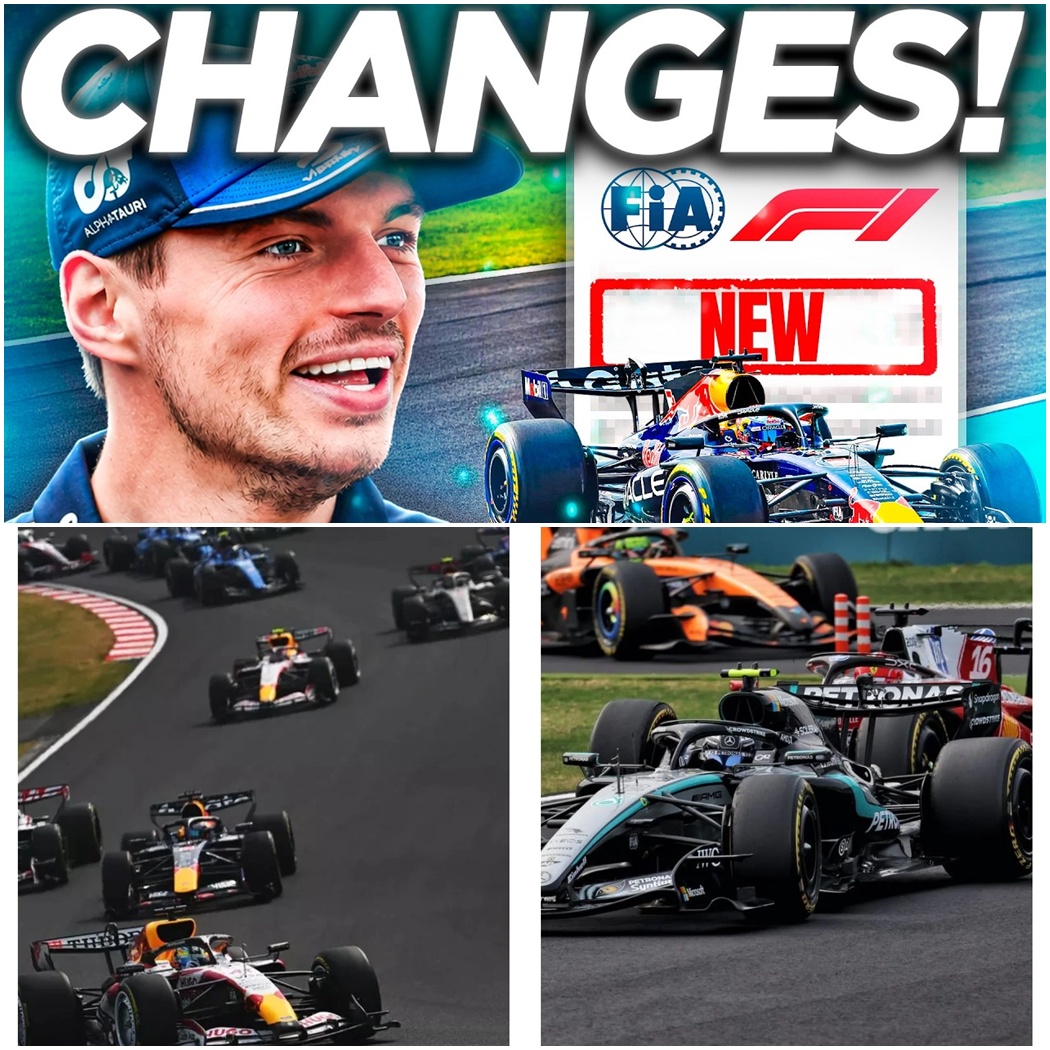
Three races. That is all it took for the pinnacle of motorsport to look in the mirror and openly admit that something has gone profoundly wrong. On Monday, April 20th, the FIA convened an unprecedented emergency meeting with every single team principal, the CEOs of all engine manufacturers, and Formula 1 management. The agenda on the table was as simple as it was alarming: the much-anticipated 2026 regulations are fundamentally broken, and they desperately need to be fixed before the sport touches down for the Miami Grand Prix.
By the time the doors of that high-stakes meeting opened, a comprehensive package of immediate rule changes had been unanimously agreed upon. Every single stakeholder in the room signed off on the new directives—a level of absolute consensus that almost never happens in the highly politicized world of Formula 1. So, what exactly went wrong in the span of just three race weekends, and what drastic measures are being implemented to save the season?
To truly understand the gravity of the situation, we must first look at the terrifying incident that made it entirely impossible for the governing body to ignore the drivers’ mounting concerns. During final practice at the Japanese Grand Prix, young talent Oliver Bearman was closely following Franco Colapinto down a high-speed straight. Suddenly, Colapinto’s car slowed down drastically. He did not touch the brakes, and nothing mechanically failed on his challenger. Instead, his car was actively harvesting energy from its own engine in a desperate bid to recharge its battery. The closing speed between the two vehicles was absolutely enormous. Bearman had virtually no time to react to the rapidly decelerating car ahead, resulting in him flying off the track at nearly 190 mph and slamming violently into the barrier.
That heart-stopping moment crystallized exactly what the drivers had been warning the FIA about since the very first green light in Australia. The 2026 generation of cars is unpredictable in a manner that extends far beyond the typical teething problems of a new regulation cycle. The core issue is no longer just about extracting lap time or aerodynamic performance; it has escalated into a genuine crisis of safety.
To comprehend why these terrifying speed differentials exist, one must look deep into the architecture of the 2026 power units. For the first time in the rich, engineering-driven history of Formula 1, the electric motor and the internal combustion engine have been strictly designed to produce equal amounts of power. This 50/50 split means that the electric motor is now genuinely as powerful as the screaming V6 engine itself. However, that immense electric power is drawn from a battery, and that battery is depleting at a rate significantly faster than anyone in the paddock originally anticipated.
When the battery reserves drop to critically low levels, drivers are left with two unappealing options. The first is the traditional “lift and coast,” where the driver simply lifts completely off the throttle pedal well before the braking zone to stop draining electric power, allowing the system to regenerate naturally under braking. The second option is an incredibly controversial and highly aggressive technique known as “super clipping.”
Super clipping is exactly where the dynamic becomes incredibly strange and profoundly dangerous. During this phase, the driver keeps their foot absolutely pinned to the floor on the throttle, but the electric motor is electronically switched into reverse. Instead of propelling the car forward, it forcefully acts as a generator, aggressively sapping the engine’s power to rapidly recharge the battery. The car is technically still at full throttle, yet it is simultaneously braking itself down the longest straights on the calendar. The external visual is bizarre, but for the driver in the cockpit directly behind—as Oliver Bearman disastrously discovered—it is absolutely terrifying. A car suddenly decelerating by significant margins on a straight while visibly remaining at full throttle creates a lethal closing speed.
Faced with the undeniable reality of this danger, the FIA was forced to act swiftly. The unanimously agreed changes cover four highly specific areas of the weekend: energy management in qualifying, energy deployment during the race, the start procedure, and wet weather conditions.
In qualifying, the fundamental flaw has been that drivers literally cannot complete a single, uninterrupted flying lap without having to constantly and frantically manage their battery deployment. A qualifying lap in Formula 1 is meant to be the purest, most unadulterated expression of mechanical and human speed. Instead, the 2026 rules turned it into a complex mathematical strategy exercise, forcing drivers to calculate precisely where to super clip and where to lift and coast, entirely compromising their ability to find the absolute limit of the car. To combat this, the FIA is strictly reducing the maximum energy a car is permitted to harvest per lap from 8 megajoules down to 7 megajoules. Less harvesting automatically means a significantly reduced need for aggressive super clipping. Furthermore, when super clipping does inevitably occur, teams will now be permitted to pull up to 350 kW of energy, an increase from the previous 250 kW. The engineering logic here is sound: a more powerful, aggressive, but much shorter burst of harvesting is far less disruptive and unpredictable than a drawn-out, weaker phase. George Russell, representing the grid through the Grand Prix Drivers’ Association, openly praised this specific tweak as an absolute “no-brainer.”
When the lights go out on Sunday, the priority heavily shifts from sheer performance to basic survival and safety. Moving forward from Miami, the maximum additional power available through the electric boost function in race conditions will be strictly capped at 150 kW. This deliberate limitation is designed to fundamentally restrict how aggressively an attacking driver can close in on a vulnerable car ahead. Additionally, the FIA is micromanaging where the MGU-K can actually deploy its maximum power. In critical acceleration zones, corner exits, and major overtaking areas, the full 350 kW remains on tap. However, everywhere else on the circuit, deployment is firmly capped at 250 kW. This nuanced approach aims to keep thrilling overtaking possible while making the relative speed differences between the cars significantly more predictable.
The starting grid procedure is also receiving a radical, technology-driven safety overhaul. Getting these highly complex 2026 machines off the line has proven to be a surprisingly difficult task. If a car fails to accelerate cleanly when the red lights go out, it instantly becomes a stationary hazard in the path of 20 other drivers rapidly accelerating toward it. In response, the FIA has developed what they call a “low power start detection system.” The very microsecond a driver drops the clutch, the system electronically monitors the car’s initial acceleration phase. If the telemetry indicates the car is moving dangerously slowly, the MGU-K will automatically and independently fire to propel the car forward. This is not designed to offer a sporting or competitive advantage; it is a strict minimum safety threshold engineered entirely to prevent a stalled car from sitting helplessly on the grid. Any vehicle that triggers this emergency system will also have its rear and lateral lights immediately flash to warn the rapidly approaching pack.
Wet weather conditions have not been ignored either. Drivers have widely reported severely struggling to control the cars in low-grip environments because the sheer, instant torque of the electric motor is simply far too aggressive when traction is limited. The FIA has responded by reducing the maximum ERS deployment specifically designated for wet conditions, making the power delivery much smoother and the cars significantly more controllable. Intermediate tire blanket temperatures are also being raised to provide instant, crucial grip right out of the pit lane, and the rear light systems are being visually simplified to cut through heavy spray more effectively.
Yet, despite this sweeping overhaul, the paddock remains fiercely divided on whether these measures will actually cure the disease or merely treat the symptoms. Mercedes Team Principal Toto Wolff was notably cautious, publicly warning that the FIA risks using a blunt bat when the delicate situation clearly calls for a surgeon’s scalpel. His primary concern is that dramatically altering the core regulations just three races into a new era—long before teams have even had a proper opportunity to fully understand and develop their cars around the existing framework—could easily create far more instability than it resolves.
Perhaps the most brutally honest assessment of the situation came from the head of car engineering at Haas. He bluntly explained the fundamental tension resting at the very heart of these emergency changes: Formula 1 in 2026 is, by its very design, an “energy-starved formula.” These revolutionary machines simply do not possess the necessary physical battery capacity to sustain maximum electric deployment over the course of an entire lap. That was always the unavoidable reality of the regulations. By actively reducing how much energy the cars are allowed to harvest, the FIA is simultaneously and unavoidably reducing how much they can ultimately deploy. If the battery runs completely empty earlier in the lap, the terrifying super clipping is simply replaced by “normal clipping.” This occurs when the battery entirely depletes, forcefully shutting off the electric motor and instantly robbing the car of half its total power output. While normal clipping is admittedly less dramatic and structurally less dangerous than the aggressive braking effect of super clipping, the drastic drop in speed remains.
Ultimately, the FIA has not genuinely solved the underlying architectural problem; they have merely reshaped it into a more palatable form. The lap times will inevitably be slightly slower, the cars will behave somewhat more naturally, and the most lethal safety scenarios have hopefully been mitigated. But Formula 1 in 2026 remains a championship entirely built around managing an inherent energy deficit. No frantic, mid-season tweak will ever change that fundamental, inescapable reality.
Miami is now set to be the ultimate, high-stakes test for this patched-together rulebook. Adding immense pressure to the situation is the fact that Miami is a Sprint weekend. The teams will have a mere 60 minutes of free practice to fully understand exactly how these comprehensive new rules fundamentally alter the entire behavior of their incredibly complex machines. The engineering departments that can adapt and rewrite their software the fastest will inherit a massive, decisive advantage.
And the timing could literally not be more complicated. This is not a standard race weekend; the developmental arms race has well and truly begun. Every single major front-running team is arriving in Florida with significant, highly anticipated upgrade packages. Ferrari is bringing a heavily revised floor and reintroducing their highly controversial “Macarena” rear wing. Mercedes is debuting a suite of vital new aerodynamic components to cure their bouncing issues. Red Bull Racing is desperately trying to deploy lightweight parts to address the severe weight issues that have critically handicapped their dominant RB22 all season. All of that incredibly expensive, millions-of-dollars’ worth of development work was meticulously calibrated around the old rules. Now, these brilliant engineers must frantically figure out how their new upgrades interact with a completely rewritten energy management framework, all within the span of a single, chaotic hour of practice.
There is a broader, deeply uncomfortable question hovering over the paddock that nobody truly wants to answer. These 2026 regulations were years in the making, designed to entice massive new engine manufacturers, boost the sport’s relevance to the global automotive industry, and create a sustainable, technologically bleeding-edge generation of racing. Yet, just three races into this grand new vision, the drivers are branding it broken, the governing body is panic-rewriting the rulebook, and the brightest engineers are openly admitting that fixing one critical flaw is simply birthing another. Max Verstappen, who was among the most vocal, unrelenting critics of these regulations from the very beginning, has been entirely vindicated.
What happens next will definitively shape the entire narrative of the 2026 World Championship. If these rapid, desperate changes work under the intense pressure of Miami, the conversation can thankfully shift back to the on-track battles. If they do not, the mounting pressure to enact even more drastic, season-altering revisions will become impossible for the sport to ignore.








