Chaos in Montreal: The Sprint Awakening, Hidden Mechanical Crises, and the Ultimate Reckoning at the 2026 Canadian Grand Prix
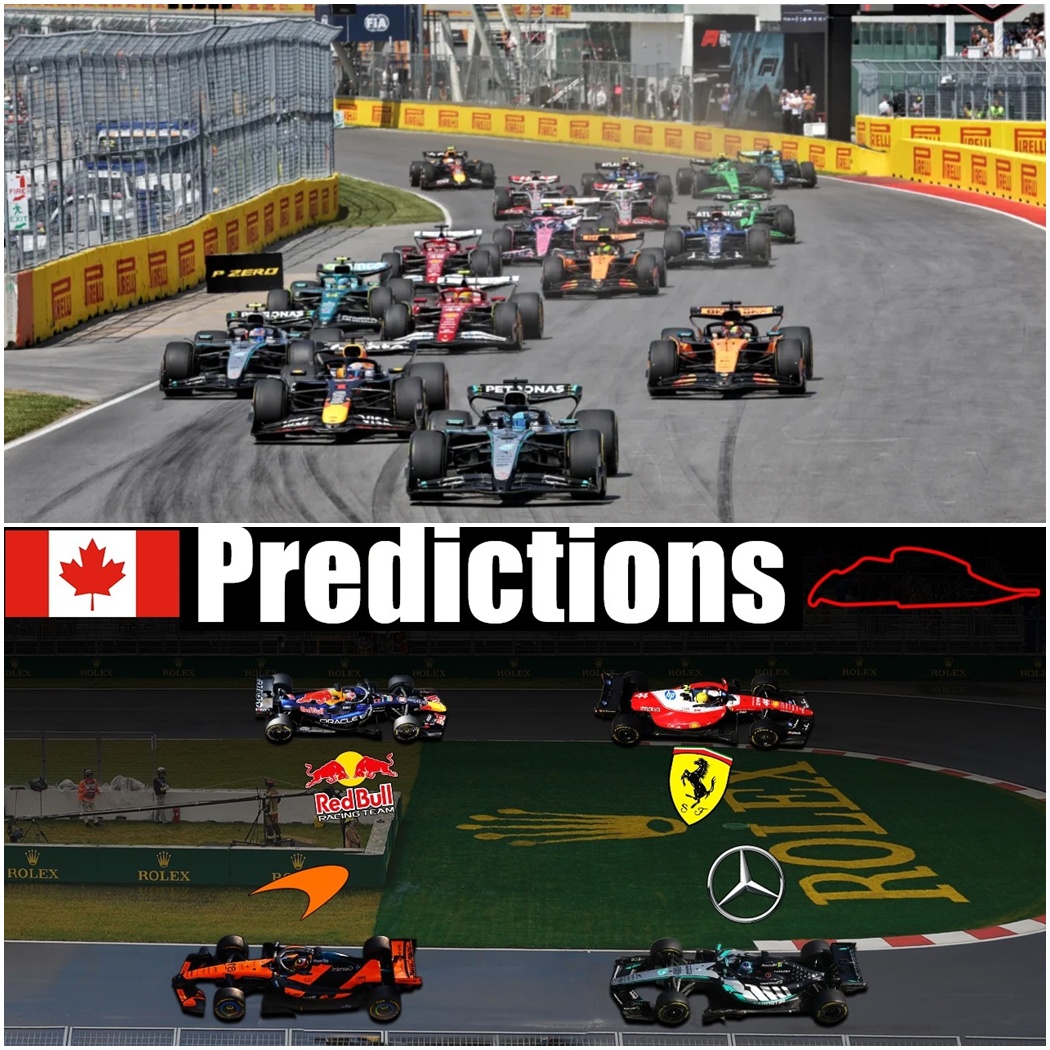
The global travelling circus of Formula One has safely crossed the Atlantic, carrying an intoxicating mixture of immense excitement and underlying dread as it touches down for the highly anticipated 2026 Canadian Grand Prix. Settle in, because the pristine paddock on Montreal’s man-made Île Notre-Dame is currently thick with a level of palpable tension that we haven’t witnessed in years. The sport is fresh off a spectacular, deeply dramatic weekend in Miami, but history has reliably taught us that the unique, high-stakes environment of the Circuit Gilles Villeneuve operates on an entirely different plane of sporting reality.
If you ask any seasoned paddock insider or die-hard fan to look back over the modern era, they will tell you the exact same thing: Canada simply does not produce boring motor races. It is a track structurally incapable of delivering a dull afternoon. From the historic, rain-soaked chaos of the legendary 2011 epic—where Jenson Button masterfully triumphed in a race that stretched to an astonishing four hours and four minutes through wildly changeable conditions—to the intensely controversial 2019 penalty saga involving Sebastian Vettel and Lewis Hamilton, Montreal is a modern crucible where racing folklore is violently forged. Even as the sport successfully transitioned into the highly complex ground-effect regulatory era, the track continued to reliably deliver absolute thrillers year after year.
But as the teams frantically assemble their multi-million-pound machines under the bright garage lights, the 2026 edition is bracing for a monumental, entirely unprecedented shock to the system. For the very first time in its long and illustrious history, Canada will officially play host to a high-octane Sprint race weekend format. It is a radical, highly anticipated promotional shift that has sent immediate shockwaves through the engineering offices of the elite teams, fundamentally transforming a track traditionally defined by tactical patience into an all-out, short-form street fight where absolute chaos is guaranteed to reign supreme.
The Physics of the Park: Fighting the Dust and the Flames
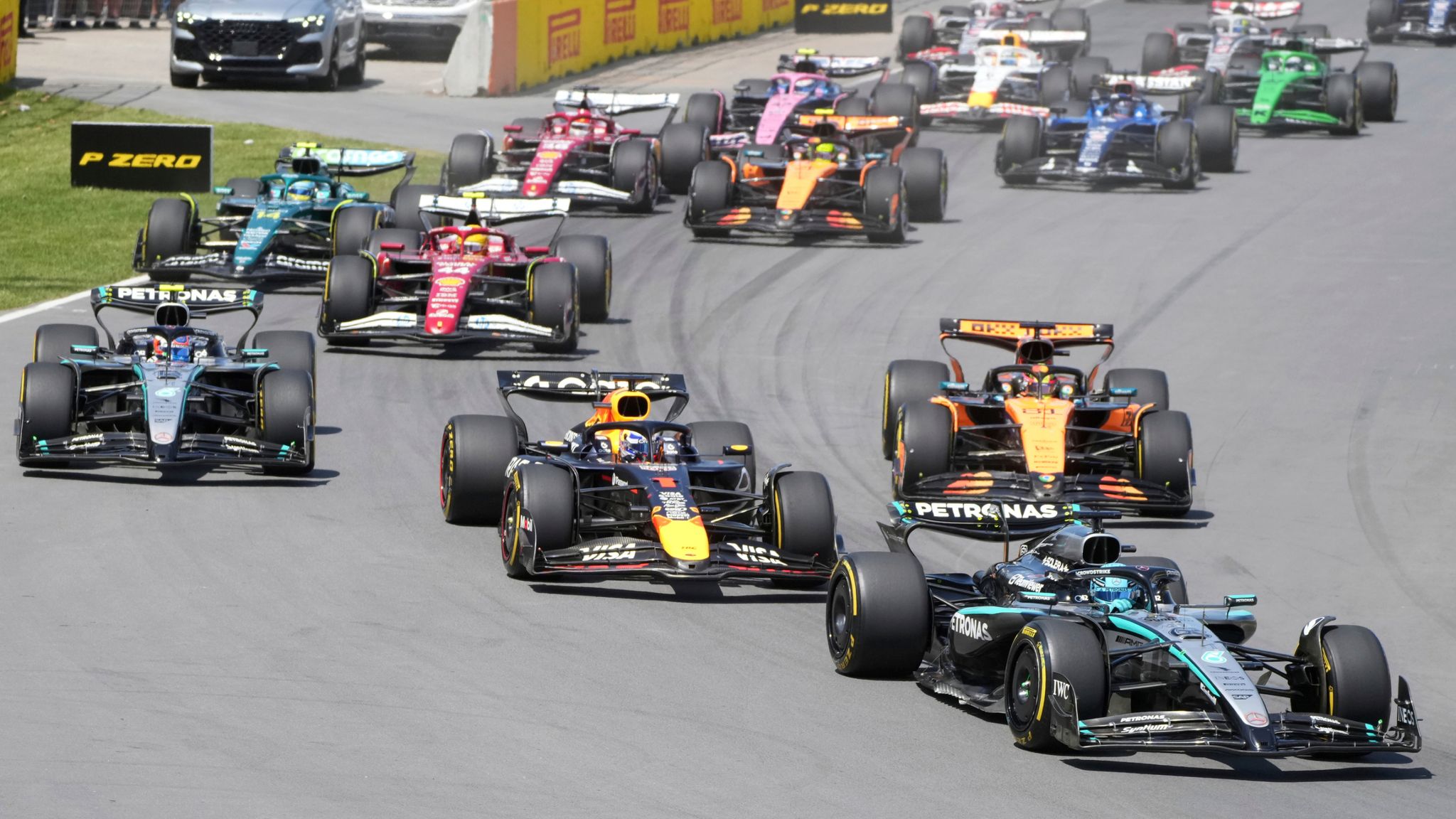
To understand why Montreal strikes such immense fear into the hearts of the grid’s technical directors, one must critically examine the physical profile of the circuit itself. Because the track is situated entirely within a public park for the vast majority of the calendar year, it experiences absolutely zero regular racing activity. Consequently, when the teams unpack their telemetry gear for the opening sessions, they are greeted by an incredibly green, heavily weathered surface layered with an immense amount of dust and debris.
This characteristic triggers an incredibly steep, rapid weekend track evolution. The opening laps of Friday’s sole practice session will be absolutely critical, functioning less as a high-speed performance test and more as a high-stakes sweeping exercise. The cars will be frantically attempting to clean the racing line, desperately trying to lay down a thin layer of rubber to establish the basic mechanical grip required to safely navigate the circuit’s violent braking zones.
And make no mistake, braking is the absolute definitive keyword in Montreal. The Circuit Gilles Villeneuve is a brutal, stop-start rollercoaster that ruthlessly punishes a car’s stopping hardware like nowhere else on Earth. The circuit forces drivers to repeatedly anchor these incredibly heavy, low-downforce ground-effect machines from speeds exceeding three hundred kilometres per hour into tightly binding, low-speed chicanes.
Engineering offices will be forced to fitted significantly larger, heavily modified brake ducts to both the front and rear axles in a desperate bid to channel vital cooling air to the glowing discs. The technical margins are incredibly razor-thin. If a team miscalculates the thermal load by even a handful of degrees, the consequences are immediate and catastrophic. Brakes will literally catch fire in the pit lane, pedal feel will completely fade down the long back straights, and drivers will suffer violent, uncontrollable tyre lockups. These lockups do not merely ruin a single lap; they inflict massive, severe flat-spots on the tyres that send bone-shattering vibrations through the carbon-fibre suspension, destroying driver comfort and completely derailing race-day performance strategy.
This extreme thermal stress completely flips the traditional tyre management philosophy on its head. In Montreal, the absolute structural integrity of the rubber is heavily limited by the immense heat radiating directly from the blistering brake assemblies rather than the mechanical wear of the tarmac itself. Historically, this unique characteristic has generated a fascinating strategic compromise, leaving teams balancing precariously on a knife-edge between an aggressive, fast two-stop strategy or a highly defensive, deeply compromised one-stop plan. The entire paddock is currently holding its breath, desperately hoping that the sport’s latest tire compounds don’t inadvertently homogenise the grid and ruin the brilliant, unpredictable strategic variance that has defined Canadian racing for decades.
The Hidden Nightmare: Aston Martin’s Transmission Crisis
While the front-running teams focus entirely on fine-tuning their aerodynamic balance, a dark, deeply concerning technical crisis is violently tearing through the Aston Martin garage. Behind closed doors, the Silverstone-based team has been waging an exhausting, highly stressful war against a severe, structural gearbox failure that has completely crippled their season.
The primary victim of this mechanical nightmare has been Fernando Alonso. The legendary double world champion has grown increasingly vocal and deeply frustrated with the erratic behavior of his AMR26. Paddock insiders have confirmed that the team has been losing an immense, completely unacceptable amount of lap time inside the critical low-speed traction zones that litter the second and third sectors. The car’s transmission has been struggling heavily with erratic shifting and severe electronic lag, completely destroying Alonso’s ability to cleanly deploy the engine’s power out of the slow corners.
It is a deeply bitter pill for the team to swallow, particularly because the mechanical baseline of the car should theoretically be exceptionally strong in the slow, technical sections of the track. The machine was meticulously designed under the brilliant technical guidance of Adrian Newey, utilizing a highly advanced, sophisticated suspension architecture specifically engineered to maximize mechanical grip over aggressive kerbs. But an elite suspension system is completely useless if the gearbox actively refuses to smoothly transfer power to the rear wheels.
Desperate to rescue their rapidly collapsing campaign, Aston Martin has rushed a highly significant, unpublicised emergency transmission upgrade directly to Montreal, having spent the brief two-week hiatus relentlessly testing the modified components on the high-tech test benches at Sakura. Team insiders are quietly whispering that this mechanical redesign could spark a major jump in pure performance, finally giving Alonso the stable platform he needs to fight his way out of a miserable mid-field slump. However, the stakes could not possibly be higher. If this high-stakes emergency package fails to deliver immediate on-track results, Alonso faces the distinct, humiliating prospect of a catastrophic Q1 basement elimination at a track where he has historically excelled.

Paranoia and Prodigies: The Mercedes Intra-Team War
At the absolute front of the grid, the narrative is completely dominated by a fascinating, highly toxic psychological war currently brewing inside the championship-leading Mercedes garage. The Silver Arrows have established an ironclad stranglehold on the 2026 constructor’s title, but the internal dynamic between their two drivers has reached an absolute, highly volatile boiling point.
Kimi Antonelli, the sensational teenage rookie, returns to the site of his historic maiden Formula One podium from 2025 riding an absolute wave of global hype. The young Italian prodigy has completely stolen the spotlight, driving with a clinical, robotic consistency that belies his complete lack of long-term experience. He currently leads the world championship by a commanding margin, and paddock experts are already backing him to secure the fastest lap and another dominant victory this weekend.
This meteoric rise has completely cornered George Russell, plunging the established British star into a desperate, high-stakes fight for his own professional survival within the Brackley organization. Russell is widely predicted to unleash an absolute masterclass in Saturday’s high-pressure qualifying session, using his immense raw speed to secure a spectacular pole position around the tight, concrete-lined circuit. But securing pole position in Montreal is merely half the battle.
The real, definitive test will arrive during the frantic, high-stress race restarts where the track’s unique layout heavily favors aggressive, decisive overtaking maneuvers. Paddock insiders are openly predicting a brutal, wheel-to-wheel confrontation between the two teammates, with Antonelli widely tipped to ruthlessly hunt down and overtake Russell during the heavy traction phases of the Grand Prix. If Russell fails to forcefully assert his authority and allow his rookie teammate to secure a fourth consecutive victory, his status as the self-proclaimed leader of the post-Hamilton era will suffer an absolute, potentially fatal blow.
The Relentless Chasing Pack and the Wall of Champions
Compounding the immense internal drama at Mercedes is the terrifying reality that the chasing pack is rapidly closing the performance gap. McLaren is arriving in Canada heavily armed with the largest, most aggressive aerodynamic upgrade package on the entire grid. After showing a phenomenal, highly disruptive display of pure speed during the sprint sessions in Miami, Lando Norris and Oscar Piastri are firmly convinced that they possess the absolute technical weaponry required to consistently challenge the silver cars on Sunday afternoon.
Simultaneously, Scuderia Ferrari is desperately attempting to permanently dial in the complex suite of eleven technical modifications they introduced in Florida, hoping that Montreal’s long, flat-out acceleration runs will perfectly suit the high-end power deployment of their Italian engine. Even Red Bull Racing, despite a highly publicised and dramatic spin from Max Verstappen in Miami, remains an existential threat to the frontrunners, possessing a brilliant mechanical platform that excels at riding the brutal, car-breaking chicanes.
Looming over this entire multi-team development war is the physical embodiment of the circuit’s danger: the infamous Wall of Champions. Situated at the absolute exit of the final, high-speed chicane, this legendary concrete barrier has earned a terrifying reputation for violently collecting the sport’s absolute elite. With the 2026 regulations significantly reducing the overall downforce levels of these ground-effect machines, the cars will be incredibly twitchy, unstable, and highly unpredictable when thrown aggressively over the final kerbs.
Add in the highly volatile Canadian weather projections—where unseasonably cold, freezing fourteen-degree temperatures and sudden, violent rain showers can completely saturate the asphalt within a matter of minutes—and the stage is perfectly set for an absolute classic. The chaotic weather could easily function as the ultimate equalizer, throwing a vital lifeline to struggling outfits like Cadillac or Alpine to fight for an insane, season-saving world championship point. One thing is completely certain as the engines roar to life in the pit lane: Montreal is preparing to demand the absolute ultimate reckoning from every single driver on the grid, and the championship will look fundamentally different by Sunday night.








