The Impossible Disaster: How an F1 Team Built With Tape and Desperation Became the Worst in Racing History
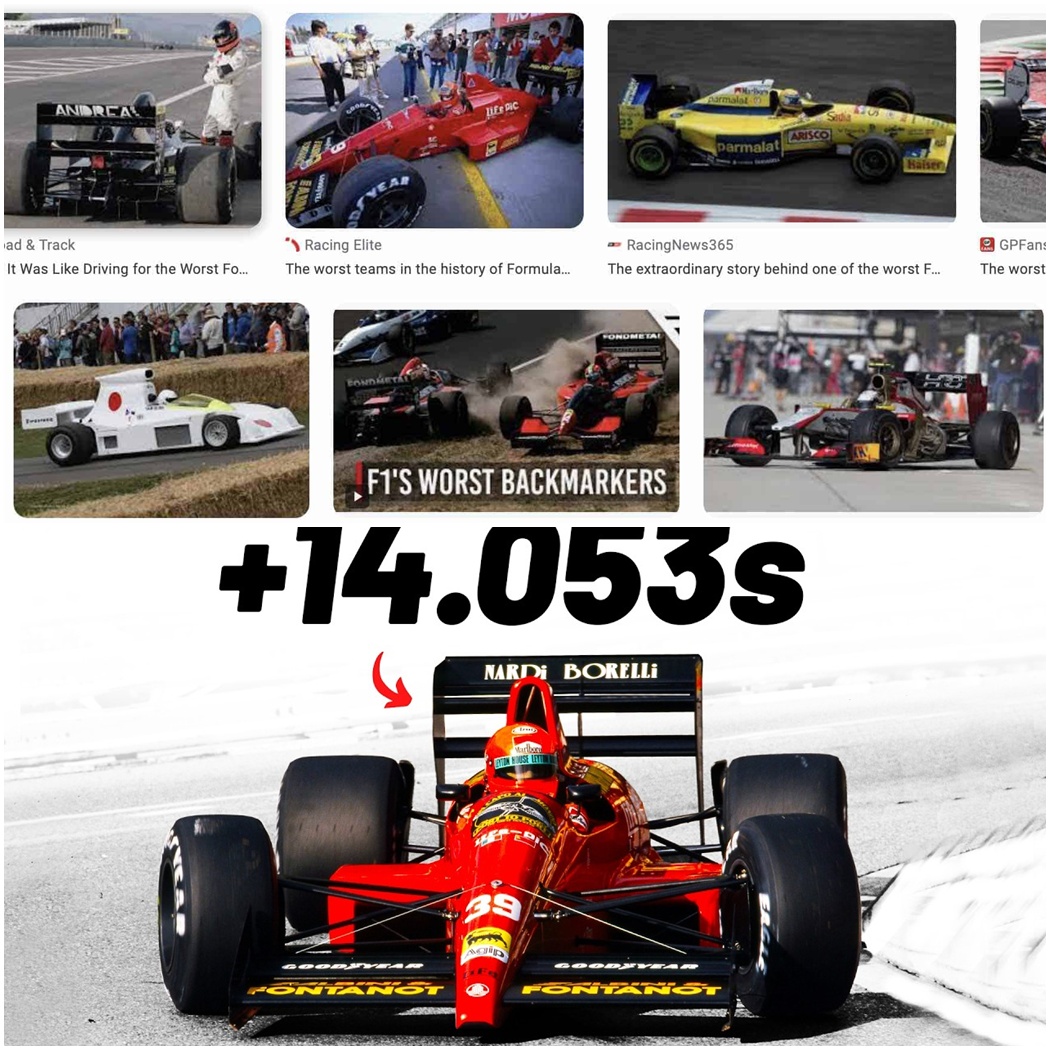
When you think of Formula One, your mind immediately conjures images of engineering perfection, multi-million-pound budgets, and the absolute pinnacle of human speed. It is a sport where fractions of a second decide the difference between legendary status and forgotten mediocrity. Throughout its rich history, the grid has undoubtedly seen its fair share of backmarkers—teams that struggled with funding, battled with questionable ownership, and consistently failed to trouble the points-scoring positions. However, floating somewhere far below the typical struggles of a racing team lies a story so astonishing, so profoundly disastrous, that it borders on the surreal. This is the tale of Life Racing Engines, a team that arrived on the Formula One grid in the 1990 season with a car so incomprehensibly slow, an engine so hilariously outdated, and a budget so non-existent, that their mere presence on a race weekend felt like a glitch in reality. They are universally regarded as the worst team in the history of Formula One, yet their journey is a fascinating tapestry woven with blind ambition, sheer desperation, and an undeniable human spirit.
To properly understand how a team like Life could even exist, we must first transport ourselves back to the wildly excessive landscape of Formula One in the late nineteen-eighties. The sport was undergoing a massive cultural and commercial expansion. Cable television networks were booming globally, and broadcasts by networks such as Eurosport meant that Formula One was suddenly attracting a completely unprecedented number of eyeballs. This sudden explosion in global exposure transformed the sport into an absolute gold mine for sponsors. Consequently, it created a chaotic environment where virtually anyone with a decent bank balance and a burning desire for the limelight wanted to buy their way into the paddock to capitalise on it financially.
Simultaneously, Italy was experiencing a robust economic boom, leading to an influx of hopeful Italian privateer teams aiming to conquer the pinnacle of motorsport. Against this backdrop of rapid financial expansion, the sport’s governing body, the FIA, made a monumental regulatory decision. The iconic but highly volatile turbo engines that had defined the nineteen-eighties were deemed too dangerous, unpredictable, and financially crippling due to their atrocious fuel consumption and soaring development costs. For the 1989 season, turbos were officially banned, and the rulebook was dramatically ripped open to allow a wide variety of naturally aspirated engines. This sudden shift created a massive technological vacuum, an open market where teams desperately scrambled to secure new engine suppliers for the impending era.
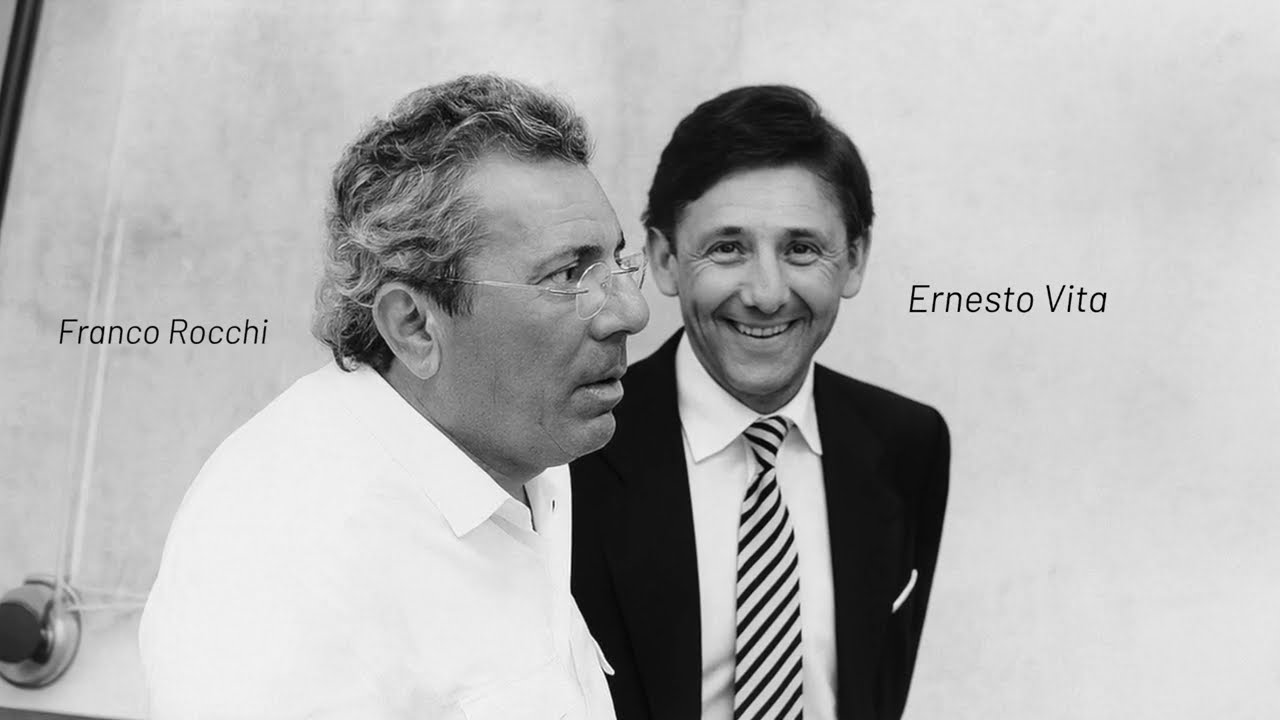
Where most people saw a chaotic transition, an ambitious Italian businessman named Ernesto Vita saw the ultimate opportunity to turn a massive profit. He recognised that countless teams would be hunting for brand new power units, and he boldly decided that he would become a Formula One engine supplier. He branded his new venture “Life Racing Engines,” a direct translation, as “Vita” simply means “life” in English.
Vita’s grand vision hinged entirely on a man named Franco Rocchi. Rocchi was not a novice; he was a highly respected, veteran engine designer who had formerly worked at Ferrari, even winning world championships alongside the legendary Niki Lauda before retiring in 1979. During his golden years, Rocchi had conceptualised and experimented with a highly radical W12 engine layout. Despite having a working proof of concept, Ferrari management had ultimately rejected the design decades prior. When Vita approached him for an engine, Rocchi stubbornly insisted on finally making his beloved W12 dream a reality. Funded by Vita’s capital, the Life W12 engine was officially born. In theory, the W12 was meant to be significantly narrower than a standard V8 engine while theoretically matching the immense power output of a V12. In reality, it was a piece of engineering architecture that was fundamentally more than twenty years out of date before it ever saw a race track.
Vita’s master business plan was simple: build the incredible W12 engine and sell it to the desperate Formula One grid for a fortune. Unfortunately, the grid took one collective look at the heavy, incredibly complex, and completely unproven miracle engine from an unknown supplier and politely declined. Absolutely nobody wanted it. The established giants remained fiercely loyal to proven powerhouses like Honda, Renault, and Cosworth. Even the most desperate backmarker teams refused to touch the Life W12 with a proverbial barge pole.
This total rejection left Ernesto Vita facing a catastrophic financial dilemma. He had already poured a substantial fortune into the research, rights, and physical construction of these engines. He was left with only two agonising choices: attempt to sell the assets for scraps and admit humiliating defeat, or double down, spend even more of his dwindling fortune, and construct his own Formula One team from scratch. Vita chose the latter. His logic was fuelled by pure defiance. He believed that if he built his own car and the engine performed magnificently on the track, he would instantly prove the entire paddock wrong, allowing him to recoup his massive investments.
However, ambition cannot overcome a complete lack of capital. Vita simply did not have the financial resources to design and build a bespoke Formula One chassis capable of accommodating his monstrous W12 engine. His only realistic option was to scour the motorsport scrapyard and purchase an already-built chassis from another failed venture. He found his saviour in a project called First Racing.
First Racing had attempted to make the jump to Formula One in 1989. They commissioned a chassis, but the final product was an absolute disaster. The car failed the mandatory FIA crash tests, possessed a dangerously faulty steering column, and featured a chassis that was notoriously described as being as soft as butter. The car was deemed fundamentally unsafe, and the designer completely distanced himself from the terrifying project. First Racing withdrew before the season even began, leaving the discarded chassis collecting dust.
Vita purchased this literal reject, and his tiny crew set about frantically modifying it. They had to somehow reinforce a dangerously weak chassis to pass safety tests, whilst simultaneously hacking the car apart to replace the small V8 engine it was designed for with the gargantuan, bulky Life W12. The resulting machine, dubbed the L190, was an absolute Frankenstein’s monster of motorsport. It featured a bulging, misshapen engine cover just to fit the power unit, resulting in a car that was aggressively ugly and terrifyingly heavy.
Entering the 1990 season, the Formula One grid was vastly overpopulated. At some circuits, as many as thirty-nine cars arrived hoping to compete, but the physical tracks could only safely accommodate twenty-six starters on a Sunday. To solve this logistical nightmare, the FIA utilised a brutal system known as pre-qualifying. Early on a Friday morning, the thirteen slowest teams were forced into a chaotic, one-hour shootout. Only the four fastest cars from this frantic session were allowed to progress into the actual race weekend. If you failed to make the top four, your entire weekend was instantly over.
The Life Formula One team was entirely comprised of roughly fifteen overworked, under-paid individuals. For fourteen agonising races of the 1990 season, this ragtag crew desperately pushed their heavy, underpowered machine onto the tarmac for pre-qualifying. And for fourteen straight races, they failed spectacularly. To be abundantly clear, they did not just miss the cut. They were historically, fundamentally miles off the pace of the other slow cars they were competing against.
The race-by-race breakdown of Life’s sole season in Formula One reads less like a sporting summary and more like a dark comedy of errors. At the season opener in Phoenix, the car managed a mere four laps before the electronic black box completely failed. Because the team could not afford spare parts, their session was instantly over. Their fastest lap was an unbelievable thirty-five seconds slower than the fastest pre-qualifier.
In Brazil, the car’s engine spectacularly exploded on the out-lap before setting a single timed lap. At Imola, the exact same tragedy occurred when a faulty belt violently ripped the engine apart on the out-lap. The only official lap time recorded that weekend was when the car was driven back to the pit lane strapped to the back of a recovery lorry, clocking in at roughly six minutes—a highly respectable pace for a commercial truck.
Perhaps the most glaring example of their sheer lack of pace occurred at the prestigious Monaco Grand Prix. The tight, twisting streets of Monte Carlo are famous for neutralising power deficits, allowing talented drivers to occasionally hustle a bad car to a respectable time. The Life L190 managed eight full laps before the engine inevitably expired, and their absolute fastest time was still an eye-watering fourteen seconds off the pre-qualifying pace.
When analysing the technical data, the sheer scale of the disaster becomes perfectly clear. In an era where the championship-winning McLaren Honda was running at a screaming fourteen thousand revolutions per minute and producing well over seven hundred brake horsepower, the Life W12 was practically a tractor engine. Team engineers later revealed that they could never safely rev the W12 above eleven thousand RPM. At best, the engine was producing roughly four hundred and fifty horsepower on a dyno, but out on the track, realistic estimates put the output at an abysmal three hundred and eighty-five brake horsepower. Furthermore, the car was absurdly overweight. Due to the massive heft of the antiquated W12 and the desperate chassis reinforcements, the car weighed roughly thirty kilograms over the sport’s minimum limit.
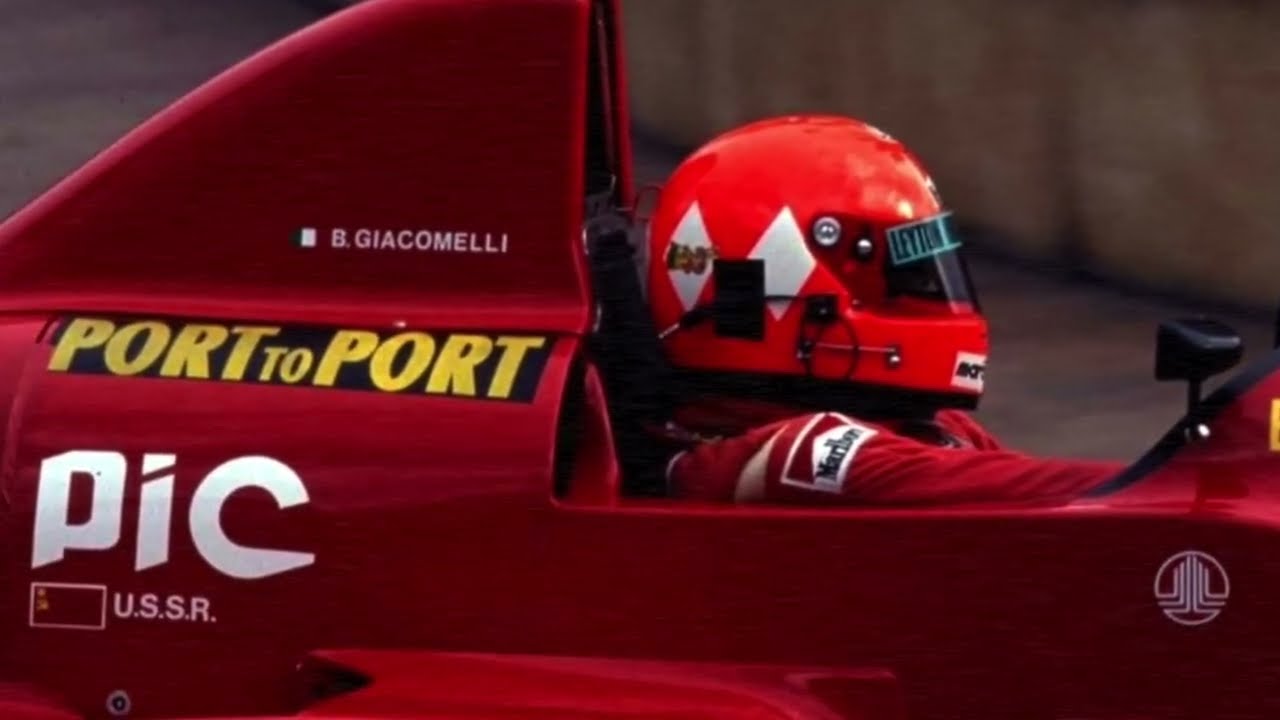
Driving this motorised tragedy was a terrifying prospect. The team started the season with Gary Brabham, son of the legendary three-time champion Jack Brabham. Gary sensibly abandoned the project after just two humiliating races. The team scrambled and hired Bruno Giacomelli, a talented driver who had not raced full-time in Formula One for seven long years. Despite the constant danger and the intense humiliation of driving a car that moved so slowly he genuinely feared being rear-ended by closing traffic, Giacomelli became the emotional heart of the team. Mechanics later recalled that he never lost his motivation and was frequently seen with his sleeves rolled up, actively helping the exhausted mechanics bolt his own car together.
The human element of the Life team is what elevates the story from simple failure to a tragic underdog tale. The small crew knew their situation was completely hopeless, yet every two weeks they travelled the globe, operating on virtually no sleep and zero budget, purely fuelled by the sheer romance of technically being a Formula One team.
By the midpoint of the season, Life had become an open joke within the paddock. Bernie Ecclestone even pulled Ernesto Vita aside and desperately pleaded with him to shut the team down for the sake of the sport’s dignity, but Vita stubbornly refused. In a bizarre final twist to secure funding, Vita managed to land a sponsorship deal with the Petersburg Industrial Company from the Soviet Union. The team was suddenly rebranded as “Life PIC,” proudly displaying the hammer and sickle on their painfully slow engine cover just a year before the collapse of the communist regime.
In a final act of utter desperation, the team abandoned the useless W12 engine ahead of the Portuguese Grand Prix, opting to install a standard Judd V8. This rendered the entire existence of the team completely meaningless. The exhausted mechanics were forced to redesign the chassis mid-season to accommodate an entirely different engine block. When they arrived at the track, the new engine did not fit properly. Fearing massive financial penalties, the team literally duct-taped the engine cover to the car and sent it out. Predictably, the cover blew off at slow speeds. Following the next disastrous race in Spain, where they were still twenty seconds off the pace, Ernesto Vita finally admitted defeat and pulled the plug forever.
When motorsport historians debate the absolute worst Formula One cars of all time, names like Andrea Moda and Lola frequently arise. However, none of them come close to the pure, unadulterated failure of Life Racing Engines. They never once escaped pre-qualifying. They never raced a single Grand Prix. Yet, despite being undeniably and unequivocally the worst team in history, the story of Life remains an unforgettable testament to an era where blinding ambition, sheer stubbornness, and a handful of dreamers could somehow sneak onto the most exclusive starting grid in the world.