Crown Princess Mette-Marit Breaks Her Silence on Jeffrey Epstein Connection Amidst a Deepening Royal Crisis
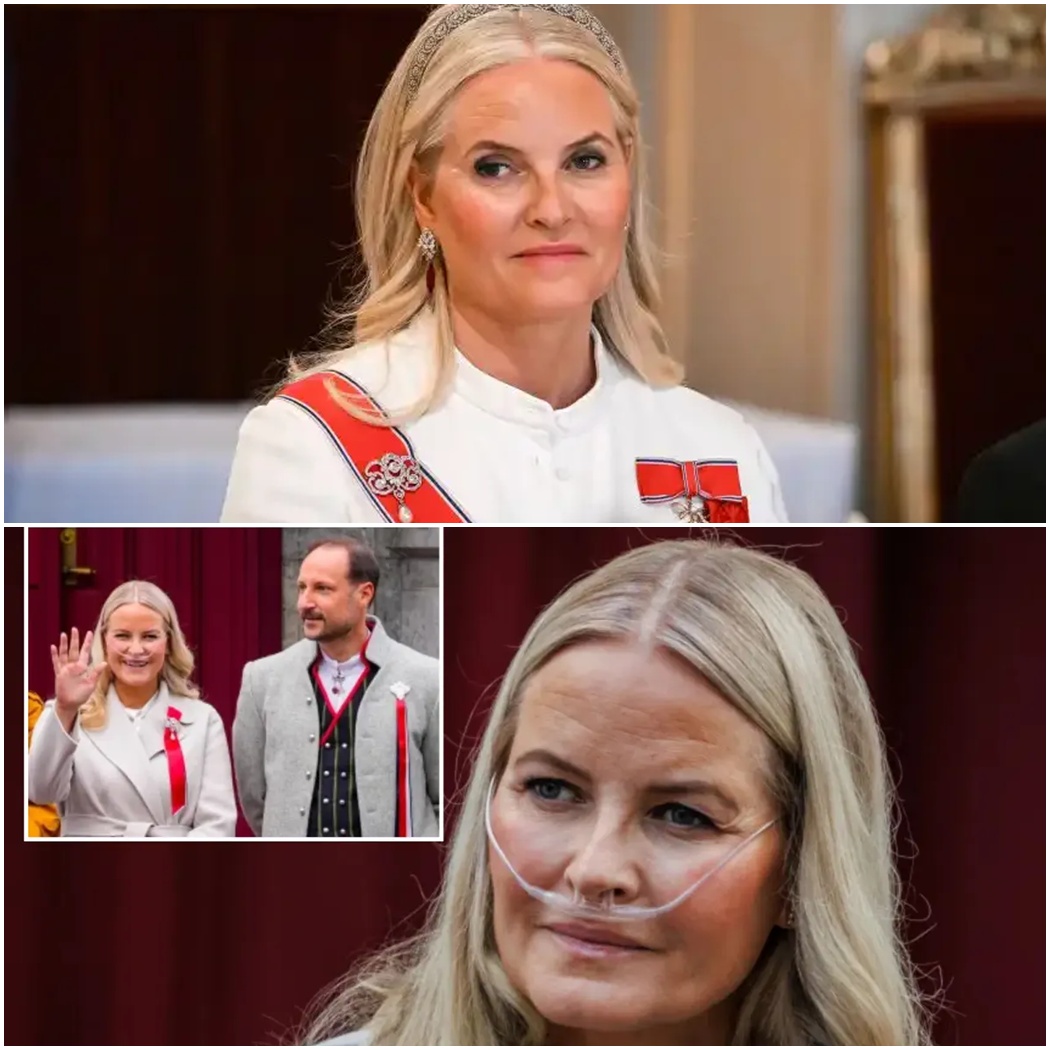
In an unprecedented and astonishing television broadcast that has sent shockwaves through the Nordic nation and royal watchers worldwide, Norway’s Crown Princess Mette-Marit has finally broken her silence. Stepping in front of the cameras for a candid, highly anticipated interview on the national broadcaster NRK, the future Queen addressed one of the most damaging controversies to ever threaten the modern Norwegian monarchy: her extensive and highly scrutinised relationship with the late, convicted sex offender Jeffrey Epstein.
As the Epstein scandal continues to cast a dark and sprawling shadow across the highest echelons of global power, Mette-Marit’s decision to speak publicly marks a significant, perhaps desperate, turning point. For months, the royal palace had maintained a strategy of minimal engagement, offering only carefully worded statements expressing deep regret. However, the relentless pressure mounted following the bombshell release of unsealed US Justice Department files in January, which spectacularly named several high-profile Norwegian figures, including the Crown Princess herself. The resulting fallout has created a perfect storm for the Norwegian royals, threatening to permanently tarnish a family previously celebrated for its modern, relatable approach to the monarchy.
The Infamous Epstein Files and the Norwegian Connection
The catalyst for this royal reckoning was the release of thousands of pages of court documents and personal communications belonging to Jeffrey Epstein. These files, released by the US Justice Department, peeled back the curtain on the disgraced financier’s vast network of powerful, influential, and wealthy associates. While names from British royalty and American politics were largely expected, the sheer volume of correspondence originating from the Norwegian royal court caught the public completely off guard.
According to the devastating data dump, Crown Princess Mette-Marit appears to be mentioned nearly 1,000 times in personal email exchanges spanning from 2011 to 2014. It is a staggering number that instantly destroyed the narrative of a fleeting, coincidental acquaintance. Instead, the files painted a picture of a persistent, active correspondence taking place years after Epstein’s initial 2008 conviction in Florida for procuring a minor for prostitution. The timeline is incredibly damning; during the years the Crown Princess was corresponding with him, Epstein was a registered sex offender desperately attempting to launder his reputation by courting the global elite. Mette-Marit, wittingly or not, had become a crucial pawn in his grand scheme of social rehabilitation.

The NRK Interview: A Strategy of Defence and Contrition
Faced with a rapidly deteriorating public image, Mette-Marit, accompanied by her husband, Crown Prince Haakon, sat down at their Skaugum residence for a feature-length interview with NRK. Her demeanour was solemn, her words carefully measured, yet laced with an undeniable sense of panic regarding her legacy.
In her first public defence, the Crown Princess leaned heavily into the narrative of victimhood, explicitly stating that she had been “manipulated and deceived” by Epstein. She described him as a master manipulator who exploited her natural inclination to see the best in people. According to her testimony, Epstein was introduced to her as “a friend of a friend” through trusted international networks connected to her philanthropic work.
“I regret that I did not anticipate the consequences of those meetings,” she confessed to the cameras, her voice occasionally trembling. She claimed utter ignorance regarding the true, horrific extent of his crimes during their association, insisting that their interactions were primarily social. However, she did admit to a catastrophic failure of due diligence. She acknowledged that, as a prominent figure representing Norway on the global stage, she should have thoroughly investigated his background. Mette-Marit expressed profound regret that her ongoing association may have conferred an unearned degree of legitimacy upon a convicted predator, stating that the realisation of this consequence has been incredibly difficult to confront.
The Bizarre and Damaging Email Exchanges
While the Crown Princess’s apologies appeared genuine, her explanations were immediately complicated by the specific contents of the emails released in the Epstein files. The correspondence revealed a level of bizarre casualness that has left public relations experts and royal commentators entirely baffled.
In one highly publicised and deeply uncomfortable exchange, Mette-Marit casually asked Epstein for advice regarding interior decoration for her son. The email showed the Crown Princess asking whether it was “inappropriate for a mother to suggest two naked women carrying a surfboard for my 15-year-old son’s wallpaper?” The sheer oddity of posing such a question to a convicted sex offender has disgusted the Norwegian public, raising severe questions about her judgment and parental boundaries.
Even more damaging was an email dating back to October 2011, which directly contradicts the narrative that she was completely unaware of his sinister past. In this exchange, Mette-Marit explicitly wrote to Epstein: “Googled you after the previous email. Agreed, it didn’t look good :).” During the NRK interview, when pressed by the journalist to explain exactly what she meant by this message and the accompanying smiley face, the Crown Princess faltered. She claimed she simply “did not know” what she had meant at the time, an answer that has widely been perceived as an unconvincing deflection. The admission that she had indeed performed a Google search on him in 2011—three years after his highly publicised conviction—yet continued the friendship for several more years, fundamentally shatters the defence of complete ignorance.
A Monarchy Besieged: The Trial of Marius Borg Høiby
The Epstein scandal is, tragically for the monarchy, not an isolated incident. It arrives precisely at a time when the Norwegian royal family is already enduring the most severe, horrifying crisis in its modern history. The NRK interview, remarkably, was filmed on the very final day of a devastating criminal trial involving Mette-Marit’s eldest son, Marius Borg Høiby.
Marius, born from a previous relationship before Mette-Marit married Crown Prince Haakon, has long been a controversial figure on the fringes of the royal family. However, the current situation has escalated from tabloid gossip to a horrifying legal nightmare. He is currently facing a staggering 39 criminal charges, which include allegations of severe domestic abuse and four counts of rape. Marius vehemently denies the charges, but the graphic nature of the trial, coupled with intense daily media coverage, has completely drained the public’s goodwill toward the Crown Princess.
The juxtaposition of a mother defending her poor judgment regarding a prolific sex offender on national television, while her own son stands accused of heinous sexual crimes in a courtroom just miles away, has created a toxic atmosphere. For many Norwegians, the overlapping scandals suggest a deep, systemic moral failing within the royal household. The family is fighting a desperate, two-front war for its survival, and the psychological toll on Mette-Marit is visibly immense.

Health Struggles and Stepping Back from the Spotlight
Compounding the intense media scrutiny and the legal nightmares is the Crown Princess’s rapidly deteriorating physical health. In late 2018, Mette-Marit was diagnosed with a rare, chronic variant of pulmonary fibrosis, a severe respiratory condition that causes irreversible scarring of the lungs. Over the past year, her medical team, led by Dr. Are Martin Holm, has been forced to hold press conferences detailing her delicate condition, even floating the terrifying possibility that the future Queen may eventually require a complete lung transplant.
Her health battles have necessitated a drastic reduction in her official royal duties. Her appearances have become sporadic and highly controlled. Recently, royal experts noted a “historic” departure from protocol when it was announced that she would not be attending the lavish 80th birthday celebrations for King Carl Gustaf in Stockholm. Despite her incredibly close ties to the Swedish royal house—she serves as the godmother to Prince Oscar—her absence was glaring.
The palace has attempted to shield her, ensuring that when she does appear, it is primarily at events hosted within the secure confines of Oslo’s Royal Palace, where interactions with the press are strictly forbidden and the environment is entirely controlled. While the public remains deeply sympathetic to her brutal medical reality, her repeated absences from high-profile state events, combined with the swirling controversies, have led to uncomfortable questions regarding her long-term viability and motivation to serve as Norway’s Queen.
Political Fallout and the Parliamentary Investigation
The repercussions of the Epstein revelations have extended far beyond the gilded gates of the royal palace; they have triggered a genuine political earthquake. The fact that Epstein managed to penetrate the highest levels of Norwegian society—associating not only with the Crown Princess but also with a former prime minister and prominent diplomats—has outraged the political establishment.
In a dramatic move that underscores the severity of the situation, the Norwegian parliament recently voted unanimously to appoint a completely independent investigative commission. This powerful body has been tasked with aggressively probing any and all connections between the country’s foreign office, state officials, and Jeffrey Epstein. The commission’s mandate is broad and unforgiving, aiming to uncover how a convicted sex offender was granted such astonishing access to the nation’s elite, and whether any state resources were improperly utilised to facilitate these meetings. The Crown Princess, while immune from standard political prosecution, finds her personal actions directly responsible for initiating a massive, costly state inquiry, further damaging her standing as a unifying national figure.
The Survival of the Modern Monarchy
As 2026 unfolds, Crown Princess Mette-Marit finds herself standing at the precipice of ruin. Once hailed as a modern Cinderella—a single mother with a rebellious past who found her prince and won the hearts of a nation—she is now fighting a desperate battle to salvage her legacy.
Crown Prince Haakon has publicly stood by his wife, attempting to reassure the nation that she remains a vital, integral part of the monarchy’s future. King Harald has also subtly supported her, ensuring she was warmly mentioned during recent state dinners. However, the damage inflicted by the Epstein emails, the horrifying trial of her son, and her own declining health have created a deeply unstable foundation for the future reign.
The NRK interview was a gamble—a calculated risk designed to draw a line under the Epstein saga by offering public contrition. Yet, by failing to adequately explain the most damning pieces of evidence, Mette-Marit may have only succeeded in fanning the flames of public outrage. The Norwegian people are inherently forgiving, valuing honesty and transparency above rigid royal perfection. But as the dark realities of her past associations continue to clash with the severe criminal accusations facing her family today, one must wonder if the public’s patience has finally run out. The coming months will determine not only Mette-Marit’s fate but the very survival of the Norwegian monarchy in its current form.








