The 100kW Trap: How a Technical Ghost in the 2026 Power Unit Ruined Oscar Piastri’s Melbourne Dream
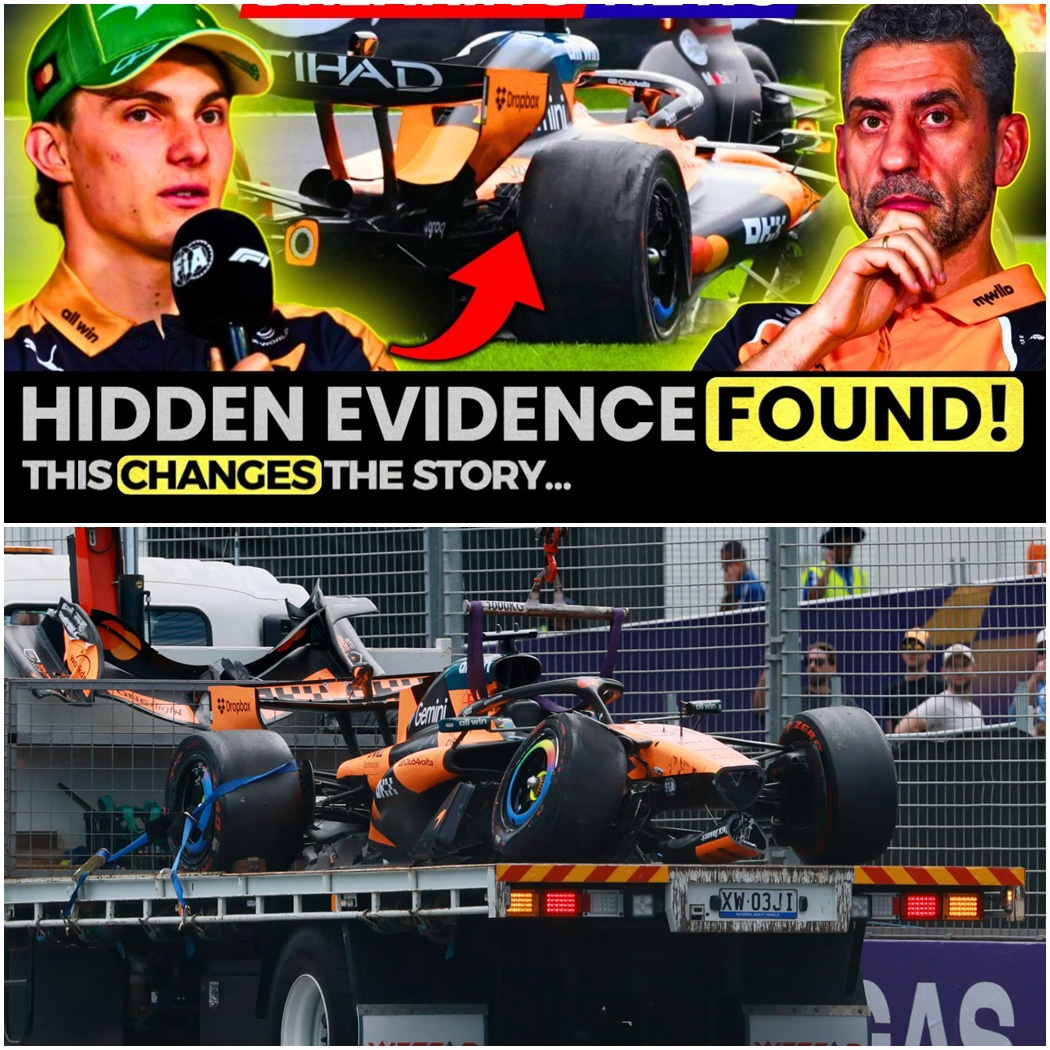
The Australian Grand Prix at Albert Park has always been more than just a race; it is a cultural event, a high-octane festival that marks the spiritual beginning of the Formula One season for the Tifosi of the Southern Hemisphere. In 2026, the stakes were higher than ever. With a brand-new set of technical regulations taking flight, the eyes of the world were on Melbourne’s own Oscar Piastri. The young Australian was supposed to lead the McLaren charge in front of a record-breaking home crowd, but what transpired on the formation lap left tens of thousands in stunned silence. Instead of a heroic charge to the podium, Piastri’s race ended in a cloud of carbon fiber dust and the gut-wrenching sound of a concrete impact.
Initially, the post-mortem of the incident was swift and unforgiving. Social media and pundits alike pointed to the usual suspects: cold tires, an over-eager throttle foot, and the unforgiving curbs of Turn 4. It looked like the classic mistake of a driver trying too hard to please a home crowd before the lights had even gone out. However, as the telemetry data began to trickle out of the McLaren garage, a far more sinister picture emerged. This wasn’t just a driver error; it was a warning shot from the most complex power units in the history of the sport.
According to McLaren Team Principal Andrea Stella, the car didn’t just slide—it was pushed. Piastri reported a sudden, unprompted delivery of approximately 100 kW of extra power at the exact moment he was navigating the exit of the corner. In the precise world of F1, where traction is managed by the millisecond, a 100 kW surge is the equivalent of a physical shove from an invisible giant. This revelation has sent shockwaves through the paddock, raising urgent questions about whether the 2026 hybrid systems are delivering power in a way that even the best drivers in the world cannot anticipate.
The 2026 regulations were designed to push the boundaries of hybrid technology, combining massive electrical deployment with traditional internal combustion to reach the magical 1,000-horsepower mark. But power is nothing without control. Stella’s candid breakdown of the incident suggests that the sport has entered a “danger zone” of torque delivery. He explained that the new power units release energy in aggressive “waves,” particularly during gear shifts or transitions between energy recovery modes. When this surge aligns with a lateral load—such as when a car is leaning through a corner—the rear tires are instantly overwhelmed.
What makes this situation truly alarming is that Piastri wasn’t an isolated case. The Melbourne weekend was a graveyard for rear-end stability. Mercedes’ sensational rookie Kimi Antonelli suffered a high-speed snap in practice that left his mechanics rebuilding the car from the chassis up. Even Max Verstappen, a man whose car control is often described as supernatural, fell victim to the same “technical ghost” during qualifying. When the most precise driver of a generation loses the rear of his car approaching Turn 1, the problem is no longer about talent; it is about the machine.
Andrea Stella refused to sugarcoat the reality. While acknowledging that factors like cold tires and curb strikes played their part, he pointed to a fundamental instability in how torque is regulated under the current FIA framework. The data showed that oscillations during gear shifts can create momentary torque spikes. Normally, these are managed by the car’s sophisticated electronic mapping, but at Albert Park, the “perfect storm” of low track temperatures and aggressive energy deployment created a breaking point. For Piastri, the result was a snap-spin so violent that there was no time for correction. He was a passenger in his own car before he could even register the fault.
This incident exposes the steep learning curve teams are facing with the 2026 power units. Testing is done in the controlled environments of Bahrain or on high-fidelity simulators, but nothing can truly replicate the “organic chaos” of a street circuit like Albert Park. The interaction between the hybrid battery, the turbocharger, and the mechanical grip of the tires is currently in a state of flux. As Stella noted, teams are still learning just how “dangerous” these new machines can be when the software and the hardware aren’t perfectly in sync.
The human element of this story cannot be overlooked. For Oscar Piastri, this was the ultimate heartbreak. To crash out of your home race before it even starts is a psychological weight that few athletes ever have to carry. The silence that fell over the grandstands as the McLaren was towed away was a testament to the shared disappointment of a nation. Yet, the revelation of the 100 kW surge offers him a form of technical vindication. He wasn’t just a “rookie making a mistake”; he was the first victim of a new era of unpredictability.
As Formula One moves toward the next round of the championship, the focus will inevitably shift to the FIA and the power unit manufacturers. If the torque delivery is truly as volatile as McLaren’s data suggests, we may be looking at a mid-season push for software stabilization or regulatory tweaks. The sport prides itself on being the pinnacle of engineering, but when the technology becomes an adversary to the driver, a line has been crossed.
For now, the McLaren garage is looking forward, but the “Ghost of Turn 4” will haunt the 2026 season for weeks to come. Andrea Stella’s honesty has opened a door that many in the sport would have preferred to keep closed. We are no longer just watching a race between drivers; we are watching a battle between man and a new, aggressive form of artificial power. The 2026 era has arrived, but as Oscar Piastri learned the hard way, it has arrived with teeth.








