Racing by Committee: How the FIA’s New “Difficulty Slider” is Transforming Formula 1 into a Bureaucratic Experiment
For fifteen seasons, the Drag Reduction System, or DRS, was the singular, mechanical arbiter of overtaking in Formula 1. It was a polarizing but predictable tool: a driver pulled within a second of the car ahead, a flap on the rear wing opened, drag was reduced, and a pass was either made or missed. It was a binary world of physics and timing. However, as the 2026 regulations descend upon the paddock, that mechanical simplicity has been wiped away. In its place stands a complex, electrical “Overtake Mode” that grants the FIA a power it has never possessed in the history of the sport: the ability to adjust the “difficulty” of racing on the fly.
This is not merely a technical update; it is a fundamental shift in the philosophy of motorsport. For the first time, the governing body has granted itself the authority to act as a mid-season balancing authority, essentially turning the dial on how much electrical energy a driver can use to overtake. As we stand on the precipice of this new era, the question looming over the Albert Park pits is whether Formula 1 is still a battle of engineering brilliance and driver courage, or if it is becoming a highly engineered spectacle managed by a committee in Geneva.
The End of the DRS Era: From Stop-Gap to Staple
To understand the magnitude of the 2026 shift, one must appreciate the context of the system it replaces. When DRS arrived in 2011, it was presented as a temporary “stop-gap.” Formula 1 was suffering from a “dirty air” crisis where cars followed each other so closely that they lost downforce and cooked their tires, making on-track passes nearly impossible. The solution was a movable rear wing flap that allowed the trailing car to slice through the air with less resistance.
Over the next decade and a half, the FIA’s ability to “tune” DRS was limited and rigid. They could move a detection point or lengthen a zone by a few meters, but the underlying mechanics were baked into the cars at the start of the season. Changes to the wing gap—increasing from 50mm to 85mm over several years—were massive, season-long decisions made months in advance. The system was mechanical, binary, and largely out of the FIA’s hands once the lights went out on Sunday. That era is now officially over.
The Mechanics of the Overtake Mode
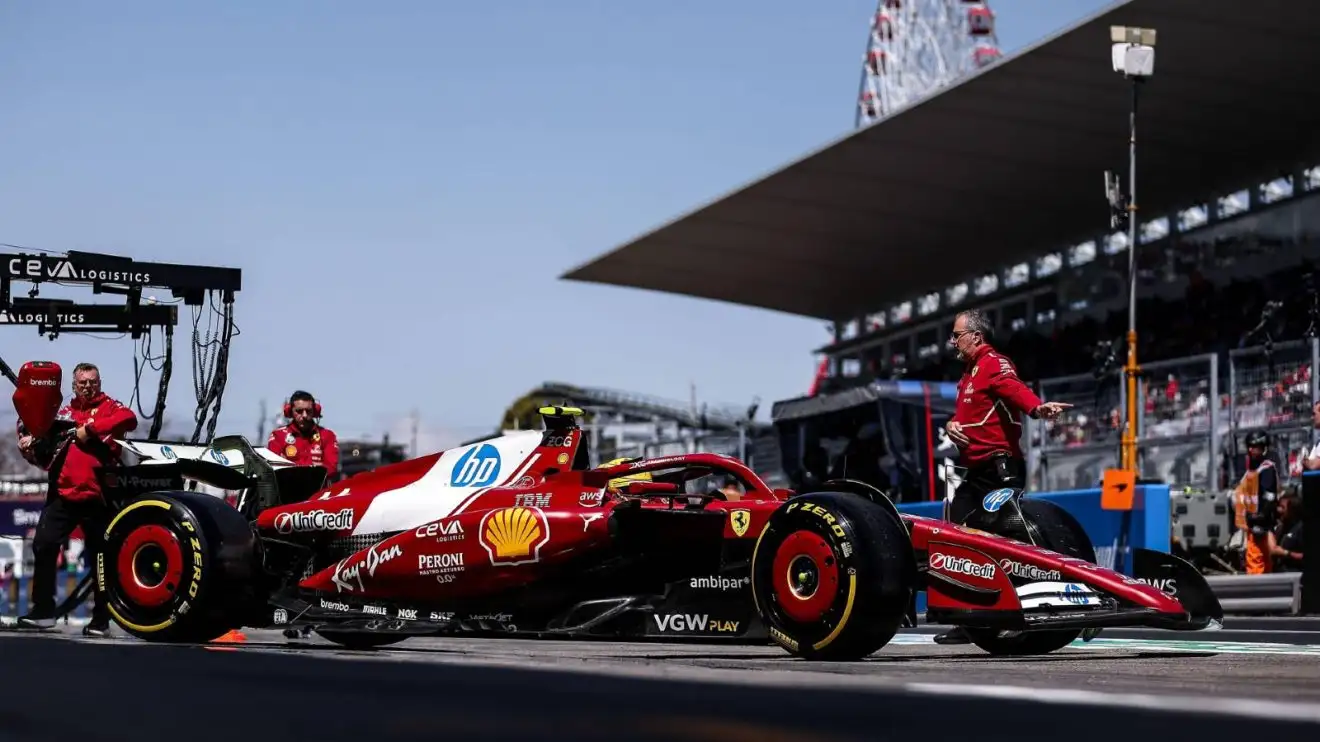
The new “Overtake Mode” (or “Override Mode”) replaces the physical wing flap with a pool of electrical energy. To activate it, a driver must still be within one second of the car ahead at a detection point. However, instead of a flap opening, the driver is granted an extra 0.5 megajoules of electrical energy. This is where the driver’s agency begins to diverge from the old system.
In the DRS era, the driver pushed a button and the wing opened. In 2026, the driver is handed a “quantum” of energy and must decide how to spend it. They can dump the entire 0.5 megajoules into a single long straight for a spectacular lunge, or they can strategically bleed that energy across multiple acceleration zones over an entire lap. This adds a layer of racecraft that simply didn’t exist with DRS. Two drivers in identical machinery could use their advantage in completely different ways, turning every overtake into a high-speed game of chess.
The physics of this advantage are staggering. In standard boost mode, the 350 kW electric motor delivers full power up to 290 km/h before tapering off. In Overtake Mode, that 350 kW—roughly 470 horsepower—is held all the way up to 337 km/h. At exactly the speeds where passes happen on the world’s longest straights, the car in front has zero electrical assistance while the car behind still has approximately 270 horsepower pushing them forward. It is a massive asymmetric advantage designed to mimic the effectiveness of the old rear wing.
The Geneva Slider: A Bureaucracy of Overtaking
The true controversy, however, lies not in the electrical motor but in the fine print of the regulations. Nicholas Tombazis, the FIA’s single-seater director, has confirmed that the governing body now has “quite a lot of flexibility” to adjust these parameters mid-season. If the racing in the early rounds is found to be “too easy” or “too processional,” the FIA can strengthen or reduce the effectiveness of Overtake Mode with just four weeks’ notice to the teams.
This is the “Difficulty Slider.” The FIA can now control the 0.5-megajoule energy quantum, the one-second detection gap, the physical location of activation lines, and even the power output curves themselves. Tombazis has explained that the FIA recognizes it cannot perfectly predict how these variables will interact across 24 different circuits and 11 different car concepts. The solution was to build “flexibility” into the very fabric of the rules.
But for many in the paddock, this flexibility feels like a lack of conviction. Formula 1 has historically been a sport of “fixed” rules where engineers find loopholes and drivers exploit edges. By making the very difficulty of overtaking a tunable parameter, the FIA has positioned itself as a race-by-race producer rather than a neutral referee. If the show isn’t exciting enough, someone in Geneva turns the dial. If a pass is too easy, they turn it back. This “live experiment” nature of the sport risks alienating fans who value the purity of competition over engineered drama.
Plan B: The High-Stakes Recalibration
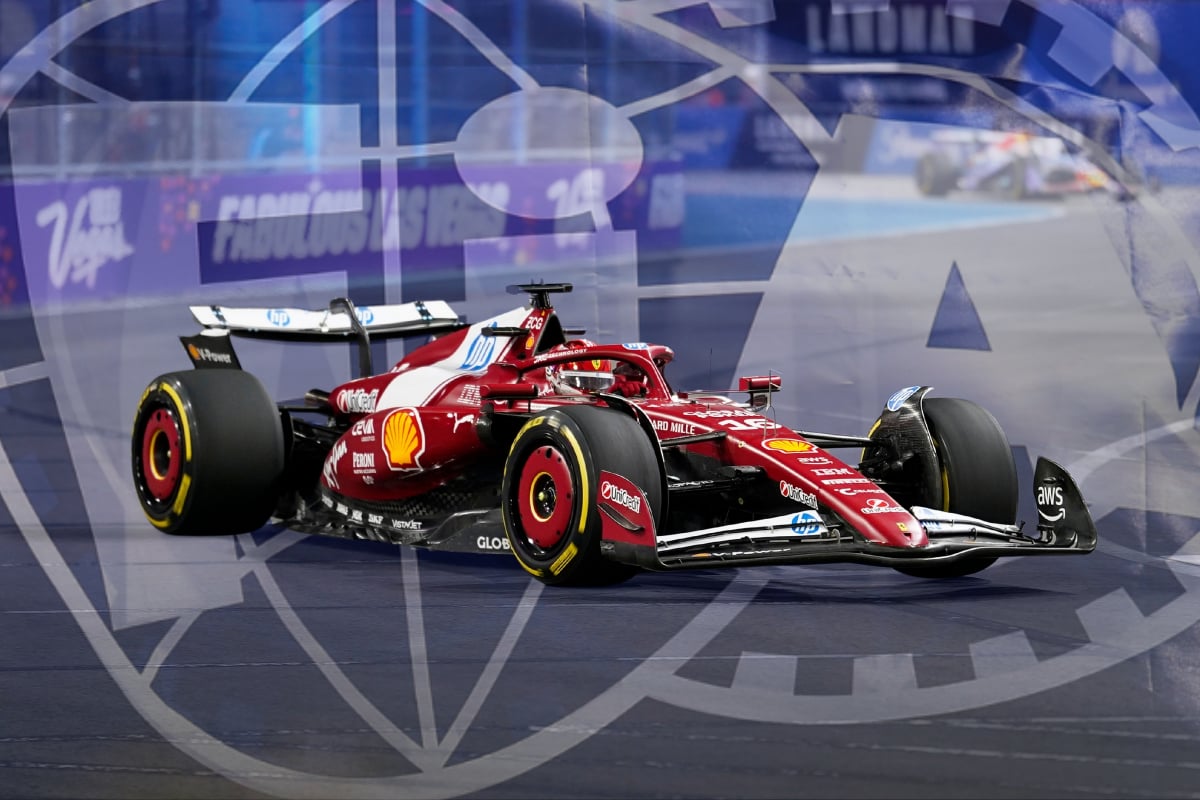
The risks go even deeper than just a few “tuned” laps. The 2026 power units represent a radical 50/50 split between internal combustion and electrical power. Early simulations have suggested that energy management might become so punishing that drivers spend more time “harvesting” energy than actually racing. If this scenario manifests in the opening rounds, the FIA has already prepared a “Plan B.”
The regulations allow the FIA to raise the harvesting limit (known as super clipping) from 250 kW to 350 kW, while simultaneously reducing standard race power. This would be a massive, mid-season architectural shift that would force every team to rethink their cooling, weight distribution, and energy mapping. If such an aggressive recalibration is triggered, it would be a tacit admission that the original 2026 philosophy was fundamentally flawed.
What to Watch For in the Opening Rounds
The first real test for this bureaucratic experiment arrives in Melbourne. The paddock will be watching closely for three key indicators. If the Australian Grand Prix produces fewer than ten on-track passes outside of the pit windows, expect an immediate energy increase for the European leg of the season. If the street circuit of Jeddah—a notoriously energy-poor track—turns into a processional parade, the worst fears about power unit imbalance will be confirmed.
Finally, if Bahrain, a circuit designed for heavy breaking and harvesting, fails to deliver wheel-to-wheel action, the problem may be beyond the reach of any “slider.” In that scenario, no amount of parameter tuning will be able to save a season defined by mismanaged regulations.
Conclusion: Sport or Engineered Spectacle?
The story of the 2026 season is not just about who builds the fastest engine or who hires the best driver. It is about the legitimacy of the sport itself. For decades, Formula 1 resisted the urge to artificially manufacture excitement, relying instead on the brilliance of its engineers and the bravery of its pilots. By creating a system that requires a bureaucracy to make it exciting, the FIA has entered uncharted territory.
If the racing is naturally competitive and the “slider” is never touched, the FIA’s flexibility will be remembered as a wise insurance policy. But if constant mid-season adjustments become the new norm, we must ask ourselves what we are actually watching. Is it a sport where the best man wins, or is it a produced spectacle where the outcome is curated by a committee in Geneva? The traffic lights in Melbourne will signal the start of more than just a race; they will signal the start of a fight for the very soul of Formula 1.