The Return of the Roar: Why Formula 1 is Secretly Plotting a Spectacular Comeback for Screaming V8 Engines
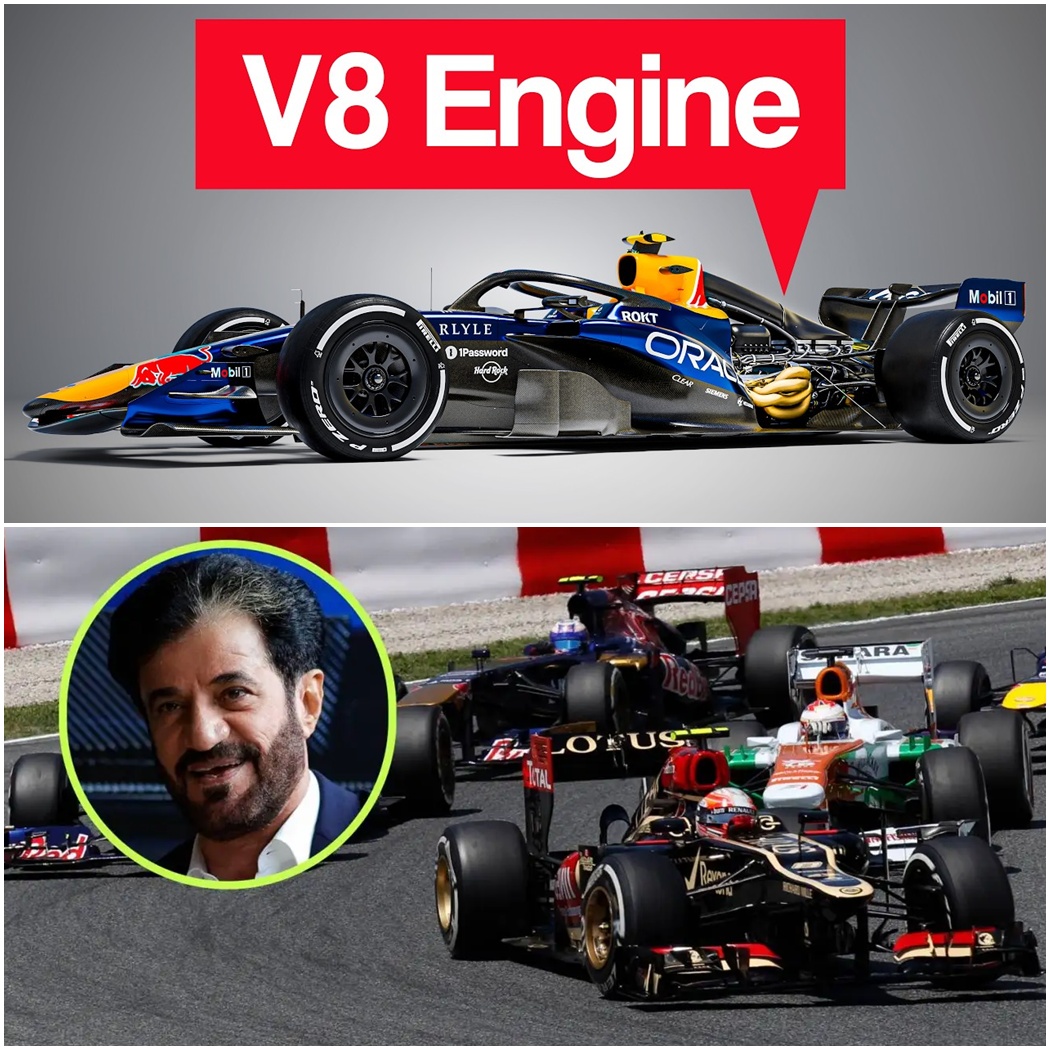
Formula 1 might be on the precipice of reversing one of the single most monumental, controversial, and deeply debated decisions in its long and storied history. After more than a decade of highly complex, heavily muffled hybrid power units dominating the grid, the sport’s key decision-makers are now locked in serious, high-stakes discussions about bringing back the legendary V8 engine. However, this is not a simple exercise in nostalgia. The proposed power unit is something completely different: a highly advanced V8 hybrid designed specifically for a modern, environmentally conscious era. Yet, if this dramatic U-turn actually materialises, it raises a profound and multi-billion-pound question. Why on earth would Formula 1 willingly abandon a sophisticated technology that it has spent immense fortunes developing, and what would this revolutionary new engine actually look, feel, and sound like out on the tarmac?
To truly understand why this seismic conversation is even taking place in the boardrooms of motorsport, you must first look at the harsh realities the sport is currently dealing with. Let us start with the most visceral, emotional element of all: the sound. Formula 1 CEO Stefano Domenicali has recently spoken quite publicly about the organisation’s own internal market research. The data is utterly conclusive; the vast, overwhelming majority of global fans desperately want the traditional, ear-splitting sound back on the racetrack. When your own commercial numbers are telling you something that emphatically, it undeniably shapes the future of the business.
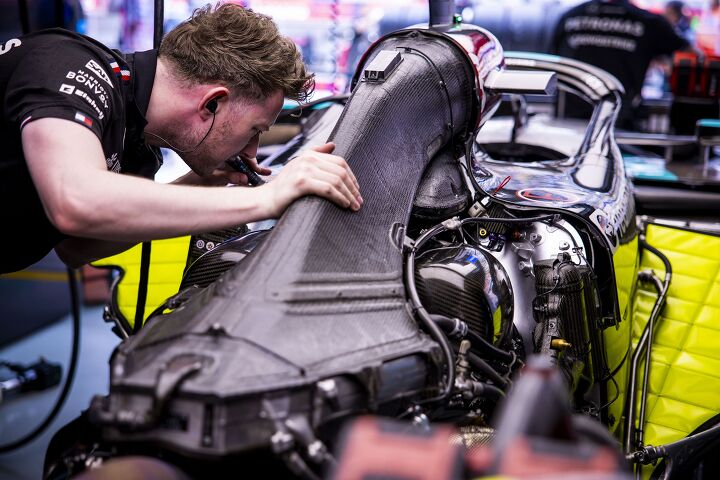
During the golden era, the old naturally aspirated V8 engines ran at a staggering 145 decibels, peaking perfectly at the precise frequency range where human hearing is at its most sensitive and emotional. It was a noise that rattled your ribcage. When the V6 turbo-hybrids officially arrived in 2014, the overall volume dropped by roughly 11 decibels. Because sound is measured on a logarithmic scale, that technical reduction was actually perceived by the human ear as roughly halving the loudness overnight. It was a devastating blow to the trackside experience. Lewis Hamilton has fondly spoken about going to Spa-Francorchamps as a young boy, vividly remembering the sensation of feeling Michael Schumacher’s screaming Ferrari physically reverberating through his entire body as it crested Eau Rouge. Similarly, Charles Leclerc, a driver who has never actually raced a V8 in Formula 1, lamented recently that the visceral noise is still what he misses the most about the sport.
Beyond the romance of the sound, there is the brutal reality of the cost. The current hybrid power units are extraordinarily expensive to develop, test, and build. The financial commitments routinely run into the hundreds of millions of pounds per manufacturer, per single year, in research and development alone. Crucially, that immense complexity does not just cost a fortune; it actively concentrates track performance. When Mercedes built the superior hybrid package in 2014, they seamlessly turned it into eight consecutive, largely unchallenged Constructors’ Championships. When Honda returned to the grid in 2015, they spent several miserable, incredibly costly seasons floundering at the back of the pack before finally winning a race with their own engine. Simpler technology distributes competitive performance far more evenly across the entire grid. It is worth remembering that the previous V8 era remarkably crowned four entirely different World Champions in the space of just four years.
The original reason Formula 1 shifted to the hybrid formula in 2014 was the concept of ‘road relevance’. The wider automotive world was rapidly heading toward widespread electrification, and the giant car manufacturers desperately needed the technology placed inside the race car to mean something to the road cars sitting in their showrooms. That marketing narrative is what ultimately justified their astronomical racing budgets. Hybrid engines successfully provided them with that corporate story. However, a major regulatory shift has just changed the entire landscape. In 2026, Formula 1 has mandated the use of 100% sustainable, fully carbon-neutral fuel. This brilliant scientific breakthrough fundamentally means that the physical engine architecture no longer exclusively determines the environmental outcome of the sport. A screaming V8 engine running on completely sustainable fuel inherently has the exact same carbon impact as a muted V6 hybrid running on that very same fuel. In a single stroke, the original environmental justification for all of that crippling hybrid complexity has been comprehensively answered and neutralised.
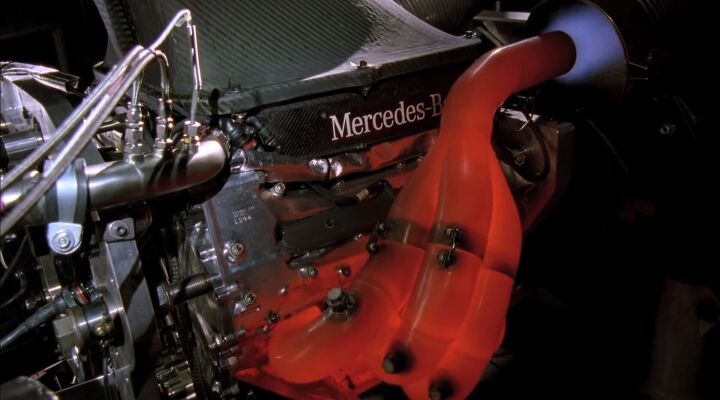
Therefore, Formula 1 Management suddenly finds itself holding all the crucial cards. They have the commercial case, they have the sound case, they have the financial cost case, and now, the environmental argument is totally resolved. But here is precisely where the situation gets remarkably complicated, because the automotive giants who actually manufacture these racing engines possess a very different corporate view.
The manufacturers pushing back against the V8 revival are not doing so blindly or without solid reasoning. Their defensive position makes complete logical sense once you understand why they participate in Formula 1 in the first place. For the board members in Tokyo, Stuttgart, or Ingolstadt, it is rarely about the shiny trophies. It is exclusively about the R&D justification. They need the ability to stand in front of their shareholders and state that every single pound spent on motorsport is actively developing technology that ends up in consumer road cars. Without that clear narrative, justifying hundreds of millions a year on a racing programme becomes practically impossible. For Honda, that vital technology is electrification. Their corporate president stated it directly; the sole reason they are returning to Formula 1 for the 2026 regulations is the advanced powertrains and the complex hybrid systems. A screaming V8 fitted with a token, tiny hybrid unit simply does not give them the development platform they desire. Audi faces a similar dilemma. The German marque has painstakingly built their entire impending Formula 1 programme from scratch, entirely around the 2026 hybrid regulations. Every new hire, every new facility, and every technical decision was oriented around the advanced electrical formula. For Audi, the hybrid element is not merely a feature of their engine; it is the entire point of their existence in the sport.
Yet, over the last twelve months, the global automotive world has shifted significantly beneath their feet. Governments around the world are aggressively rolling back their aggressive EV legislation, key consumer markets are slowing down dramatically, and there is immense economic pressure weighing heavily on automotive balance sheets. The global marketplace looks very different today than it did when the 2026 Formula 1 regulations were originally written. Several manufacturers have already communicated this changing reality directly to the FIA. Furthermore, absolutely nobody in the paddock wants to fund two entirely separate engine programmes simultaneously—running a massively expensive turbo-hybrid through to 2030, whilst developing a brand-new V8 in parallel for 2031. That is an enormous, deeply unpalatable financial ask at the absolute worst possible moment in the global economy.
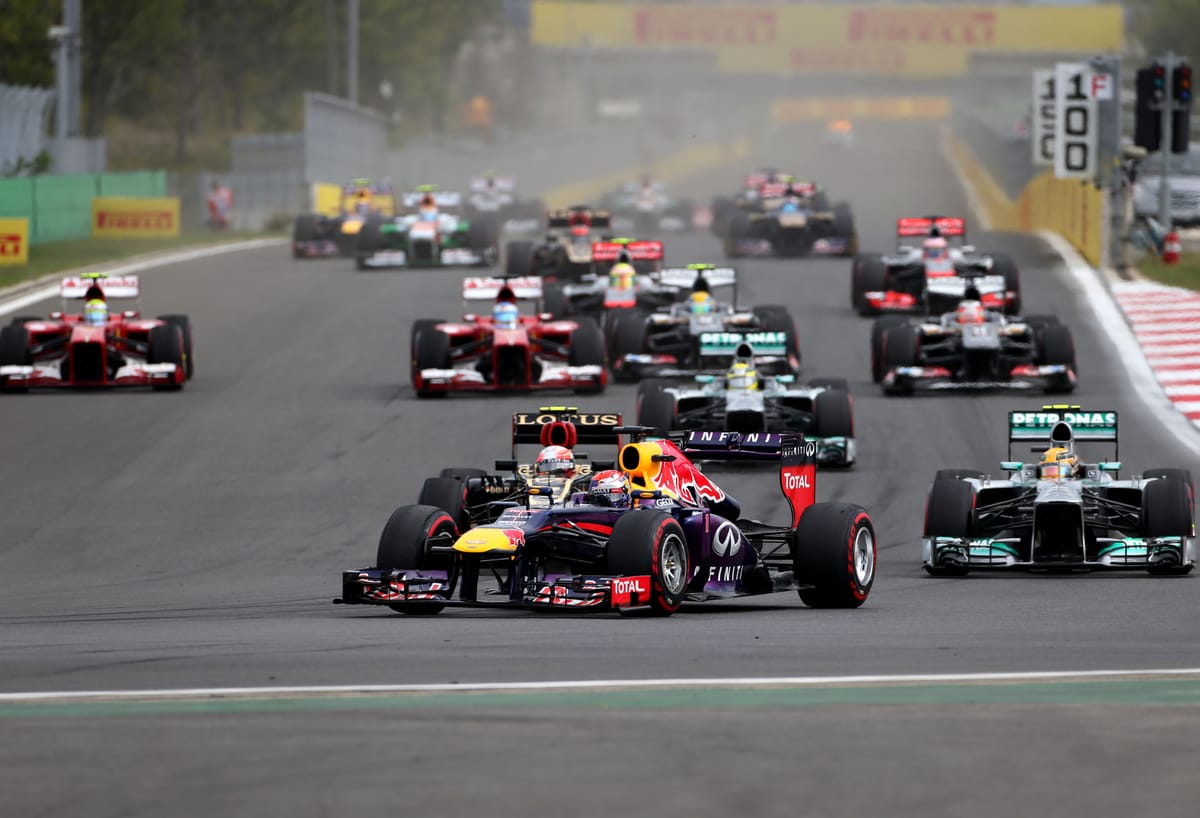
This creates a fascinating, high-stakes conflict. Formula 1 desperately wants the change for the good of the spectacle, whilst the manufacturers desperately need time and a commercially viable reason to stay. This is exactly why the breathtaking proposal currently on the negotiating table is not a straight, simple swap back to the 2000s. It is something much more specific, highly targeted, and genuinely thrilling.
To fully grasp the brilliance of the new engine proposal, one must understand the glaring flaws it is specifically designed to solve. The impending 2026 power unit is roughly a 50-50 split between combustion and electric power. The V6 engine produces around 536 horsepower, whilst the electrical systems contribute roughly 470 horsepower, combining for over 1,000 horsepower. However, the glaring issue is the battery itself. It can only store so much electrical energy, and it inevitably depletes rapidly over the course of a long straight. When it runs low, drivers are forced to awkwardly manage their deployment, aggressively backing off the throttle on the straights to desperately harvest charge through regenerative braking. In certain racing conditions, the brutal speed difference between a car with a full battery and one stuck in ‘harvesting mode’ can reach a terrifying 50 kilometres per hour. This is the dreaded ‘energy starvation’ problem.
The incredible new proposal seeks to eradicate this issue entirely. The target is a 2.4-litre V8 engine producing roughly 880 horsepower, screaming at a glorious 16,000 revolutions per minute, running exclusively on 100% sustainable fuel. It will still feature a hybrid system, but a dramatically smaller, far less intrusive one. Instead of the current 50-50 power split, the proposal targets somewhere between a 90-10 and 70-30 split heavily in favour of internal combustion. The electric component effectively becomes a traditional ‘push-to-pass’ boost tool, rather than making up half of the car’s fundamental powertrain. Consequently, the incredibly unpopular practice of ‘energy management’ as a lap-by-lap strategy effectively disappears.
Because the heavy battery shrinks so dramatically, so too does the massive weight of the car. The current bloated machines have a minimum weight of 768 kilograms. The 2031 target is a wonderfully nimble 650 kilograms. That is an astonishing 118 kilograms removed from the chassis, completely revolutionising how the car changes direction, heavily reducing tyre degradation, and giving the drivers a far more direct, purely mechanical relationship with the racing surface.
However, one highly critical detail is still being fiercely negotiated behind closed doors, and it is the singular decision that determines whether the iconic sound truly returns: the turbocharger. A turbocharged engine inherently uses exhaust pressure to spin a turbine, which absorbs the high-frequency edge that famously defined the classic V8 era. A naturally aspirated engine, conversely, breathes completely freely. At 16,000 RPM, the violent combustion pulses fire directly out of the exhaust at the exact acoustic frequency that produces that spine-tingling scream. Surprisingly, Toto Wolff recently described his ideal vision for the future as “naturally aspirated, high revving, aligned with sustainable fuel.” If the Mercedes team principal is pushing for a naturally aspirated engine, the momentum is undeniably building.
The current contractual timeline targets this spectacular revolution for the 2031 season, the exact moment the current governance agreements expire and the manufacturers lose their powerful veto rights. However, if the impending 2026 regulations prove to be as deeply flawed and unpopular as many insiders fear, the FIA has strongly indicated it would consider bringing the V8 switch forward. Formula 1 has spent an entire decade building the most scientifically advanced, overly complicated engines in the history of motorsport. The sensational proposal now sitting on the table is not about foolishly throwing that progress away. It is about actively finding a version of this magnificent sport that finally gives back what the vast majority of fans have been desperately missing, whilst keeping just enough modern technology to keep the automotive giants invested. Whether they can successfully agree on exactly what that delicate compromise looks like will undoubtedly be the biggest, most explosive story in motorsport over the next two years.








