The Secret Threat That Terrified F1: The Untold Story of the Six-Wheeled Racing Revolution and the Ban That Buried It
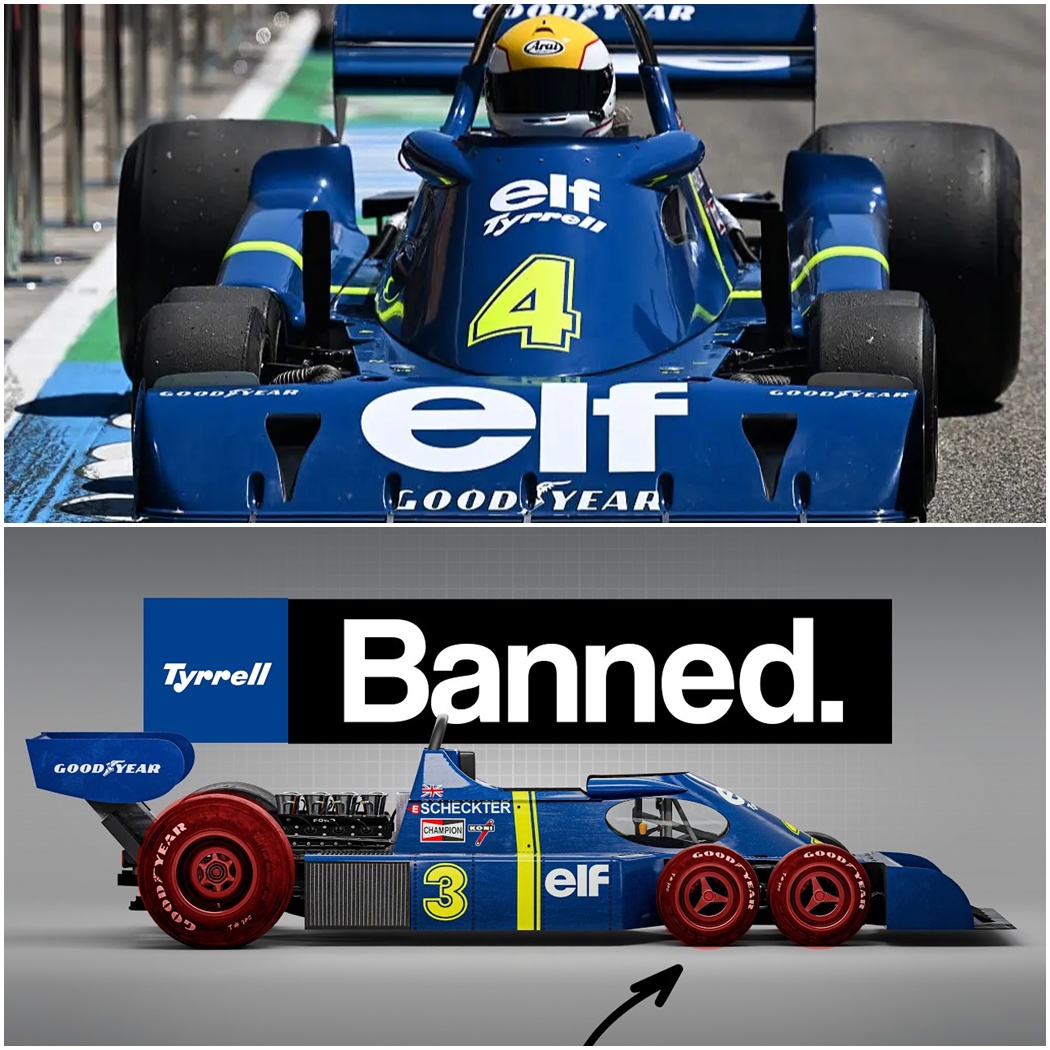
In the highly secretive, fiercely competitive world of 1975 Formula 1, a brilliant British engineer managed to find something utterly extraordinary hidden deep within the official regulatory rulebook. It was not a loophole, nor was it a clever reinterpretation of an existing technical guideline. Instead, it was a glaring, unprecedented omission that absolutely nobody else on the grid had ever thought to look for. Armed with this startling discovery, he quietly set about building a racing car around it in absolute secrecy. He told almost no one working within the factory walls about his grand design. For months, the mysterious vehicle sat quietly under a heavy tarpaulin, completely obscured from prying eyes. The designer even went as far as fitting large, deceptive hoops over the wheel arches, carefully shaped to ensure the chassis looked exactly like a normal, conventional racing car from a distance. Even his own highly paid, elite drivers had absolutely no idea what kind of radical machine was being painstakingly built for them in the shadows.
When the designer finally pulled the heavy cover off to present his creation to the world, the reaction was sheer disbelief. Fully half of the seasoned motorsport journalists standing in the crowded room genuinely decided it must be an elaborate, expensive public relations stunt. The car sitting before them possessed six wheels. Astonishingly, this bizarre mechanical contraption would go on to win a Formula 1 Grand Prix on sheer merit. And then, abruptly and controversially, Formula 1 permanently banned it from the sport. The official reason provided by the governing body was simply “safety.” However, as history often reveals, that convenient explanation was absolutely nowhere near the whole story.
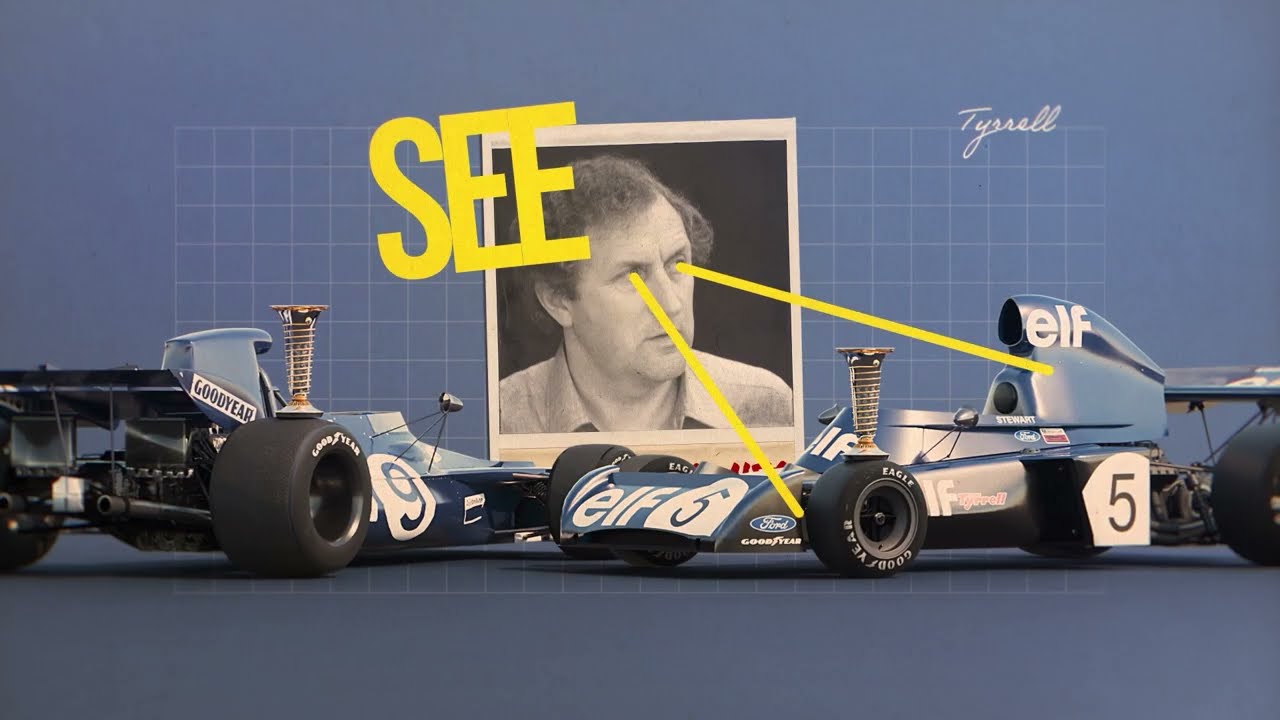
To truly understand the genesis of this six-wheeled monster, we must step back into the unique environment of the mid-1970s. During this specific era, the vast majority of Formula 1 teams were essentially operating on a remarkably level playing field. Most constructors were running the exact same naturally aspirated Ford-Cosworth engine, heavily paired with the exact same dependable Hewland gearbox. While the various racing cars looked noticeably different on the outside, adorned with varied liveries and aerodynamic shapes, underneath their lightweight skin, they were nearly identical in mechanical capability. Derek Gardner was Tyrrell’s chief designer at the time, and he was a man possessing immense pedigree, having been the engineering mastermind behind two of Sir Jackie Stewart’s illustrious World Championships. Gardner could clearly see the dangerous performance plateau that was rapidly approaching.
When an entire grid shares the exact same core hardware, the competitive gaps between rival teams naturally become incredibly small, and they tend to stay there. You quickly stop finding precious lap time hidden in the engine bay and are forced to start desperately looking absolutely everywhere else on the chassis. Seeking an elusive advantage, Gardner focused his attention entirely on the front tyres. In a conventional Formula 1 car of the era, the massive front tyres sat entirely outside the protective shadow of the front wing. They were completely exposed, violently sticking out into the oncoming airflow. At pure racing speeds, these two large, rotating rubber columns essentially acted as massive aerodynamic airbrakes. They were violently hitting the air at roughly two hundred kilometres an hour on every single lap, naturally generating an immense amount of drag that slowly bled performance the car simply did not have to lose.
Nobody had bothered to fix this glaring aerodynamic flaw because the obvious solution seemed physically impossible to achieve. If you wanted to eliminate the drag, you simply needed to make the front tyres much smaller and neatly tuck them entirely inside the profile of the front wing. Doing so would make the aerodynamic drag virtually disappear overnight. However, there was a massive, fundamental catch. A significantly smaller tyre inherently possesses a much smaller contact patch. Less rubber physically touching the tarmac immediately translates to less mechanical grip, drastically reduced cornering speed, and severely compromised braking capabilities. By attempting to solve one complex aerodynamic problem, you instantly created a far worse mechanical one.
Gardner sat with that frustrating engineering puzzle for quite a while, until a radical, unbelievable idea finally struck him. What if you chose to use four of them? Four notably smaller wheels spread evenly across two distinct front axles could perfectly match the overall rubber contact patch of two traditional, full-size tyres. Yet, crucially, each individual wheel would be physically small enough to perfectly hide behind the leading edge of the front wing, disappearing from the destructive airflow entirely. Gardner frantically checked the official FIA rulebook. It thoroughly covered almost every single aspect of car design, but it explicitly said absolutely nothing about how many front wheels a car could legally run. The strict regulations had never bothered to address the topic because absolutely nobody in the history of the sport had ever thought to ask the question.
The deeply secretive development was given the codename ‘Project 34’. Gardner maintained an iron grip on the flow of information, keeping his own elite drivers, Jody Scheckter and Patrick Depailler, completely in the dark regarding what was being built for their upcoming season. Interestingly, the one single person entirely outside the Tyrrell team that Gardner decided to confide in was his trusted former driver, Jackie Stewart. During a long flight home following the 1975 South African Grand Prix, Gardner stealthily snuck into the quiet first-class section of the aeroplane, sat beside his old friend, and excitedly explained the radical six-wheel concept. Stewart reportedly had a sudden fit of choking upon hearing the outlandish idea. Ever the optimist, Gardner happily took that visceral reaction as a very good sign that he was onto something truly disruptive.
However, the design required a monumental external partnership. Goodyear, reigning as the only major tyre manufacturer left in Formula 1 at the time and supplying every single team on the starting grid, had to agree to manufacture a completely custom front tyre entirely from scratch. This new tyre would be drastically smaller than anything the sport had ever used before. It would be entirely bespoke, built specifically for one single car, and utterly useless to absolutely anybody else on the grid. Amazingly, Goodyear agreed to the costly venture and promised to keep the secret quiet.
Now, this is where the engineering reality becomes incredibly complicated and endlessly fascinating. Having four smaller wheels neatly tucked inside the front wing sounds beautifully clean and elegant in aerodynamic theory. In brutal track practice, however, it instantly created a host of bizarre, unprecedented problems that had never previously existed in the history of a racing car. When any conventional car confidently turns into a corner, the wheels positioned on the inside of the turn naturally follow a much tighter arc than the wheels positioned on the outside. With an unbelievable four front wheels spread across two entirely separate axles, both pairs of tyres desperately needed completely different steering angles operating simultaneously. They required constant, aggressive adjusting through every single sweeping corner, every tight chicane, and every heavy braking hairpin.
Gardner’s incredibly complex steering solution actually worked relatively well in fast, sweeping corners where the angles were shallow. However, in slow, incredibly tight ones, the suspension geometry essentially fought against itself. The heavy front end stubbornly pushed wide, and the driver was forced to aggressively manage the chaotic handling rather than instinctively trust it. Furthermore, the overall brake balance was noticeably worse. A conventional racing car operates with two distinct braking variables: the front and the rear. The Tyrrell P34 possessed three separate variables: the first front axle, the second front axle, and the rear. Each was fed by its very own independent master cylinder. Because four separate front tyres naturally do not heat up or wear down at identical, predictable rates, that crucial brake balance aggressively shifted constantly throughout a race.
If the first pair of front wheels happened to lock up under heavy braking before the second pair did, the car’s effective wheelbase suddenly shortened in the middle of a high-speed corner. Conversely, if the second pair locked up first, the wheelbase drastically lengthened. The car was literally having a violent, mechanical argument with itself through every single braking zone on the circuit. Despite the chaos, Patrick Depailler bravely adapted his driving style. He eventually found the unique rhythm of the six-wheeled car and worked seamlessly with its bizarre quirks. His teammate, Jody Scheckter, never quite got there mentally. Scheckter famously called the revolutionary P34 the absolute best car he had ever driven, while simultaneously referring to it as a total “piece of junk.” Astonishingly, Scheckter actually won a Grand Prix in the car, and yet he still openly hated it—a profound fact that tells you vastly more about the underlying nature of the P34 than any single lap time ever could.
The truth is, Derek Gardner knew intimately about every single one of these looming mechanical problems long before the car ever turned a wheel on a live circuit in anger. He courageously built it anyway, heavily gambling on a very specific theory. He believed that on certain modern circuits—ones heavily featuring smooth tarmac, immensely long straights, and very fast, flowing corners—absolutely none of those severe handling problems would matter as much as the massive advantage gained from what those hidden front wheels were doing to the air. He simply needed to be completely right about which specific circuits suited his creation. Sadly, it was this massive gamble that made everything that came next both totally inevitable and entirely preventable.
The ultimate, fatal flaw in the Tyrrell P34 was not actually the radical chassis design; it was the tiny, custom tyres. When Goodyear initially agreed to eagerly manufacture those bespoke front tyres, they were primarily doing a massive corporate favour for a long-standing, respected partner. They absolutely were not signing up to indefinitely run a highly expensive, parallel tyre development programme exclusively for one single team, especially for a niche product that held absolutely no other commercial use in global motorsport alongside their standard, highly profitable Formula 1 range.
Then, everything abruptly changed. The powerful French manufacturer Michelin aggressively entered Formula 1 in 1977, exclusively supplying the factory Renault team. Instantly faced with a massive, highly funded corporate threat, Goodyear aggressively redirected absolutely everything they had toward competing with Michelin’s revolutionary radial tyre technology. Predictably, the incredibly demanding custom fronts designed for the Tyrrell P34 completely stopped being any sort of priority. In fact, they barely even registered as a minor consideration within the factory through the gruelling 1976 and 1977 seasons.
While the standard, full-size Goodyear rear tyres kept rapidly evolving and finding greater performance, the custom front tyres remained stagnant. The rear tyres on the P34 massively improved with the rest of the Formula 1 field, but the crucial front tyres barely moved forward at all. Nobody at Goodyear headquarters ever said that harsh reality out loud, simply because nobody had to. The brutal development data made the situation glaringly plain. The rear end of the car gained massive amounts of mechanical grip, while the intricate front end simply could not keep pace. A car that had been beautifully precise and relatively balanced in 1976 rapidly became significantly harder to read, immensely harder to trust, and almost impossible to extract a truly competitive lap time from.
Tyrrell desperately tried to address this growing crisis with a heavily revised chassis known as the P34B. This desperate update featured a much wider front track and totally revised aerodynamics. However, it arrived terribly compromised, actively carrying the equivalent of an extra adult passenger in dead weight over the strict minimum limit. Furthermore, artificially widening the front track unfortunately pushed the small front wheels right back outside the protective shadow of the front wing. The massive aerodynamic advantage that Gardner had originally envisioned was accidentally, tragically deleted by the very update specifically designed to save the entire project. By the bitter end of 1977, the dream was definitively over. The revolutionary P34 was not ultimately beaten by a fundamentally faster car or a fundamentally smarter design philosophy. It was quietly abandoned simply because a busy tyre company had vastly too many other important things to do.
However, while the Tyrrell P34 was tragically falling apart on track throughout 1977, the rest of the Formula 1 paddock had been quietly, obsessively building their very own radical six-wheeled cars behind closed doors. After all, a highly unconventional six-wheeled car had undeniably won a major Grand Prix, and absolutely nobody in the competitive motorsport world could afford to simply ignore that fact. But interestingly, the rival teams that followed suit drew a completely different engineering conclusion from Gardner’s initial idea. His core logic was entirely aerodynamic: smaller front wheels naturally meant less aerodynamic drag. The other teams, however, intently looked at the rear of the car.
In Formula 1, absolutely every single ounce of horsepower produced by the roaring engine has to aggressively transfer directly through the rear tyres and straight into the unforgiving tarmac. More rear rubber inherently means vastly more traction, significantly less wheel spin, and phenomenally faster acceleration out of every single corner on the circuit. The engineering consensus became clear: four massive rear wheels would ultimately find vastly more raw lap time than any clever aerodynamic trick at the front of the car ever could.
Ferrari secretly built a terrifying prototype known as the 312T6. This absolute monster featured four massive rear wheels boldly arranged side-by-side on a single, heavily widened rear axle. It was so incredibly wide that it brazenly exceeded Formula 1’s strict maximum width limit by a significant margin. Legendary drivers Niki Lauda and Carlos Reutemann both bravely tested the terrifying machine. Unsurprisingly, Reutemann violently crashed it when an over-stressed rear suspension upright catastrophically failed under the immense cornering loads. Spooked by the danger, Ferrari quietly shelved the entire project without ever issuing a formal public explanation. March also built a radical prototype, known as the 240, cheaply converting an existing chassis in a quiet, dark corner of their factory. The over-stressed gearbox violently failed on its very first testing lap at Silverstone, and the car sadly never raced.
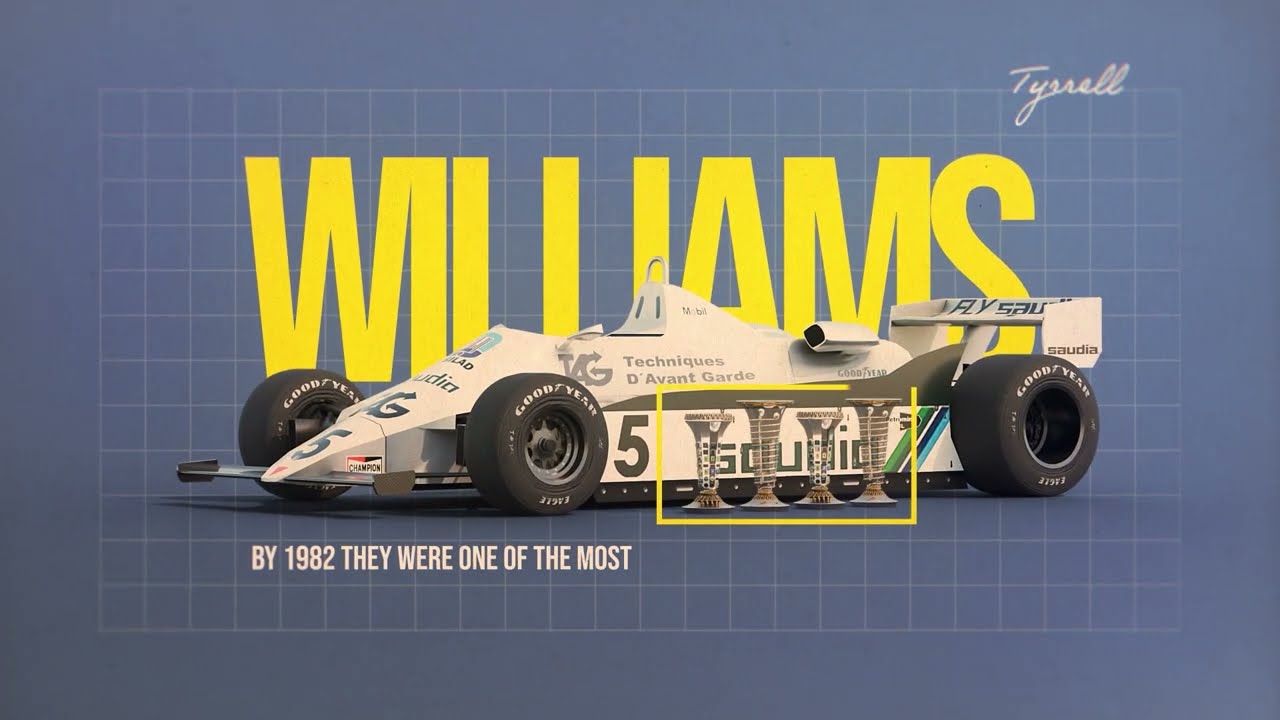
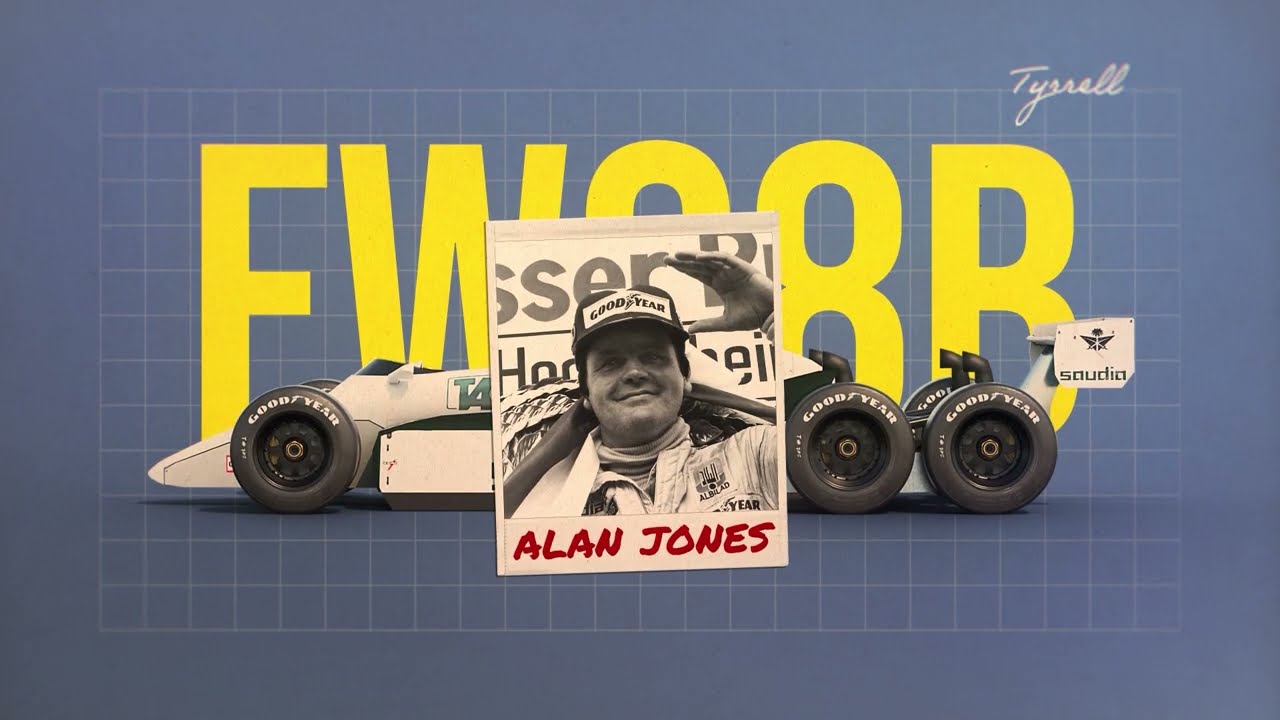
Williams, however, were an entirely different proposition. By 1982, they had firmly established themselves as one of the most ruthless, successful, and highly competent constructors in the entire sport. And when they finally decided to build a six-wheeled car, they did it properly and meticulously. Their secret weapon, the FW8B, proudly featured four rear wheels arranged in tandem across two full, independent axles placed one directly behind the other, each equipped with its very own heavy-duty final drive. They had already thoroughly tested the core concept on a heavily modified older car with world champion Alan Jones confidently at the wheel. The terrifyingly advanced FW8B was the highly refined, purpose-built version.
In intense private testing, the sheer mechanical traction blasting out of slow corners was widely described by engineers as absolutely phenomenal. Standing start practice runs vividly showed the car aggressively launching off the line with absolutely zero wheel spin, accelerating in a violent manner that the conventional, four-wheeled Williams chassis simply could not possibly match. Amazingly, the car was achieving this mind-bending performance while carrying significantly more raw physical weight than the car it was specifically supposed to eventually replace. The highly confidential wind tunnel and track data was absolutely alarming to anyone who saw it. With proper, sustained development, this radical car was going to be vastly faster than absolutely anything Williams were already successfully racing.
If this astonishing car had been allowed to race, and inevitably, if it had won, every single other team on the grid would have been heavily forced to frantically follow suit just to survive. Every single team would suddenly be desperately needing completely bespoke rear tyres in entirely different sizes and highly specific chemical compounds. It would demand a completely new, vastly expensive product line that absolutely nobody in the tyre industry had ever agreed to develop. Goodyear had already vividly shown the paddock exactly what inevitably happened when a commercial tyre company foolishly tried to maintain a highly bespoke product exclusively for one single racing team. The P34 front tyres had totally stagnated within a single season. Now, the governing bodies were forced to multiply that exact same catastrophic scenario across the entire grid. The FIA looked closely at exactly where this terrifying technological arms race was heading, and in 1983, they aggressively slammed the door firmly shut.
The official public explanation handed down to the press was tightly focused on safety concerns and spiralling costs. While both of those issues were entirely real, highly valid concerns, the timing of the massive ban is what truly reveals the underlying truth. The definitive ban came in 1983, not back in 1977 when the original Tyrrell P34 was still actively racing and the radical concept was at its absolute most visible and dangerous. The ban purposefully arrived six long years later, immediately after Williams had successfully built something genuinely, existentially threatening to the established order, and the terrifying performance data was rapidly circulating around the paranoid paddock in whispered conversations.
The exact timing matters immensely. Between 1978 and 1982, the revolutionary concept of “ground effect” aerodynamics had completely taken over Formula 1. Brilliant teams had discovered that carefully shaping the underside of the car to act like an inverted wing could generate massive amounts of downforce that essentially glued the car to the track, making almost everything else look utterly marginal. In that highly specific aerodynamic context, Gardner’s original logic of reducing front tyre drag to go faster on the long straights had been largely partially overtaken by the massive gains found underneath the car. However, the sweeping 1983 regulations suddenly banned ground effect as well, grouping it directly into the exact same massive rule overhaul that permanently eliminated six wheels.
The terrifying Williams rear-wheel concept, however, was built on a totally different argument entirely: mechanical traction. The raw, unfiltered ability to forcefully put immense engine power through the rear tyres and directly into the road was still an absolute, fundamental limit of achievable lap time. Banning aerodynamic ground effect absolutely did not change that brutal reality. In the restrictive, flat-bottom aerodynamic era that immediately followed the ban, pure mechanical grip suddenly became vastly more valuable than it had been in many years. The Williams FW8B was pointing aggressively at a massive mechanical advantage that was only ever going to rapidly grow as engines became significantly more powerful.
Deep inside a highly charged FOCA meeting in late 1982, the ultimate argument that finally settled the debate was entirely practical. Allowing complex six-wheeled cars to exist would dramatically drive up astronomical development costs and create absolute, dangerous chaos during high-speed pit stops with mechanics frantically changing six tyres instead of four. Those operational concerns were entirely real, but they coincidentally landed at the exact moment the terrifying Williams data was in full circulation, and everyone powerful in the paddock fully understood what the mighty FW8B truly represented for the future of the sport.
The permanent ban was carefully framed around cost and safety entirely because those were the only arguments that would successfully hold up to intense public and media scrutiny. The much deeper, unacknowledged reality was that Formula 1 management had clearly seen the terrifying data, deeply understood exactly where it was rapidly going, and unilaterally decided that it simply did not want to stick around to find out. The incredible FW8B went directly into dark storage. Today, it remains a heavily guarded part of the esteemed Williams Heritage Collection. It incredibly still exists, and it still beautifully runs. Ex-Formula 1 driver Jonathan Palmer even drove it vigorously at the Goodwood Festival of Speed in 1995 to the delight of the crowds. However, it has never, and will never, competed in a sanctioned Formula 1 race.
Elsewhere, the terrifying Ferrari 312T6 was quietly broken up for scrap parts, the March 240 completely disappeared into obscurity, and every single Formula 1 car successfully built since the dawn of 1983 has possessed exactly four wheels. Jody Scheckter currently stands alone in the history books as the only driver to ever win a Formula 1 Grand Prix whilst aggressively steering a six-wheeled car. That incredible record is absolutely not under any threat, as the modern regulations make it totally permanent.
The legendary Tyrrell P34 did not ultimately fail because the core engineering concept was fundamentally wrong or misguided. It failed exclusively because Michelin arrived in Formula 1 and pulled Goodyear’s crucial attention somewhere else entirely, and a highly bespoke tyre that served only one single team had absolutely no commercial chance of surviving that brutal corporate war. If Goodyear had simply managed to keep pace with development, the radical car that every single other team in the paddock was already desperately copying might have easily defined exactly what Formula 1 looked like for decades to come. Instead, the astonishing Williams FW8B went straight into storage, and Formula 1 quietly went right back to looking exactly like it always had. Four wheels, every single car, every single team, every single race. Except, of course, for that one incredible, unbelievable time.








