The Unfulfilled Legends: Ranking Formula 1’s Greatest (and Worst) One-Time Champions
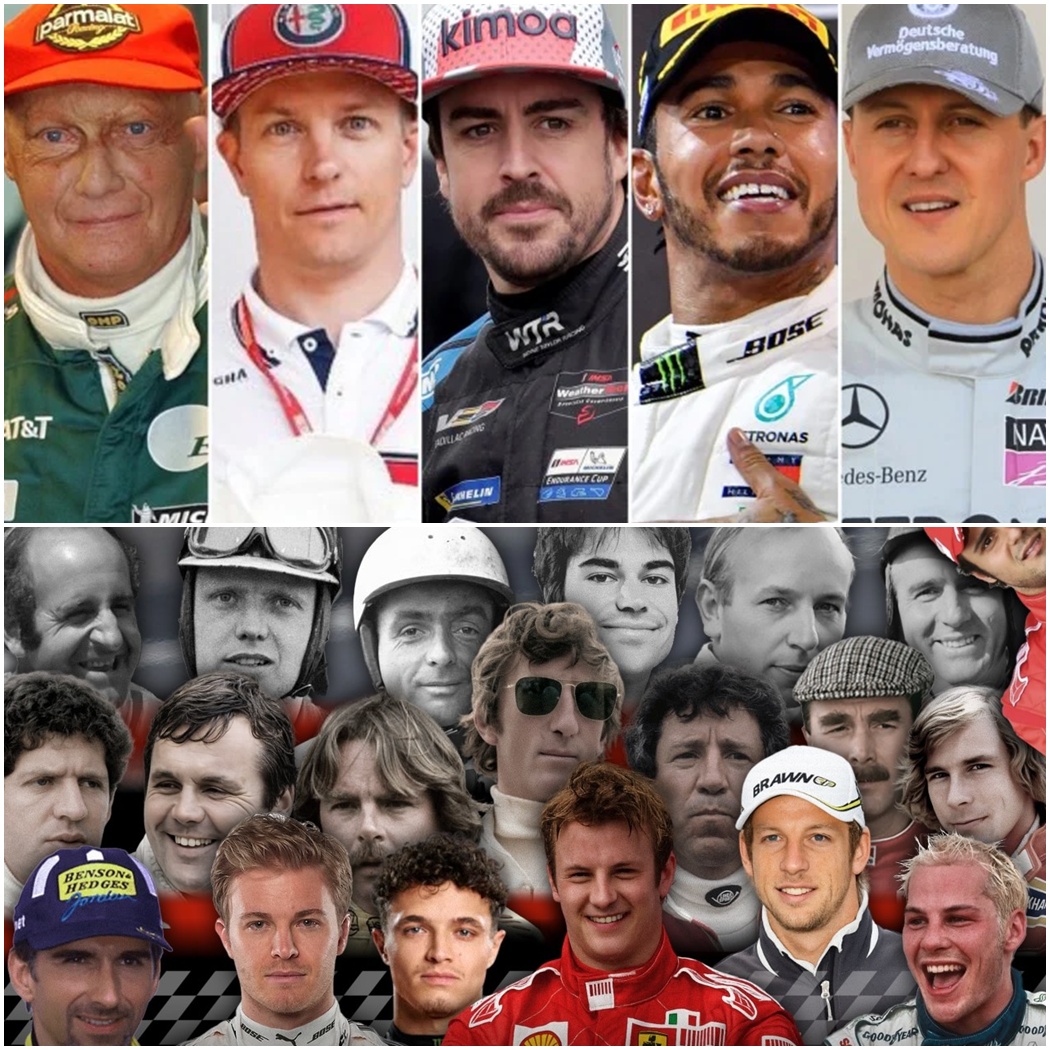
To win a Formula 1 World Championship is to etch your name permanently into the sacred annals of sporting history. It is the ultimate culmination of a lifetime of sacrifice, immense financial backing, terrifying physical risk, and unparalleled natural talent. Millions of aspiring drivers dream of reaching the pinnacle of motorsport, yet very few ever see that dream become a reality. Even fewer manage to climb that treacherous mountain more than once. Throughout the rich, vibrant, and often tragic history of Formula 1, there have been exactly eighteen drivers who have captured the ultimate prize just a single time. Eighteen one-hit wonders.
For some of these drivers, securing just one title was more than enough to satisfy their lifelong ambitions. For others, a single championship was a mere tease—a tantalizing glimpse of a dynasty that was brutally ripped away by unreliable machinery, corporate politics, or the cruel hands of fate. Had they simply been in the right place at the right time, or driving a car that did not shatter into pieces under pressure, many of them would have undoubtedly achieved multiple crowns.
When we analyze this unique club of single-title winners, a massive disparity in raw talent, circumstance, and legacy begins to emerge. By ranking these champions from the absolute worst to the undisputed greatest, we uncover a fascinating tapestry of triumph, unimaginable heartbreak, and the ruthless reality of top-tier motorsport.
At the very bottom of this prestigious list sits a man who never truly wanted to be there in the first place: Phil Hill. Ranked as the least impressive one-time champion, Hill’s journey to the 1961 Formula 1 World Championship is a story defined more by tragic circumstance and reluctant participation than by ruthless competitive drive. Hill originally took up racing purely as a casual hobby while working as a mechanic in the United States. However, his undeniable success in sports cars eventually caught the discerning eye of the legendary Enzo Ferrari, who brought him into the Scuderia fold in 1956.
Hill made his Formula 1 debut in 1958, driving a privateer Maserati before stepping into a factory Ferrari later that season. By 1960, he had secured his first victory at the legendary Monza circuit, although this win came with a massive caveat—all the major British teams had boycotted the race due to safety concerns regarding the infamous banking. But it was the 1961 season that forever defined Hill’s complicated legacy. Ferrari introduced the iconic “Sharknose” 156, a mechanical masterpiece that completely outclassed the rest of the grid. Hill proved his raw speed over a single lap, securing five consecutive pole positions, but he struggled to convert those advantages into race day dominance.
The 1961 title fight ultimately came down to a fierce battle between Hill and his charismatic teammate, Wolfgang von Trips. Tragically, the championship was decided by blood. At the Italian Grand Prix at Monza, von Trips was involved in a horrific, fatal collision with Jim Clark—an accident that also claimed the lives of fifteen innocent spectators. Hill won the race and instantly became Formula 1’s first American World Champion, but the victory was entirely hollow. There was absolutely no cause for celebration.
Following his championship year, Hill’s relationship with Enzo Ferrari rapidly deteriorated. Enzo viewed Hill as temperamentally unsuited for the brutal, gladiatorial arena of Formula 1. Hill was an incredibly cautious driver who actively avoided risks wherever possible. “I’m in the wrong business,” Hill famously confessed. “I don’t want to beat anybody. I don’t want to be the big hero. I’m a peace-loving man, basically.” After securing the title, he openly admitted that he had lost his hunger and was no longer willing to risk killing himself for a trophy. He was soon fired by Ferrari and faded out of single-seater racing. However, his cautious, methodical approach made him a titan in the world of endurance racing, where he became the first driver to ever secure the legendary Triple Crown of Endurance Racing—winning the 24 Hours of Le Mans, the 24 Hours of Daytona, and the 12 Hours of Sebring.
Moving slightly up the rankings to the seventeenth spot, we find the complex and tragic figure of Mike Hawthorn. A dashing, bowtie-wearing British gentleman, Hawthorn burst onto the scene in the early 1950s. He secured his first Grand Prix victory for Ferrari in 1953 after an epic, race-long duel with the great Juan Manuel Fangio—a battle so intense it was dubbed the “Race of the Century.”
However, Hawthorn’s career was deeply scarred by the inherent, inescapable dangers of the era. In 1955, while driving for Jaguar at the 24 Hours of Le Mans, Hawthorn was heavily involved in the inciting incident that led to the deadliest disaster in motorsport history, where Pierre Levegh’s car launched into the grandstands, killing more than eighty spectators. The psychological weight of the 1950s was immense. When Hawthorn returned to Ferrari full-time for the 1958 season, he found himself locked in a fierce battle for the championship. But the cost was devastating. Over the course of the season, his teammate Luigi Musso was killed in a crash while desperately trying to chase Hawthorn down. Shortly after, Hawthorn’s closest friend and fellow teammate, Peter Collins, was also killed on the track.
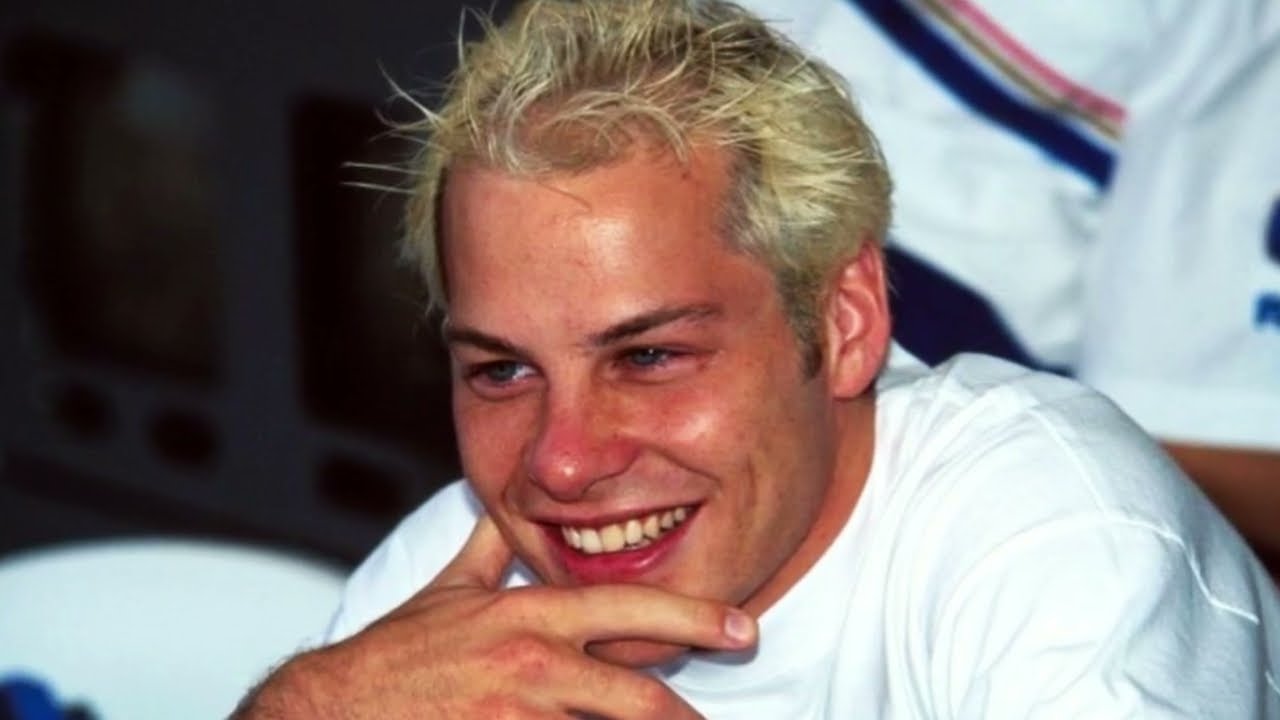
Despite the overwhelming grief, Hawthorn managed to secure the 1958 World Championship, beating Stirling Moss by a single point. Profoundly traumatized by the deaths of his friends, Hawthorn immediately retired from professional racing at the end of the year. In a cruel twist of irony, the man who had survived the deadliest era of motorsport died just months later in a civilian road traffic accident.
While the bottom of the one-time champion rankings is dominated by drivers who were defined by the tragedies and circumstances of their eras, the absolute top of the list belongs to a man who transcended his machinery through sheer, unadulterated talent. Without question, the greatest one-time World Champion in Formula 1 history is the legendary Kimi Räikkönen.
Known globally as “The Iceman,” Räikkönen’s career is a masterclass in blistering speed, supreme technical understanding, and a hilariously aloof personality that earned him a fiercely loyal global fan base. For years, Räikkönen was widely considered the fastest man on the grid, yet he was repeatedly robbed of multiple world titles during his early years at McLaren by agonizingly fragile machinery. He would routinely extract unimaginable pace from his cars, only to have his engines expire in a cloud of thick white smoke while comfortably leading races.
In 2007, Räikkönen finally made the highly publicized move to Ferrari, tasked with the impossible job of replacing the retiring Michael Schumacher. In one of the most dramatic conclusions to a season in sporting history, Räikkönen overcame a massive points deficit in the final races to snatch the World Championship away from the feuding McLaren duo of Fernando Alonso and a rookie Lewis Hamilton by a single, glorious point.
After a brief hiatus from Formula 1—where he spent two years casually wrestling rally cars in the WRC and experimenting with NASCAR—Räikkönen orchestrated one of the greatest comeback stories the sport has ever seen. In 2012, he signed a two-year contract with the mid-field Lotus team. What Lotus did not realize was just how relentlessly brilliant the Iceman still was. His contract included a massive performance bonus of €50,000 for every single World Championship point he scored. Räikkönen drove so exceptionally well, securing numerous podiums and a stunning victory in Abu Dhabi, that his massive points tally quite literally bankrupted the Lotus team. They were forced to stop paying his salary, leading to his premature exit from the squad to undergo back surgery.
He eventually returned to Ferrari, partnering with Fernando Alonso and later Sebastian Vettel. While he swapped some of his raw, youthful qualifying speed for veteran race-day consistency, he remained a formidable force on the grid, famously securing his final Grand Prix victory at the 2018 United States Grand Prix in Texas.
Behind the public veneer of a man who famously detested media obligations and sponsorship commitments was a deeply calculating, fiercely intelligent racer. He possessed an uncanny ability to understand the mechanical nuances of his car, allowing him to preserve tires and execute complex strategies flawlessly without the need for constant radio chatter. He raced purely for the love of the battle, completely uninterested in the glamorous distractions of the Formula 1 circus.
His reputation in the paddock was impeccable. Sebastian Vettel, a four-time world champion and Räikkönen’s long-time teammate at Ferrari, perfectly summarized his character: “I don’t think you can have an argument or a problem with Kimi. If you do, the problem is not him; the problem is you.”
Kimi Räikkönen eventually retired at the end of the 2021 season, holding the record for the most experienced driver in Formula 1 history at the time, with an astonishing 349 race starts across 19 gruelling seasons. He was a driver who unquestionably possessed the raw talent and racecraft to win four or five world titles had he been blessed with reliable machinery during his prime at McLaren. Yet, even with just a single championship trophy resting on his mantle, his legacy is completely bulletproof. He remains the definitive gold standard—the undisputed greatest one-time Formula 1 champion the world has ever seen.