The Suzuka Masterstroke: How a Teenage Prodigy Outsmarted the Grid and Rewrote the Formula One Championship
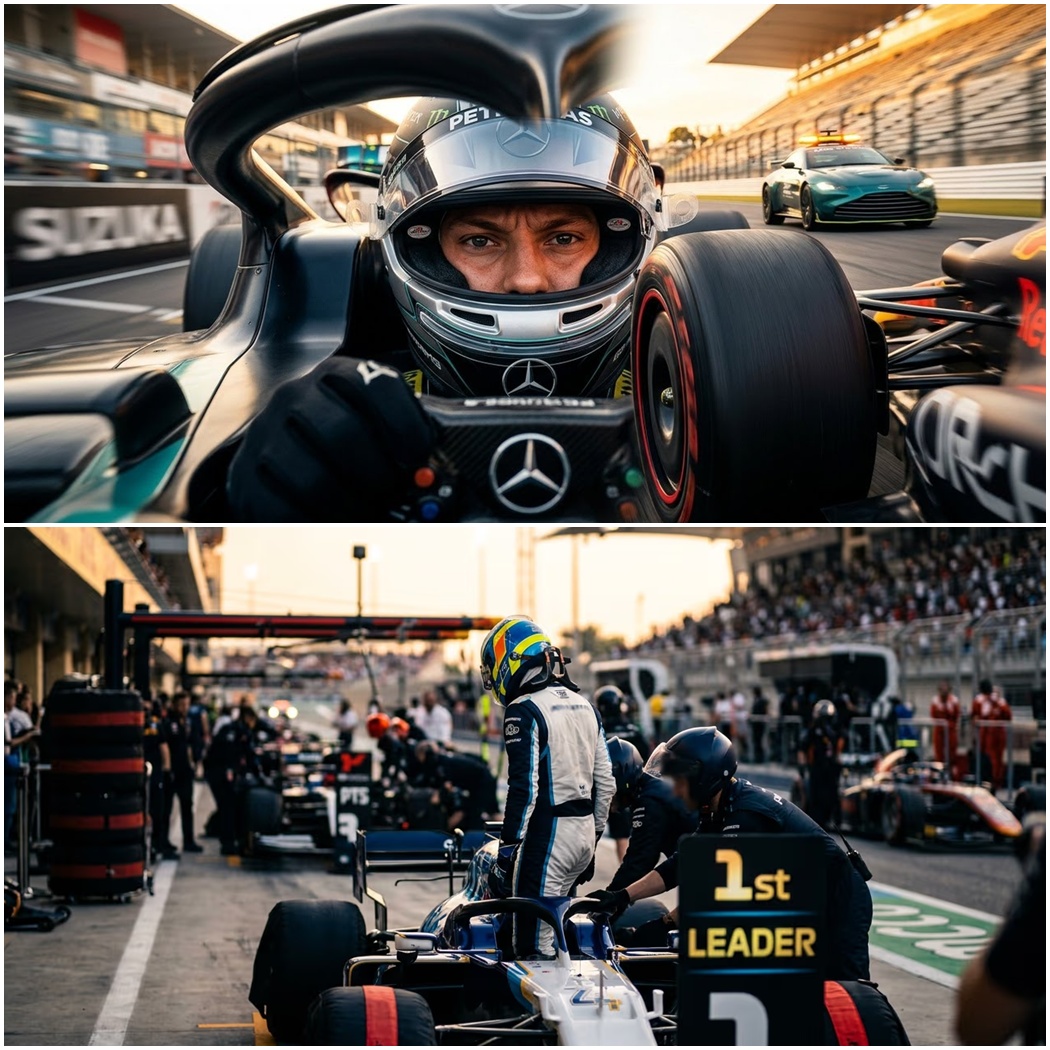
Suzuka is a circuit that does not merely test a driver; it interrogates them. It is an unforgiving ribbon of tarmac that demands absolute perfection, punishing the slightest miscalculation with heavy barriers and broken dreams. Going into the 2026 Japanese Grand Prix, the narrative seemed completely set in stone. The fastest driver was supposed to win. The team with the strongest early rhythm was destined to control the outcome. For twenty-seven spectacular laps, the motor race strictly adhered to this predictable script. Yet, Formula One is a sport defined by chaos and fine margins. A single mistake, completely removed from the battle for the lead, triggered a seismic shift in the balance of power. When the dust finally settled, an eighteen-year-old phenom had not just stolen a victory; he had systematically dismantled the established order. Kimi Antonelli’s triumph in Japan was not a product of mere luck. It was a calculated, devastating takeover that has fundamentally changed the complexion of the world championship.
When the five red lights extinguished, the race initially followed every logical expectation. Oscar Piastri, demonstrating the supreme confidence that has become his trademark, launched his McLaren with assertive precision. He controlled the crucial sprint into the first corner, instantly dictating the terms of engagement. Behind him, the pack scrambled for breathing room. Charles Leclerc threw his Ferrari into the mix with characteristic aggression, snapping at Piastri’s heels, while Lando Norris slotted in right behind, keeping his movements tight and deeply calculated. Conversely, the much-anticipated Mercedes front-row lockout immediately unravelled. The Silver Arrows appeared completely out of sync before the race had even properly begun. Kimi Antonelli plummeted down the order to sixth place, whilst his teammate George Russell dropped to fourth. To the casual observer, Mercedes had already surrendered their Saturday advantage. But Suzuka is a circuit that heavily rewards patience, and the Mercedes pit wall clearly understood the long game.
Within a handful of laps, the sheer pace of the leading pack began to stratify the field. Russell, eager to make amends for the poor getaway, started carving his way forward. His moves on Norris and subsequently on Leclerc were wonderfully decisive—almost inevitable given the raw speed beneath him. Antonelli followed his more experienced teammate through the field, though his approach was markedly different. The teenage sensation was less visibly aggressive but infinitely more precise. He was not wildly forcing his car into non-existent gaps; he was intelligently waiting for them to naturally open. By lap fifteen, the leading six cars were separated by mere seconds. This incredibly tight formation was not the result of artificial tyre preservation or extreme strategy; it was an exhibition of pure, unadulterated racing pace. At the absolute front of this high-speed train, Piastri remained fundamentally unbothered. The Australian was calm, composed, and visually in complete command. Every flawless sector time he posted simply reinforced the prevailing narrative: McLaren had the ultimate measure of the Japanese Grand Prix.
However, beneath the surface of Piastri’s apparent total control, a highly complex strategic battle was quietly brewing. The traditional pit stop window swung open, and the pressure began to visibly mount on the pit walls. Lando Norris was the very first front-runner to blink, diving into the pits on lap sixteen in a desperate bid to execute the powerful undercut. McLaren immediately recognised the threat and reacted with Piastri, successfully covering off the danger and maintaining critical track position. Russell extended his opening stint a fraction longer, playing the strategic offset. It was at this precise juncture that the race fractured into two entirely separate timelines. There were those who had committed to the early stop, securely banking their fresh rubber, and those who decided to roll the dice and stay out. Antonelli was among the latter, alongside Lewis Hamilton. They were not lapping faster than the fresh-tyred McLaren, nor were they controlling the actual pace. They were simply waiting in the wings. At Suzuka, timing is everything, and the Mercedes strategists knew that sometimes the winning manoeuvre is not about outright lap time, but about track position when the inevitable chaos strikes.
Nobody could have predicted exactly when or how the race would turn, but the longer the Grand Prix stayed under green flag conditions, the more dangerous Mercedes’ alternate strategy became. The defining crack in the race’s foundation finally occurred on lap twenty-two. It happened far away from the glamour of the lead battle, but its impact was utterly catastrophic for McLaren. Oliver Bearman, pushing the limits of adhesion, violently lost control of his machine through the treacherous sweeping left-hander at Spoon corner. His car snapped aggressively, sending him hurtling across the grass and directly into the barriers with a heavy impact. The yellow flags frantically waved, and mere seconds later, Race Control deployed the safety car. In that blinding flash, the motor race ceased to be about outright speed. The drivers who had bravely extended their opening stints had just been handed the most priceless gift in motorsport: a completely free pit stop.
Antonelli dove into the pit lane, executed a flawless tyre change, and emerged back onto the circuit firmly in the lead of the Grand Prix. There was no dramatic on-track overtake, no bitter wheel-to-wheel battle, and absolutely no warning for Piastri. It was a total, crushing inversion of the race order. Everything that McLaren had meticulously built over twenty-two laps was instantly obliterated. But while the safety car handed Antonelli the lead, it was what he did next that truly defined his weekend. The race finally restarted on lap twenty-eight. This is the exact moment where Grand Prix victories are genuinely won or tragically lost. Piastri tucked himself neatly into the Mercedes’ slipstream, waiting for the inevitable rookie mistake from the young Italian. Behind them, utter chaos erupted as Hamilton immediately attacked Russell for third place. Yet, out at the very front, Antonelli did not bother to defend his position. Instead, he simply vanished.
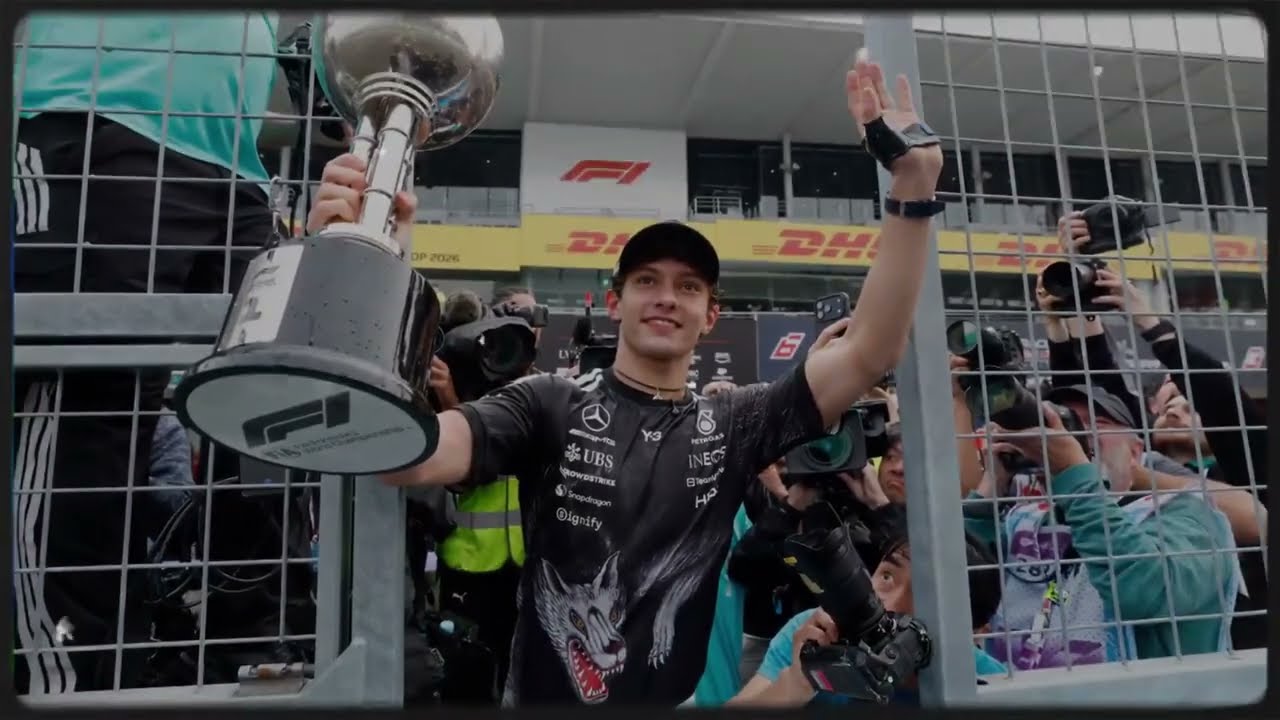
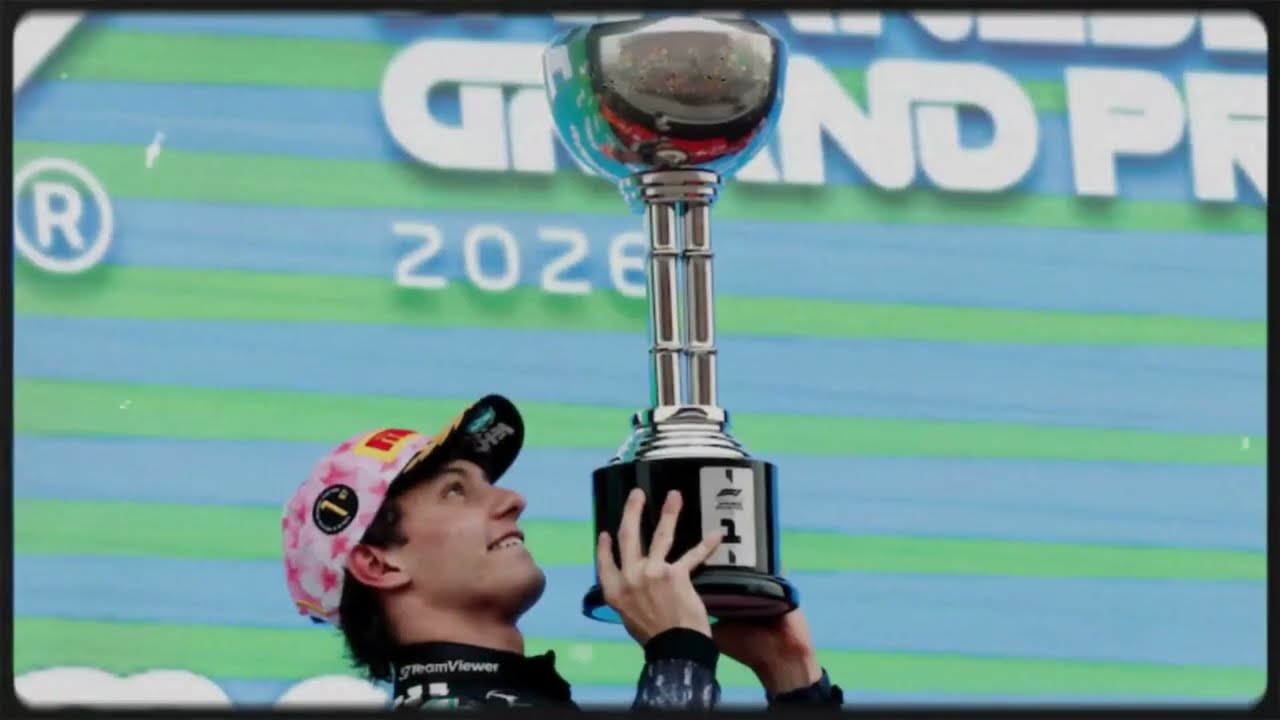
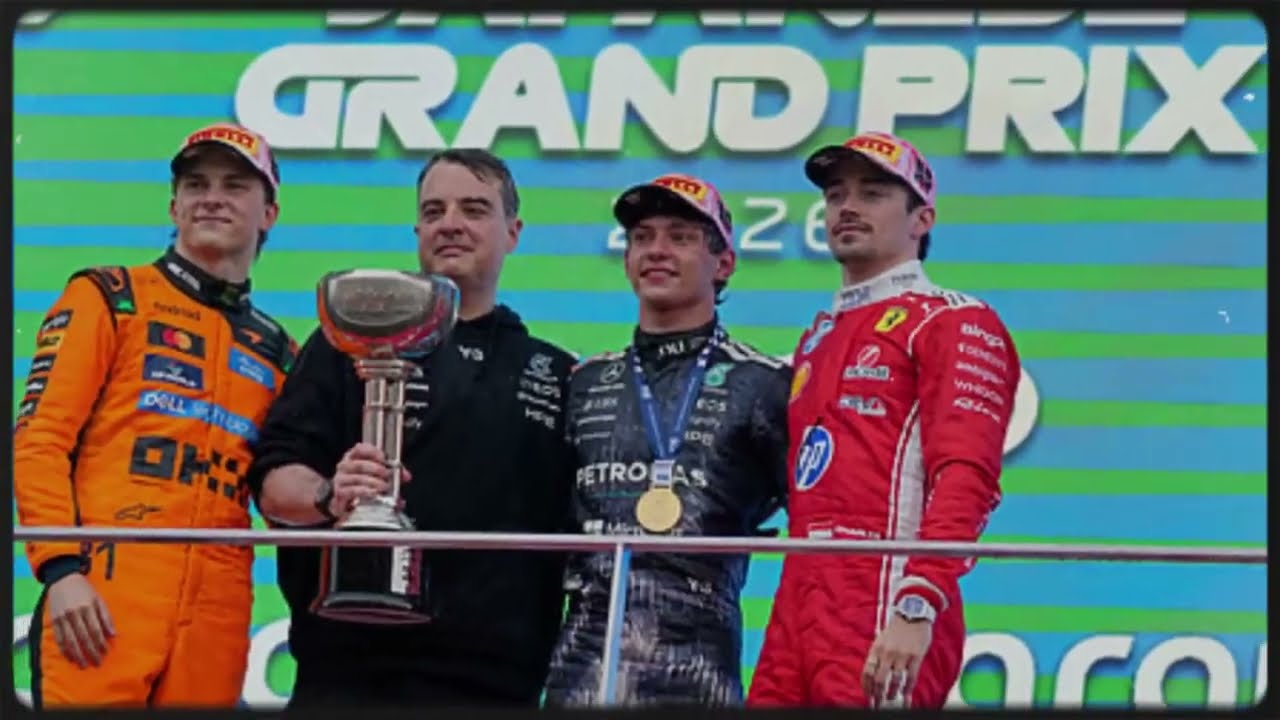
Within a matter of laps, the gap ballooned. One second, then three seconds, then five. There was no drama, no twitch of the steering wheel, and absolutely no fight from Piastri. This was no longer a story about a lucky safety car intervention; this was a breathtaking exhibition of clinical execution. Every corner was attacked cleanly, and every micro-sector was faster than the last. While Piastri pushed his tyres to their absolute thermal limits trying to keep up, Antonelli was simply managing his pace with the composure of a seasoned multi-world champion. When the ultimate pressure was applied, there was zero drop-off, zero error, and zero hesitation from the teenager. By the final phase of the Grand Prix, the time gap was no longer a question—it was a definitive statement. Antonelli crossed the finish line a staggering fourteen seconds ahead of a McLaren that, prior to the safety car, looked entirely unbeatable. This was not a stolen victory; it was a total, undeniable takeover of the Formula One hierarchy.
While the young prodigy escaped up the road, the rest of the grid collapsed into a frantic, bitter skirmish. The battle for the final podium position turned into a generational clash between Hamilton, Russell, and a rapidly approaching Leclerc. Experience clashed violently with youthful momentum. Russell pushed relentlessly, searching for every possible opening, but initially found a stubborn Hamilton impossible to break through. Then, Leclerc arrived on the scene with devastating intent. On lap forty-two, the Monegasque driver executed a breathtaking, incredibly bold manoeuvre around the outside of Turn One, sweeping past Hamilton with pinpoint precision. Just one lap later, Russell replicated the exact same move. With three elite drivers fighting over a single piece of tarmac, the margins were razor-thin. Hamilton’s early strategic gamble ultimately caused his pace to plummet as his tyre grip completely evaporated. Norris soon joined the fray, waiting like a shark for a mistake that never quite materialised.
Further down the order, the sheer brutality of the Suzuka circuit claimed other high-profile victims. Max Verstappen, a man usually so utterly dominant, endured a remarkably quiet and deeply frustrating afternoon. The reigning champion was heard bitterly complaining over the team radio about severe heavy steering, visibly fighting the complex mechanics of his car far more than he was fighting the actual circuit. Meanwhile, Pierre Gasly held firm to secure a quietly impressive seventh-place finish, navigating the chaos with a calm maturity. The midfield strategies completely unravelled, heavily punishing those who had aggressively committed to early pit stops. In this specific iteration of the Japanese Grand Prix, timing did not reward aggression; it fundamentally punished it.
Ultimately, the 2026 Japanese Grand Prix was far more than just another race on the calendar. It was a glaring, blinding signal to the rest of the Formula One grid. Kimi Antonelli is no longer a rookie merely reacting to the unfolding events of a Grand Prix; he is actively controlling them. Yes, the perfectly timed safety car undeniably created the golden opportunity, but what he achieved after the restart is precisely where true champions are forged. He displayed no mistakes, absolutely no panic, and unrelenting pace under the most immense pressure imaginable. Crucially, this spectacular victory has propelled him to the lead of the world championship standings. He sits at the top not simply because he is always the fastest over a single lap, but because he possesses the incredibly rare ability to be exactly where he needs to be when the dynamic of a race fundamentally changes. Mercedes did not dominate the weekend at Suzuka; they fundamentally understood it. Right now, that level of strategic intelligence combined with Antonelli’s raw talent is far more dangerous to the rest of the grid than outright speed. This is exactly how power shifts happen in Formula One. It does not always begin with season-long dominance; it begins with solitary moments. One race, one chaotic interruption, and one driver who was perfectly ready when it truly mattered. The established elite of the grid now have a massive problem on their hands. If Kimi Antonelli can casually win a race by fourteen seconds without even leading from the start, the paddock must terrifyingly wonder what happens when he inevitably does. The balance of power is rapidly changing, the psychological pressure is building, and the next race will finally reveal if Suzuka was just a stroke of fortune, or the dawn of a terrifying new era.








