The Spark That Ignited a Storm: Mercedes Dominance, Piastri’s Heartbreak, and the Technical Civil War Threatening F1’s New Era
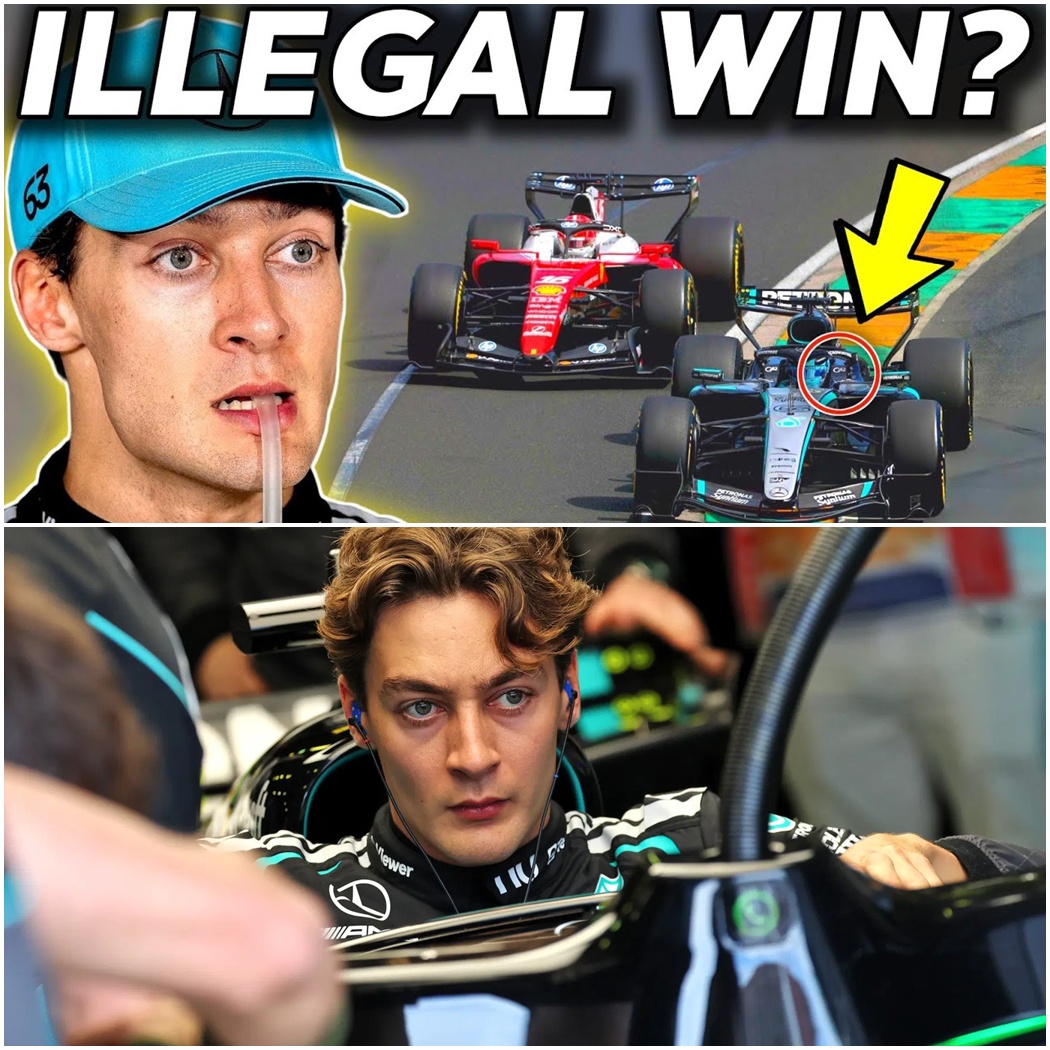
The Albert Park circuit has seen its fair share of drama over the decades, but the 2026 Australian Grand Prix will likely be remembered as the moment the soul of Formula 1 entered its most turbulent chapter yet. It was supposed to be a celebration—the dawn of a revolutionary technical era designed to make the sport more sustainable and competitive. Instead, the weekend served as a cold reminder that when you play with the fundamental physics of racing, the consequences can be both heartbreaking and politically explosive.
The shockwaves began before the lights even went out. For the tens of thousands of Australian fans who had flocked to Melbourne to see their local hero, Oscar Piastri, the dream ended in a cloud of carbon fiber and dust on the reconnaissance lap. Piastri, who had been the standout performer of the weekend, matching the pace of the top tier, found himself spinning uncontrollably into the barriers at Turn 4. The culprit wasn’t a driver error in the traditional sense, but a sudden, violent 100 kW surge from the car’s hybrid battery system.
In the new 2026 regulations, electrical power isn’t just a supplement; it’s a primary driver, contributing roughly 50% of the car’s total 750 kW output. That 100 kW spike represented a staggering 13% of the car’s total power hitting the rear wheels instantly. On cold tires and over the unforgiving curbs of Albert Park, even a talent like Piastri was a passenger. It was a sobering realization for the paddock: these new power units deliver torque so aggressively that they can override human skill in a heartbeat. The fact that this was the first time since 2001 that no Australian driver started their home race was a tragedy for the fans, but for the engineers, it was a terrifying warning.
As the race got underway, the focus shifted from mechanical reliability to a brewing political storm. While George Russell and his teenage prodigy teammate, Andrea Kimi Antonelli, secured a dominant 1-2 finish for Mercedes, the rest of the grid was left scratching their heads. Mercedes hadn’t seen a result like this since 2019, and the nature of their victory has sparked accusations that could redefine the 2026 championship.
The talk of the paddock is the “Compression Ratio Loophole.” Rival teams, including Ferrari and Red Bull, have quietly raised concerns that Mercedes has found a way to interpret the engine regulations that allows them to run more aggressive combustion settings. If true, this gives them a dual advantage: more efficient fuel burn and, more importantly, a much higher rate of energy recovery. In an era where battery deployment equals straight-line speed, Mercedes appears to have an “infinite” supply of boost compared to their rivals.
Telemetry from the race confirmed the suspicions. While Charles Leclerc and Lewis Hamilton—now in the scarlet red of Ferrari—attempted a bold strategic gamble by staying out during a Virtual Safety Car period, they were powerless to close the gap. Even on fresher tires, the Ferrari simply couldn’t match the traction and corner-exit acceleration of the Mercedes. Russell and Antonelli weren’t just fast; they were stable. The Mercedes chassis seemed to have solved the puzzle of the 2026 torque spikes, allowing their drivers to maintain blistering lap times without destroying their tires.
The frustration among the elite drivers is becoming impossible to ignore. Max Verstappen, a man known for his pursuit of “pure” racing, gave a brutally honest assessment after the race. He isn’t enjoying these cars. The reason? A phenomenon called “super clipping.” To keep the batteries charged under the new rules, drivers are often forced to lift off the throttle in the middle of high-speed corners. Instead of pushing flat-out, they are essentially managing a rolling science experiment. In some moments, the car might drop from its full 750 kW potential down to a mere 150 kW just to harvest energy. For the world’s best drivers, being told to slow down so a battery can recharge feels like an insult to the sport’s heritage.
This “energy management” racing has created a strange hierarchy. Mercedes has clearly mastered the flow, while others are drowning in the technical complexity. The political stakes are sky-high because the FIA has already signaled that while they recognize the potential loophole Mercedes is exploiting, they won’t be closing it until June. This leaves a massive window of opportunity. If the Silver Arrows continue to dominate the next six or seven races, the 2026 title could be mathematically over before the summer break even begins.
The Australian Grand Prix was meant to be a showcase of F1’s future, but it has instead highlighted a sport at a crossroads. We are seeing a technical civil war where the battle is being fought in the small print of the rulebooks and the software of battery management systems rather than wheel-to-wheel on the track. The Piastri incident showed us the danger of unpredictable power, while the Mercedes dominance showed us the danger of a technical “silver bullet” that leaves the rest of the field in the dark.
For the fans, the spectacle remains high-speed and glamorous, but for those who look closely, the cracks are starting to show. Will Formula 1 remain the pinnacle of human driving skill, or is it becoming a competition of who can best hide a technical advantage within a complex hybrid system? As the paddock packs up and heads to the next round, the questions far outweigh the answers. One thing is certain: George Russell may have the trophy, but the fight for the soul of the 2026 era is only just beginning.








