The Reincarnation of Speed: Why Formula 1 Insiders Believe Max Verstappen is the Modern Era’s Ayrton Senna
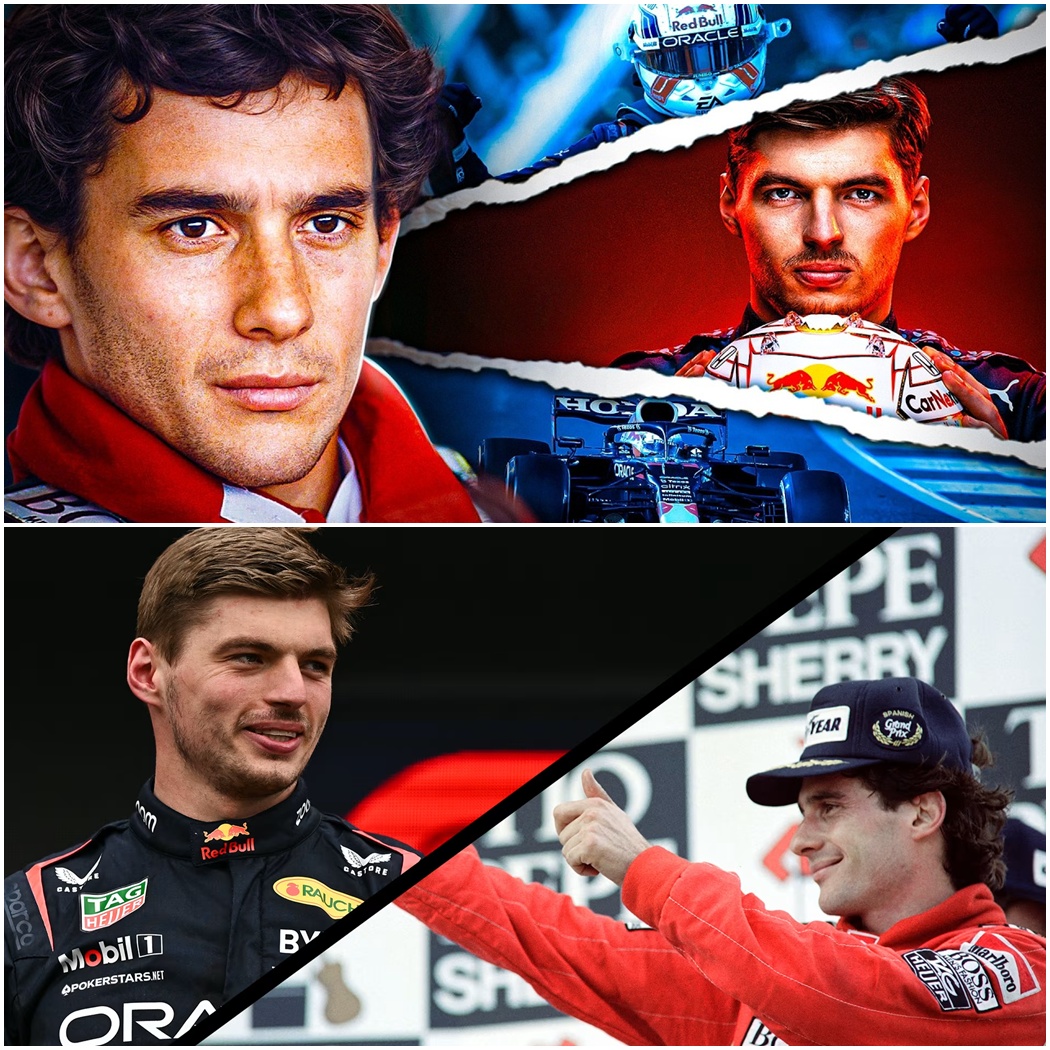
In the torrential downpour of November 2024 at the Interlagos circuit in São Paulo, the Formula 1 world witnessed something that felt inherently spiritual. The rain was hammering down with such biblical ferocity that the television cameras could barely pierce the gloom to see the asphalt . Starting from a lowly 17th position, Max Verstappen initiated a charge that defied logic, physics, and the terrifying conditions. By the end of the very first lap, he had already scythed past six cars, executing three of those overtakes at the Senna ‘S’—the treacherous chicane literally named after the patron saint of Brazilian motorsport.
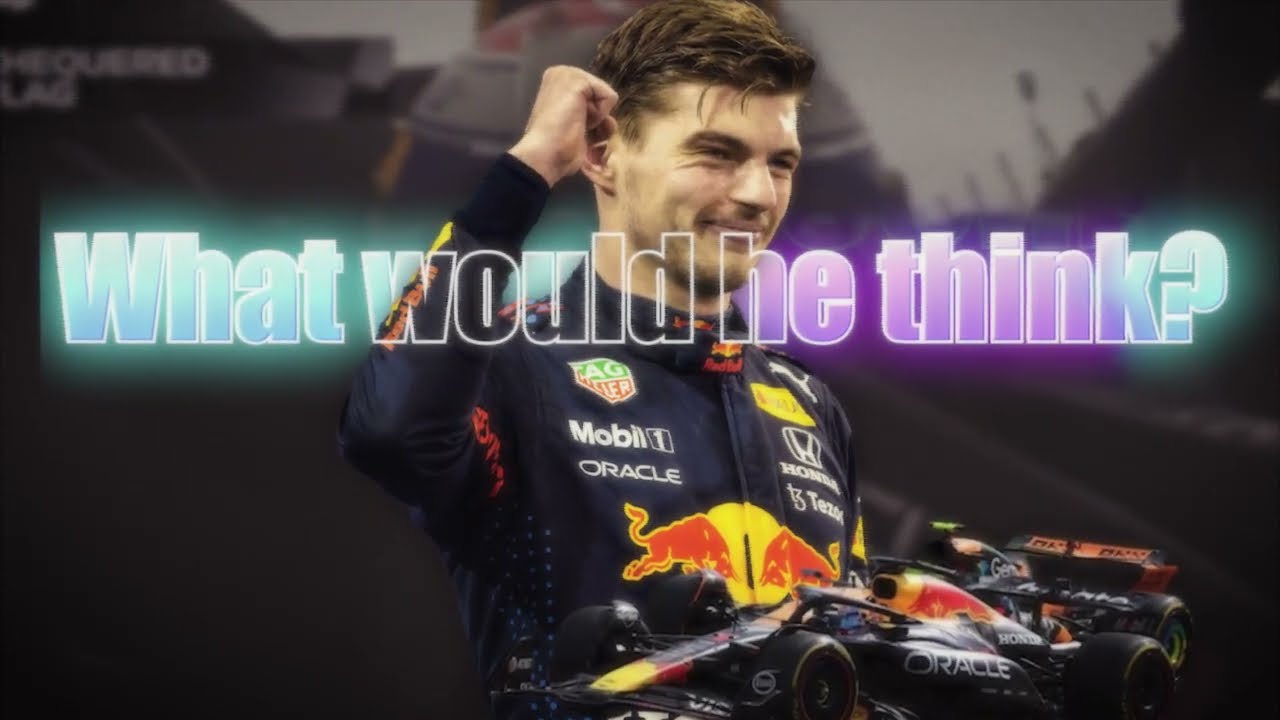
As Verstappen danced his Red Bull through the spray, making the world’s best drivers look as though they were piloting junior category machinery, a collective realization washed over the team principals watching from the pit wall. They were all thinking the exact same thing: this looked terrifyingly like Ayrton Senna at Donington in 1993 . Thirty years separate the tragic loss of Senna and the absolute dominance of Verstappen. One man’s legacy is etched in marble; the other is actively rewriting every record in the book. But as the comparisons reach a fever pitch, the ultimate, unanswerable question lingers in the paddock: What would Ayrton Senna truly think of Max Verstappen?
The Philosophy of the Sacred Gap
To even begin to understand how Senna might view Verstappen, one must first deconstruct what racing meant to the Brazilian icon. For Ayrton Senna, driving a Formula 1 car was never merely a sport, a profession, or a display of mechanical engineering. It was an intensely spiritual, almost religious experience. When Senna secured his 50th career pole position at Monaco in 1988, obliterating his legendary teammate Alain Prost by an incomprehensible 1.4 seconds, he famously described entering a trance-like state . He spoke of the circuit narrowing into a tunnel, a state of unconscious driving where he tapped into a well of speed that simply should not have existed within the physical limits of the car. Senna was a man who believed the absolute limit was not a concrete wall, but a hidden door. And if you possessed the courage and the divine right to push hard enough, that door would swing open.
This philosophy was distilled into a single, immortal sentence that continues to justify aggression on racetracks across the globe: “If you no longer go for a gap that exists, you are no longer a racing driver” . This wasn’t just a clever soundbite; it was the manifesto of his entire career. It justified his ruthless tactics against Prost and explained the infamous, highly controversial collisions at Suzuka in 1989 and 1990. It effectively split the Formula 1 community into two deeply entrenched camps: those who believed Senna’s commitment to the gap was sacred and pure, and those who viewed him as dangerously reckless.
Senna lived entirely inside this contradiction—a man who was perceived as an untouchable god behind the wheel, yet possessed an enormous, visible fragility outside the cockpit . Fast forward three decades, and the Formula 1 paddock is currently ruled by a driver who exists within that exact same contradiction. And the people who are pointing this out aren’t internet fans; they are the very men who bled, fought, and built cars alongside Ayrton Senna.
The Verdict of the Ancients
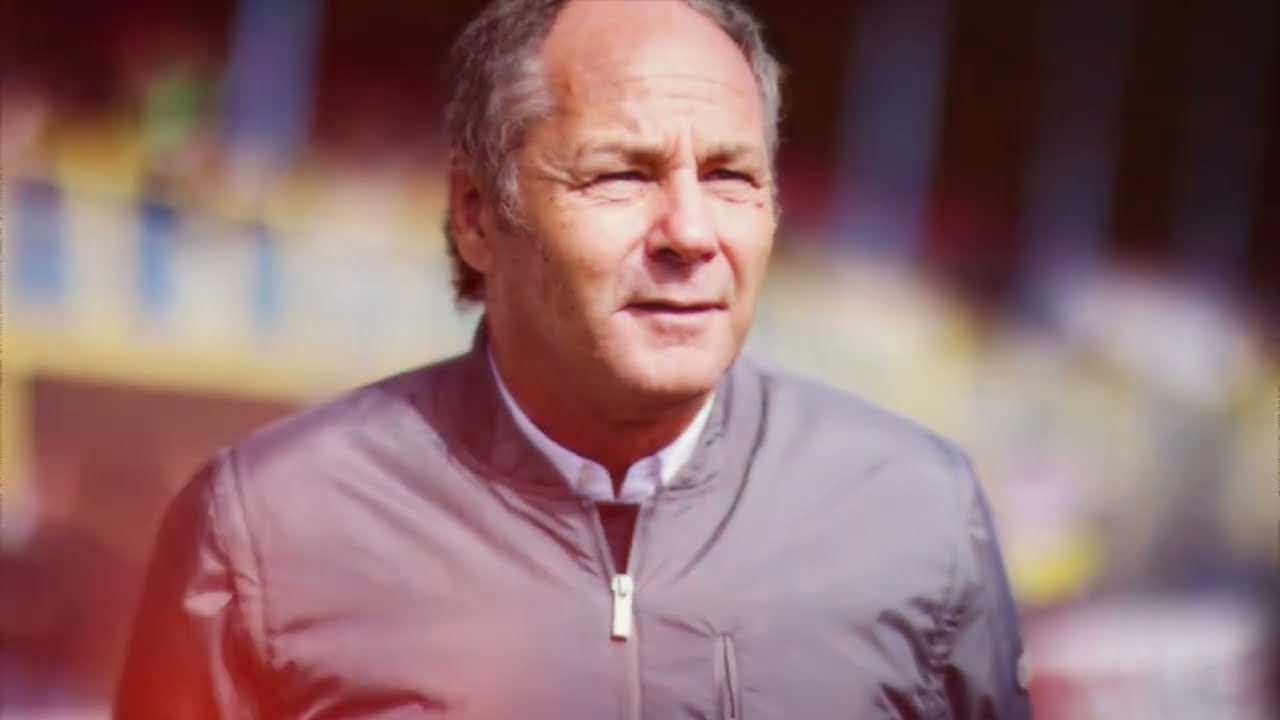
The Senna-Verstappen comparison gained legitimate, undeniable weight when Gerhard Berger—Senna’s teammate and close friend at McLaren for three years—made a shocking public declaration. For thirty years following Senna’s tragic death, Berger steadfastly maintained that the Brazilian was the undisputed greatest driver to ever sit in a racing car. Nobody else even came close. Then, in January 2024, Berger publicly changed his mind . Having analyzed the data and watched the races, he stated his belief that Max Verstappen had actually surpassed Senna. His reasoning was chillingly simple: Senna, for all his magic, still occasionally made mistakes. Verstappen, according to Berger, essentially does not. In wheel-to-wheel combat, at the apex of the first corner, Verstappen is invariably in the correct position .
This sentiment is echoed by Martin Brundle, a man who raced against Senna in both Formula 3 and Formula 1. Brundle identified something far more insidious than pure lap time; he recognized the exact same brand of psychological warfare . Senna had an uncanny ability to live inside the heads of his rivals, forcing them into a state of submission and second-guessing before they even reached the braking zone. Brundle watched Senna execute this mental domination for years, and he now watches Verstappen apply that same deliberate, crushing intensity race after race.
Perhaps the most compelling testimony comes from Adrian Newey, the undisputed greatest aerodynamicist in the history of the sport. Newey is the only man alive who has designed championship-winning machinery for both Senna and Verstappen . When asked to evaluate the dozens of world-class drivers he has worked with across four decades, Newey places exactly two men on a pedestal above the rest: Ayrton Senna and Max Verstappen. Even Alain Prost, Senna’s bitterest rival and the man who eventually carried his coffin, acknowledged the undeniable connection, particularly in how both drivers approached the ruthless, highly aggressive early phases of their careers .
The Eerie Parallels and the Fundamental Divergence
When you lay their careers side-by-side, the parallels are genuinely eerie. Both men are universally regarded as the absolute masters of wet-weather driving in their respective generations. Senna’s legendary opening lap at Donington in 1993, where he carved from fifth to first in 65 seconds through a monsoon, is frequently cited as the greatest single lap in Formula 1 history . Verstappen’s breathtaking charge from 17th to victory at Interlagos in 2024, under similarly treacherous conditions, was instantly elevated to that same mythical status .
Both drivers share the all-time record of eight consecutive pole positions. In a twist of poetic fate, Verstappen matched that record at Imola in 2024—the very circuit where Senna tragically lost his life exactly thirty years prior . Both have been heavily criticized for crossing the line of acceptable aggression. Senna’s deliberate, 150-mph collision with Prost at Suzuka mirrors the sheer, unyielding intensity of Verstappen’s battles with Lewis Hamilton at Silverstone, Monza, and Saudi Arabia during their titanic 2021 championship fight. Neither man was ever willing to concede a single inch of tarmac.
However, the element that truly separates them runs much deeper than telemetry or trophy cabinets. It is a fundamental difference in worldview. Senna was a deeply devout Catholic who openly credited his otherworldly speed as a direct gift from God . He carried a crucifix in his cockpit and framed his qualifying laps as transcendent, out-of-body communions with the divine. Verstappen exhibits the exact same impossible car control and the same ability to conjure grip from nowhere, but he processes it entirely through the cold, hard lens of modern technology . Verstappen’s religion is data analysis, simulator correlation, and relentless preparation. Where Senna looked upward to the heavens for his speed, Verstappen looks inward at a telemetry screen.
Furthermore, they are separated by the brutal reality of their eras. Senna raced in a time when the sport regularly killed its heroes. He watched Roland Ratzenberger die at Imola just one day before his own fatal crash . Senna understood that every time he strapped on his helmet, he was dancing with death. Verstappen, conversely, races in the safest era the sport has ever known. The titanium halo device that saved Lewis Hamilton’s life when Verstappen’s car landed on his head at Monza simply did not exist in Senna’s brutal world . This isn’t a criticism of Verstappen; it is simply the stark truth of what fundamentally separates their psychological experiences at the absolute limit.

The Final Verdict
So, what would Ayrton Senna truly think of Max Verstappen? Based on everything Senna ever preached about the purity of racing, the necessity of absolute commitment, and the sanctity of the gap, there is only one logical conclusion. He would not view Verstappen as a cheap imitation or a mere copy. He would recognize a kindred spirit . He would see a driver who carries that exact same consuming fire, that identical, pathological refusal to accept second place. He would respect a man willing to place his car exactly where others would never dare.
Alain Prost summarized it perfectly: “Max has a lot in common with him, but today he has his own way of being” . And perhaps that is the highest compliment Verstappen could ever receive. He isn’t simply the next Ayrton Senna. Like the great Brazilian before him, he is entirely, unapologetically, and irreducibly himself. Two titans of the tarmac, separated by thirty years, yet forever bonded by their eternal, uncompromising pursuit of absolute speed.








