The Pursuit of Perfection: How the McLaren MP4/4 Rewrote the Laws of Formula 1 Dominance and Became the Greatest Car in History
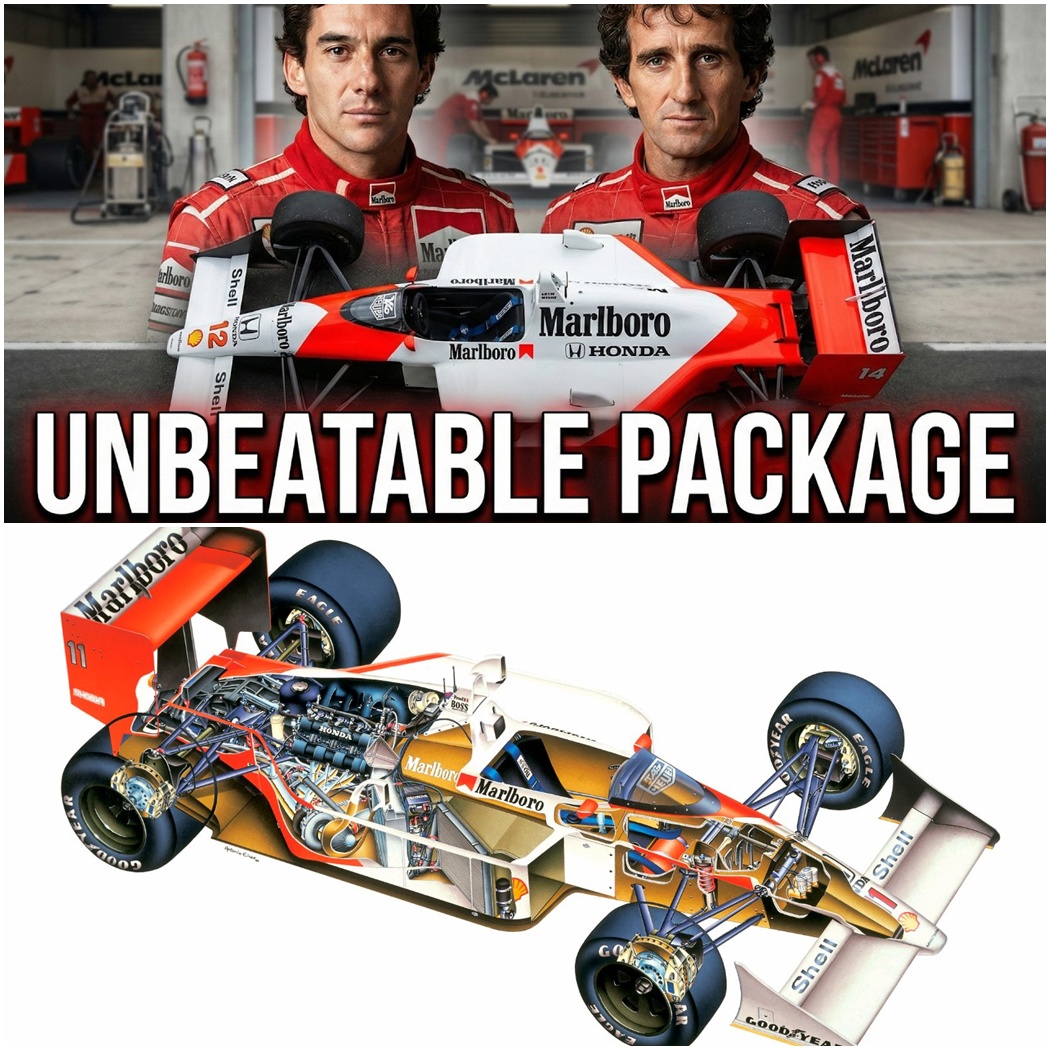
Some Formula 1 cars win championships. A select few define eras. But only one machine has ever come so close to breaking the very idea of competition itself: the McLaren MP4/4.
In the annals of motorsport history, the 1988 season stands apart as a singular anomaly. It was a year where the question wasn’t “Who will win?” but rather “Which McLaren driver will win?” With the legendary duo of Ayrton Senna and Alain Prost behind the wheel, the low-slung, red-and-white rocket ship didn’t just beat the opposition; it annihilated them. Winning 15 out of 16 races, the MP4/4 achieved a level of statistical dominance that remains the benchmark against which all modern super-teams are measured.
But what actually made this car so special? Was it just the drivers? The engine? Or was it a radical design philosophy that had failed spectacularly just two years prior? To understand the legend of the MP4/4, we have to look beyond the podiums and dive into the engineering genius that birthed it.
The Resurrection of a “Failed” Idea
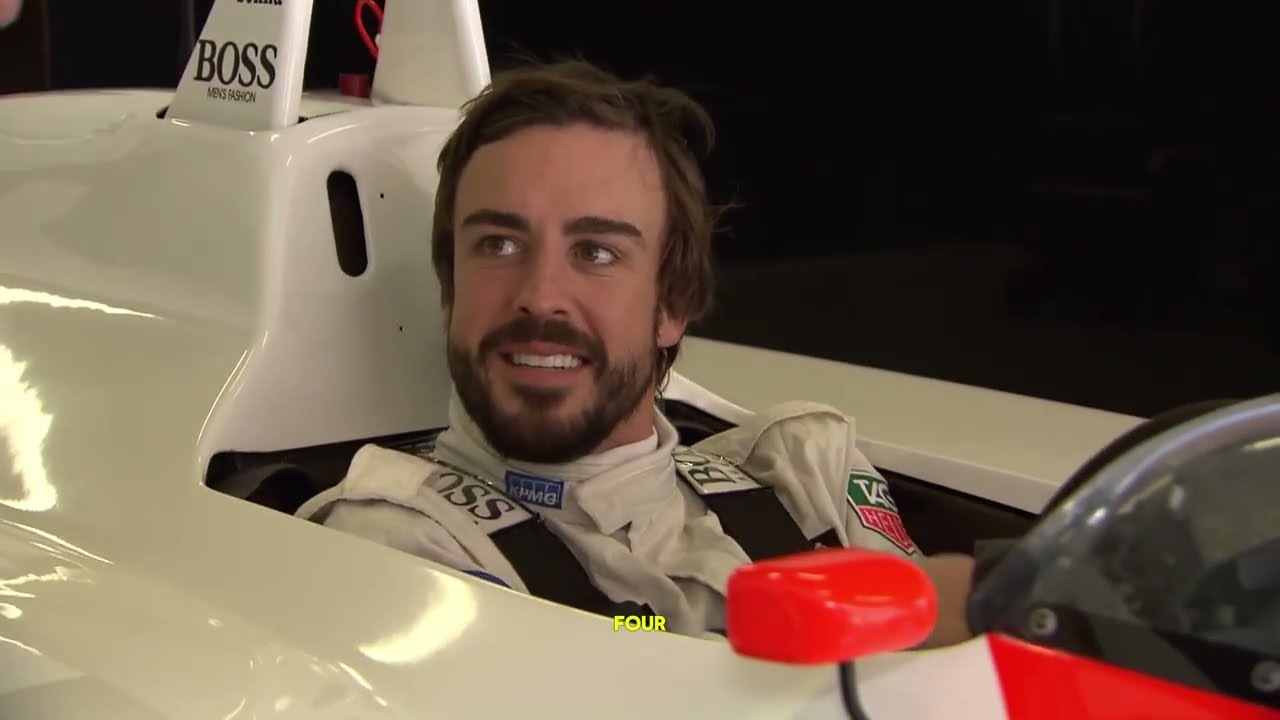
The story of the MP4/4 doesn’t begin in 1988, but in 1986, at a struggling Brabham team. Legendary designer Gordon Murray had introduced the BT55, a car known as the “skate car” due to its incredibly low profile. The concept was theoretically sound: reduce the frontal area to cut drag and lower the center of gravity to improve cornering speeds.
On paper, it was brilliant. On the track, the Brabham BT55 was a disaster, plagued by reliability issues and packaging compromises. It went down in history as a failure. But Murray refused to let the idea die. He knew the physics were sound; he just needed the right environment to execute it.
That opportunity arrived when Murray moved to McLaren in late 1986, joining forces with Technical Director Steve Nichols. With the resources of a super-team and a blank sheet of paper for the 1988 regulations, Murray dusted off the “skate car” concept. This time, however, he wasn’t just building a chassis; he was integrating it with a power unit that would change the sport forever.
The Honda Connection: Brutal Efficiency
For 1988, McLaren made a pivotal switch from the TAG-Porsche engines to Honda. The Japanese manufacturer was already a force in F1, but Murray and Nichols demanded something specific. They didn’t just want power; they wanted packaging.
They requested a custom-built engine that would fit the ultra-low profile Murray envisioned. Honda delivered the RA168E—a 1.5-liter V6 Turbo. With an 80-degree bank angle and producing roughly 685 horsepower in qualifying trim (revving to a screaming 12,500 RPM), it was a marvel of compact engineering.
Crucially, the 1988 regulations had slashed fuel limits to just 150 liters, a massive reduction from previous years. Honda’s genius lay in creating an engine that was not only powerful but brutally efficient. It allowed the drivers to push hard while rivals were lifting and coasting to save fuel. This efficiency gave McLaren the strategic flexibility to run higher boost pressures for longer periods, turning the MP4/4 into a relentless weapon over a race distance.
Lying Down on the Job
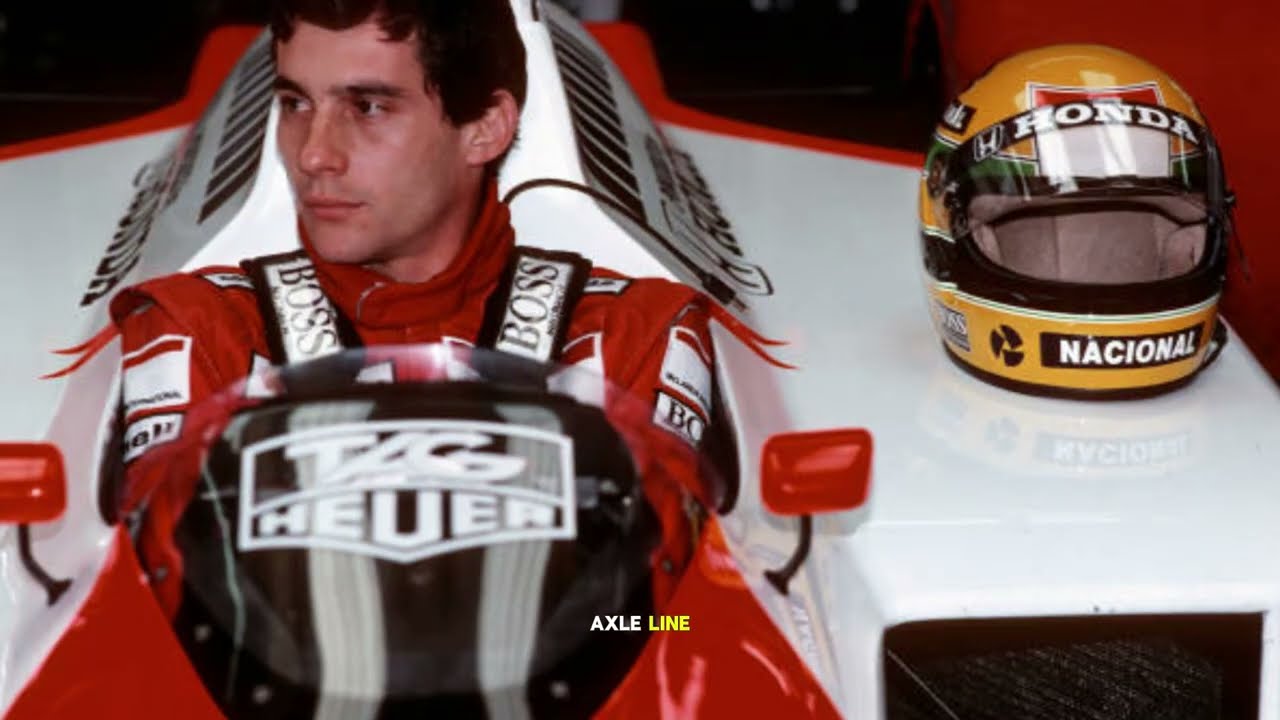
The most radical aspect of the MP4/4, however, was how the driver fit into the machine. To achieve the extreme low-line aerodynamics Murray craved, the conventional upright seating position had to go.
In the MP4/4, Senna and Prost weren’t sitting; they were practically lying down. The seat was reclined to an extreme angle, placing the driver’s feet just behind the front axle line. This reduced the car’s frontal area significantly, allowing air to flow cleaner over the bodywork and to the rear wing.
More importantly, it lowered the overall center of gravity. In a sport where weight distribution is king, this gave the MP4/4 an unnatural stability. It could change direction with a ferocity that caught other teams off guard. While other cars rolled and pitched through corners, the McLaren stayed planted, allowing Senna and Prost to carry significantly more speed through the apex.
The Hidden Secret: The Gearbox
While the Honda engine got the glory, team insiders often point to a less visible component as the true key to the car’s success: the gearbox.
Gordon Murray, working with engineer Pete Weismann, developed a unique triple-shaft longitudinal gearbox. Conventional designs used a twin-shaft layout, which was bulkier. The triple-shaft design was shorter and more compact, allowing the engine to be mounted further forward and the rear bodywork to be tapered more aggressively.
This tight packaging was the final piece of the puzzle. It meant that while other teams like Lotus were using the exact same Honda engine, they couldn’t get anywhere near McLaren’s performance. The Lotus chassis was simply too bulky, too conventional. McLaren had built a bespoke suit for the engine; Lotus was wearing off-the-rack.
A Season of Total Domination
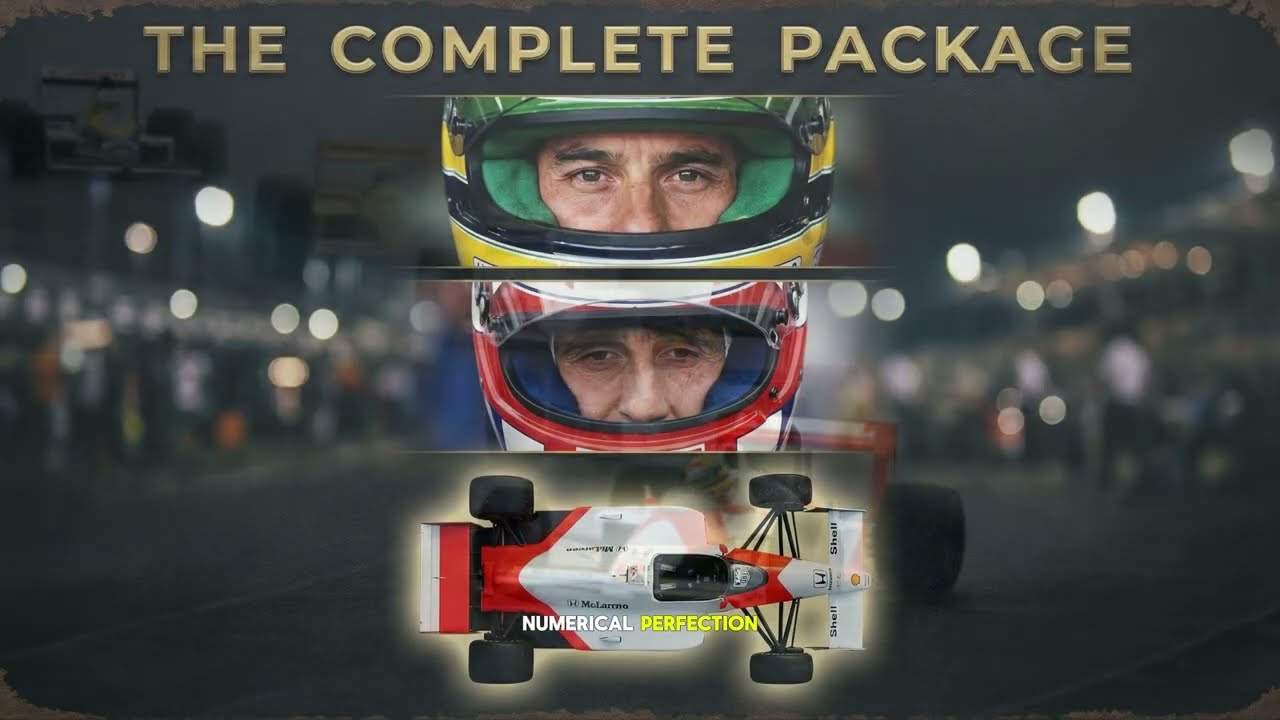
When the MP4/4 finally hit the track—late in pre-season testing—the paddock knew immediately that the game was over. The car was perfect right out of the box. It possessed an eerie combination of qualifying speed and race durability.
The statistics from 1988 read like a glitch in the matrix. McLaren took pole position in 15 of the 16 races. They won 15 of the 16 races. The only blemish on a perfect record came at the Italian Grand Prix at Monza.
In a cruel twist of fate, Alain Prost suffered a rare mechanical failure, and Ayrton Senna, leading comfortably, collided with a backmarker in the closing stages. That single incident is the only thing standing between the MP4/4 and a 100% win rate.
Despite that one Sunday, the car delivered Ayrton Senna his first World Championship after a titanic season-long battle with Prost. It wasn’t just a car; it was the stage for the greatest rivalry the sport has ever seen.
The Legacy of Perfection
Decades later, the McLaren MP4/4 remains the gold standard. In an era of increasing complexity, where teams struggle to balance aerodynamics with mechanical grip, the MP4/4 stands as a testament to the power of a unified concept. It proved that a race car is not just a collection of parts, but a cohesive system where every bolt, every wire, and every carbon fiber panel must work in harmony.
It was the car that validated Gordon Murray’s “failed” ideas. It was the car that cemented Honda’s legend. And it was the car that gave us the definitive image of Ayrton Senna: a yellow helmet in a red and white blur, crossing the line first, again and again.
We may see dominant cars in the future—Red Bull’s RB19 came close—but the MP4/4 did it with a style and a purity that will likely never be matched. It wasn’t just a machine; it was a masterpiece.








