The Politics of Blame: Sarah Pochin’s Bizarre Football Comment Sparks National Outrage and Charity Condemnation
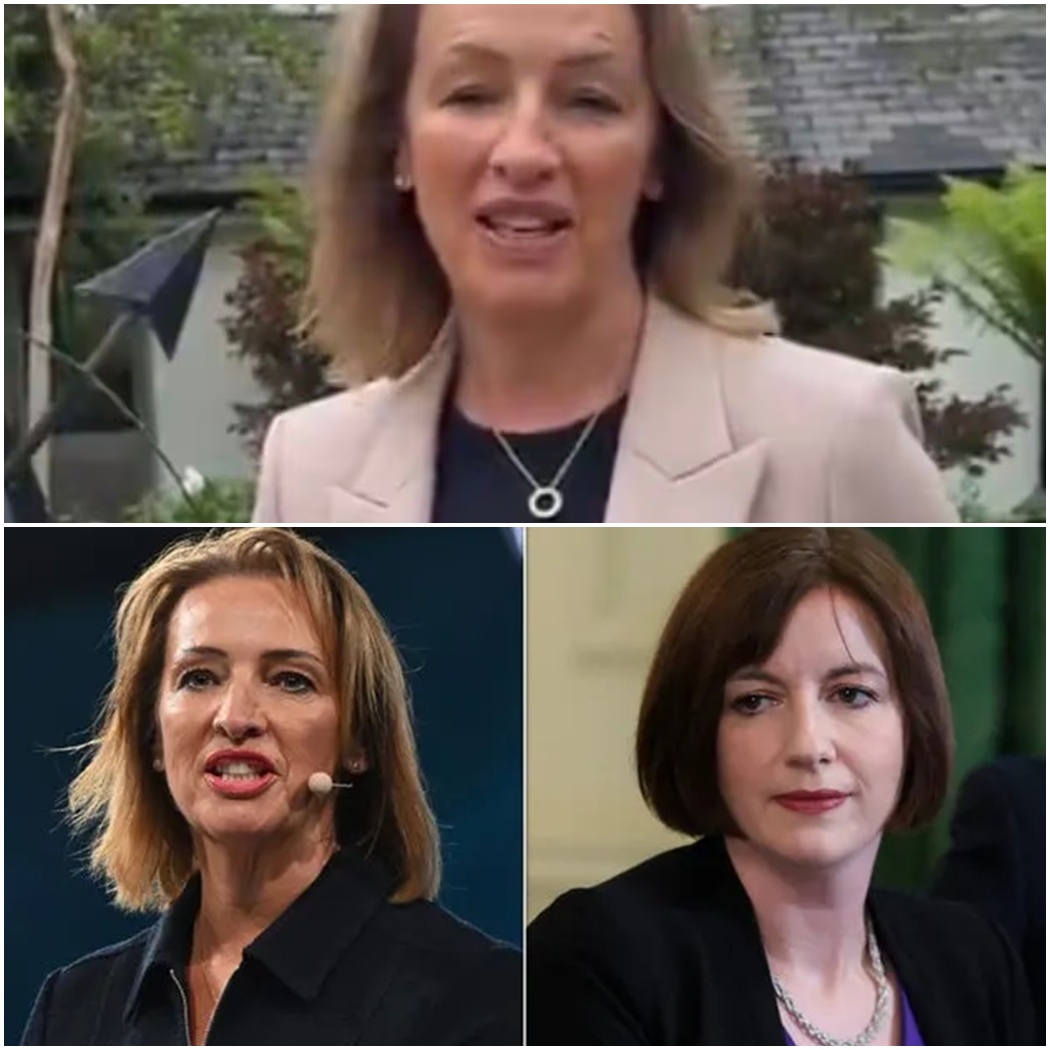
In the high-stakes, hyper-scrutinised world of modern British politics, few things can destroy a career as quickly as a misplaced word—or in the case of Reform UK MP Sarah Pochin, a misplaced video. On the morning of June 18, 2026, as the nation was still reeling from a mix of footballing euphoria and political tension surrounding the Makerfield by-election, the Member of Parliament for Runcorn and Helsby decided to upload a short, informal clip to social media. What she likely intended as a supportive, if slightly eccentric, message to the England football squad quickly mutated into a political disaster of epic proportions, drawing immediate, sharp, and universal condemnation from charities, government ministers, and the wider public alike.
The premise of Pochin’s video was staggering in its simplicity and horrifying in its implications. Referring to England’s recent 4-2 World Cup victory over Croatia, she addressed the team directly, stating: “England won the football last night, and thank goodness they did. Because on the occasions that England lose their football matches, the incidences of domestic violence go through the roof. So boys, keep winning.”
In the span of thirty seconds, Pochin had managed to do what many politicians spend decades avoiding: she had externalised the moral responsibility for domestic abuse, seemingly pinning the safety of women and children on the performance of a group of professional footballers. The backlash was not merely swift; it was explosive.

To understand why this comment caused such a seismic reaction, one must look at the nature of domestic abuse itself. It is a persistent, insidious, and largely hidden crime that thrives on isolation, power imbalances, and, crucially, the shifting of blame. For decades, survivors, support workers, and legal experts have fought a long and arduous battle to ensure that the narrative remains focused on a simple, immutable truth: domestic abuse is a choice made by the abuser, and the abuser alone is responsible for their actions. By suggesting that a football team’s success or failure is a determining factor in whether a woman is assaulted, Pochin was inadvertently reinforcing the very myths that charities have worked so hard to dismantle.
The response from the charity sector was nothing short of devastating. Farah Nazeer, chief executive of the leading charity Women’s Aid, wasted no time in dismantling the logic of the MP’s statement. “Football does not cause domestic abuse,” Nazeer stated with clinical precision. “It is a choice that is made by the abuser, time and again, regardless of whether a team wins or loses a match.” The charity leader highlighted a crucial point: while statistical evidence has long shown an increase in domestic abuse reports during major sporting tournaments, the correlation does not equate to causation. Abuse is a chronic pattern of behaviour that escalates based on the internal dynamics of a relationship and the perpetrator’s own desire for control, not the result of a match at Wembley or on the world stage.
Refuge, another pillar of the domestic abuse support network, expressed “deep concern” at the remarks. Their spokesperson was equally scathing, noting that Pochin’s narrative was not only misleading but potentially dangerous. “This is not only misleading, but could allow perpetrators to evade accountability,” they explained. By suggesting that football results are a catalyst for violence, the MP’s words provided a ready-made excuse for abusers. It suggests that if a perpetrator becomes violent after a loss, it is a reaction to an external stressor—the football match—rather than a deliberate act of violence. It is a dangerous piece of “mental framing” that sanitises the actions of the aggressor.
The political reaction was equally unforgiving. Bridget Phillipson, the Education Secretary and Minister for Women and Equalities, took to social media to deliver a sharp, blunt rebuke that stripped away any room for political spin. “Men should not beat up women. Full stop. No excuses,” Phillipson wrote. It was a message of such simplicity that it served as a brutal contrast to Pochin’s rambling, bizarre commentary.
Even within the broader context of the 2026 political calendar, Pochin’s video appeared to be a catastrophic miscalculation. The country was focused on the Makerfield by-election, a pivotal moment for both the Labour Party and the future of Sir Keir Starmer’s premiership. In an environment where every vote was being fought for, such a controversy served as a massive, unwelcome distraction for the Reform Party. Sources within the party were reportedly “gloomy” about their prospects in Makerfield, and while they publicly insisted they were “very happy” with their performance, it is clear that the party leadership was less than thrilled with having to answer for their MP’s social media activities on such a crucial day.
When confronted at the Makerfield by-election count, Pochin attempted to walk back her comments, claiming that her words were being “twisted.” She insisted that she was not placing the responsibility for domestic abuse on the England team—a claim that fell on largely deaf ears, given the explicit nature of her video. She argued that her intention was merely to highlight that friends and family members should be vigilant during periods of high tension. However, the damage was already done. In the eyes of the public, the nuance had been lost—or perhaps, it was never really there to begin with.
This latest gaffe is not an isolated incident for Sarah Pochin. Since her election in 2025, she has been a lightning rod for controversy. Her political career has been punctuated by a series of high-profile skirmishes, from her unsuccessful Maiden speech where she poked fun at her colleagues for being at the pub, to her provocative questioning at Prime Minister’s Questions regarding the banning of the burqa. She has frequently clashed with the institutions of the British establishment, including a recent and highly publicised “deplatforming” by the debating society at Bangor University, who refused to host her, citing their zero-tolerance policy towards racism, transphobia, and homophobia—charges which Pochin vehemently denies.
Critics might argue that Pochin’s tendency to court controversy is a deliberate strategy. In an age of social media, where outrage is the currency of engagement, being “cancelled” or condemned by the mainstream can, to some, be a badge of honour. It reinforces the “outsider” status that many in the populist-right movement cultivate. Yet, there is a fundamental difference between challenging political orthodoxy and making comments that undermine the safety and dignity of domestic abuse survivors. When the topic is as grave as domestic violence, the public’s patience for “populist truth-telling” wears incredibly thin.
The incident also highlights the wider tension between the role of a modern Member of Parliament and the volatile, unfiltered nature of the digital age. In the past, a representative would have had a series of hurdles—press officers, editorial boards, internal party discipline—to navigate before their thoughts were broadcast to millions. Today, a MP can film a thirty-second clip on their phone in the back of a car or a quiet corner of a constituency office and reach a global audience in seconds. While this has undoubtedly democratised access to politicians, it has also stripped away the safeguards that often prevent the kind of disastrous gaffes that can wreck a political career.
For Reform UK, the challenge is clear. If they wish to be taken seriously as a party of government, they must grapple with the behaviour of their representatives. Leader Nigel Farage has previously distanced himself from some of Pochin’s more extreme statements, including a “vile” rant regarding the demographics of television advertising, during which she complained about the prevalence of black and Asian actors. At the time, Farage described her comments as “wrong and ugly,” but he stopped short of removing the whip or taking meaningful disciplinary action, citing a “broader context” of complaints about diversity, equity, and inclusion policies. This latest incident, however, carries a different weight. It is not an issue of cultural politics or advertising demographics; it is a fundamental issue of public safety and moral responsibility.
As the dust settles on this particular scandal, the broader question remains: what does the British public expect from their elected representatives? Do they want provocative, unfiltered, “tell-it-like-it-is” politicians who are willing to say the quiet bit out loud, or do they expect a level of gravitas and sensitivity that is commensurate with the power they wield?
The outcry against Sarah Pochin suggests that on matters of domestic abuse, the public has a clear, unambiguous answer. There is no “context” that makes domestic violence acceptable, and there is no football match result that should ever be used to frame or contextualise the suffering of victims. It is a red line that politicians cross at their own peril.
For the time being, Pochin remains an MP, and her constituency will continue to hold the spotlight, albeit for all the wrong reasons. But the strength of the reaction—from charities, fellow MPs, and social media users across the political spectrum—proves that even in a highly polarised country, some things are still considered beyond the pale. The “red card” that the charity Refuge called for in their statement is one that the public seems increasingly willing to show.
In the final assessment, Sarah Pochin’s comments are a case study in the dangers of performative, unscripted political rhetoric. By attempting to insert herself into the national conversation surrounding the World Cup, she managed to alienate her supporters, provide ammunition to her opponents, and, most importantly, cause significant harm to the cause of domestic abuse survivors. Whether she can recover from this latest misstep remains to be seen, but one thing is certain: the spotlight will be burning significantly brighter on her every word in the weeks and months to come. And in the world of Westminster, where the next crisis is always just around the corner, she may find that the public’s forgiveness is not as easily won as a social media “like.”








