The Invisible Advantage: How Max Verstappen’s Bizarre Braking Technique Broke Formula 1
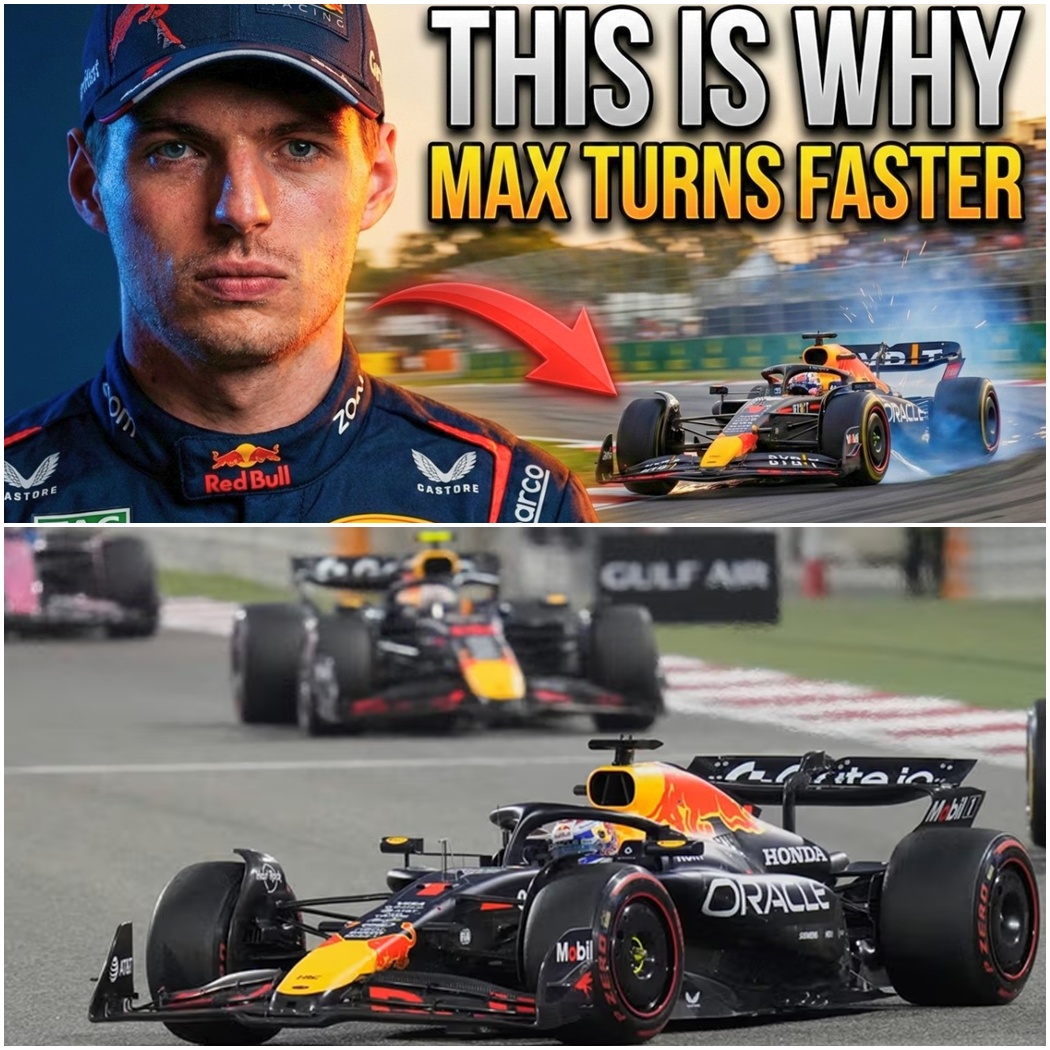
When you watch a modern Formula 1 car hurtle toward a hairpin corner at over 300 kilometers per hour, the sheer violence of the deceleration is mesmerizing. The carbon brake discs glow a furious, molten orange. The driver’s body is subjected to a crushing five Gs of force, straining every muscle in their neck simply to keep their head upright. To the untrained eye, the art of braking in motorsport seems brutally simple: hit the pedal as late as humanly possible, slow the car down, and turn the steering wheel. But in the hyper-competitive, data-obsessed world of Formula 1, braking is not about stopping. It is an intricate, high-speed dance of weight manipulation. And right now, no one in the world is manipulating weight quite like Max Verstappen.
While rival drivers and armchair critics often attribute Verstappen’s relentless dominance to Red Bull’s aerodynamic superiority or his sheer aggression, the reality hidden deep within the team’s telemetry data tells a wildly different story. Verstappen does not merely brake later than his competitors. The true secret to his lap time—the elusive detail that rival engineers point to with a mixture of awe and frustration—lies not in when he hits the brake pedal, nor in how hard he presses it. The secret lies entirely in how he lets it go.
To understand why this split-second action is so critical, we must first dive into the brutal physics of a Formula 1 corner. When a driver slams on the brakes, the massive deceleration forces cause a violent shift in the car’s dynamics. The weight of the vehicle is aggressively thrown onto the front axle. The front suspension compresses, the aerodynamic balance pitches forward, and the front tires are driven forcefully into the asphalt, generating maximum grip. Conversely, the rear of the car becomes dangerously light and prone to stepping out. The entire mechanical and aerodynamic profile of the car transforms in less than a single second.
However, the most crucial phase of cornering—the exact moment where lap time is definitively won or lost—is not during peak deceleration. It happens in the microscopic window immediately afterward, during a phase engineers call “brake release.”
When a driver begins to lift their foot off the brake pedal to initiate the turn, the heavy load resting on the front tires naturally begins to shift back toward the rear of the car. If a driver releases the brake too quickly, the front tires lose their downward pressure before the car has had a chance to rotate toward the apex, resulting in agonizing understeer. If the driver holds the brake too hard for too long, the unstable rear end will snap out, ruining the lap or sending the car spinning into the barriers.
This is where Max Verstappen operates on a completely different physical and mental plane. Telemetry traces from rival drivers generally show a relatively simple brake release curve. They hit peak pressure, hold it for a fraction of a second, and then release the pedal in a smooth, predictable downward slope as they turn the steering wheel. Verstappen’s telemetry trace, however, looks downright bizarre. Instead of a clean downward slope, his release curve features a long, highly controlled taper punctuated by subtle, deliberate plateaus.
Verstappen maintains a residual amount of brake pressure significantly deeper into the corner than any other driver on the grid. Engineers often refer to this dark art as “holding the nose down.” He isn’t braking hard; he is maintaining just a few percentage points of pressure. But those tiny, lingering percentages of brake load are enough to keep the weight pinned to the front axle for just a fraction of a second longer. By doing this, he forces the front tires to operate at their absolute peak grip threshold precisely as he applies steering lock. The result is a car that rotates toward the apex significantly earlier and sharper than the competition.
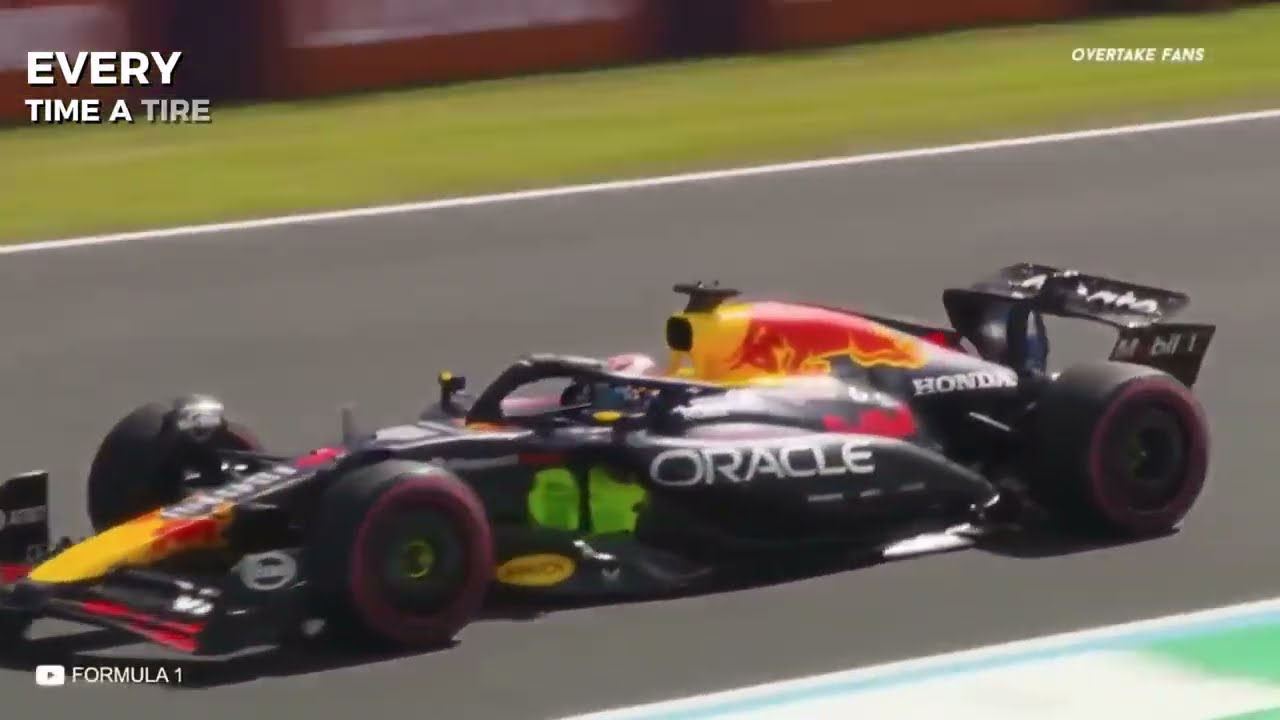
But why does early rotation matter so much? Because in motorsport, an earlier rotation creates a shorter, straighter path through the corner. A shorter path means the car is pointed down the next straight sooner. If the car is pointed straight sooner, the driver can get back on the throttle earlier. And an earlier throttle application equates to a significantly higher exit speed that carries all the way down the following straight. Over the course of a single lap, these tiny, seemingly insignificant fractions of a second accumulate into massive, crushing advantages.
The immediate question that arises is obvious: if every single team on the pit wall has access to this GPS and telemetry data down to the thousandth of a second, why can’t other drivers simply copy what Verstappen is doing?
The answer highlights the difference between reading data and possessing innate, unteachable muscle memory. Braking in Formula 1 is not a robotic sequence. The brake release phase happens in mere fractions of a second while the driver is simultaneously managing massive g-forces, turning the steering wheel, preparing to modulate the throttle, and reacting to the shifting balance of the car. You cannot actively think about tapering your brake pressure while traveling at 150 miles per hour; it must be completely instinctual. Verstappen developed this specific feel for front-end load during his early, formative years in karting, a discipline where maintaining momentum and front grip through corner rotation is absolutely essential. He has hardwired this technique into his nervous system over a lifetime of racing. To ask another driver to suddenly adopt it is like asking a right-handed tennis player to win Wimbledon playing with their left hand. It simply defies natural muscle memory.
This unique driving style also heavily intertwines with Red Bull’s specific engineering philosophy. There is a constant “chicken-or-the-egg” debate in the paddock: did Red Bull design a car that perfectly suits Verstappen’s weird braking habits, or did Verstappen adapt his braking to survive the car? The reality is a deeply symbiotic relationship. Red Bull Racing has historically favored building cars with an incredibly sharp, responsive front end, often at the expense of a nervous, unstable rear. Teammates like Sergio Perez have repeatedly voiced their struggles with this lack of rear entry stability. Verstappen, however, does not just survive this instability; he actively exploits it. By holding the brake pressure longer and keeping the nose pinned to the tarmac, he activates the car’s strongest characteristic. Over several years, Red Bull’s brilliant engineering team has continually refined the suspension geometry, anti-dive characteristics, and aerodynamic balance to perfectly complement this exact entry style.
Furthermore, this microscopic pedal control acts as a secret weapon for tire preservation. Every time a tire slides across the abrasive asphalt under braking or steering, the friction generates massive heat spikes. Abrupt brake releases cause the front tires to experience a sudden drop in vertical load, forcing them to slide more as the driver turns the wheel. Because Verstappen’s gradual, tapered release keeps the vertical load stable, the tire physically slides less. Less sliding means fewer surface temperature spikes, which ultimately translates to dramatically slower tire degradation over a long race stint. This perfectly explains the baffling phenomenon where Verstappen appears to be driving wildly aggressively, yet his tires somehow survive significantly longer than his competitors’.
As Formula 1 hurtles toward the massive regulatory overhaul slated for the 2026 season, this invisible advantage might become even more devastating. The new rules will introduce cars that rely significantly more on electrical deployment, with roughly half of the total power output coming from the battery systems. The removal of the MGU-H will drastically alter energy recovery dynamics, meaning the amount of engine braking torque generated by the rear axle will fluctuate heavily from corner to corner. Add the introduction of complex active aerodynamics—where front and rear wings will constantly shift between high-downforce and low-drag modes during the braking phase—and the cars are set to become exponentially more difficult to balance on corner entry.
Drivers will require an almost supernatural level of precision to synchronize the mechanical weight transfer of the chassis with the constantly shifting aerodynamic load. In an era where cars will be lighter, more powerful, and wildly more unpredictable under braking, the driver who can feel the exact threshold of the brake pedal will reign supreme. Max Verstappen has already proven that he feels the mechanical heartbeat of a racing car better than anyone else alive. The rest of the grid isn’t just fighting a faster car; they are fighting a driver who has fundamentally rewritten the physics of how to drive it.








