The Flawed Hero with the Heart of a Lion: Unraveling the Chaotic, Dramatic, and Unforgettable Legacy of Nigel Mansell
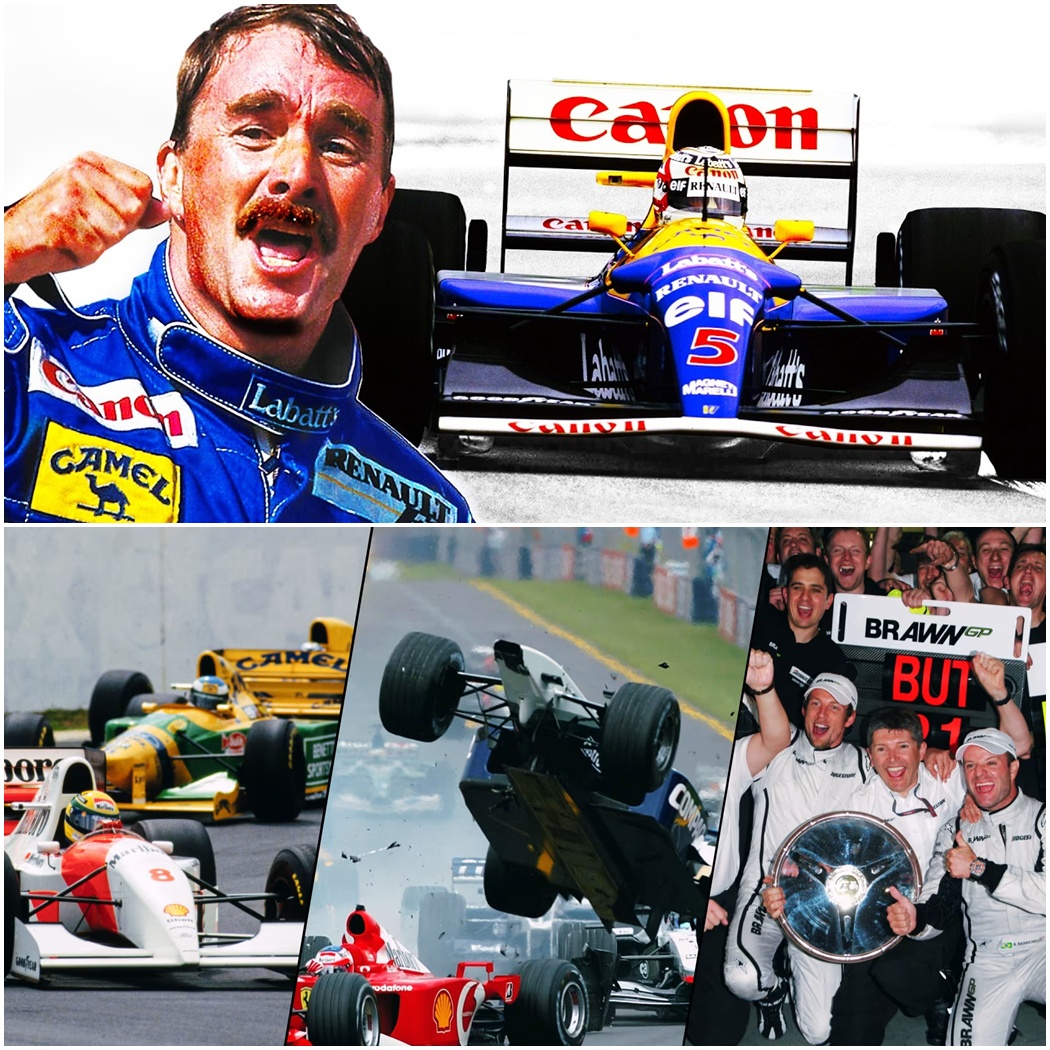
In the high-stakes, meticulously engineered, and intensely political world of Formula 1, drivers are often conditioned to operate like emotionless machines. They are trained to give sterile PR answers, to maintain an icy composure, and to execute their race strategies with a calculated, robotic precision. But occasionally, a driver comes along who completely shatters that mold. A driver who races purely on raw emotion, who visibly suffers through every setback, and who wears their deeply flawed human heart firmly on their racing sleeve. For Formula 1 fans in the 1980s and 1990s, that driver was Nigel Mansell.
When Mansell drove for Ferrari, the infamously passionate Italian fanbase known as the Tifosi bestowed upon him a nickname that perfectly encapsulated his entire racing persona: “Il Leone,” or The Lion. That single moniker tells you absolutely everything you need to know about the kind of competitor Mansell was. He was a man who raced through agonizing chemical burns, who strapped himself into the cockpit with broken bones, and who suffered through the cruelest, most dramatic championship defeats imaginable. Whether you adored him as a working-class hero or despised him as an incessant complainer, Mansell was undeniably one of the most polarizing and entertaining figures in the history of motorsport. If there is one single word that perfectly defines the entirety of his incredible career, it is simply this: drama.
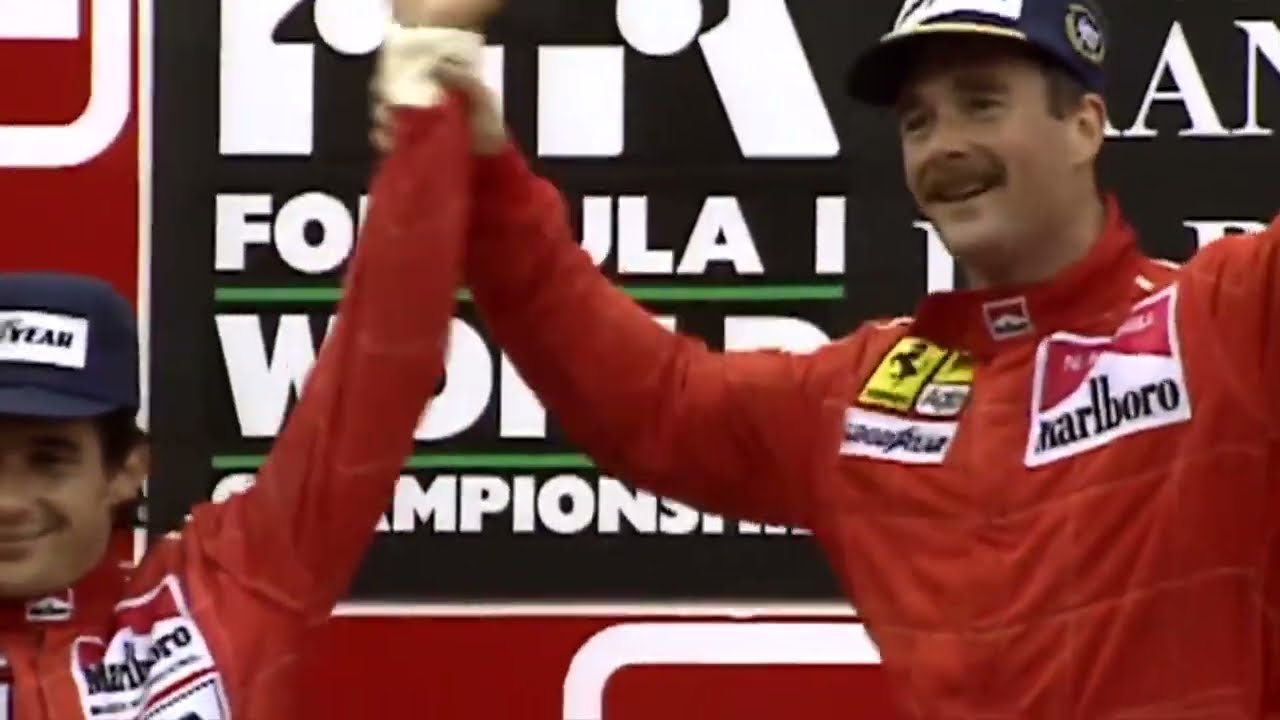
Mansell’s journey to the pinnacle of motorsport is a remarkable saga of perseverance, characterized by an ongoing war against terrible luck and his own personal hubris. His story officially began with his Formula 1 debut for the iconic Lotus team at the 1980 Austrian Grand Prix. In a scenario that sounds like a Hollywood scriptwriter’s exaggerated invention, Mansell’s debut was an absolute trial by fire. While sitting on the starting grid, his Lotus developed a severe fuel leak, continuously pouring highly volatile race fuel directly into his cramped cockpit. In a desperate, improvised attempt to dilute the caustic liquid, his mechanics simply dumped water onto his racing suit. It was a futile effort. Mansell endured the race suffering from severe, agonizing chemical burns on his back and his legs. Showing the superhuman grit that would come to define him, he raced on in excruciating pain until his Cosworth engine mercifully blew up after forty laps.
That horrifying debut essentially set the tone for everything that was to follow. Drama shadowed Mansell like a dark cloud, creating some of the most enduring, unbelievable images in the sport’s photographic archives. Consider the infamous 1984 Dallas Grand Prix. Run in some of the most oppressive, sweltering heat ever recorded in Formula 1 history, the track temperature soared well over one hundred degrees Fahrenheit. As his broken Lotus coasted toward the finish line, a physically spent Mansell unbuckled his belts, jumped out of the cockpit, and desperately tried to push the heavy machine across the line himself. He ultimately collapsed onto the blistering asphalt from severe heat exhaustion. It was a visceral, unforgettable display of determination that made the global fanbase fall completely in love with his fighting spirit.
However, determination alone does not win world championships, and Mansell’s career is perhaps best known for his agonizing, back-to-back title losses during his first stint with the Williams team. In 1986, he entered a thrilling three-way title decider in Adelaide, Australia. Running comfortably in the exact position he needed to clinch the crown with just eighteen laps remaining, tragedy struck. His rear tire violently exploded at over one hundred and eighty miles per hour, destroying his suspension and violently taking him out of the race. The image of the sparks flying from his shattered Williams remains one of the most iconic, gut-wrenching moments in the sport.
As if that was not cruel enough, history repeated itself the very next season. In 1987, at the penultimate race in Suzuka, Japan, Mansell suffered a monumental, terrifying crash during a practice session. The heavy impact resulted in severe spinal pain and massive internal bruising, rendering him medically incapable of competing in the final two rounds of the year. While he lay in a hospital bed in agonizing pain, the championship was automatically handed to his Williams teammate, Nelson Piquet.
The rivalry between Mansell and Piquet was the stuff of legends, characterized by an intensely toxic, deeply personal hatred that divided the entire Williams garage. Piquet had arrived at Williams as a double world champion and the contractually designated number one driver. He severely underestimated Mansell’s raw speed. Over two incredibly tense years together, Mansell actually secured more race victories and more pole positions than the Brazilian champion. However, Piquet was far more consistent, securing more overall podiums and ultimately the 1987 title. The atmosphere inside the team was absolutely poisonous. Mansell felt infuriated that Piquet received all the best engineering upgrades, while Piquet felt profoundly betrayed that Mansell refused to play a supportive role. The animosity reached such vulgar depths that Piquet publicly insulted Mansell in the press, infamously referring to the British driver as an “uneducated blockhead” and resorting to completely unprovoked, cruel insults aimed directly at Mansell’s wife.
Disillusioned with Williams and their decision to abandon their dominant Honda engines, Mansell sought refuge in the welcoming, chaotic embrace of Ferrari in 1989. It was a match made in melodramatic heaven. Mansell holds the distinct honor of being the very last driver personally selected by the legendary Enzo Ferrari before his passing. Mansell immediately endeared himself to the Italian fans by winning on his Ferrari debut, a feat rarely accomplished. But as always, the spectacular highs were accompanied by bizarre lows. He was slapped with a race ban for blatantly ignoring black disqualification flags during a race, and by his second season with the Scuderia, he was already embroiled in deeply bitter political warfare.
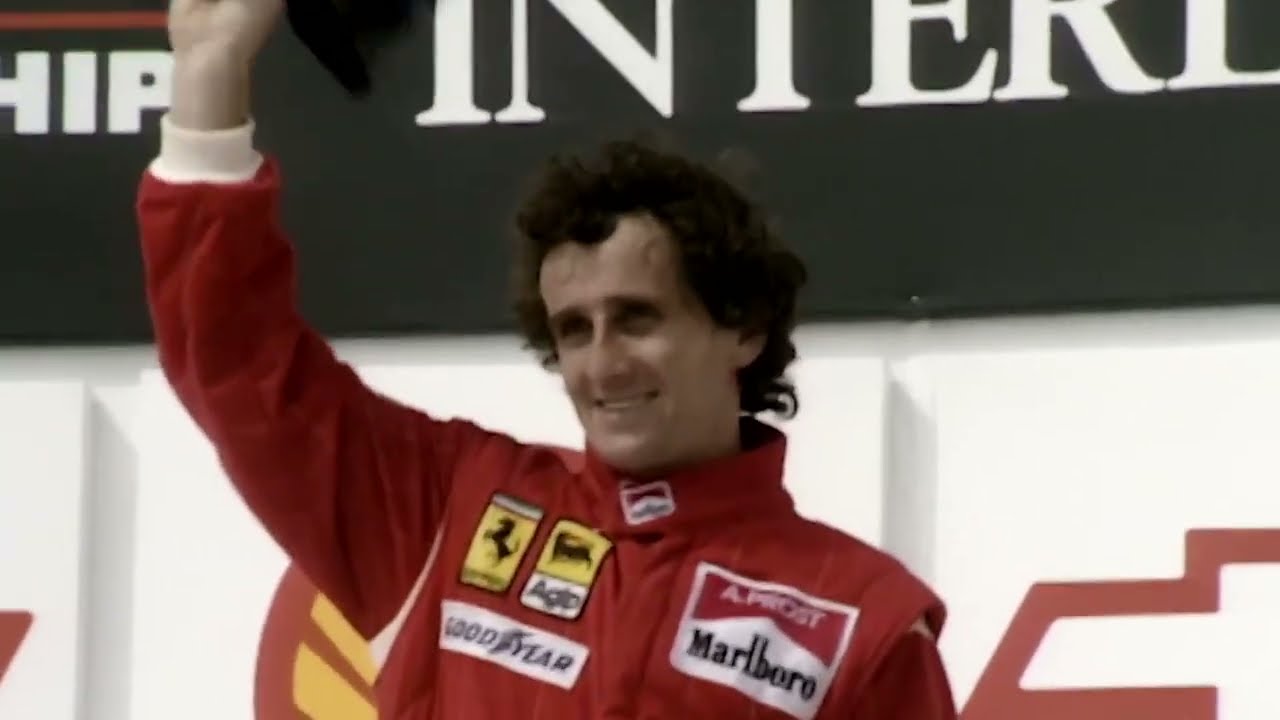
In 1990, Ferrari brought in the calculating, brilliant Alain Prost. While Mansell possessed explosive, natural speed, Prost was a master tactician who spoke fluent Italian and quickly galvanized the disorganized Ferrari mechanics around him. Mansell, burdened by a massive inferiority complex and feeling that he was never afforded the same innate respect as legends like Ayrton Senna or Prost, began to crack under the pressure. Rather than elevating his own driving standards, he retreated into a shell of paranoia. He constantly muttered about political conspiracies against him, complaining endlessly to the press. It earned him the incredibly unflattering nickname, “Moaning Mansell.” Halfway through the 1990 season, in a fit of classic, theatrical frustration, Mansell shocked the paddock by dramatically announcing his permanent retirement from Formula 1.
Of course, the retirement was short-lived. Mansell was eventually lured back to Williams for the 1991 season, right as the team was developing the most technologically advanced, dominant race cars the grid had ever seen, courtesy of the brilliant aerodynamicist Adrian Newey. It was during this era that Mansell pulled off some of the most evocative, breathtaking overtakes in history. His fearless dive-bomb on Nelson Piquet at Silverstone, his daring outside pass on Gerhard Berger at the terrifying Peraltada corner in Mexico, and his legendary wheel-to-wheel, spark-throwing drag race with Ayrton Senna down the main straight in Barcelona are moments forever etched into the minds of racing purists.
But even with the fastest car on the grid, Mansell still found highly unique, embarrassing ways to self-sabotage. During the 1991 Canadian Grand Prix, Mansell dominated the entire race. On the very last lap, possessing a massive lead, he decided to begin celebrating early. He started enthusiastically waving to the cheering crowds in the grandstands. As he approached the final chicane, still waving with one hand, he accidentally allowed the engine revs to drop far too low. The highly complex Renault engine abruptly stalled. Mansell fumbled a guaranteed, dominant victory mere corners from the checkered flag. And to add the ultimate, painful insult to injury, the driver who happily cruised past him to inherit the completely unearned victory was none other than his bitter nemesis, Nelson Piquet.
Finally, in 1992, at the advanced racing age of thirty-nine, Mansell put together a ruthlessly dominant campaign in the legendary Williams FW14B. After twelve grueling, dramatic seasons in the sport, he finally secured the elusive World Championship. He became the fifth oldest driver in history to win the title, a testament to his incredible, enduring natural talent. But even his ultimate triumph was immediately spoiled by backroom politics. Before the season was even finished, team boss Frank Williams—who always viewed drivers as highly replaceable, overpriced commodities compared to his brilliant cars—refused to meet Mansell’s financial demands. Behind Mansell’s back, Williams secretly signed Alain Prost for the following year. Feeling profoundly disrespected and betrayed yet again, Mansell packed his bags.
What followed was a bizarre, fascinating epilogue to his career. Mansell crossed the Atlantic to race in the dangerous, high-speed world of American IndyCar racing in 1993. Relying on his supreme bravery, he won the championship in his rookie season, briefly holding the distinct honor of being the reigning F1 and IndyCar champion simultaneously. However, his American adventure was also marred by massive, terrifying crashes on the concrete ovals that required major spinal surgery.
He eventually made a brief, emotional return to Williams following the tragic death of Ayrton Senna in 1994, bringing a much-needed sense of stability to a grieving team and even winning the final race of the season. That should have been the perfect, storybook ending. Instead, for reasons that remain baffling to this day, he was enticed by Ron Dennis to join a heavily declining McLaren team in 1995. The entire partnership was an unmitigated, embarrassing disaster. The car was painfully slow, uncompetitive, and incredibly ugly. Worst of all, the broad-shouldered Mansell literally could not fit inside the narrow cockpit. The team had to spend the first two races of the season entirely redesigning the tub just so their star driver could physically sit in it. After just two unmotivated, agonizing races in the redesigned car, Mansell finally walked away from Formula 1 for good.
The legacy of Nigel Mansell is that of a beautifully complicated, deeply flawed sporting hero. He possessed the ferocious heart of a lion, but an ego that could be instantly deflated by a harsh word. He fought the car, he fought his teammates, he fought the team bosses, and most of all, he constantly fought himself. But whether you liked him or loathed him, you simply could not take your eyes off him. His melodramatic, emotional character out of the car, paired with his incredibly aggressive, hard-charging mentality inside the cockpit, gifted Formula 1 some of its greatest, most visceral moments during a truly golden era. Nigel Mansell simply made Formula 1 far more fun to watch, and in the end, that is a legacy worth celebrating.








