THE COLLAPSE OF AN ERA: How the Chaotic Monaco Grand Prix Proved Formula 1’s 2026 Regulations Are a Catastrophic Failure
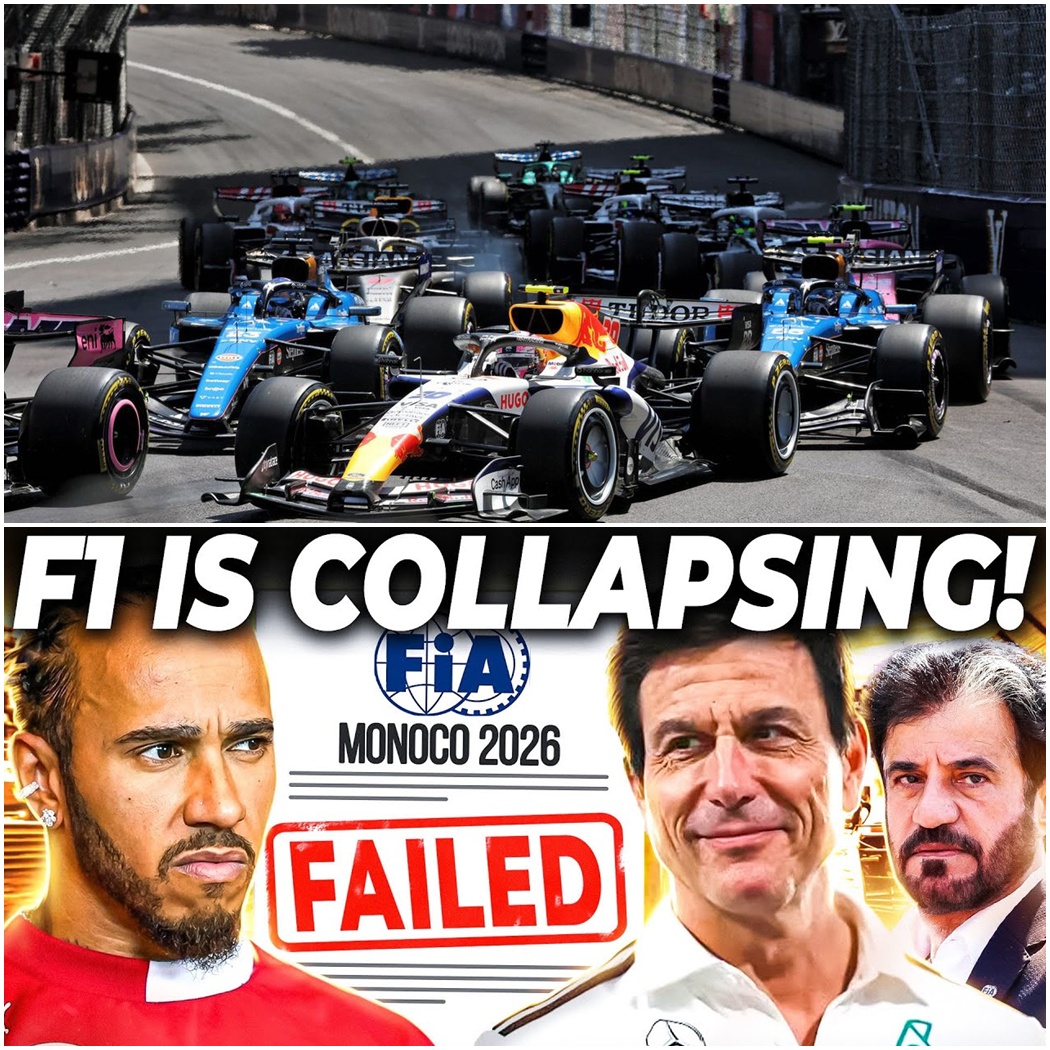
This was supposed to be the season that unequivocally saved Formula 1. After years of predictable dominance and heavily heavily criticised hybrid formulas, the highly anticipated 2026 rule changes were sold to the public as the ultimate motorsport panacea. Fans were promised closer racing, cleaner and more sustainable technology, and a fiercely competitive grid where absolutely anyone could emerge victorious. The new era was meticulously designed over four long years to fix everything that was supposedly wrong with the pinnacle of motorsport.
Instead, on a dramatic Sunday afternoon in Monte Carlo, the heavily marketed future of Formula 1 quietly, yet spectacularly, came apart at the seams.
The Monaco Grand Prix is universally recognised as the glittering jewel in the motorsport crown. It is the single race every aspiring driver dreams of winning, the slowest and tightest circuit on the calendar where ultimate precision matters vastly more than raw horsepower, and where one microscopic mistake puts you straight into the unforgiving steel barriers. It is the one weekend a year when the entire globe tunes in, even those who never usually watch Formula 1. Because of this massive global audience, if the new 2026 era was ever going to look genuinely impressive, it was meant to look good here. It did the exact opposite.
By the time the chequered flag mercifully fell on Sunday the 7th of June, the sixth round of the twenty-two race calendar was barely recognisable as a Grand Prix. It had descended into a farcical survival exercise that laid bare the fundamental, deep-rooted flaws of a rulebook that is already entirely collapsing under its own weight.
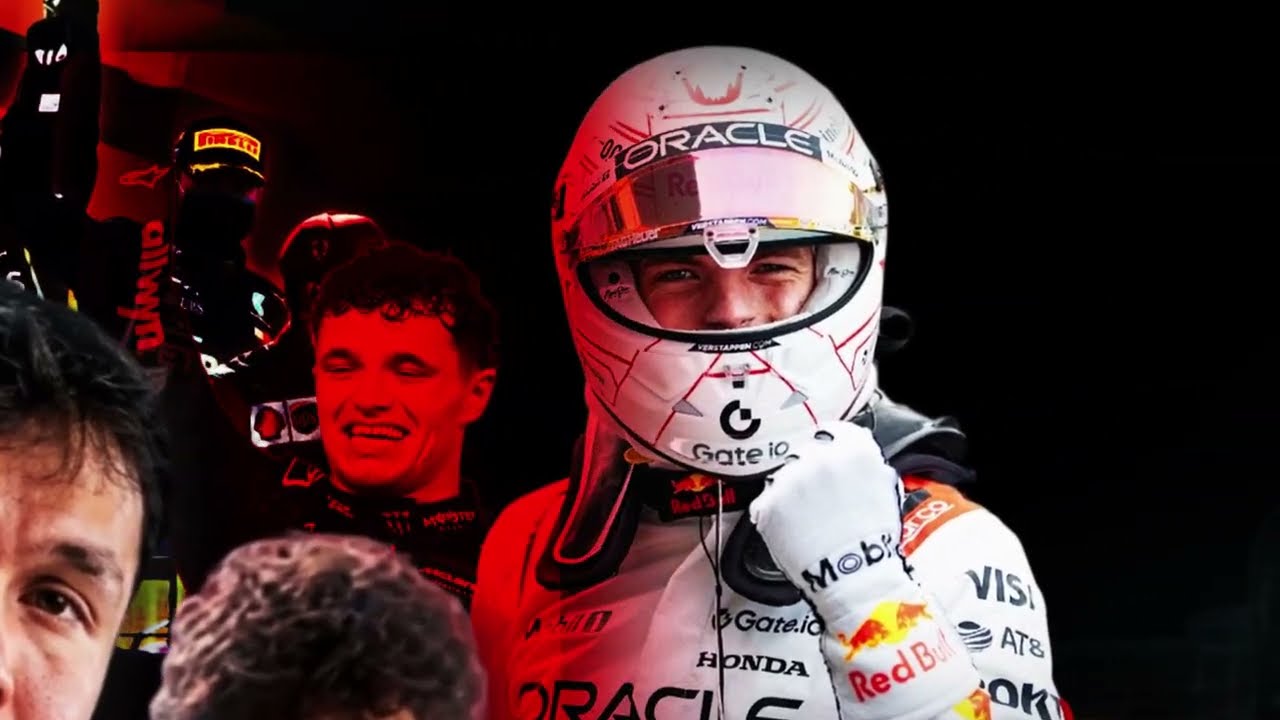
The disaster officially began before the race even started. Max Verstappen, the reigning benchmark driver and four-time world champion, had qualified brilliantly on the front row, missing pole position by a mere few hundredths of a second. He was the undeniable favourite for the victory. Yet, when the starting lights went out, his Red Bull simply refused to move. The complex engine, in his own exasperated words, had “just dropped dead.” The rest of the highly charged grid streamed terrifyingly past him into the tight first corner while his state-of-the-art machine sat there as a useless, multi-million-pound paperweight.
Red Bull team boss Laurent Mekies later confirmed that the fatal problem had developed on the slow formation lap. These new hybrid power units are required to rev incredibly hard on the formation lap just to spool the turbocharger and securely bank electrical energy into the battery system. This convoluted start procedure has proven to be incredibly fragile all season. McLaren’s Andrea Stella had proactively warned the FIA before the year even began that the new starting protocols were a massive safety risk. He was entirely right. When the best driver of his generation cannot reliably get his car off the starting line for the third time in six races—following similar mechanical heartbreaks in Australia and China—it is no longer just bad luck. It is a terrifying, systemic pattern.
Verstappen was merely the very first major casualty to fall. Around lap 45, Lando Norris helplessly coasted to a halt. His defeated radio message succinctly explained the entire failure: “No power, no battery.” This marked his second terminal power unit failure in two consecutive races, occurring on a McLaren that is otherwise demonstrably the fastest piece of machinery on the grid.
This specific failure is the exact nightmare scenario that seasoned engineers warned was coming with these regulations. The 2026 engines lean so incredibly hard on their electrical energy systems that when the complex battery network eventually lets go, there is absolutely no internal combustion power left to carry the heavy car home. You must remember exactly where this epidemic is happening. Monaco is universally acknowledged as the gentlest race of the entire year on an engine. It features the lowest top speeds, the shortest straights, and the least amount of time spent at full throttle. It is the easiest weekend a power unit will ever naturally experience. If these highly advanced engines are failing here of all places, it tells you exactly how dangerously stretched the new systems already are.
Then, the iconic walls of the principality started claiming victims due to a terrifying handling characteristic engineered directly into the cars. Valtteri Bottas cooked his brakes and pulled off, quickly followed by Oliver Bearman. But the true danger revealed itself with around twenty laps remaining when Lance Stroll crashed violently at the final corner, bringing out the safety car. In a shocking twist of fate, at the subsequent restart, hometown hero Charles Leclerc crashed his Ferrari at the exact same corner. Two cars, one corner, exactly seven laps apart.
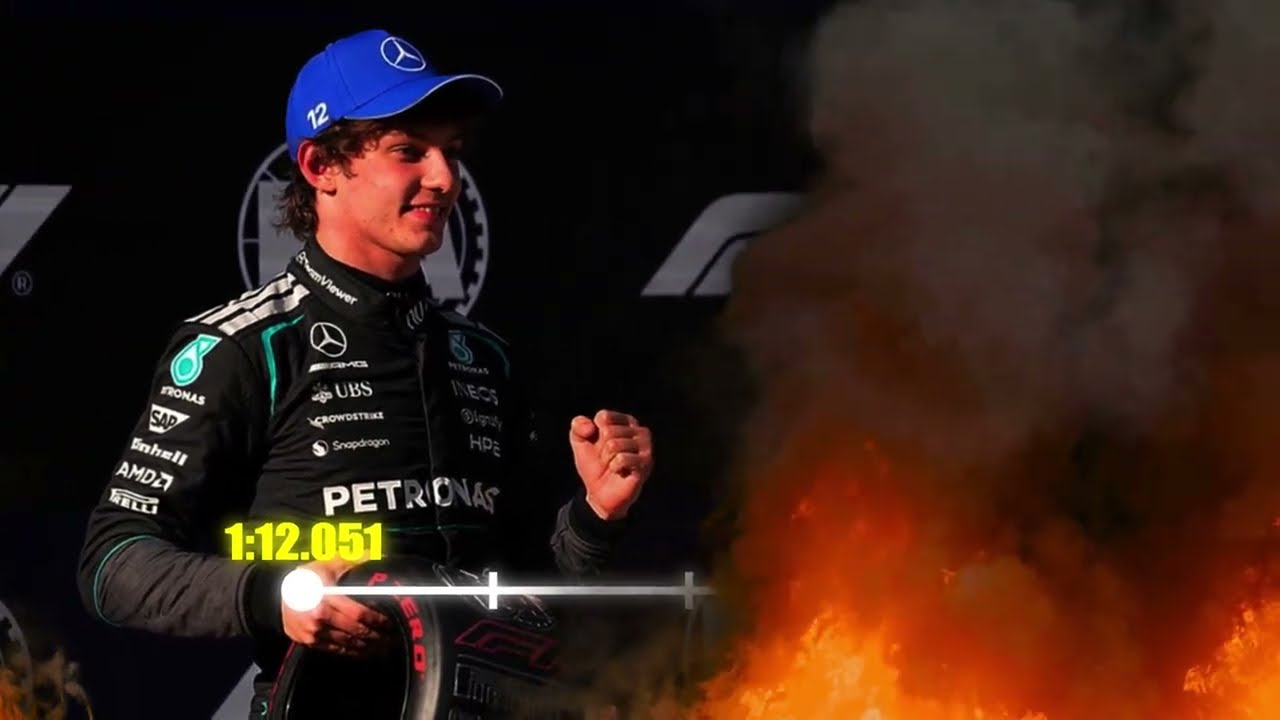
Stroll immediately pointed the finger firmly at the car’s engine braking system, mirroring the exact same frustrated complaints Isack Hadjar had been aggressively broadcasting all weekend. Under these convoluted 2026 rules, when the battery cannot sufficiently recharge, the drivers instantaneously lose their engine braking capabilities on the critical entry into a corner. The rear of the car goes entirely light, nervous, and completely unpredictable at the absolute worst possible moment. On a normal, modern circuit with vast tarmac run-off areas, this is simply a highly annoying handling gripe. In Monaco, where steel barriers sit mere inches from the optimal racing line, it is a guaranteed high-speed crash. These regulations handed the grid cars that drivers physically cannot trust under heavy braking, forcing them to gamble their safety into every single braking zone.
If cars dying and crashing due to fundamental rule flaws wasn’t embarrassing enough, the physical track decided to join the chaos. By lap 68 of the scheduled 78, the race had to be entirely red-flagged. Not for a crash, but because the actual track surface itself was aggressively breaking apart at Turn 19. Track workers were forced out onto the circuit to frantically repair crumbling tarmac in the middle of the most prestigious race in the world, resulting in an excruciating 37-minute stoppage.
When the race finally resumed, the result descended into total administrative farce. A sudden wave of pit lane speeding penalties hit five different drivers immediately after the chequered flag, several of them penalised for exceeding the limit by as little as a tenth of a kilometre per hour. Pierre Gasly, who had miraculously crossed the finish line in third and was on course for a shock, emotional podium, was brutally dropped to seventh. George Russell served his penalty incorrectly, picked up a devastating drive-through penalty, and fell completely out of the points. Carlos Sainz collected severe damage in the ensuing chaos and retired.
Yet, the absolute most damning indictment of the entire weekend was not the crashes, the crumbling tarmac, or the chaotic penalties. It was a completely silent decision the sport made before a single car even turned a wheel in anger.
Formula 1 quietly switched off its own flagship technology.
The active aerodynamic systems—the revolutionary moving wings that were passionately promised to define this entire modern era of racing—were disabled completely for the Monaco Grand Prix. The governing body’s reasoning was purely based on safety. The highly complex system requires a straight long enough to logically justify activating it, and Monaco simply does not possess one. The speeds generated coming out of the famous tunnel, combined with a severe lack of run-off area, were officially judged to be far too dangerous. Therefore, for the very first time in 2026, the cars ran permanently locked in their high-downforce settings for the entire weekend.
Sit and properly digest what that means. This was the first time movable wings of any kind were totally unavailable in Formula 1 since the Drag Reduction System (DRS) was introduced back in 2011. The single most heavily marketed, expensive, and widely discussed feature of these new cars could not be trusted to run safely at the sport’s most prestigious event. The sport looked at its own billion-pound creation and ultimately decided it was a dangerous liability.
It did not stop there. The heavily hyped battery systems were also brutally muzzled. Through a highly specific Monaco engine map mandated by the FIA, the cars forcefully cut their electrical deployment far earlier than normal, actively pulling the electric assistance away by the time the drivers reached 300 km/h to keep the energy levels strictly under control. The sport did not adapt the historic circuit to suit the advanced cars; it disgracefully adapted the cars away from their own fundamental rules because the rules, as originally written, could not safely handle the reality of Monaco.
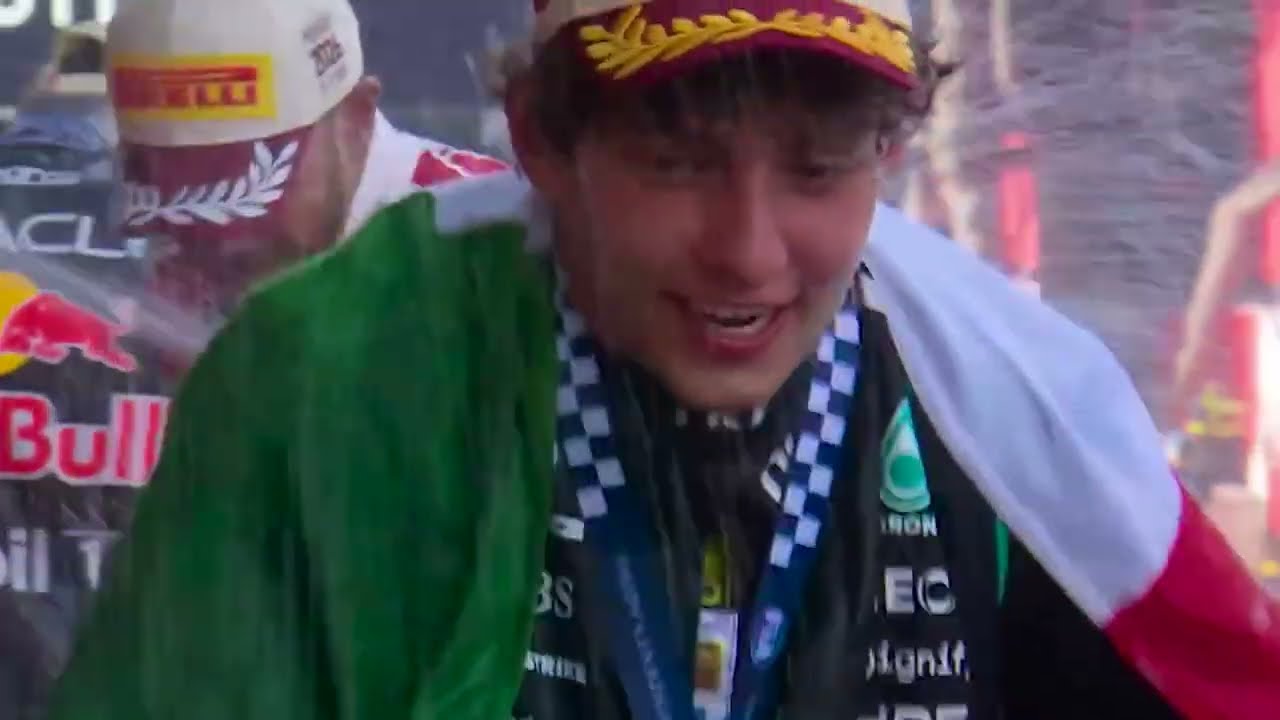
The supreme irony, of course, is that with the flagship technology actively turned down or entirely switched off, the raw racing on Saturday was some of the very best witnessed all year. Around a circuit where the cars were finally allowed to be visceral and raw, the drivers produced a qualifying session for the ages. Nineteen-year-old sensation Kimi Antonelli took a breathtaking pole position, beating Max Verstappen by an invisible 0.043 seconds. Lando Norris called them “the most pure qualifying laps you have seen all year.” Charles Leclerc gleefully noted there was absolutely no energy management required—just a driver, a car, and the stopwatch. The complicated, desperately expensive future of Formula 1 worked best when most of it was switched off.
Behind the scenes in the bustling paddock, a massive driver revolt is rapidly building. Fernando Alonso, a man who has raced in Formula 1 for over two decades, openly declared this to be “the worst generation of cars he has ever driven.” He went even further, stating plainly that hybrid cars of this terrifying weight and complexity should absolutely not be racing. Lewis Hamilton, a seven-time world champion, described the machinery as a clear, undeniable step backwards in overall downforce and mechanical grip, noting they feel heavily planted and entirely lifeless in the corners. Max Verstappen has spent the entirety of the season relentlessly mocking the cars, frequently comparing them to Mario Kart and Formula E on steroids. This is a unanimous, paddock-wide verdict from the most talented drivers alive, and it is brutally damning.
This crisis is compounded by the fact that the absolute core promise of the 2026 era—a tightly bunched grid where any team could win—has been completely shattered. While multiple champions sat stranded in the garage or buried in the barriers, young Kimi Antonelli put his Mercedes on pole, led every single lap, secured the fastest lap, and took a commanding victory. It was his fifth consecutive win. He broke Lewis Hamilton’s 2008 record to become the youngest winner in Monaco’s illustrious history, and he currently leads the world championship by a staggering 66 points after just six rounds. Verstappen sits a miserable 113 points behind.
The promise of engine convergence was a total myth. Following a stricter FIA compression ratio test implemented on the 1st of June to close a suspected Mercedes loophole, the true pecking order was starkly revealed. Red Bull Powertrains possesses the strongest engine, Mercedes sits over two percent behind them, and the bottom tier of Ferrari, Audi, and Honda are languishing more than four percent adrift, desperately scrambling for emergency upgrades.
The immense pressure from the drivers, the fans, and the fundamental failures on the track has seemingly broken the resolve of the governing body. The FIA is already aggressively planning an escape route, with a serious public push to bring back naturally aspirated, screaming V8 engines before the end of the current decade. The sport spent four years and a colossal fortune meticulously designing this hybrid formula, and within mere months of it hitting the asphalt, they are already planning its funeral.
Monaco did not break the 2026 regulations; it simply refused to hide them in the shadows any longer. The incredibly fragile start procedures, the fatally stranded batteries, the dangerously unpredictable braking zones, and the deeply unhappy drivers were fully exposed on the global stage. The real question moving forward is no longer whether the 2026 rules are in deep trouble—the FIA’s frantic push for a V8 revival has already answered that. The question now is exactly how long Formula 1 is willing to painfully limp through a broken era it no longer fundamentally believes in, and how much damage will be done before the old engines return to save it.








