The Brutal Customer Reality: Why McLaren’s 2026 Title Defence is Falling Spectacularly Apart
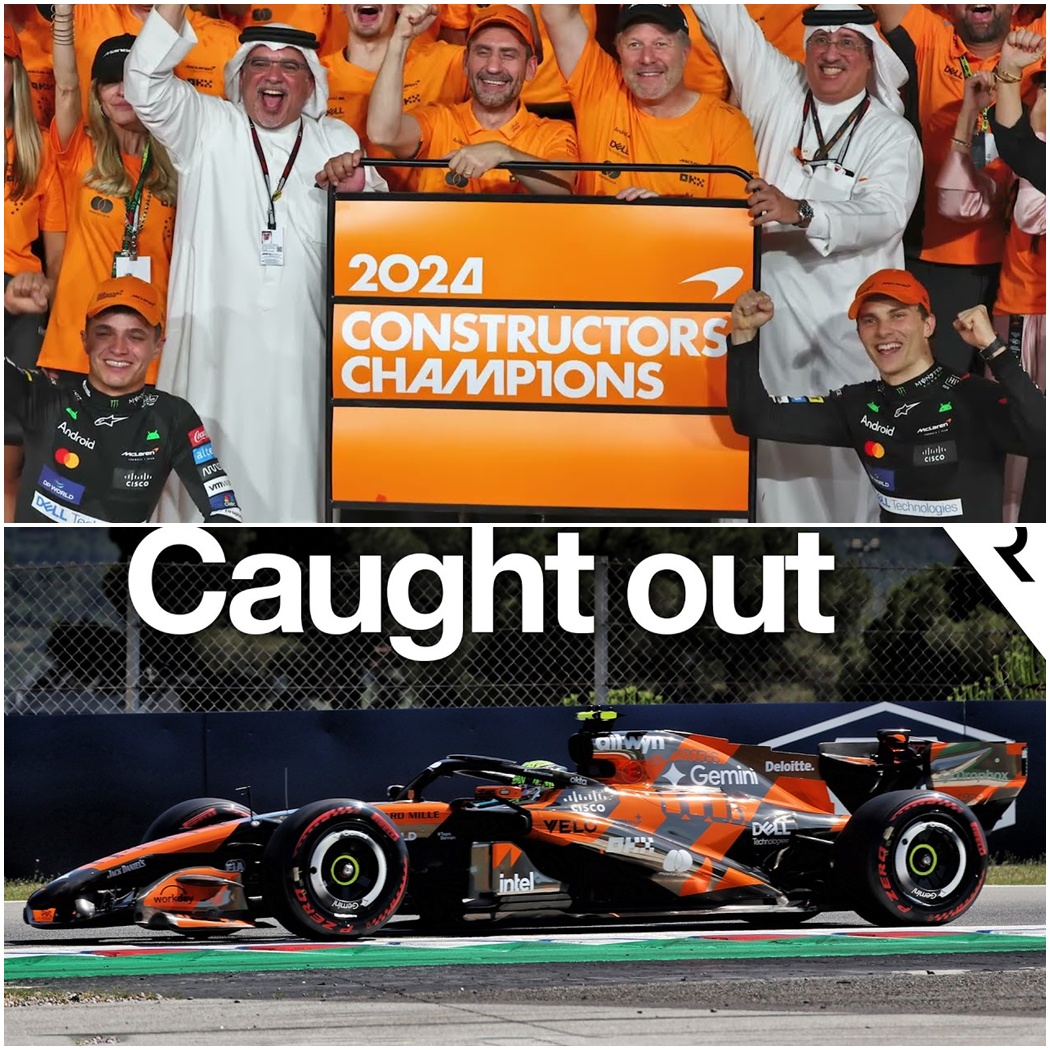
Formula One is a sport of relentless innovation, where a single winter of development can entirely upend the established competitive order. For the papaya-clad squad at Woking, the transition into the highly anticipated 2026 season has been nothing short of a nightmare. McLaren, the beloved British institution that brilliantly secured the Constructors’ Championship in 2024 and sensationally delivered a spectacular double world championship in 2025, is currently facing a deeply sobering reality check. In a season where they were heavily tipped to maintain their dynastic grip on the sport, McLaren is yet to win a single Grand Prix. Instead, they have been forced to watch helplessly as their very own engine supplier, Mercedes, utterly dominates the sharp end of the grid.
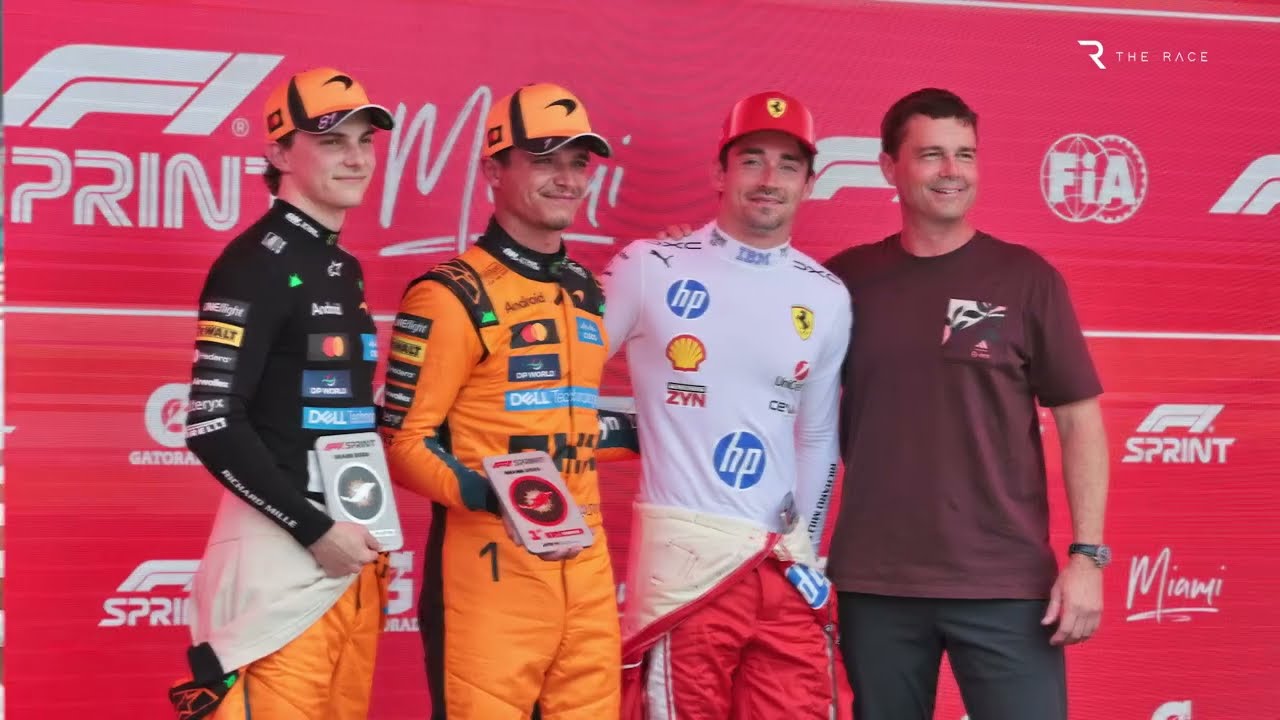
The statistics are painfully clear and profoundly concerning. As it currently stands, defending world champion Lando Norris and his extraordinarily talented teammate Oscar Piastri have accumulated fewer points combined than Mercedes’ championship leader, Kimi Antonelli, has managed entirely on his own. While Norris and Piastri have scraped together a couple of hard-fought podium finishes each—and Norris was a genuine threat for victory during the Miami Grand Prix weekend, even winning the Sprint—the underlying truth remains inescapable. McLaren desperately needs a monumental leap forward in both raw performance and bulletproof reliability if they want to drag themselves back into proper title contention. But achieving that monumental step requires them to overcome a fundamental ceiling that has suddenly reappeared: the brutal, unforgiving reality of being a customer team in a brand-new era of Formula One engine regulations.
To understand McLaren’s current predicament, one must look closely at the architectural shifts dictating the 2026 regulations. During their triumphant runs in 2024 and 2025, McLaren benefited immensely from a multi-year engine homologation freeze. Power units across the grid were vastly well-understood commodities. Because the technical parameters of the engines were entirely frozen and locked in place by the governing body, McLaren effectively enjoyed the operational status of a pseudo-works team. They received their finely tuned Mercedes power units, bolted them seamlessly into a brilliant chassis, and focused entirely on aerodynamic development. It was an incredibly favourable deal that allowed them to become the very first customer team to win a World Championship in Formula One’s immensely complex hybrid era.
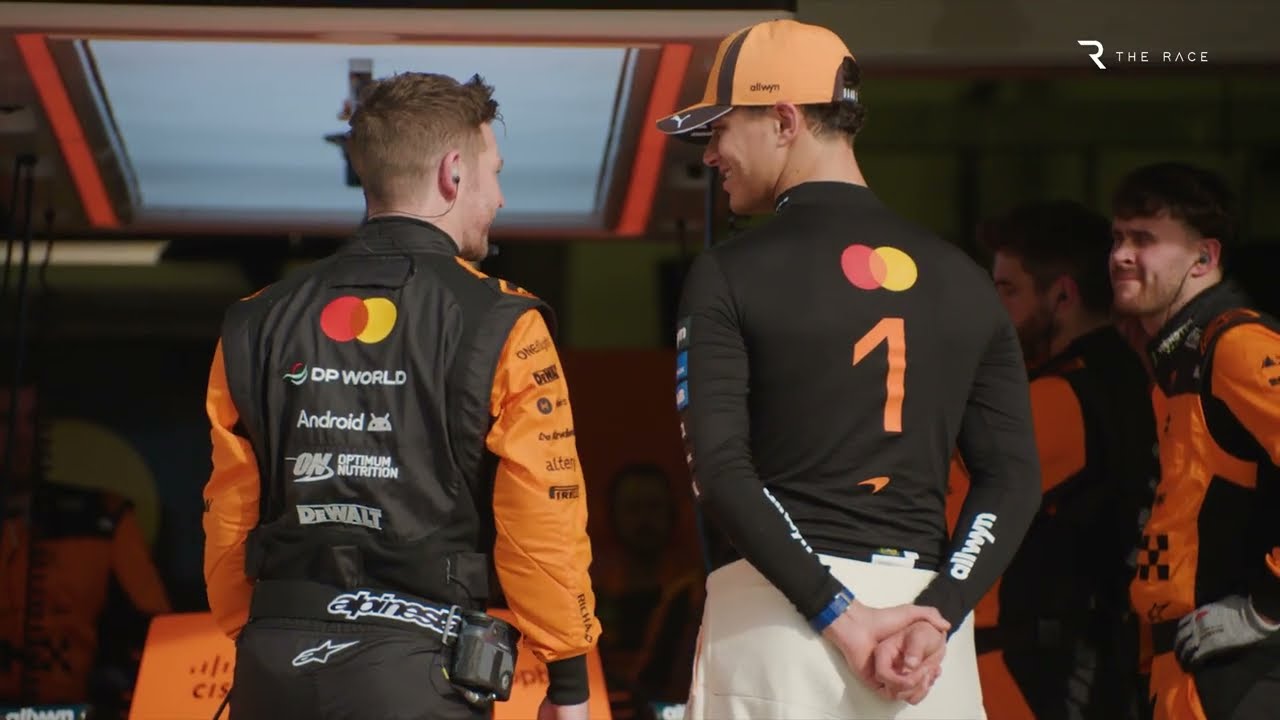
However, the dawn of the 2026 regulations has drastically altered the landscape, resetting the technological chessboard and violently turning the tables back in favour of full-fledged factory works teams. Whenever a major rules overhaul occurs, the intrinsic edge of being a works team—where the chassis department and the engine department exist under the same corporate umbrella—becomes significantly sharper. This season feels uncomfortably akin to the start of the V6 turbo-hybrid era back in 2014, a period where Mercedes entirely dominated its customer teams and eventually drove McLaren into a disastrous, ill-fated partnership with Honda.
While modern Formula One mandates strict equipment parity and outlaws the extreme engine mode discrepancies that existed a decade ago, the sheer complexity of the new 2026 power units has quietly re-established a massive disadvantage that had previously dwindled into insignificance. McLaren has only recently realised how profoundly they were lagging behind the Mercedes works team when it came to fundamentally understanding the new engines. When the cars first hit the track for testing at the beginning of the year, the extreme sensitivities of the fresh power units immediately became apparent. Mercedes High Performance Powertrains (HPP) instinctively understood how to extract subtle, hidden pockets of performance potential, whilst their customer teams were essentially guessing in the dark.
The inherent problem with being a customer team is the inescapable restriction on intellectual property and timeline priorities. McLaren found themselves heavily on the back foot when predicting exactly how their car would dynamically behave. As customers, their engineering teams were still painstakingly trying to figure out how altering a tiny parameter in energy deployment on one corner would trigger a disproportionately massive effect elsewhere around the lap. Mercedes, having developed the engine entirely in-house, were far ahead of this crucial learning curve. They worked as one single, cohesive entity, seamlessly merging their chassis and power unit data to maximise overall vehicle performance.
It actually took McLaren until the third round of the championship in Japan before they looked somewhat capable of matching Mercedes purely on the highly critical metric of electrical energy deployment. During those opening weeks, McLaren’s deficit steadily chipped away from just under a full second a lap, to half a second, down to a few mere tenths. Subsequent minor regulatory tweaks have somewhat dulled the extreme edges of this specific energy management challenge, rendering it less of an existential crisis. But as the performance gap slightly narrowed, an even more terrifying spectre raised its head in the McLaren garage: chronic, devastating unreliability.
As the frantic global tour of the Formula One calendar progressed, McLaren’s season was repeatedly punctured by mechanical heartbreak. The concern shifted swiftly from outright engine performance to pure engine survivability. The lowest point arguably arrived in China, where the team suffered a completely bizarre and devastating double pre-race electrical failure, meaning neither Norris nor Piastri could even take the start of the Grand Prix. In Japan, despite bolting a brand-new battery into his car at the start of the event, Norris required yet another replacement battery mid-weekend. The misery continued across the Atlantic, where a terminal gearbox issue abruptly forced Norris to retire his stricken car during the chaotic Canadian Grand Prix. And just when they thought the storm had passed, a severe problem with the internal combustion engine crippled their efforts in the glamorous streets of Monaco.
Following the Monaco disaster, McLaren Team Principal Andrea Stella was incredibly keen to face the media and diplomatically stress that their issues were not solely the fault of their German engine suppliers. “We have had issues pretty much in all areas of the car,” Stella admitted, highlighting that the blame could not be entirely laid at the doorstep of Mercedes HPP. But the physical toll on the team was undeniable. The mechanics were forced to break the notoriously strict FIA curfew twice in just two weekends—first in Monaco, and then again in Barcelona. These exhausting, late-night rebuilding sessions were a direct consequence of deeply ingrained problems the engineering staff simply did not fully understand.
Although there was a precautionary change related to the complex installation of several power unit components in Barcelona—a move that strongly hinted McLaren might have finally pinpointed a root cause for their woes—it felt like too little, too late. McLaren has never publicly questioned the foundational quality of the equipment supplied by Mercedes. The relationship between Woking and Brixworth remains genuinely strong. However, they are living a harsh new reality. There is a rigid ceiling for any customer team. You simply have less opportunity to intimately integrate the power unit into the core architectural design of your chassis. Mercedes HPP is acutely aware that its product has not been robust enough for such a valued, high-profile customer, and they have no intention of supplying a package that refuses to work reliably. But inevitably, when resources are stretched and fundamental problems arise, the works team will constantly remain the ultimate priority.
There is, naturally, one bulletproof method to entirely shield a racing team from the inherent compromises of being a customer: you become a works team yourself. McLaren had previously evaluated a massive factory partnership with Audi when the German automotive titan was initially scouting the paddock a few years ago. However, McLaren wisely opted against the deal because Audi’s ultimate demand was outright ownership of the team, a concession McLaren’s proud shareholders absolutely refused to make.
Conversely, their fierce rivals at Red Bull Racing have boldly created an entirely new blueprint for an independent constructor. By launching the ambitious Red Bull Powertrains division and securing substantial financial and technical backing from Ford, Red Bull committed to developing a completely in-house Formula One engine. Despite initial industry scepticism, the monumental project is already bearing fruit. Red Bull scored its very first podium in Canada, brilliantly qualified on the front row in Monaco, and possesses a power unit that has been controversially judged by the FIA’s intricate methodology as the best internal combustion engine on the entire 2026 grid.
For McLaren to replicate this staggering feat would require an astronomical influx of investment from their stakeholders or a complex buy-in from another major automotive manufacturer. It would represent a gargantuan strategic shift. McLaren Racing CEO Zak Brown candidly admitted in Monaco that while the organisation will conduct a preliminary evaluation of that route whenever Formula One eventually commits to its next set of simpler engine regulations slated for 2030 or 2031, their absolute priority right now is to remain a loyal Mercedes customer. To survive this brutal era, McLaren simply must find innovative ways to radically improve their working relationship with HPP, making their joint processes robust enough to preemptively identify catastrophic issues before the cars even roll out of the Woking factory.
Yet, to solely blame the power unit would be a gross oversimplification of McLaren’s sudden fall from grace. The papaya challenger is undeniably suffering from its own inherent, foundational flaws. The current chassis conspicuously lacks pure aerodynamic load in medium-speed corners—a characteristic that was previously a massive, defining strength of their championship-winning predecessors. Furthermore, the engineering department appears to be drastically missing crucial tyre understanding, frequently leaving the car desperately short of mechanical grip in highly variable circumstances.
When the conditions perfectly align, such as in the blistering heat of Miami or the familiar sweeps of Barcelona, the McLaren can genuinely push Mercedes to the absolute limit. Norris’s spectacular victory in the Miami Sprint race served as a potent reminder of the car’s latent potential. But on days when the setup window eludes them, the weaknesses are brutally exposed. Monaco served as a harsh reality check. Andrea Stella previously viewed low-speed corners as a primary strength of the McLaren DNA, but that assumption is now under severe interrogation. Even if the car performs adequately from an aerodynamic standpoint, the mechanical platform simply refuses to cooperate.
Lando Norris has been particularly outspoken, expressing profound frustration over how genuinely difficult the car has become to drive on the absolute limit. The core issue revolves around coaxing the temperamental Pirelli tyres into their optimal operating window. This headache first reared its head during the colder, smoother track conditions in Canada, but became staggeringly pronounced in Monaco, where they utterly failed to generate sufficient heat to provide bite on the asphalt. The car seemingly retains its previous DNA of being extremely gentle on its tyres, which historically aided race pace but now heavily penalises their ability to warm up the rubber for critical qualifying laps. This narrative was complicated further in Barcelona, where Norris surprisingly showcased excellent tyre degradation in the Grand Prix, whilst Piastri suffered a genuinely shocking race. Clearly, the mastery of tyre management that defined their recent championship campaigns has severely slipped.
Interestingly, the slight reduction in the physical size of the 2026 Pirelli tyres has fundamentally altered the vehicle dynamics. The tyres simply do not offer consistent, predictable grip during the complex transition from straight-line heavy braking, to applying steering lock, and rotating through the apex of a corner. McLaren’s chassis appears inherently sensitive to this specific aerodynamic and mechanical transition, frequently resulting in costly front brake locking or sudden, unpredictable losses of rear traction.
Lando Norris poignantly summarised the situation, noting that McLaren simply isn’t at the elite level they previously occupied. Last year, they possessed a meticulously developed machine that confidently worked at almost every circuit on the calendar. Now, they are saddled with a deeply temperamental car plagued by glaring outliers and structural weaknesses that severely hurt their chances, even on their very best days. For the defending champions, the 2026 season has rapidly devolved into an uphill battle for survival. To reclaim their crown, they must navigate the treacherous politics of being an engine customer while urgently fixing a heavily flawed aerodynamic package. The road back to the top step of the podium looks steeper and more challenging than ever before.