The 28 Seconds That Defied Death: How Romain Grosjean Survived Formula 1’s Most Terrifying Crash
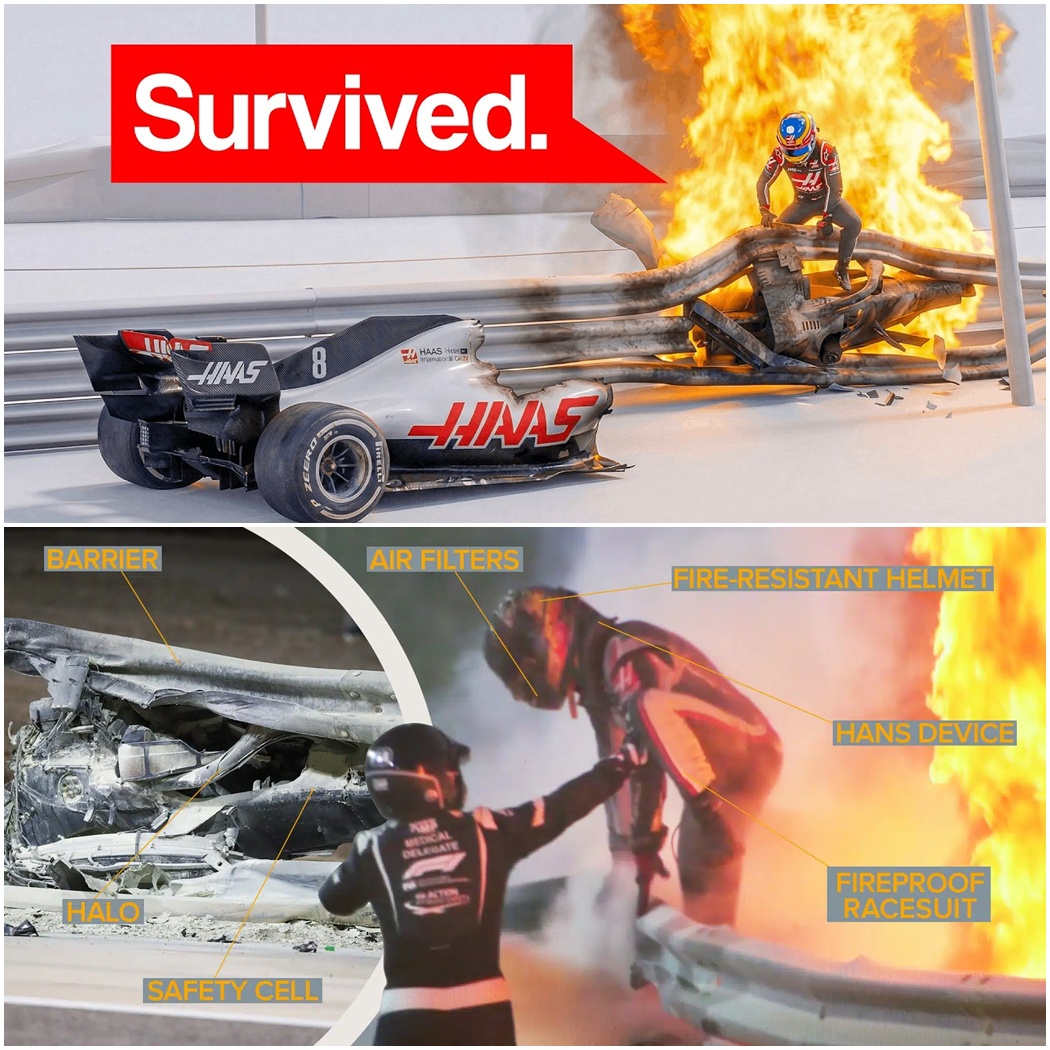
Twenty-eight seconds. In the normal rhythm of an ordinary day, twenty-eight seconds is a fleeting, almost imperceptible span of time. It is the exact amount of time it might take to pour a hot cup of coffee or wait for a busy traffic light to change colors. But for Formula 1 racing driver Romain Grosjean, those exact twenty-eight seconds stretched into an unimaginable, agonizing eternity. Trapped inside a roaring, 800-degree Celsius fireball, he was forced to accept the terrifying, impending reality of his own death. Those twenty-eight seconds completely defied every single statistical probability of human survival. This is the complete, chilling story of one of the most violent and horrific crashes in the history of modern Formula 1, and the perfect storm of revolutionary safety technology that miraculously saved a man’s life.
The date was November 29, 2020. The setting was the Bahrain Grand Prix. At the time, Romain Grosjean had spent nine and a half grueling seasons racing at the absolute pinnacle of motorsport in Formula 1. After this specific race, he only had two scheduled appearances remaining before his planned departure from the sport. He was thirty-four years old, a devoted husband, and a loving father to three young children. As he sat strapped into his vehicle on the starting grid, he was completely unaware that he was about to experience a catastrophic event that, by all logical laws of physics and biology, should have killed him instantly.
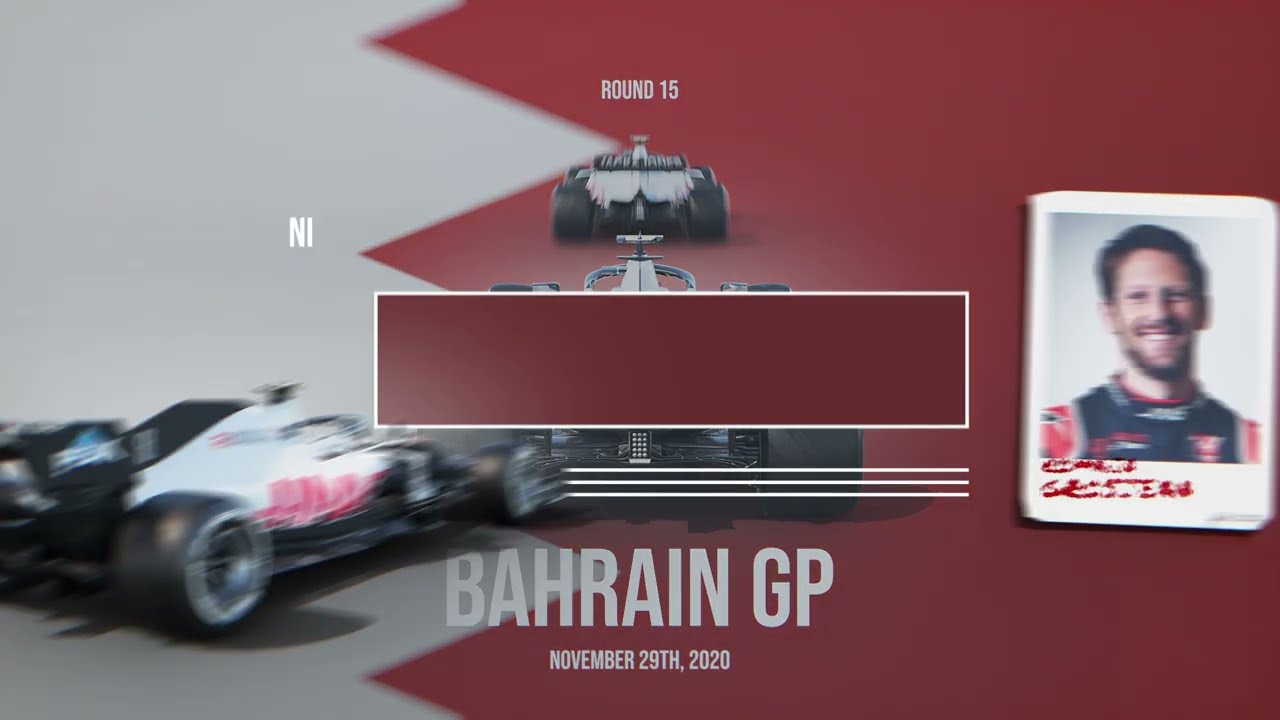
As the race began, the drivers aggressively jockeyed for position. On lap one, rapidly approaching turn three, Grosjean, who had qualified in nineteenth place, was locked in a fierce battle with the AlphaTauri car of Daniil Kvyat for the seventeenth position. The pack of highly tuned race cars ahead of them was rapidly bunching up. Grosjean was actively hunting for gaps, desperately looking for any opportunity to advance his track position. In a fraction of a second, he made a fateful decision that would alter the course of his life forever. He cut from the left side of the track to the right side much too sharply. His right rear tire violently made contact with Kvyat’s front left wheel.
The brutal physics of the ensuing moment were absolutely instantaneous. Grosjean’s Haas VF-20 race car snapped violently to the right, hurtling directly toward a steel Armco barrier that is rarely tested on this particular section of the circuit. The car was traveling at a blistering speed of 119 miles per hour, hitting the wall at a highly dangerous 22-degree yaw angle. This precise angle and staggering velocity are exactly where the true nightmare began. These steel barriers are specifically designed to absorb heavy impacts and strictly control the structural deformation of crashing vehicles. The metal rails are supposed to bend, flex, and safely catch the car. However, Grosjean hit the structure at such a mathematically precise angle and with such devastating, specific force that the massive middle rail of the barrier did not bend. It completely broke apart.
The car did not stop. Instead, it pierced completely through the thick Armco barrier, effectively slicing the heavy vehicle in half, and finally came to a rest on the other side with the heavy steel barrier rail directly impaled through the carbon fiber chassis. The immense force of the initial impact registered at a staggering 67G. To put that massive number into a proper perspective, heavily trained astronauts typically experience only three to four Gs of force during a violent rocket launch. Elite fighter pilots usually begin to black out when they reach around nine Gs. When reigning world champion Max Verstappen suffered his own massive, highly publicized crash at Silverstone eight months later—widely considered one of the hardest impacts witnessed in modern racing years—that collision registered at 51G. Grosjean somehow endured 67G. Under that immense pressure, his body effectively weighed four and a half tons. His head, which normally weighs around five kilograms, suddenly weighed 335 kilograms. Every single internal organ was violently compressed, and vital blood was instantly forced away from his brain. The human body is simply not biologically designed to survive this kind of trauma. Yet, incredibly, Grosjean remained completely conscious. Even more astonishingly, he was entirely aware of his chaotic surroundings.
But surviving the initial, bone-crushing impact was only the very first hurdle. A fraction of a second after the crash, the true horror materialized. The main fuel tank of the car sits directly behind the driver, built into the survival cell with multiple high-tech safety systems designed to prevent any catastrophic leaks. When the steel barrier rail punched completely through the car, it violently ripped all of these intricate systems apart, instantly creating massive paths for highly combustible fuel to escape. The official FIA investigation later found that the main fuel tank inspection hatch was entirely ripped off, and the crucial engine fuel supply connection was torn completely away from the inner safety bladder. One hundred kilograms of racing fuel now had a direct way out.
While liquid fuel does not burn easily on its own, the vapor it creates is unbelievably deadly. As the racing fuel rapidly escaped the ruptured tank, it instantly vaporized in the intense ambient heat and exposed atmospheric air. This thick vapor is incredibly flammable, requiring only a tiny ignition source to erupt. Tragically, there were dozens of ignition sources available. The violent impact had brutally exposed the car’s highly complex electrical systems. Heavy batteries, torn wiring, and shattered sensors were all ripped open, actively generating showers of hot sparks. The very moment the dense fuel vapor met these flying sparks, the resulting fireball was completely instantaneous.
The immense fire did not merely surround the exterior of the shattered car; it deeply penetrated directly into the driver’s survival cell. Grosjean was suddenly sitting in the dead center of a roaring, 800-degree inferno. For the first few agonizing seconds, he could not find a way out of the twisted wreckage. Grosjean later vividly described the deeply psychological toll of that specific moment. His body instinctively started to relax. He felt a strange, chilling sense of peace wash over him, and he genuinely believed he was going to die. He caught himself morbidly wondering which part of his body was going to burn first. Would it be his foot? Would it be his hands? He wondered if the entire dying process was going to be painful. He realized that sometimes people are scared when death approaches, but in that specific moment, death was standing right there with him, and he had fully accepted it.
But then, a powerful thought pierced through the blazing heat and the quiet acceptance. He thought about his loving wife and his three young children waiting for him at home. Suddenly, his entire mindset changed. At the ten-second mark inside the blazing fire, Grosjean made his very first desperate attempt to escape. However, he immediately realized there was a massive problem. He was tightly wedged at an awkward, unnatural angle. The massive steel barrier rail was actively piercing through the side of his car, completely blocking his normal exit path out of the cockpit. He frantically tried to lift his body out of the way, but his frame simply would not fit through the tiny gap left by the twisted metal.
By the fifteen-second mark, the intense heat was becoming entirely unbearable. His protective racing gloves were already starting to melt. Faced with impending doom, he made a brilliant, split-second decision that he still cannot fully explain to this day. He violently turned his heavy racing helmet far to the left and twisted his shoulder at a deeply unnatural, incredibly painful angle. Miraculously, the desperate maneuver started to work. His shoulders were slowly coming through the tiny opening. But the nightmare was not over; his left foot was completely stuck underneath the crushed vehicle pedals. With the fire raging all around him, he pulled upward with his trapped left leg as hard as humanly possible. The rigid racing shoe stayed exactly where it was, firmly wedged under the metal, but his bare foot violently popped out of the shoe.
At twenty-three seconds, he was finally pulling himself over the titanium safety halo. Both of his hands were placed directly onto the searing hot metal surrounded by the active fire. He could literally see the protective fabric of his gloves rapidly changing color from bright red to charred black, actively melting directly onto his bare skin. By twenty-five seconds, he had successfully cleared the edge of the protective survival cell. The heavily damaged steel barrier was right in front of him, and he jumped over it. At exactly twenty-eight seconds, Dr. Ian Roberts, the brave FIA medical delegate who had rushed to the catastrophic scene, forcefully grabbed Grosjean’s smoking race suit and violently pulled him the rest of the way to absolute safety. Grosjean was finally out. He was alive. And somehow, defying all logic and reason, he was walking. He deliberately chose to walk directly to the waiting medical ambulance instead of utilizing a stretcher because he desperately wanted the live television cameras to see him moving. He wanted his wife, his children, and the entire watching world to know he was going to be okay.
How did any of this happen? How did a human being survive a 67G impact and casually walk away from an 800-degree fire? The definitive answer is not purely luck. It is heavily rooted in decades of relentless, tragedy-driven motorsport engineering. Five distinct pieces of technology saved his life that fateful day. The carbon fiber survival cell, heavily reinforced with six millimeters of tightly layered Kevlar, heroically withstood the impossible forces and the 1,000-degree after-fire without ever breaking. The remarkable HANS device completely prevented his neck from instantly snapping under the 300 kilograms of sudden forward force. The titanium Halo, heavily debated and criticized upon its introduction in 2018, absorbed the entire lethal impact of the steel barrier, ultimately saving his head from a 119-mile-per-hour collision. His Nomex fire suit, officially rated for only twelve seconds of direct fire exposure, somehow managed to keep him alive for twenty-eight seconds. Finally, the rapid, highly trained response of the FIA medical team, arriving in just eleven seconds, paired with the fearless track marshals who ran directly toward the explosion with fire extinguishers, bought him the precious extra seconds he so desperately needed to free himself.
In the immediate aftermath, Grosjean was transferred to the Bahrain Defense Force Hospital heavily suffering from second-degree burns to his hands and damaged ribs, but he was miraculously discharged just three days later. The crash launched a massive, grid-wide FIA investigation, leading directly to five major regulatory changes to prevent this specific scenario from ever happening again. These crucial changes included mandating stronger gloves, highly secured fuel hatches, fixed headrests, redesigned pedal boxes, and added tire barriers at the impact site. Grosjean understandably missed the final two races of his incredible Formula 1 career due to his injuries, but his final act was completely unforgettable. He recovered rapidly and proudly transitioned to a highly successful IndyCar career in 2021, adopting a deeply fitting nickname that perfectly encapsulates his miraculous survival against all odds: The Phoenix. After nine and a half seasons, numerous intense battles, and ten impressive podiums, absolutely nothing will ever come close to defining his legacy quite like those terrifying, miraculous twenty-eight seconds in Bahrain.








