The 2026 Engine Crisis: Why F1 Drivers Are Calling the New Rules “Broken” and Dangerous
Imagine the sheer adrenaline of hurtling down a Formula 1 straight at well over 300 kilometers per hour. You floor the accelerator, anticipating a violent surge of speed. But instead of power, your car simply gives up. There is no roar, no forward thrust, no mechanical heartbeat. You are no longer racing; you are coasting, effectively becoming a high-speed passenger. This isn’t a random technical glitch. It isn’t a catastrophic mechanical failure. This is exactly how Formula 1 operates under the radically new 2026 engine regulations. Just a few races into the season, the paddock is in uproar, the FIA is scrambling for solutions, and the drivers are unequivocally calling the system broken.
What was fiercely marketed as a sustainable, road-relevant revolution is quickly unraveling into something the drivers fundamentally distrust. The 2026 regulations were designed to push boundaries, introducing a massive shift toward electrical power. On paper, the specs sound intoxicating: a 1.6-liter V6 turbo engine still producing around 1,000 horsepower. To cut astronomical costs and successfully attract new automotive giants like Audi and Cadillac, the FIA completely removed the complex MGU-H component. To compensate for that significant loss, they transformed the remaining MGU-K into an absolute monster, pushing it to 350 kilowatts. That equates to nearly 470 horsepower generated entirely from a battery.
For the first time in the sport’s illustrious history, Formula 1 is operating on a near 50/50 split between traditional internal combustion and electrical power. It is akin to bolting a second engine onto the chassis. But here is where the illusion of raw power violently shatters: that 1,000 horsepower figure only exists when the battery is completely full. When it isn’t, the consequences are severe. F1 introduced an “override mode,” essentially a push-to-pass boost button for overtaking. It sounds incredibly exciting for fans, but the reality for the driver is terrifying. When the battery abruptly depletes, a phenomenon known as “clipping” occurs. You don’t just lose a fraction of your speed; you instantly lose nearly half of your power output. The car effectively dies mid-straight.
This monumental change has broken the fundamental rhythm of motor racing. It has completely altered how drivers attack corners, how they defend positions, and most concerningly, how they survive in traffic. The pushback from the grid has been immense and deeply critical. Three-time world champion Max Verstappen recognized the impending disaster early in the development phase, condemning the regulations as feeling artificial and game-like. Now that it is a reality on the asphalt, his warnings have proven prophetic. Lando Norris offered an even blunter assessment. He described the harrowing feeling of pressing the gas pedal after a qualifying run, having the battery die, and instantly becoming a helpless passenger.
This isn’t merely the usual grumbling of highly competitive athletes; it is a stark warning about the very soul of the sport. The throttle pedal no longer dictates mechanical power; it is merely a tool used to negotiate with a complex software system. Drivers are being forced into absurd driving styles—downshifting aggressively just to harvest energy and lifting off the throttle halfway down massive straights. They are actively sacrificing lap time simply to ensure they have enough electrical deployment to survive the end of the lap. Racing is no longer a pure exhibition of who is the fastest and bravest on the limit. It has devolved into an advanced energy management simulation.
But the 2026 regulations have crossed a line from being simply frustrating to being inherently dangerous. The clipping effect is violently unpredictable. When a battery drains, the power drop is instantaneous—there is no gradual fade, no warning light that gives the driver a buffer. Imagine two cars battling for position at the end of a long straight. The lead car suddenly exhausts its battery and hits the clipping wall, violently decelerating. The trailing car, however, still has its override mode engaged. The closing speed between the two vehicles can instantly spike by 40 or even 50 kilometers per hour while traveling at speeds exceeding 300 km/h. That isn’t just a closing gap; that is an impact speed capable of causing a catastrophic airborne collision.
There have already been terrifying near-misses early in the 2026 season. The drivers are acutely aware of the danger, leading the Grand Prix Drivers’ Association (GPDA) to hold emergency discussions. Their demand to the FIA is unified and non-negotiable: predictability. A Formula 1 car is difficult enough to tame at the absolute limit, but when it becomes mechanically unpredictable at the highest speeds, it ceases to be a performance issue and evolves into an active safety crisis.
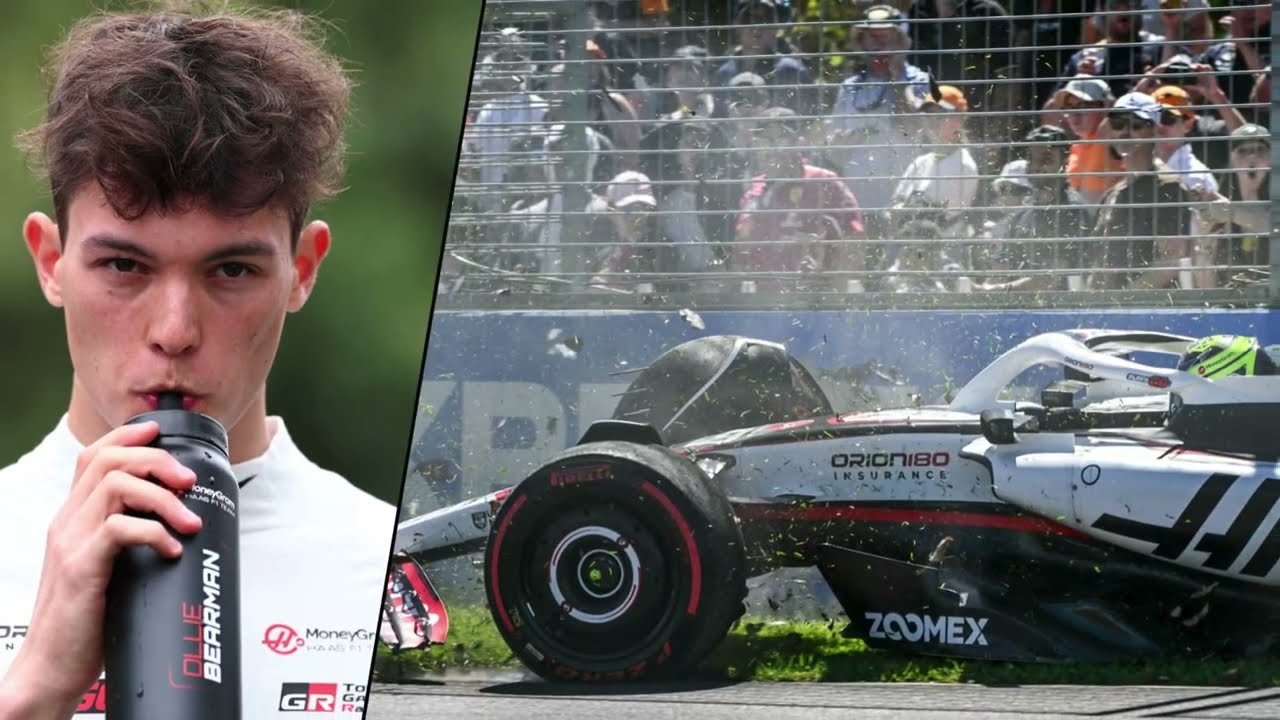
The FIA’s reaction to this mounting crisis has been frantic but severely limited by the realities of modern motorsport. They are attempting to mask the engine’s inherent flaws with active aerodynamics—deploying “X-modes” and “Z-modes” designed to adjust drag on the fly. But you cannot simply hide a fundamental power delivery problem with aerodynamic tricks. Behind the scenes, a massive power struggle is brewing. The FIA desperately wants to maintain control over the regulations, while manufacturers who have already invested hundreds of millions of dollars into developing these power units demand stability. Changing the physical hardware of the engines at this stage is almost impossible without bankrupting teams. Consequently, the governing body is left trying to patch a flawed system with software tweaks and fuel flow adjustments.
Strip away the marketing rhetoric regarding sustainability and road relevance, and you are left with a fundamental question about the legacy of Formula 1. This sport has always been defined by the delicate, visceral balance of man controlling machine at the absolute jagged edge of physics. With the 2026 regulations, that balance has inverted. The machine is now deciding when the driver is permitted to be fast. When the software dictates the pace rather than the human spirit, you fundamentally alter what Formula 1 is. The 2026 engine rules were aggressively pushed as the dawn of a bold new era. Instead, they have severely divided the paddock, terrified the drivers, and sparked an existential crisis about the future of racing.








