The 100kW Ghost in the Machine: How Radical New Engine Logic Shattered Oscar Piastri’s Australian Dream
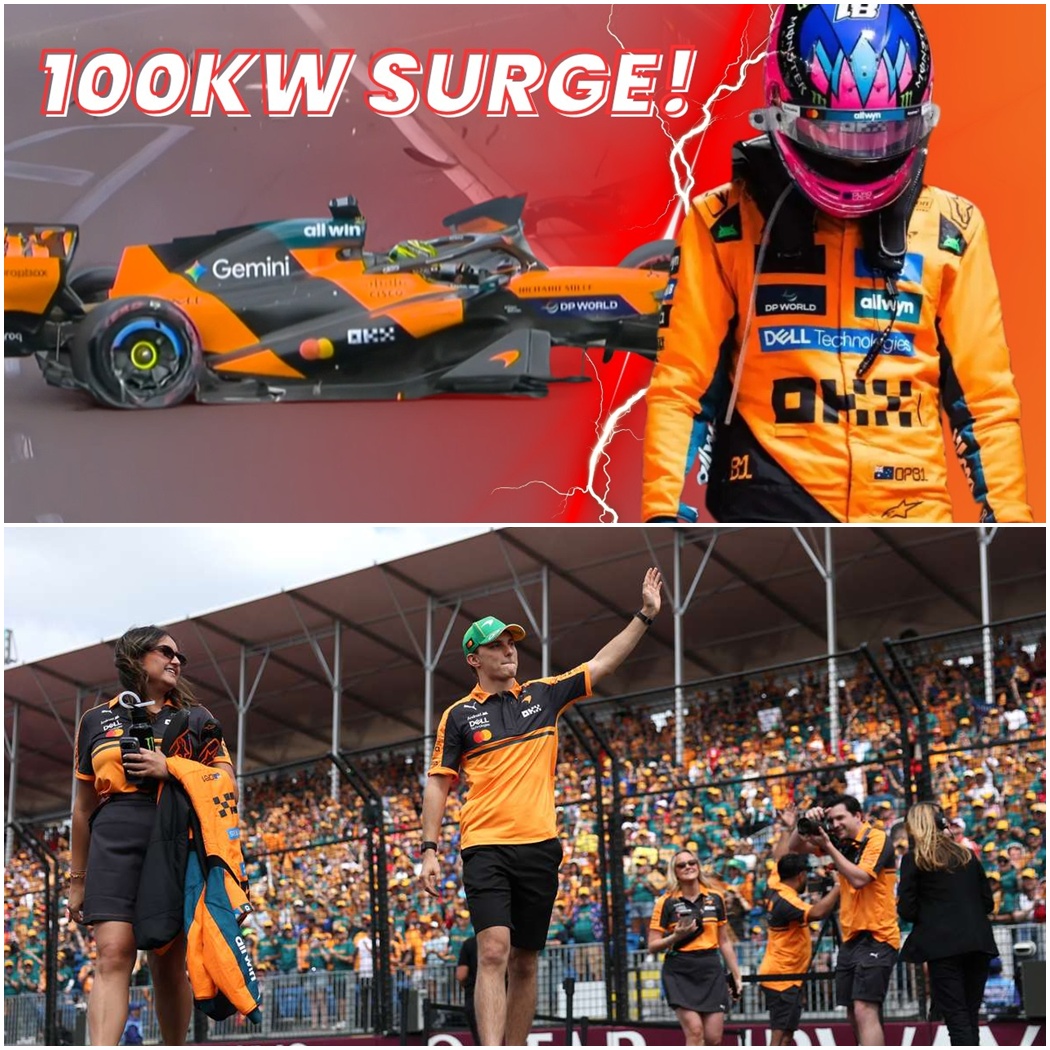
The Albert Park circuit in Melbourne was supposed to be a sea of papaya orange celebration for the 2026 Australian Grand Prix. With every grandstand sold out in his name and local anticipation at a fever pitch, Oscar Piastri was poised to deliver a landmark performance for his home crowd. Starting from a formidable fifth on the grid, the young Australian represented the best hope for a local podium in years. However, the dream didn’t end with a checkered flag or a daring overtake; it evaporated in a puff of tire smoke and the sickening crunch of carbon fiber against concrete, 40 minutes before the race had even begun.
The incident that sidelined Piastri on his reconnaissance lap was not the result of a typical driver error or a mechanical failure in the traditional sense. It was the first high-profile casualty of Formula 1’s radical 2026 technical regulations—a set of rules that have prioritized a 50/50 power split between the internal combustion engine and electrical energy. As Piastri rounded turn four, a simple gear shift triggered an uncommanded 100kW surge of electrical power to the rear wheels. In an instant, the equivalent of 130 extra horsepower hit the tires while they were still cold and the car was unsettled over the exit curb.

Piastri’s own account of the disaster paints a picture of a driver who was suddenly a passenger in his own cockpit. “I had about 100kW extra power that I didn’t expect,” he revealed shortly after the crash. Before he could even react, the McLaren had snapped violently, spinning across the grass and spearing into the concrete wall with enough force to shatter the right front suspension beyond any hope of a quick repair. While he admitted that attacking the curb on cold tires was a choice he didn’t have to make, he was adamant that the surge of power was the deciding factor that made the crash unavoidable.
To understand why this happened, one must look at the “convoluted logic” of the 2026 power units. In the pursuit of sustainability, the complex MGU-H (Motor Generator Unit – Heat) has been completely removed from the engines. To compensate for this loss of energy recovery, the MGU-K (Motor Generator Unit – Kinetic) has been made nearly three times more powerful, now capable of delivering a staggering 350kW of electrical boost. For comparison, the previous generation of cars capped this deployment at 120kW. This means that nearly half of the car’s total output is now managed by incredibly complex software and Electronic Control Units (ECUs) that make split-second decisions about when to harvest and when to dump energy.
In Piastri’s case, the car’s nervous system likely detected a momentary loss of traction as the wheel clipped the curb and interpreted the gear shift as a signal to deploy a massive wave of torque to the rear axle. On cold tires, this “perfect storm” of software programming and physics resulted in an immediate and catastrophic loss of control. It wasn’t a glitch in the system; rather, it was the system functioning exactly as it was programmed to, highlighting a terrifying new reality where the car’s own logic can override the driver’s intent at the worst possible moment.

The fallout from the Melbourne incident has sent shockwaves through the paddock, fueling an already growing fire of driver discontent regarding the new era of cars. World Champion Max Verstappen, a frequent and vocal critic of the 2026 regulations, suffered his own crash during qualifying and has stated bluntly that he is “not having fun at all” with the new machines. Piastri’s teammate, Lando Norris, went even further, describing the current generation of cars as the “worst” compared to the previous era, primarily due to the constant and extreme need for energy management that seems to go against the core spirit of Formula 1.
The concern among many experts is that the sport is shifting away from being a test of human bravery and talent toward a battle of software engineers and energy deployment maps. When a car can deliver a race-ending power spike during a routine out-lap, it raises serious questions about the safety and predictability of the current formula. For the 400,000 fans who watched their hero walk away from a wrecked car in stunned silence, the technical explanation offered little comfort. They saw a dream shattered by a “ghost in the machine”—a reminder that in the new age of F1, the most dangerous opponent on the track might just be the car itself.

As the season moves forward, the pressure is on teams like McLaren and the FIA to refine the software parameters that govern these massive power deployments. The goal of the 2026 rules was to create a more sustainable and competitive environment, but if the cost is the loss of driver control and the heartbreak of local heroes like Oscar Piastri, the sport may need to re-evaluate the path it has taken. For now, the image of Piastri’s shattered McLaren serves as a stark warning: in the pursuit of technical perfection, Formula 1 may have created a nervous system that is simply too complex for even the best human drivers to manage.