Mercedes Civil War: Is George Russell’s Title Dream Crumbling Under the Pressure of Kimi Antonelli?
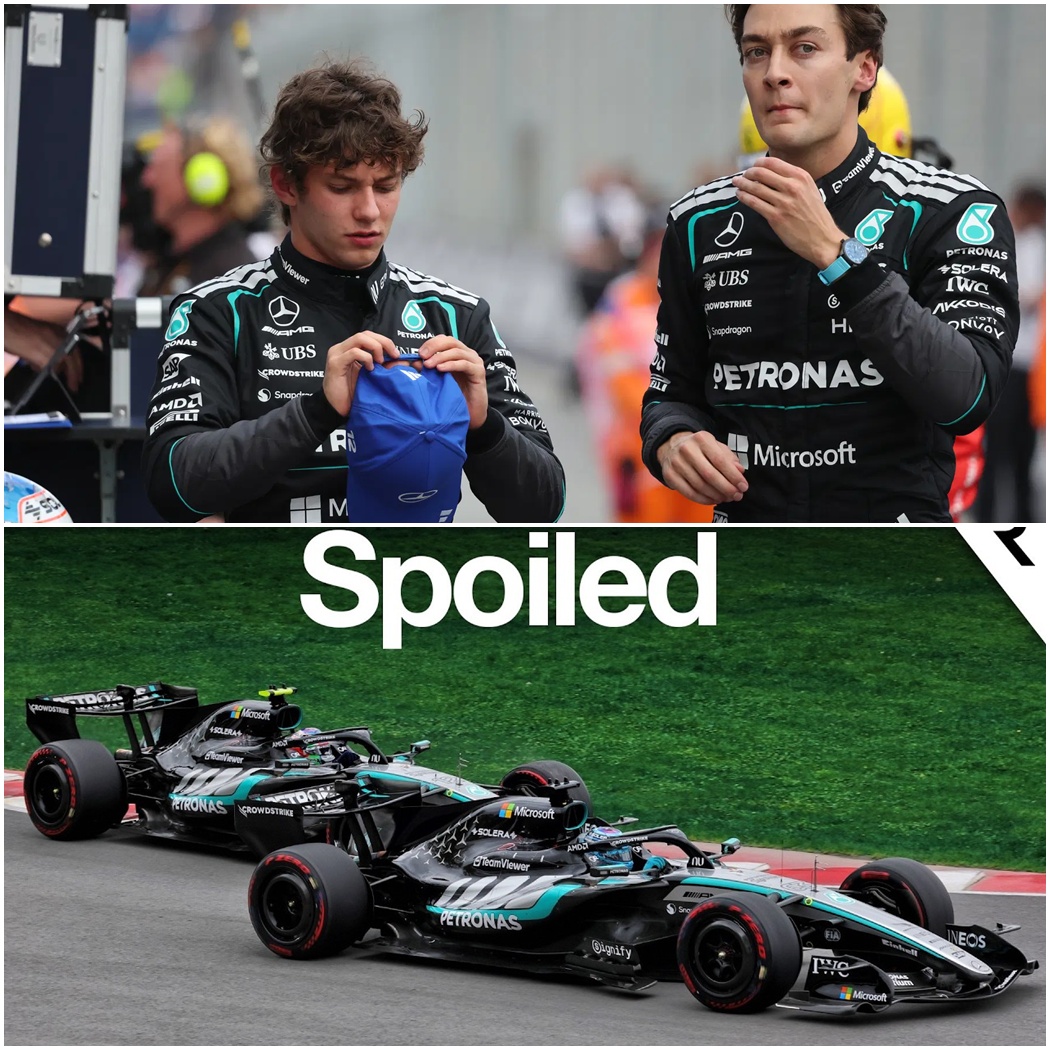
The Canadian Grand Prix, a race that historically offers spectacular action, delivered a dramatic and perhaps season-defining chapter in the increasingly volatile Mercedes internal rivalry. For George Russell, the weekend at the Circuit Gilles Villeneuve began with promise but descended into a nightmare that has left his 2026 championship campaign hanging by a thread. As his car ground to a halt by the side of the track, the silence that followed was not just the absence of an engine; it was the deafening sound of a title dream potentially slipping away, replaced by the realisation that he is now facing a daunting 43-point deficit to his rookie teammate, Kimi Antonelli.
For any Formula One team, seeing one of your drivers retire while leading is a catastrophic result. Yet, within the high-stakes environment of the Mercedes garage, there was a strange, palpable sense of relief among some members of the team. Why? Because Russell’s retirement finally put an end to the “slugfest” that had been brewing between him and Antonelli throughout the weekend. The rivalry, which had already seen sparks fly during the sprint race, escalated into a dangerous on-track confrontation during the Grand Prix itself. Team Principal Toto Wolff, rarely one to hold back his frustration, had already been forced to issue a public reprimand to the rookie over the team radio. The situation was teetering on the edge of disaster, as both drivers locked up, missed chicanes, and engaged in wheel-to-wheel combat that threatened to put both Mercedes entries out of the race.
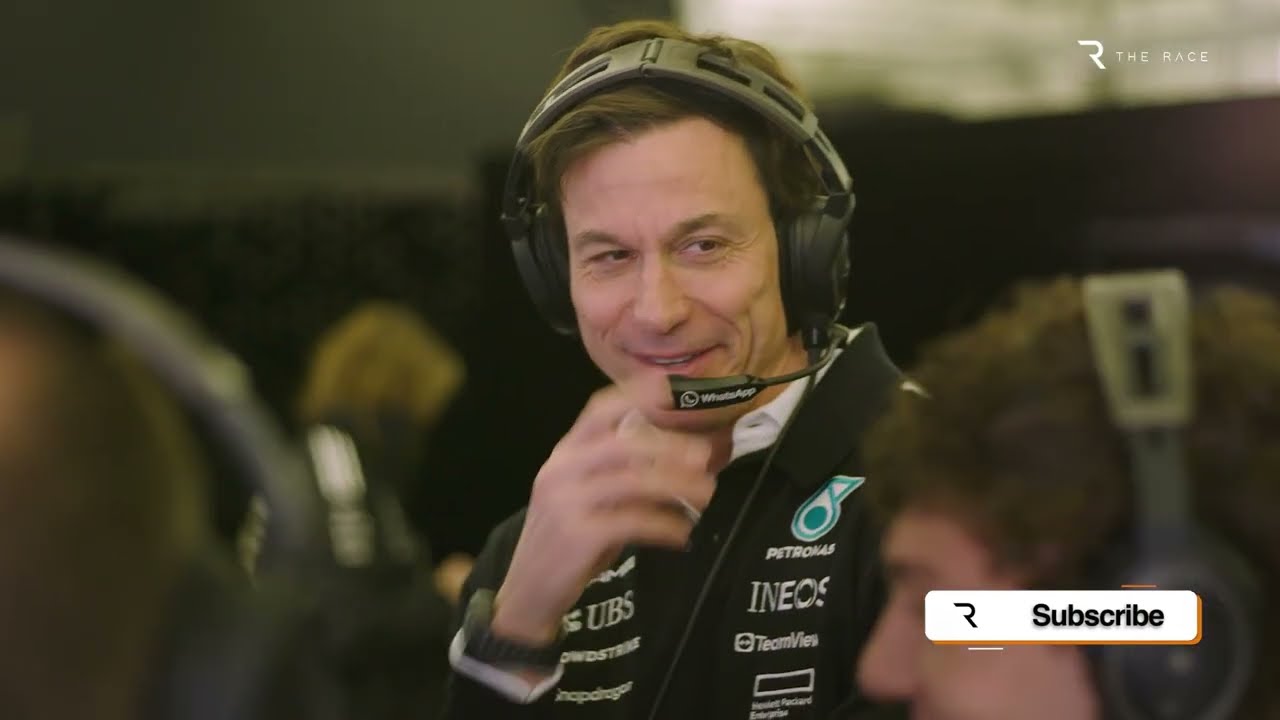
The command from the pit wall was stark and unambiguous: “If we can’t keep it tidy, then we’ll have to stop you racing.” The instruction served as a desperate attempt to diffuse a ticking time bomb. Moments later, the situation was resolved not by team discipline, but by a sudden, cruel twist of fate: a technical failure forced Russell’s car to expire at the turn eight-nine chicane. The mega battle for the win was over, the immediate headache for Mercedes was averted, but the long-term implications for George Russell were only just beginning to crystallise.
The immediate consequence of the Canadian retirement is a significant blow to Russell’s title hopes, but the broader picture is even more alarming for the British driver. A 43-point margin, while significant, is not theoretically insurmountable at this stage of a long season. Under normal circumstances, one would expect a driver of Russell’s experience to comfortably overturn such a deficit. However, the first five rounds of the 2026 season have provided a sample size that suggests the dynamic at Mercedes has fundamentally shifted. Kimi Antonelli has not merely arrived as a rookie; he has taken a monstrous leap in performance, demonstrating a pace and race-craft that Russell is finding increasingly difficult to counter.
Even in Montreal, a track where Russell has historically excelled—having secured three consecutive pole positions there—he was not convincing. Throughout the weekend, Antonelli appeared to possess the better underlying pace, matching his teammate at every turn. Russell’s attempt to dismiss his poor performance in Miami as a “bogey track” now rings hollow when he has had to fight tooth and nail just to edge out a rookie teammate in what should have been his own stronghold. The points are simply not coming for Russell, and the frustration is clearly starting to boil over. He has complained of misfortune—a technical problem in qualifying in China, a badly timed safety car in Japan—and now, the mechanical failure in Canada. He watches from the sidelines as Antonelli racks up his fourth consecutive victory, and it is no surprise that he feels the racing gods have turned against him.
His emotional reaction to the Canadian retirement—flinging his headrest out of the car and onto the track—was a clear indication of a man who feels the walls closing in. He needs to beat Antonelli repeatedly, and consistently, just to drag himself back into the championship fight. But with Mercedes holding such a dominant advantage over the rest of the field, there is a high probability that every race win for Russell will be closely followed by an Antonelli second place, minimising the points gap. The rookie’s trajectory this year is eerily reminiscent of Oscar Piastri’s rise during his second year in Formula One, where he relentlessly pressured Lando Norris. Antonelli has the same clinical, robust ability to beat his teammate in a straight fight, and he is showing a fearless disregard for the traditional hierarchy of a team.
However, the season is still long, and there is a precedent for young title bids to crumble under pressure. We saw how quickly Piastri’s 2025 campaign unravelled late in the year, and there is always the possibility that the sheer length of a 22-race season could expose the cracks in Antonelli’s relatively inexperienced armour. He is still guilty of messy execution and unnecessary teammate belligerence, traits that could eventually prove costly. But as it stands, Antonelli looks extremely at home with the 2026 regulations, a nuisance, an aggressive force, and on his best days, simply too good for Russell to match.
The rivalry is set to intensify, not soften. In the coming races, the gloves are likely to come off. We saw in Canada that Antonelli has no interest in simply “holding station.” He feels quicker, he acts quicker, and he will chase every single gap that appears, even if it means clashing with his own teammate or calling for penalties over the radio. Toto Wolff has made it clear: if there is a risk of losing points or allowing rivals to close the gap, Mercedes will be “not a millimetre hesitant” in putting the handbrake on.
This is understandable from a team management perspective, as Russell and Antonelli have already allowed the likes of Lando Norris to pinch points due to their internal squabbles. Yet, both drivers continue to insist that they enjoy the fight, and the team seems committed to letting them race for now. If Mercedes maintains its current advantage at the head of the field, this intra-team warfare will likely become the recurring theme of the season. It is a thrilling prospect for the fans, but for George Russell, it is a perilous situation. He is in the fight of his life, and while the Canadian retirement has kicked the can down the road in terms of an immediate “winner-takes-all” swing, his task to cut into Antonelli’s lead becomes more unenviable with every passing race. The championship is Antonelli’s to lose, and Russell’s challenge is to find a way to re-assert his dominance before the rookie’s title bid becomes unstoppable.
As we look ahead, the Mercedes civil war stands as one of the most compelling narratives in modern Formula One. The team has created a monster, and both drivers are now caught in a relentless struggle for internal and external supremacy. George Russell, once the clear favourite and the man expected to lead the Silver Arrows into the new era, is now fighting to prove that he is still the king of the castle. Kimi Antonelli, on the other hand, is proving that the future has arrived earlier than anyone expected. The pressure on Russell is immense, the mechanical gremlins are unforgiving, and the rookie in the other car shows no signs of slowing down. Whether the veteran can reclaim his throne or if we are watching the birth of a new superstar champion is the question that will define the rest of this spectacular season. One thing is certain: the fireworks at Mercedes are far from over.








