Hometown Heartbreak in Melbourne: The Hidden Technical Crisis Behind Oscar Piastri’s Shocking 2026 Australian Grand Prix Exit
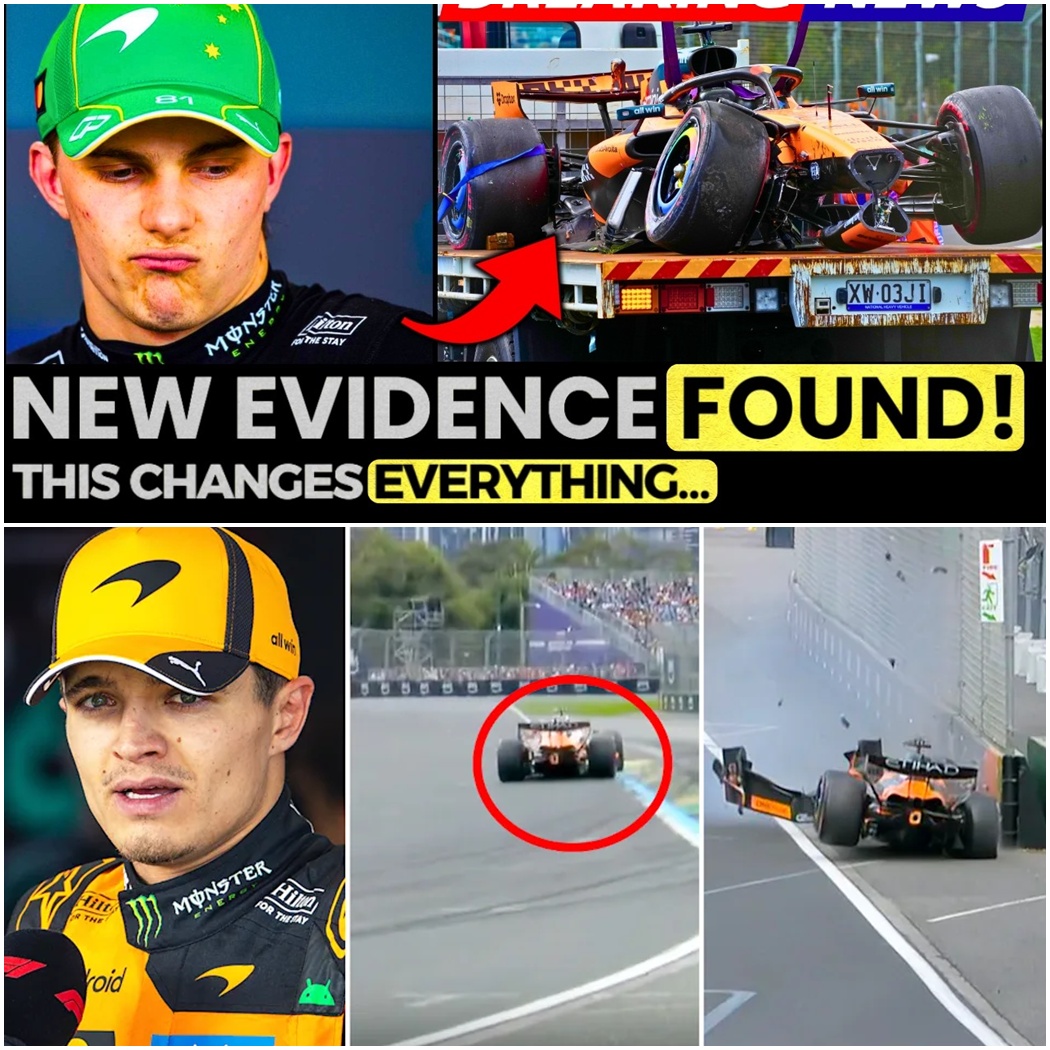
The 2026 Formula 1 season opener at Albert Park was destined to be a historic moment for Australian motorsport. More than 400,000 fans descended upon Melbourne, creating a sea of papaya orange and green-and-yellow caps, all gathered for one reason: to witness Oscar Piastri’s ascent to greatness on his home turf. As the rising star of McLaren and a man many pundits predicted would challenge for the title under the new regulations, the expectations were sky-high. However, the story of the weekend would not be written in the podium celebrations or a hard-fought battle through the streets of Melbourne. Instead, it was written in a frantic 40-second window that saw a hometown hero go from the pinnacle of hope to the depth of despair.
The incident occurred during what should have been a routine reconnaissance lap. As the cars exited the pits to make their way to the starting grid, the atmosphere was electric. But as Oscar Piastri navigated the exit of Turn 4, the unthinkable happened. A simple clip of the curb—a maneuver he had performed flawlessly dozens of times throughout practice and qualifying—sent the rear of the MCL40 snapping sideways. Within seconds, the car skidded across the grass and slammed into the barriers, destroying the front wing and the hopes of nearly half a million fans. The silence that followed was deafening. Cameras captured the stunned faces of fans in tears, while Piastri was forced to begin the “walk of shame” back to the paddock, his helmet still on to hide the visible agony of a race ended before it had even begun.
In the immediate aftermath, the court of public opinion was quick to label the incident a catastrophic driver error. On the surface, a spin on an outlap is the ultimate embarrassment for a professional racer. Yet, as the dust settled and the telemetry began to trickle out of the McLaren garage, a much more complex and unsettling narrative began to emerge. The first hint that this wasn’t a simple case of “cold tires and too much ego” came from Piastri himself. Over the radio, his voice was calm but laced with confusion. Later, he would reveal that the car behaved in a way that defied his inputs. According to the Australian, as he applied limited throttle on the exit of the corner, the car suddenly unleashed an unexpected surge of approximately 100 kW of power.
To put that into perspective, a 100 kW spike is a massive injection of torque that would unsettle any car, let alone an F1 machine on the edge of its grip limits. This wasn’t a small glitch; it was a violent surge that effectively turned Piastri into a passenger. Analysts and Sky Sports experts began to scrutinize the intricate 2026 power unit regulations, suggesting that the energy deployment systems—now more complex than ever—might be prone to erratic behavior under specific conditions. It appeared that the McLaren had struggled with smooth power delivery throughout the outlap, but it was at the exit of Turn 4 that the system decided to deliver its stored energy all at once, right as the tires were at their most vulnerable.
McLaren Team Principal Andrea Stella eventually stepped forward to offer a technical post-mortem, describing the crash as the result of a “perfect storm.” Stella identified three critical factors that converged at the exact same millisecond to trigger the disaster. First, the tires were cold—a standard reality of a reconnaissance lap, but a dangerous one. Second, the curb at Turn 4, while familiar, became a destabilizing force when combined with the third and most controversial element: power unit oscillations. Stella admitted that during a gear shift, the car experienced a frequency of torque delivery that created a snap of oversteer so sudden that even an elite driver with Piastri’s reflexes could not catch it.
This revelation sent shockwaves through the paddock. If the crash was indeed a “system interaction” rather than a pure pilot error, it points to a fundamental instability in the McLaren drivetrain that could plague them for the rest of the season. Interestingly, Stella revealed that the team had seen glimpses of this irregular torque delivery during pre-season testing. However, those incidents occurred in controlled environments with warm tires and smooth surfaces. In the high-pressure, low-grip environment of a Melbourne outlap, the “glitch” was amplified into a race-ending catastrophe.
The reaction from within the team added further intrigue to the mystery. As Piastri’s damaged car was being recovered, his teammate Lando Norris was heard over the radio asking a blunt and telling question: “Did something happen, or did he just break down?” The fact that Norris’s first instinct was to assume a mechanical failure speaks volumes. It suggests that the drivers were already wary of the car’s behavior. Across the grid, other teams also reported strange power unit anomalies during the weekend, highlighting the growing pains of the 2026 hybrid engines. But for McLaren, these growing pains came at the highest possible emotional cost.
Despite the technical evidence leaning in his favor, Piastri showed his characteristic maturity by taking a significant portion of the responsibility. He admitted that clipping the curb on cold tires was a risk he took, but he also maintained that the car’s behavior was abnormal. He noted that leaving the pits, the car had almost no battery deployment, only to suddenly “wake up” with a 100 kW surge in the middle of a corner. It is a terrifying prospect for any driver—the idea that the throttle pedal under your foot might not be a direct link to the engine, but rather a suggestion that the computer can override at its own discretion.
The emotional weight of the event cannot be overstated. Albert Park has seen many Australian heroes, from Mark Webber to Daniel Ricciardo, but the fervor for Piastri felt different. He was the “golden boy” in the fastest car the country had seen in years. To see that dream end on a reconnaissance lap was a gut punch to the national sporting psyche. However, the resilience shown by both the driver and the team suggests that this heartbreak will be a catalyst for growth rather than a permanent setback. Andrea Stella was quick to praise Piastri’s mental toughness, noting that such a public and painful error would break a lesser driver, but would only “sharpen” someone of Oscar’s caliber.
As the Formula 1 circus moves toward the Chinese Grand Prix, the focus in Woking is now entirely on the telemetry. Engineers are racing against time to ensure that the “perfect storm” of Melbourne does not repeat itself. They must find a way to smooth out the torque delivery during gear shifts and ensure the battery deployment remains predictable, even when the tires are cold. For Oscar Piastri, the goal is simple: redemption. He has already proven he has the pace to compete at the front; now he must prove that he can master a machine that, for 40 seconds in Melbourne, seemed determined to betray him. The 2026 season is long, and while the images of the wrecked McLaren will linger, the real story of Oscar Piastri’s season is only just beginning.








