From Paddock Joke to Unstoppable Empire: The Complete Engineering Evolution of Red Bull Racing
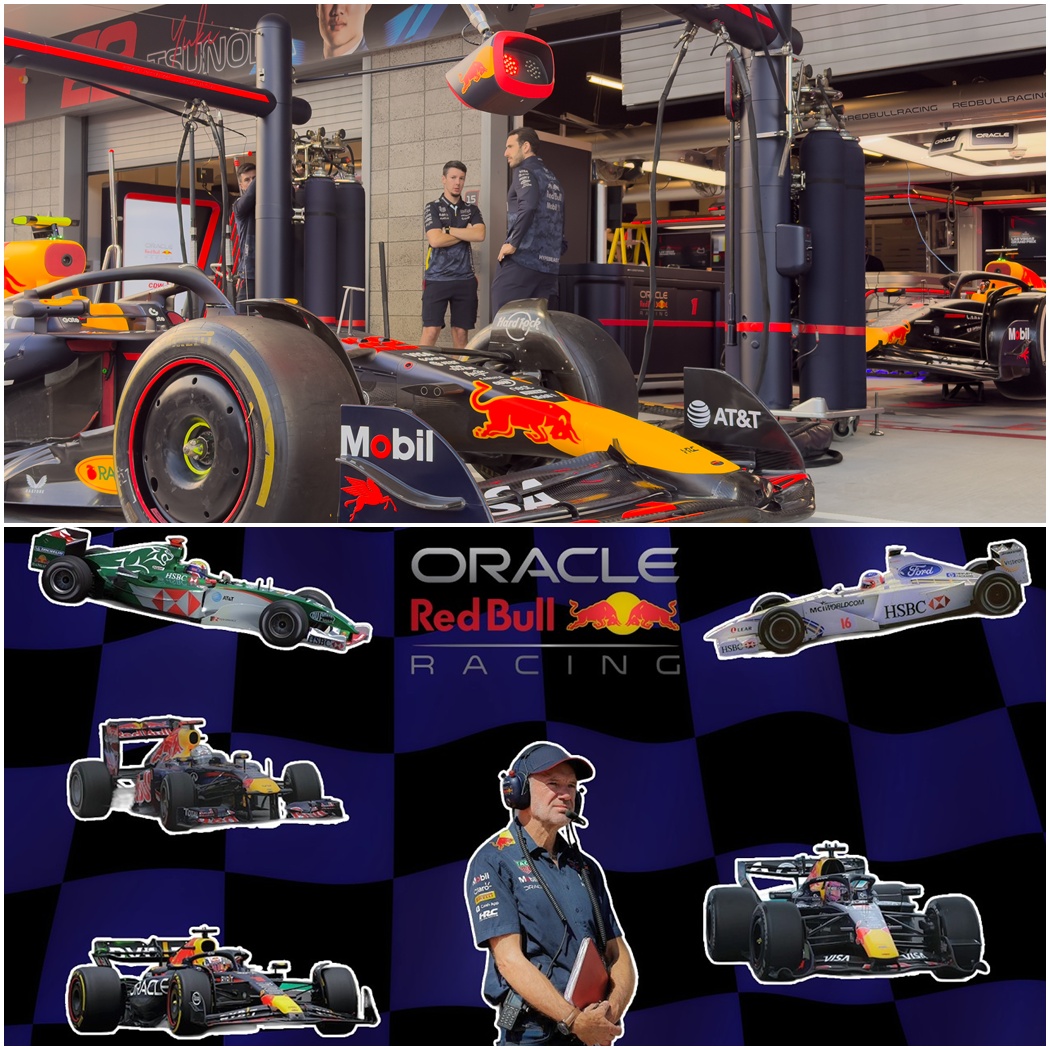
When the energy drink giant Red Bull first burst onto the Formula One scene, the traditional motorsport establishment viewed them with deep suspicion and open derision. The concept of an extreme sports beverage company owning and operating a serious racing outfit was entirely unprecedented. Rival team principals scoffed as Red Bull established a reputation for blasting relentless, ear-splitting party music from their enormous motorhome, creating an atmosphere that felt more aligned with an Ibiza nightclub than the elite, deeply serious world of grand prix racing. However, beneath the booming basslines and the relaxed facade, a ruthless ambition was quietly simmering. Through a unique dual-team structure, a massively ambitious junior driver academy, and the eventual recruitment of the greatest engineering minds in the sport, Red Bull Racing transformed from a paddock novelty into an absolute juggernaut that fundamentally rewrote the rulebook of modern Formula One.
To truly understand the DNA of Red Bull Racing, one must first look back to the foundation laid by its predecessors. The lineage of this towering empire begins with Stewart Grand Prix in nineteen ninety-seven. Founded by the legendary three-time world champion Sir Jackie Stewart and his son Paul, the team entered the sport with heavy financial backing from Ford. Their very first challenger, the SF01, was a pioneer in its own right, becoming the first Formula One car designed entirely on a computer. It was a sleek, safe machine powered by a ferocious three-litre V10 engine. While rookie driver Jan Magnussen and the highly rated Rubens Barrichello showcased flashes of undeniable speed, their campaign was absolutely crippled by abysmal reliability. Barrichello only saw the chequered flag twice, though one of those finishes was a miraculous second place in the pouring rain of Monaco.
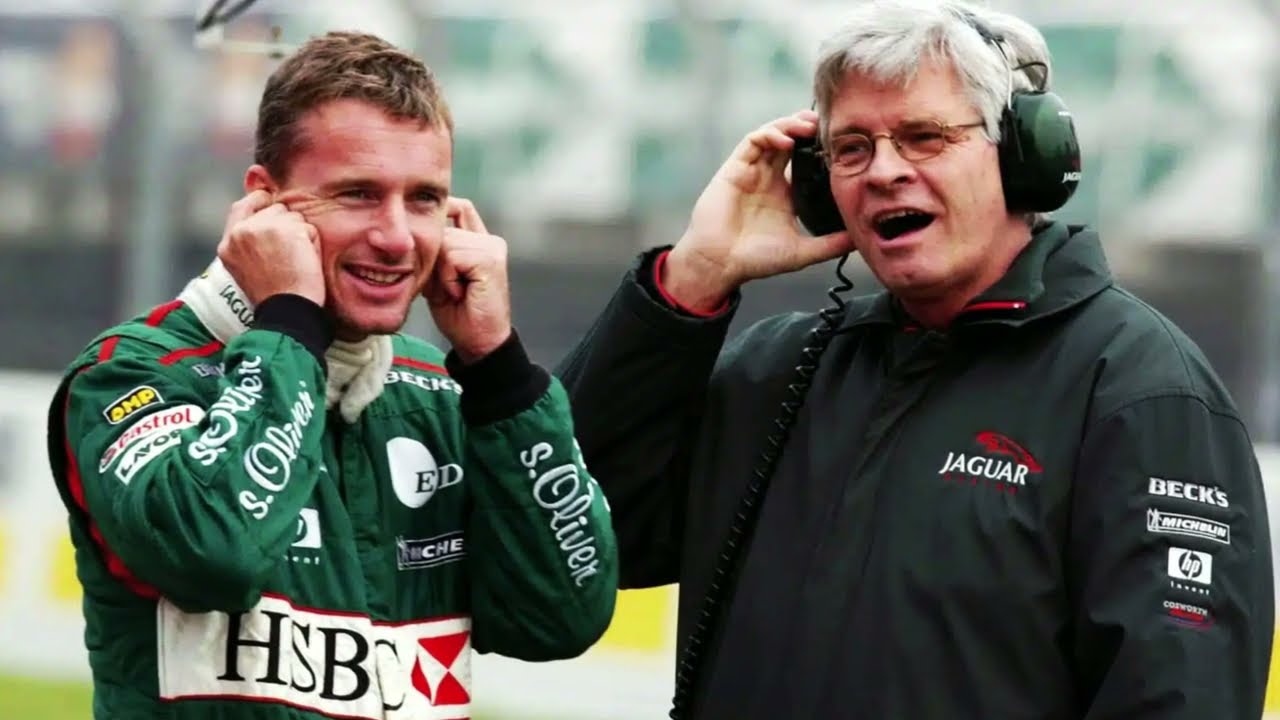
The Stewart outfit gradually found its footing, culminating in a spectacular breakthrough season in nineteen ninety-nine with the SF3. Designed by the highly respected Gary Anderson, the car proved blisteringly quick. Barrichello secured regular points, but it was Johnny Herbert who delivered a stunning, chaotic victory at the Nurburgring. That incredible performance was enough to convince Ford to buy the team outright for one hundred million pounds, aggressively rebranding it as Jaguar Racing for the new millennium.
Clad in a striking British racing green and gold livery, Jaguar arrived with immense corporate expectations. Yet, their five-year stint in the sport was defined by chaotic managerial turbulence, deep political infighting, and staggering corporate blunders. Despite cycling through prominent drivers like Eddie Irvine, Mark Webber, and Pedro de la Rosa, Jaguar languished in the midfield. Their time in the sport is perhaps best remembered not for engineering triumphs, but for a disastrous promotional stunt at the two thousand and four Monaco Grand Prix. To promote the film Ocean’s Twelve, Jaguar embedded genuine Steinmetz diamonds into the nosecones of their cars. When Christian Klien crashed on the first lap, his uninsured three-hundred-thousand-dollar diamond vanished into the glamorous streets, perfectly summarising the spectacular failure of the Jaguar experiment.
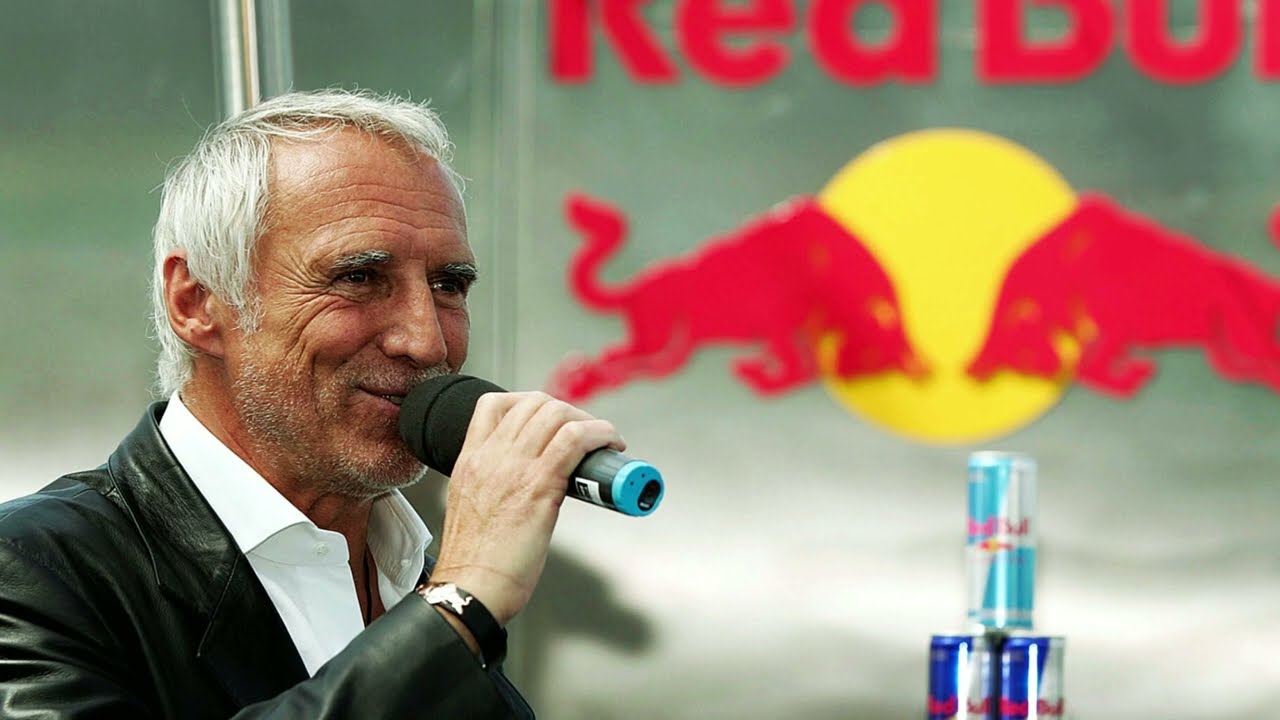
By late two thousand and four, Ford had completely lost patience and opted to abandon their Formula One project. In an extraordinary twist of fate, Dietrich Mateschitz, the enigmatic billionaire behind Red Bull, purchased the entire operation for the symbolic sum of just one single pound. In return, he committed to investing heavily over the coming seasons. A young, fiercely ambitious Christian Horner was installed as team principal, and the rebranded Red Bull Racing took to the grid in two thousand and five with the RB1. While initially relying on the final designs inherited from Jaguar, the new management quickly signalled their serious intent by bringing in veteran driver David Coulthard. They scored double points in their debut races, instantly proving they were not simply there to make up the numbers.
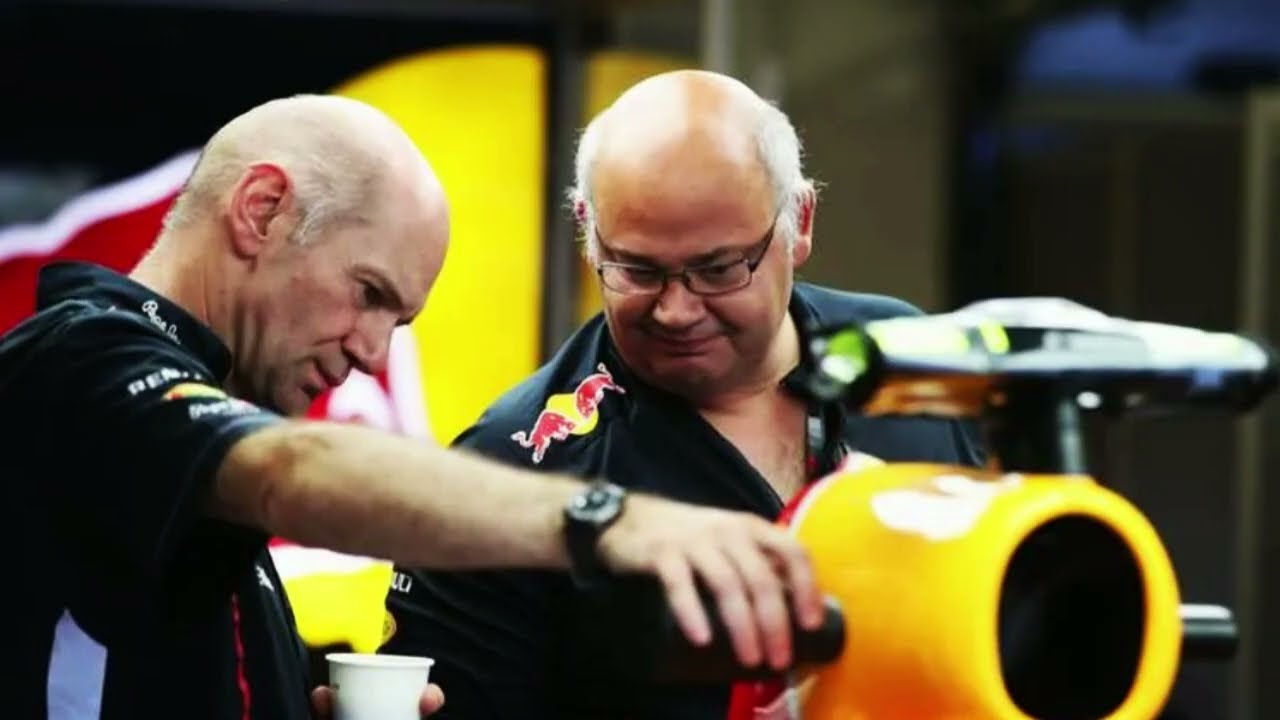
The true turning point in the history of Red Bull Racing occurred in early two thousand and six, when the team executed the most significant personnel coup of the modern era. They successfully poached the undisputed genius of automotive aerodynamics, Adrian Newey, away from McLaren. Newey was immediately appointed as the chief technical officer and given complete creative freedom. He fundamentally overhauled the team’s approach, demanding the construction of state-of-the-art simulators, transient gearbox dynamometers, and dedicated operations rooms. The early Newey cars, the RB3 and RB4, showed immense potential but were hampered by fragility.
Everything changed in two thousand and nine with a massive reset in the aerodynamic regulations. Tasked with creating cars with wider front wings and narrow rear wings, Newey produced a masterpiece with the RB5. Utilising a revolutionary pull-rod rear suspension system, Newey was able to significantly lower the rear bodywork, completely maximising airflow through the diffuser. Coupled with the promotion of a young, blisteringly fast German named Sebastian Vettel, Red Bull suddenly found themselves fighting for world championships. Although they narrowly lost out to Brawn GP in that transformative year, the foundation for a dynasty had been set in stone.
From two thousand and ten to two thousand and thirteen, Red Bull Racing unleashed an era of utter supremacy. The RB6 was an aerodynamic marvel, featuring a highly controversial exhaust-blown diffuser that directed hot exhaust gases over the aerodynamic surfaces to generate unimaginable levels of downforce. Newey proudly declared it produced more downforce than any car in the history of the sport. Despite bitter internal warfare between Vettel and Webber, the team secured their first dual championships. In two thousand and eleven, the RB7 elevated this concept even further with the off-throttle blown diffuser, allowing Vettel to completely obliterate the opposition and secure a record-breaking fifteen pole positions.
Even when the governing body repeatedly attempted to outlaw Newey’s clever exhaust tricks, the engineering team in Milton Keynes continually found ingenious loopholes. The RB8 overcame a ban on blown diffusers through complex engine mapping and resonator technologies, securing a third consecutive title in a nail-biting finale. By two thousand and thirteen, following a mid-season tyre compound change that perfectly suited their chassis, Vettel and the RB9 went on a historic rampage, winning nine consecutive races and cementing a quadruple championship legacy.
However, the relentless march of progress eventually caught up with them. The dawn of the V6 turbo-hybrid era in two thousand and fourteen served as a brutal reality check. The new regulations severely restricted aerodynamics and placed immense importance on engine power. Red Bull’s engine partner, Renault, produced a power unit that was woefully underpowered and disastrously unreliable. The RB10, despite possessing arguably the greatest aerodynamic chassis on the grid, was completely outgunned by the dominant Mercedes machines.
This sparked a deeply frustrating transitional era for the team. Between two thousand and fourteen and two thousand and twenty, Red Bull was forced to rely on capitalising on the mistakes of others. Drivers like Daniel Ricciardo and eventually a teenage sensation named Max Verstappen achieved spectacular opportunistic victories, dragging underperforming machinery to the top step of the podium through sheer driving brilliance. The relationship with Renault became entirely toxic, leading Red Bull to take a massive gamble by partnering with Honda, a manufacturer that had recently endured its own humiliating failures in the sport.
This bold partnership with Honda laid the groundwork for a spectacular renaissance. By two thousand and twenty-one, the RB16B was finally equipped with a power unit capable of directly challenging the mighty Mercedes. What followed was one of the most intense, bitter, and controversial championship battles in the history of global sport. Max Verstappen and Lewis Hamilton fought tooth and nail across the globe, colliding multiple times as the performance swung wildly between the two teams. Armed with flawless reliability and ferocious straight-line speed, Verstappen ultimately secured his maiden driver’s title in a highly contentious season finale in Abu Dhabi.
This monumental victory unlocked a terrifying new level of dominance. When Formula One introduced a radical shift back to ground-effect aerodynamics in two thousand and twenty-two, Newey’s deep understanding of this complex philosophy paid massive dividends. The RB18 initially suffered from minor reliability hiccups, but once the weight was reduced, it became an unstoppable force. While rival teams severely struggled with violent bouncing phenomena, the Red Bull glided over the tarmac. Verstappen cruised to a second title with a record-breaking fifteen victories, returning the constructors’ crown to Milton Keynes for the first time in nine agonising years.
If the RB18 was dominant, the RB19 of two thousand and twenty-three was a machine of mythical proportions. Featuring subtle refinements and a devastatingly effective triple DRS system, the car simply had no equal in race trim. Verstappen and his teammate Sergio Perez won all but a single race that season, achieving a staggering ninety-five per cent win rate. Verstappen operated on a plane of existence entirely his own, shattering records with ten consecutive victories and effectively securing the constructors’ championship single-handedly.
Yet, in the hyper-competitive realm of Formula One, no empire lasts forever. As the team transitioned into the two thousand and twenty-four season with the RB20, cracks began to show. Despite early dominance, correlation issues with aggressive upgrades introduced handling imbalances. The chasing pack, led by a resurgent McLaren and a rapidly improving Ferrari, aggressively closed the gap. While Verstappen’s sheer consistency and wet-weather brilliance in chaotic races like Brazil allowed him to secure a fourth consecutive driver’s crown, a devastating collapse in form from Sergio Perez resulted in Red Bull painfully slipping down to third in the constructors’ standings.
The narrative took an even darker turn heading into the two thousand and twenty-five season. The very foundations of the Milton Keynes squad were rocked by unprecedented internal earthquakes. After eighteen years of unparalleled engineering brilliance, Adrian Newey departed his role as chief technical officer. This monumental loss was further compounded by the shocking dismissal of Christian Horner, the man who had guided the team for two decades. Under the new leadership of Laurent Mekies, the slightly refined RB21 proved incredibly difficult to tame. With Perez gone, a revolving door of junior drivers, including Liam Lawson and Yuki Tsunoda, completely failed to support Verstappen. Left to fight a solitary battle against a dominant McLaren outfit, Verstappen mounted a valiant late-season comeback but was ultimately defeated by Lando Norris in the dying moments of the championship.
Looking ahead to the radically altered landscape of two thousand and twenty-six, the future of Red Bull Racing hangs precariously in the balance. The introduction of the RB22 marks the dawn of complex active aerodynamics, where flaps dynamically adjust in designated straight-mode zones, and drivers must grapple with highly complicated power deployment strategies. Having severed ties with Honda to forge a massive new partnership with Ford, the newly minted Red Bull Powertrains division faces an enormous uphill battle. Early signs indicate the new power unit is struggling to match the output of legacy manufacturers like Ferrari and Mercedes.
Verstappen has become fiercely vocal in his frustrations, heavily criticising the unpredictable nature of the active aerodynamics and the brutal battery regeneration cycles that severely compromise top speed. Alongside new recruit Isack Hadjar, who has shown promising flashes of raw pace, the team finds itself grappling with severe unreliability and a twitchy, unforgiving chassis.
Red Bull Racing has navigated the darkest of valleys and conquered the highest of peaks. They entered the paddock as a loud, brash joke and evolved into the most fearsome, ruthlessly efficient winning machine of the twenty-first century. As they face the massive technical and political hurdles of this new regulatory era without the brilliant minds that built their foundation, the motorsport world watches with bated breath. Can the fading empire reinvent itself once again, or has the relentless music finally stopped in Milton Keynes?








