Freezing Temperatures, Wild Sprint Puzzles, and Paddock Tension: Why the 2026 Canadian Grand Prix is Set to Push Formula 1 to Its Absolute Limit
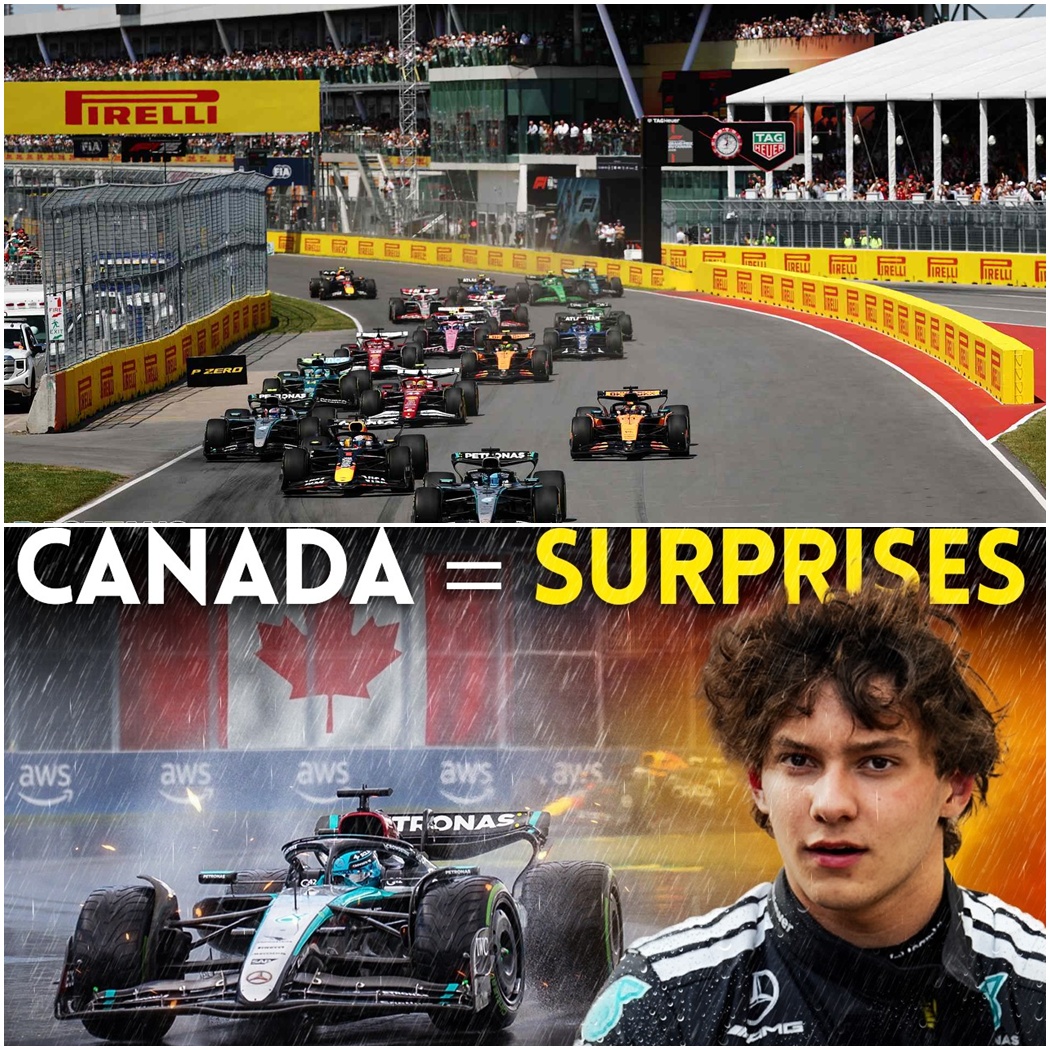
The global Formula 1 circus is packing its flight cases and heading across the Atlantic for the 55th running of the Canadian Grand Prix, and the collective anxiety radiating from the pit lane is palpable. As the fifth round of the 2026 World Championship, Montreal is historically celebrated for producing breathtaking racing, high-speed wall scrapes, and a vibrant city-wide festival atmosphere. However, beneath the standard anticipation of a classic flyaway race, a series of unprecedented scheduling shifts, brutal meteorological realities, and a high-stakes weekend format have coalesced to create an absolute pressure cooker for the ten teams on the grid. This is not going to be a straightforward weekend of motorsport. Instead, the paddock is preparing for a highly volatile, completely unpredictable weekend on the Circuit Gilles Villeneuve that threatens to thoroughly dismantle existing technical hierarchies and punish the slightest operational miscalculation.
The primary catalyst for the mounting tension inside the technical offices is a quiet, yet fundamentally disruptive change to the sport’s global calendar. This year, Formula 1 has arrived in Quebec a full four weeks earlier than its traditional mid-June slot. While a month’s difference might seem minor to the casual observer, in the hyper-sensitive world of elite automotive engineering, it represents a seismic shift in operational parameters. Montreal in late spring is a completely different beast compared to the balmy summer days the sport is accustomed to. The latest meteorological data indicates that the grid will be subjected to distinctly cold conditions, with daytime maximum temperatures struggling to reach between 16°C and 20°C. Far more alarmingly for the tyre technicians, overnight temperatures are projected to plummet to a biting 4°C.
This dramatic drop in ambient temperature introduces a terrifying engineering challenge that will directly dictate driver confidence and lap time. Keeping Pirelli’s highly sensitive compound matrices within their optimal thermal working window is going to be an agonizingly complex exercise. In particular, the front tyres—which suffer from a natural lack of energy generation on Montreal’s long, straight-heavy layout—will be exceptionally difficult to warm up. When a driver leaves the pit lane on stone-cold rubber in a 16°C ambient environment, the car will essentially feel like it is skating on ice. The front axle will refuse to bite into the apexes of the tight chicanes, inducing severe understeer and completely destroying a driver’s rhythm. In a sport where entering a braking zone at 300 km/h requires absolute, unshakeable trust in the machinery, this thermal deficit will push even the most decorated world champions to the absolute brink of disaster.
Compounding this thermal nightmare is the relentless pressure of the 2026 weekend schedule. Canada has been designated as the third Sprint weekend of the campaign. This means that out of the opening five rounds of the world championship, nearly half have featured the hyper-compressed, high-stakes Sprint format. For the engineering crews back in the garages, this is a logistical nightmare. The traditional luxury of three full, sixty-minute free practice sessions to methodically dial in mechanical setups, evaluate tyre degradation across heavy fuel loads, and map out aerodynamic correlation has been ruthlessly stripped away. Instead, the drivers will be granted exactly one solitary, chaotic practice session on Friday morning before being plunged directly into competitive Qualifying.
If a team unloads their car from the transport containers with a fundamental balance flaw, or if they misjudge the track’s evolution under the chilly skies, there is absolutely no time to implement a corrective engineering philosophy. The cars will be locked into Parc Fermé conditions almost immediately. For an engineering-driven sport that relies heavily on data accumulation and methodical refinement, this format introduces an immense, volatile layer of randomness. The teams will essentially be forced to execute pure guesswork, relying on simulation models that may completely fail to correlate with the freezing reality of the tarmac.
The Circuit Gilles Villeneuve itself remains as daunting and unforgiving as any venue on earth. Built on a man-made island in the middle of the St. Lawrence River, the 4.3-kilometre layout is a relentless stop-and-go puzzle consisting of fourteen turns winding tightly through dense parkland trees. It is a track that fiercely rewards aggressive curb riding and flawless braking stability, yet it is simultaneously notorious for its punishing physical nature. The engineering teams will be watching with bated breath as cars violently assault the massive curbs through the tight turns three and four complex. Furthermore, the entry phases into the turns eight and ten chicanes are plagued by severe, historic asphalt bumps that can easily upset a modern, low-riding ground-effect chassis, triggering sudden floor damage or a loss of aerodynamic downforce.

And then, looming at the final corner, sits the legendary Wall of Champions. This iconic, concrete barrier earned its fearsome moniker in 1999 when three legendary world champions—Damon Hill, Michael Schumacher, and Jacques Villeneuve—all crashed heavily into it during the same race weekend. Decades later, it remains just as daunting, narrow, and entirely unforgiving. Photographers shooting trackside describe the sheer, visceral thrill of watching these advanced machines clip the apex curb at astronomical speeds, their rear wings missing the concrete wall by mere millimetres. In the cold, low-grip conditions expected this weekend, the Wall of Champions will undoubtedly be waiting to claim its next high-profile victim.
The historical data suggests that chaos is almost statistically guaranteed in Montreal. The circuit currently boasts a staggering 70% probability of a full Safety Car intervention, alongside a 44% chance of a Virtual Safety Car. These figures sit significantly higher than the standard season average, meaning that race strategists will be forced into a high-stakes game of chess on Sunday. A 50% chance of rain is currently forecast for Grand Prix Sunday, threatening to spice things up in a delightfully unpredictable manner.
The paddock still speaks in hushed, reverent tones about the historic 2011 Canadian Grand Prix—a legendary afternoon where torrential rain, repeated safety cars, and a massive two-hour red-flag delay resulted in McLaren’s Jenson Button recovering from absolute last place to sensationally secure victory on the final lap. That legendary encounter entered the history books as the longest grand prix of all time, clocking in at 4 hours, 4 minutes, and 39 seconds. While modern regulations have since introduced a strict, definitive three-hour maximum time limit from the initial start signal to the final chequered flag to prevent such marathons, the underlying potential for historic, rain-shattered chaos remains embedded in Montreal’s DNA.
Amidst these macro technical battles, the human elements and political undercurrents inside the paddock are equally fascinating. For local hero Lance Stroll, the homecoming is bound to be a deeply complicated psychological experience. Born and raised in Quebec, the Aston Martin driver is quite open about the profound affection he holds for his home city. Stroll frequently notes that he knows he is truly back home when he wakes up to a traditional breakfast of pancakes and maple syrup, and he remains a massive, self-proclaimed fan of Montreal’s famous culinary institution, Lester’s Deli. On his initial out-lap during Friday morning’s lone practice session, Stroll can confidently be expected to offer a warm wave to the passionate crowds packing the grandstands.
Yet, the local reception he receives is increasingly nuanced. Unlike the universal, unadulterated adoration showered upon Daniel Ricciardo or Oscar Piastri in Australia, or the immense national hero worship enjoyed by Lewis Hamilton and Lando Norris in Great Britain, Stroll continues to cope with a significant amount of flack from the local media and fans. The massive, undeniable performance gap between himself and his veteran teammate Fernando Alonso, combined with his occasionally awkward, defensive media appearances, has continuously fueled the exhausting “paid driver” and “billionaire boss’s son” narrative. With Aston Martin enduring a remarkably poor, mechanically fragile start to the 2026 campaign, Stroll’s chances of matching or eclipsing his career-best home finish of seventh seem incredibly remote.
The off-track logistics of the event offer their own unique brand of Formula 1 intrigue. For the elite, multimillionaire drivers on the grid, commuting to an island circuit can be a deadly logistical exercise. The traffic jams crossing the bridges into the track are notoriously brutal, prompting various stars to adopt creative transport methods. While most general personnel rely on the heavily congested municipal Metro system, drivers routinely opt for two wheels to bypass the gridlock. In past years, Lewis Hamilton has famously arrived at the paddock riding his powerful Ducati motorcycle, Valtteri Bottas routinely cycles to the track, and Pierre Gasly relies on a nimble scooter to guarantee an on-time arrival.
Once the racing concludes on Sunday evening, however, the drivers will be executing a different kind of high-speed escape. A unique financial quirk known within the sports industry as Canada’s “jock tax” dictates that professional athletes and international performers who work within the country are subjected to strict federal, provincial, and sometimes municipal income taxation based precisely on the exact number of calendar days spent inside national borders. For a modern, top-tier driver commanding an elite salary upwards of £40 million a year, spending an extra Sunday night partying in downtown Montreal can literally cost them hundreds of thousands of pounds in tax liabilities. Consequently, the moment the media duties are fulfilled, a mass exodus occurs at the local airports as private jets scramble to wheels-up status before the clock strikes midnight—a frantic, financial race against time that mirrors the situation found at the Australian Grand Prix.
Ultimately, the 2026 Canadian Grand Prix is shaping up to be a brilliant, high-voltage test of pure adaptability. The sport is arriving at an unforgiving, high-speed island circuit under cold weather conditions it hasn’t experienced in years, operating under a high-pressure Sprint format that completely eliminates an engineer’s ability to methodically solve problems. From the bone-chilling track temperatures to the looming concrete of the Wall of Champions, there will be absolutely nowhere for the weak to hide. As the speed traps open and the green light flashes on Friday morning, Formula 1 will rediscover exactly which teams can think cleanly under pressure, and which drivers can truly master a cold, slippery road on pure human instinct.








