Aston Martin’s 2026 Desperation: A Strategic Surrender or a Masterstroke to Save Their Season?
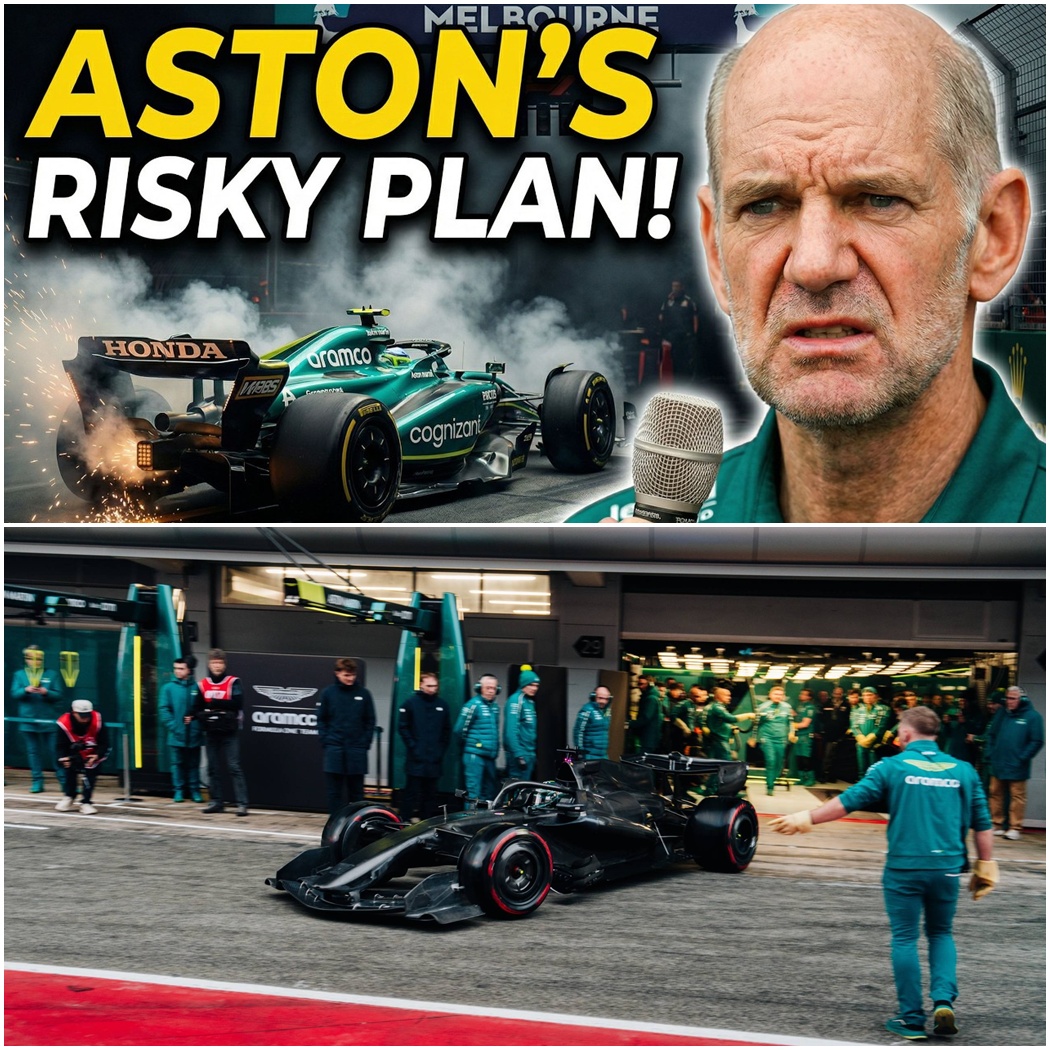
The Aston Martin Aramco Formula One Team is currently navigating one of the most treacherous and humiliating periods in its modern racing history. After a disastrous final pre-season test in Bahrain, where they completed a grid-worst 128 laps, the team is arriving at the 2026 season opener in Melbourne under a dark cloud of mechanical failure and strategic uncertainty. The situation is so dire that rumors have aggressively circulated suggesting the team might deliberately retire both cars during the Australian Grand Prix simply to prevent their fragile Honda power units from suffering a terminal, season-ending explosion.
The root of this unprecedented crisis can be traced directly to the brand-new Honda RA626H power unit. During testing in Bahrain, the engine generated abnormal, high-frequency vibrations that were so violent they physically tore the hybrid battery assembly and the energy storage system apart. Fernando Alonso, the two-time World Champion, managed a pitiful 23 laps during a race simulation before these intense vibrations destroyed his car. His teammate, Lance Stroll, fared even worse, completing a mere six laps on the final day before the team literally ran out of spare parts and was forced to pack up their garage early.
This mechanical catastrophe has left Aston Martin in an “unsolvable crisis” according to several Italian media outlets. With a compressed timeline leading up to the Australian Grand Prix, the team’s engineering staff, led by the legendary Adrian Newey, has been locked in emergency, round-the-clock meetings at their Silverstone headquarters. They are desperately searching for a way to field two functional cars without violating the strict terms of the Concord Agreement, which carries heavy financial penalties for any team that misses a championship round.
The desperation at Silverstone led to whispers of a controversial “loophole strategy.” The rumor suggested that Aston Martin would run just enough laps during Friday practice and Saturday qualifying to satisfy legal racing regulations, only to deliberately execute a double DNF (Did Not Finish) early on Sunday. By pulling the cars into the pits after just ten laps, the team could ostensibly save their fragile components from the punishing 300-kilometer race distance and avoid another catastrophic battery failure. This concept sparked immediate and vocal outrage among fans who have paid thousands of dollars for grandstand tickets at Albert Park, with many viewing such a plan as a violation of the sporting spirit of Formula 1.

However, recent reports from verified outlets suggest that the narrative of a “surrender” might be slightly misplaced. Aston Martin and Honda have realized that sitting in the garage provides zero usable data for their aerodynamicists and engine technicians. To fix the underlying flaws, they need real-world track mileage. Ikuo Takayishi, the head of Honda Racing Corporation, has reportedly ordered an immediate “patch” for the destructive engine shaking. Upon returning to the UK, engineers successfully isolated the exact frequency responsible for destroying the battery housing.
This discovery triggered a rapid, high-pressure redesign effort led directly by Adrian Newey. Instead of flying to Australia to simply give up, the team has quietly manufactured an emergency “B-spec” upgrade package. This package includes a newly developed isolation barrier that acts as a heavy-duty mechanical shock absorber, designed to decouple the violent engine frequencies from the carbon fiber chassis. While this fix significantly compromises the car’s agility and increases its overall weight, it is a necessary sacrifice to ensure the internal components survive the high speeds of the resurfaced Albert Park street circuit.
In addition to the mechanical shock absorbers, Newey has altered the AMR26’s cooling philosophy. The car now features extremely slim, downward-sloping side pods that expose the floor and increase airflow to the rear diffuser, while redirecting cooling through upward-facing, periscope-style inlets. While these changes ruin the car’s aerodynamic efficiency and increase drag on the long straights, they are essential to prevent the Honda power unit from overheating during the race.

The strategy for Australia is now clear: abandon all hope of qualifying at the front of the grid and focus entirely on reliability. The objective is to widen the operating window so the machine can complete a full Grand Prix distance without detonating. Finishing the event is far more important than scoring championship points this weekend, as completing 58 consecutive laps will provide Newey with gigabytes of clean telemetry—the exact baseline he needs to extract the chassis’s hidden potential later in the season.
The outcome of the Australian Grand Prix will dictate the entire trajectory of Aston Martin’s 2026 campaign. If these emergency modifications fail to contain the Honda vibrations, the team faces a severe development bottleneck that could ruin their entire year, forcing them to spend millions under the budget cap just to redesign basic structural mounts. For Fernando Alonso, who turns 45 this summer, the stakes couldn’t be higher. He cannot afford to spend a year at the back of the pack in a fragile machine. However, if this reliability-first strategy works, it will prove that Aston Martin possesses the technical agility of a true championship contender. They have accepted temporary public embarrassment in exchange for a long-term survival strategy. Whether the AMR26 survives the brutal Albert Park circuit or ends up broken in the garage once again, this weekend will be a definitive testament to the ruthless nature of Formula 1 development.








