Aerodynamic Alchemy: Inside Ferrari’s Revolutionary “Upside Down” Rear Wing Set to Destabilize the F1 Order in Shanghai
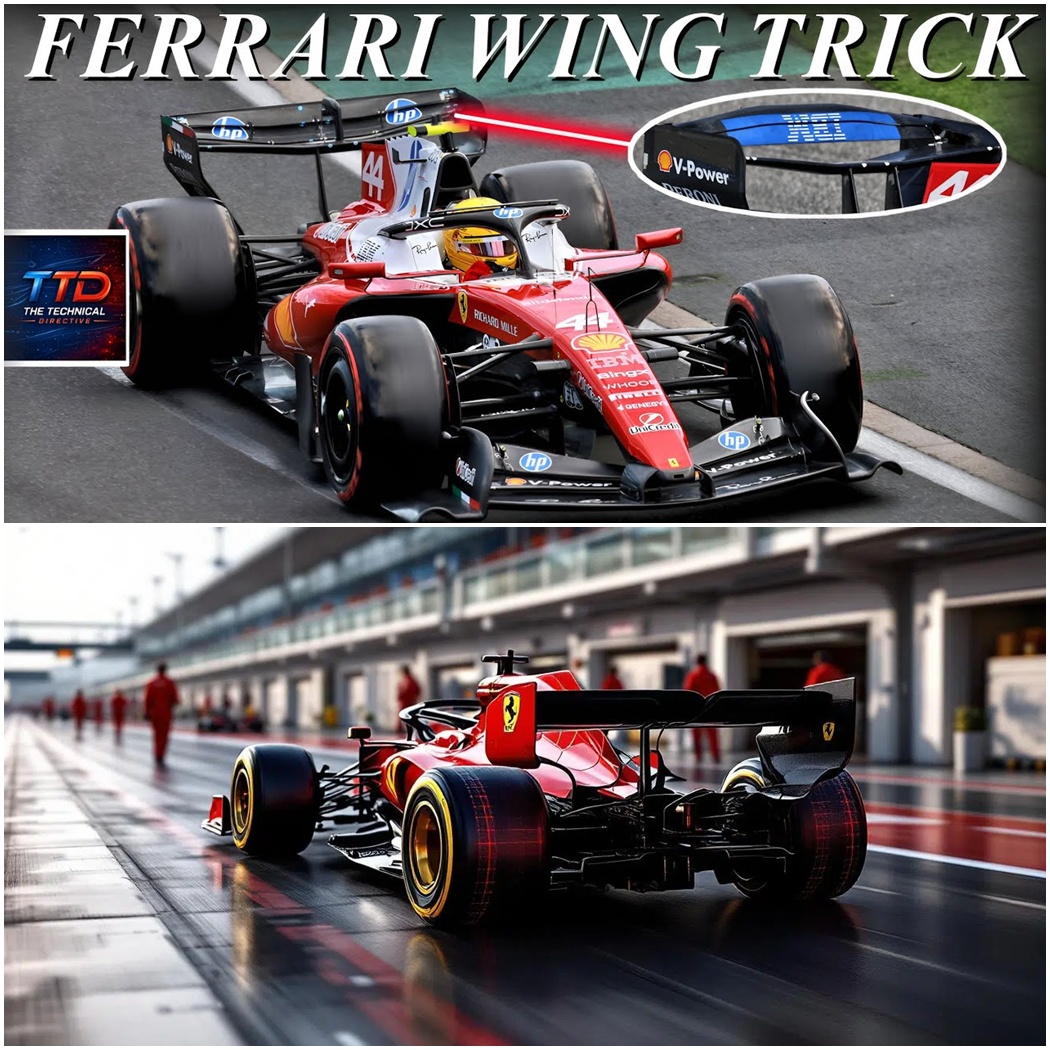
The Formula 1 circus is rolling into Shanghai, but the conversation in the paddock isn’t just about the championship standings or the local weather. Instead, all eyes are fixed on the rear end of the Ferrari SF26. In what is being hailed as the first major “technical grenade” of the 2026 regulatory era, Ferrari is reportedly set to fully debut a radical, rotating rear wing concept that has the potential to render conventional DRS systems obsolete. This is not merely an incremental update; it is a fundamental rethinking of how a racing car interacts with the air at 200 miles per hour.
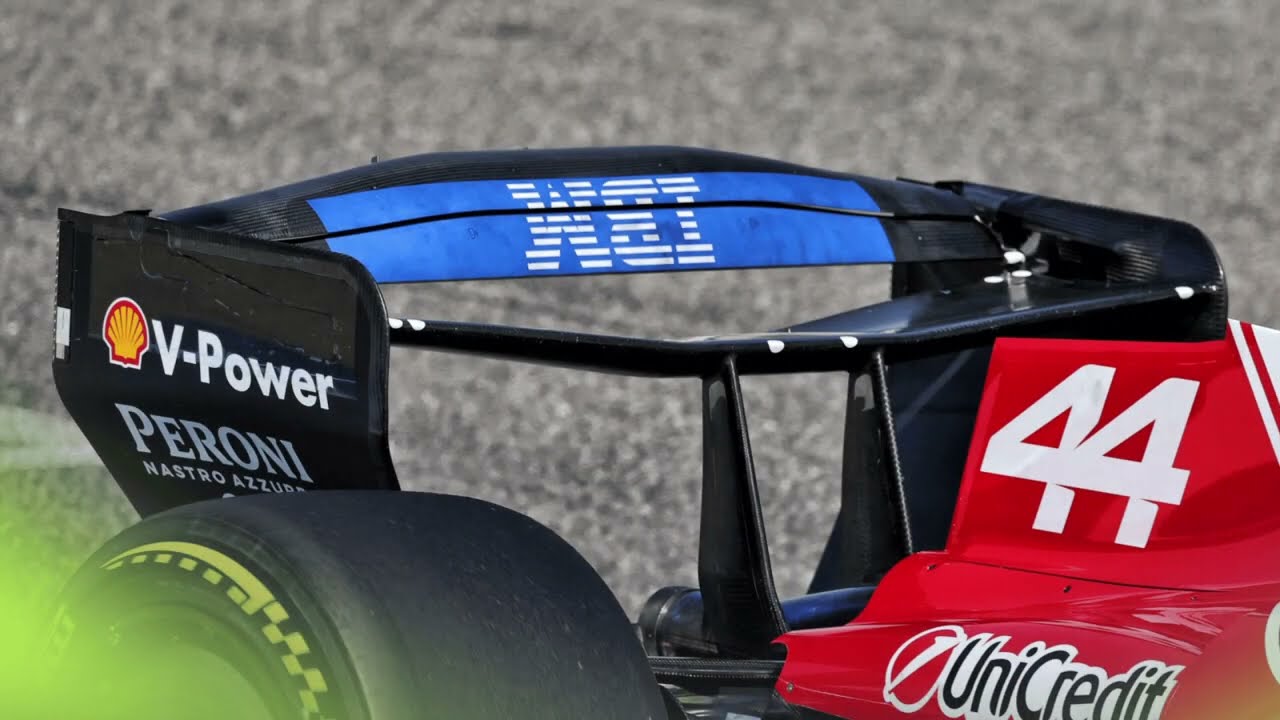
The 2026 regulations were always intended to be a blank canvas for engineers, but few expected a team to interpret “active aerodynamics” quite as literally as Ferrari has. During the final days of pre-season testing in Bahrain, sharp-eyed observers noticed something peculiar about the SF26’s rear assembly. While most teams have stuck to a modernized version of the traditional Drag Reduction System (DRS)—where a single flap opens to reduce a percentage of air resistance—Ferrari has gone in a completely different direction. On the SF26, the upper elements of the rear wing do not just open; they rotate around a central pivot, flipping almost entirely upside down when the car enters “straight-line mode.”
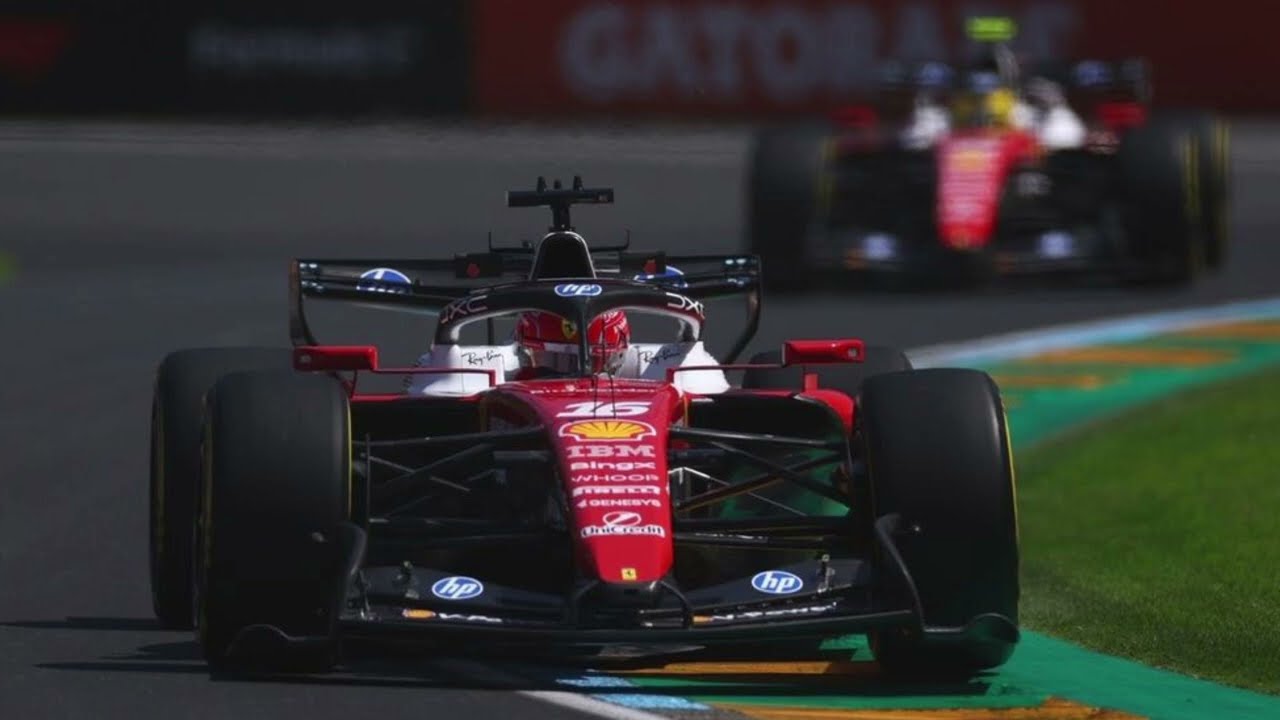
The logic behind this “Upside Down” wing is as brilliant as it is bold. In the 2026 era, managing the transition between the internal combustion engine and the massive electrical deployment of the hybrid system is the name of the game. When the battery charge begins to fade toward the end of a long straight—a phenomenon drivers are calling “super clipping”—the car suddenly becomes hyper-sensitive to aerodynamic drag. A car that is “too draggy” will feel like it has hit an invisible wall the moment the electrical boost cuts out.
By flipping the wing into an inverted position, Ferrari’s engineers are effectively reversing the curvature of the airfoil. In this state, the wing stops producing downforce and, according to some aerodynamicists, might even produce a tiny amount of lift. This drastically reduces the car’s frontal area and its “wake,” allowing the SF26 to slice through the air with significantly less resistance than a car using a traditional open-flap DRS. In simple terms, while Mercedes and Red Bull might begin to hit that “invisible wall” at the end of Shanghai’s massive 1.2-kilometer back straight, the Ferrari could theoretically keep accelerating, or at least maintain its top speed for much longer.
The engineering effort required to make such a system work is staggering. Traditional DRS actuators are relatively simple hydraulic or electronic pistons. Ferrari, however, has had to completely redesign the actuation mechanism, integrating it directly into the rear wing endplates. This allows for a range of motion that was previously unthinkable in Formula 1. When the driver hits the brakes for a corner, the wing rotates back to its original orientation in a fraction of a second, instantly restoring the massive downforce required to keep the car stable during high-speed deceleration.
This dual-state capability is the “holy grail” of the new regulations. Historically, F1 design has always been a series of compromises: you run a “skinny” wing for top speed but lose grip in the corners, or you run a “big” wing for cornering and get eaten alive on the straights. Ferrari’s SF26 appears to have solved this paradox, allowing the car to exist in two entirely different aerodynamic configurations within a single lap.
But the genius of the SF26 doesn’t stop at the wing itself. Ferrari has also had to find a way to compensate for the removal of the “beam wing”—the small aerodynamic element that sat below the main rear wing in previous years. The beam wing was crucial because it helped pull air out from under the car’s floor, making the diffuser more effective. With that component now banned under the 2026 rules, teams have struggled to maintain rear-end stability. Ferrari’s solution is to use the rotating wing as a sort of “canopy” when it is in its low-drag state. This shape appears to direct airflow downward, helping to re-energize the air leaving the floor and partially replacing the role of the forbidden beam wing.
The timing of this development couldn’t be more perfect. The Chinese Grand Prix circuit is a brutal test of aerodynamic efficiency. Its combination of technical, low-speed complexes and one of the longest straights in the world creates a massive headache for engineers trying to find the right setup balance. If Ferrari’s rotating wing performs as it did in the simulation data, the SF26 will be able to dominate the technical sectors without sacrificing a single kilometer of top speed to the Mercedes power units.
Looking back at the season opener in Melbourne, Ferrari already proved they have a car that can fight at the front. The SF26 showed incredible traction and a very stable balance in the opening laps, keeping the Mercedes drivers honest before the race settled into a strategic stalemate. With this new aerodynamic “ace up their sleeve,” the team from Maranello isn’t just looking for another podium; they are looking to break the Mercedes winning streak and announce themselves as the true masters of the 2026 regulations.
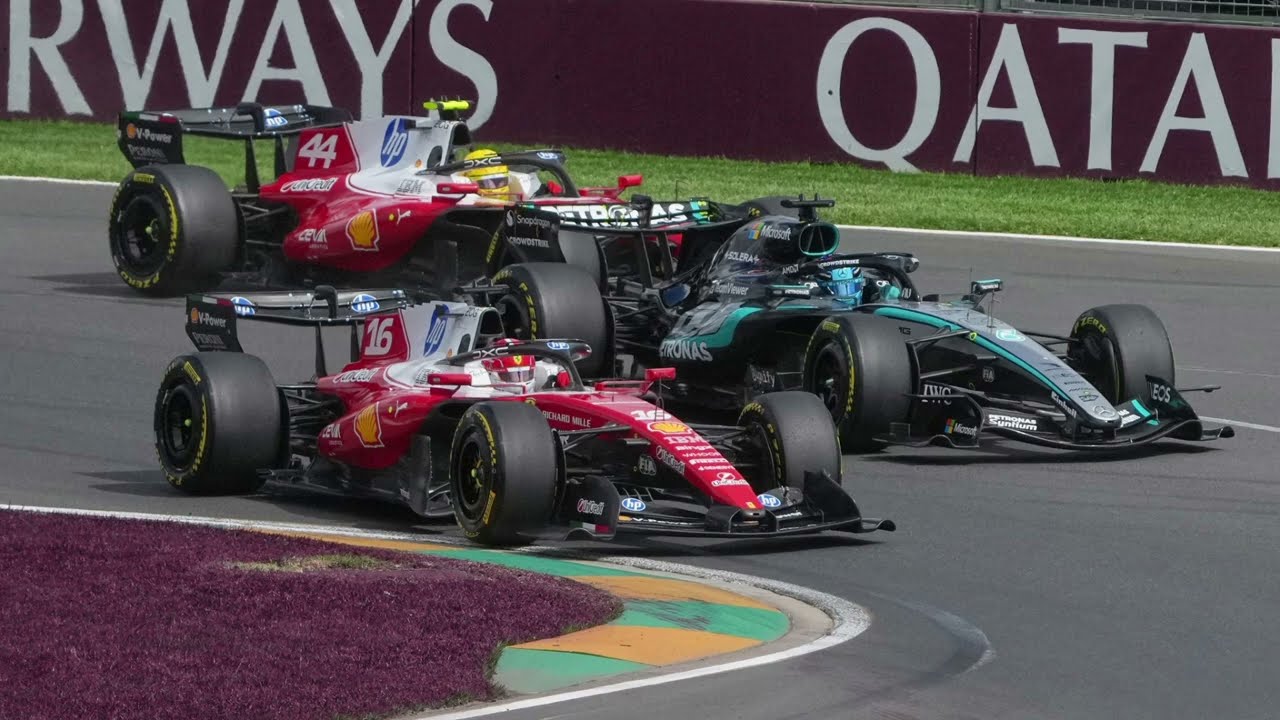
There is, of course, a risk. In the high-pressure world of F1, complexity often leads to failure. If the rotating mechanism jams in its “upside down” position while heading into a high-speed corner, the result could be a catastrophic loss of control. Furthermore, rivals are already scrutinizing the legality of the system, questioning whether the wing endplates are acting as “prohibited aerodynamic devices” by housing the rotation mechanism.
However, for the Tifosi, this represents a return to the “Golden Age” of Ferrari engineering—a time when the Scuderia didn’t just follow the rules but redefined them. As the lights go out in Shanghai, the visual spectacle of the SF26’s wing flipping over will be more than just a trick for the cameras. It will be the sound of a sleeping giant waking up and turning the F1 world upside down.








