ADRIAN NEWEY’S HIGH-STAKES GAMBLE: Inside Aston Martin’s 2026 Testing Nightmare and the Brutal Reality of the Honda Partnership

The dust has finally settled over the Bahrain International Circuit, but for Aston Martin, the storm is only just beginning. Formula One’s highly anticipated 2026 regulation reset promised a clean slate, a chance for ambitious teams to rewrite the hierarchy of the grid. But as the paddock packs up its freight and prepares for the unrelenting pressure of the opening race in Melbourne, the narrative surrounding the green cars is not one of triumph, but of profound, uncomfortable vulnerability. Something didn’t just go wrong for Aston Martin in Bahrain; it exposed a seismic fault line running deep within their 2026 revolution. The Honda-powered AMR26 didn’t merely lack competitive pace—it lacked the most crucial currency of any regulation change: mileage. And in a sport where data is everything, that deficit is incredibly dangerous.
When a team manages a mere six laps on the final day of a crucial pre-season test, alarm bells do not just ring; they deafen. We witnessed catastrophic battery failures, crippling spare part shortages, and visible public dissatisfaction radiating from their new engine partner, Honda. This was not the smooth, triumphant birth of a championship contender. It looked exactly like a complex system buckling under extreme stress. But to truly understand the gravity of the situation, we must ask a much deeper, more complex question: Is this an unmitigated collapse, or is it a calculated, albeit painful, calibration? Because when a Formula One project is spearheaded by the legendary Adrian Newey, early discomfort is very often the deceptive mask that hides a terrifying long-term intent.
Let us dissect the anatomy of this crisis. The timeline of Aston Martin’s setback did not magically begin when the cars rolled out of the garages in Bahrain. The ominous warning signs were already glaringly visible before the AMR26 ever touched the asphalt for its initial shakedown in Barcelona. The team arrived uncomfortably late to that crucial preliminary test, completing only severely limited running. Consequently, Bahrain was not just another routine test session; it was effectively the car’s very first real exposure to the brutal, unforgiving demands of the sweeping 2026 regulations. We are talking about entirely new chassis rules, a radically different power unit architecture, a completely overhauled integration philosophy, and absolutely zero margin for error.
From the opening hours under the scorching sun in Sakhir, reliability completely defined Aston Martin’s narrative. Fans and rival engineers alike watched as extended garage stays and frantic power unit checks repeatedly interrupted their meticulously planned programs. While powerhouse teams like Mercedes and Ferrari were out on track, racking up hundreds of laps and finely tuning their complex energy deployment strategies, Aston Martin’s mechanics were simply fighting a desperate battle to keep their car alive. Losing four hours of track time on a single Wednesday is not an exercise in optimization; it is an exercise in containment. In a season where energy deployment mapping will dictate who wins and who loses, missing out on crucial mileage means missing out on vital correlation between the wind tunnel and the track. And in Formula One, no correlation means absolutely no clarity.

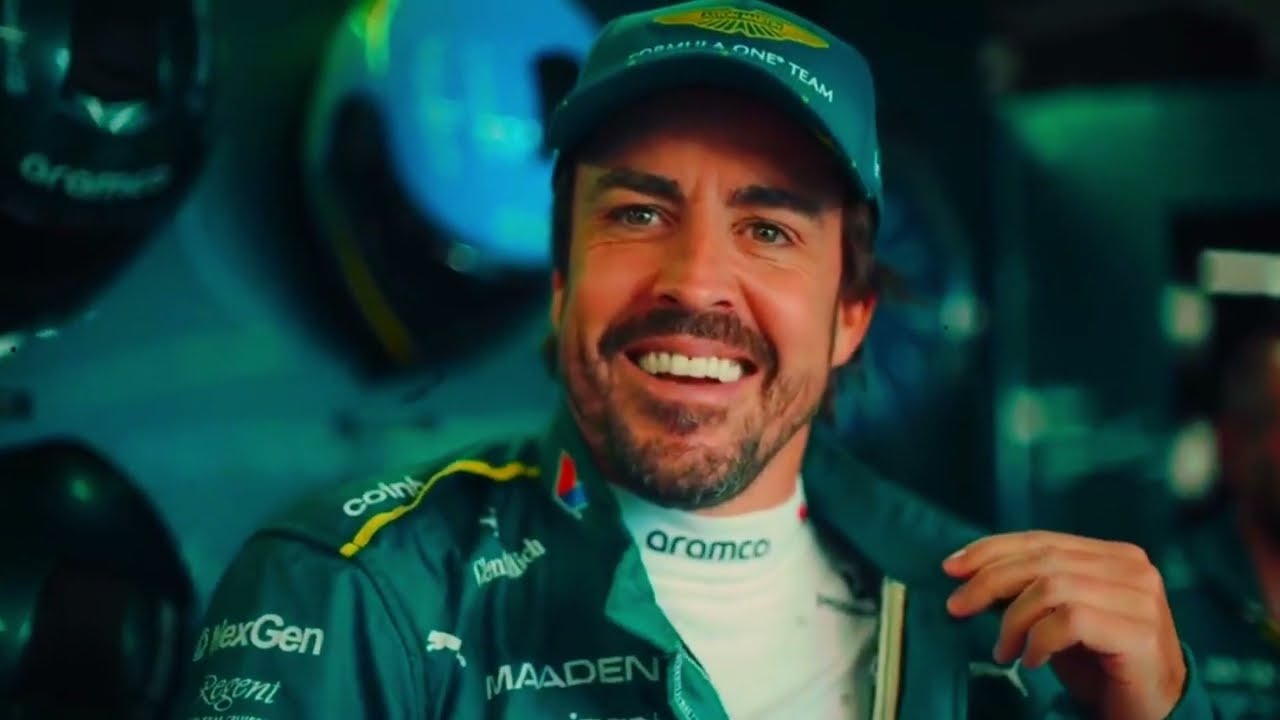
This inescapable reality forces us to confront the elephant in the room: Is this primarily a disaster on Honda’s end, or is Aston Martin’s aggressive chassis integration drastically amplifying the problem? Once we strip back the carbon fiber and look at the specifics of the power unit failures, the picture sharply comes into focus, and it is far from comfortable. The core disruption that paralyzed the team was not some vague aerodynamic anomaly; it was deeply electrical. A catastrophic battery-related failure abruptly halted Fernando Alonso’s session, forcing the two-time World Champion to painfully park his AMR26 on the side of the track.
Honda, uncharacteristically, did not hide behind corporate PR. They later confirmed that frantic simulations were being run back at their Sakura headquarters to understand the root cause of the issue. Publicly, they admitted a bitter truth: they utterly failed to hit their mileage targets in pre-season testing. In the fiercely competitive world of F1, that is a glaring red flag, not a minor footnote. Under the radical 2026 regulations, electrical deployment is no longer a secondary boost system; it is the central heartbeat of the car. Energy recovery, battery stability, and thermal control are the systems that will ultimately define lap time. If the battery architecture is not fundamentally robust, all performance mapping becomes purely theoretical. And as any race engineer will tell you, theory does not score World Championship points.
Honda’s post-test statement was unusually candid and deeply revealing. Stating that both reliability and performance were “not where they wanted them” is a massive admission of vulnerability. We must remember the unique dynamic at play here. This is not a standard customer engine deal spread safely across multiple teams, quietly gathering mountains of parallel data. This is a highly exclusive, single works partnership. Aston Martin and Honda are completely isolated. Fewer cars on the track mean fewer data references, which exponentially raises the risk profile of the entire project.
This brings us to the most fascinating layer of the story: Adrian Newey’s ultimate integration gamble. This is where the conversation pivots from simple mechanical reliability to profound engineering philosophy. The AMR26 is not a conservative, safe machine. Under Newey’s visionary direction, Aston Martin has actively chosen incredibly aggressive packaging. We are seeing impossibly tight bodywork, extreme cooling tolerances, a radically new gearbox layout, and a heavily revised rear suspension architecture. Every single element of this car has been meticulously designed to maximize aerodynamic efficiency under the stringent 2026 reset.
But tight packaging is the ultimate double-edged sword. When cooling margins shrink to millimeters, thermal stress rises exponentially. If Honda’s intricate power unit is not yet fully mature and robust, Newey’s tightly wrapped chassis does not protect it—it ruthlessly exposes it. In this scenario, integration actively amplifies weakness. We are not simply witnessing engine underperformance; we are watching a team struggle through a full system reset. They are juggling a new power unit partner, a new aerodynamic concept, and a new mechanical platform all at once. When everything changes simultaneously, teething problems do not just add up; they compound drastically.
Yet, there is an uncomfortable caveat to all this panic. This chaotic birth might have been entirely anticipated by the senior leadership behind closed doors. Adrian Newey’s illustrious history in the sport suggests something highly critical: he is often more than willing to accept severe early instability in exchange for an untouchable long-term performance ceiling. But history also ruthlessly shows that sometimes, unlocking that ultimate ceiling takes an agonizing amount of time.
Aston Martin’s PR department would probably prefer you forget the precedent of 2014, but the parallels are impossible to ignore. Wind the clock back to the dawn of the V6 hybrid era. Red Bull Racing’s winter testing looked nothing short of catastrophic. Their Renault power unit overheated repeatedly, the car barely managed to complete a handful of laps, and the global motorsport press confidently predicted an embarrassing collapse. Yet, by the time the circus arrived in Melbourne, their performance had miraculously stabilized enough to fight near the very front of the grid. Pre-season misery does not automatically equal season-long irrelevance.
That specific precedent matters deeply right now because regulation resets violently distort our perception of reality. Extremely limited mileage can effectively hide massive aerodynamic correlation gains that are simply not yet visible on the timing screens. What currently looks like a dysfunctional disaster could very well be an extreme, calculated phase of early stress testing. Paddock insiders have long whispered that Newey rarely, if ever, reveals his true performance picture during the bitter cold of winter testing. However, there is one terrifying difference this time around. In 2014, Red Bull at least managed to gather some meaningful operational lessons despite the fiery chaos. Aston Martin’s 2026 Bahrain data pool, by comparison, is far, far thinner. This is not a guaranteed copy-paste redemption story; it is a high-wire act with a much narrower margin for error.
Listen carefully to the tone echoing inside the Aston Martin garage. It was not defiant. It was not brimming with secret confidence. It was incredibly sober. Fernando Alonso frankly admitted it was “not the easiest test” and that “many things need fixing.” Lance Stroll described the car with blunt honesty, stating it was simply “not where it should be.” Honda openly stated their profound unhappiness with both reliability and performance. That is not the language of a team cleverly sandbagging; that is the language of controlled, genuine concern.
Trackside leadership has officially acknowledged they are starting the season on the back foot. In a year where mastering energy deployment strategy will dictate race outcomes, arriving in Australia without a stable, reliable baseline is a terrifyingly risky proposition. Because without bulletproof reliability, engineers cannot unlock the aggressive engine modes. Without those aggressive engine modes, aerodynamicists cannot properly evaluate the car’s true efficiency. This creates a dangerous, suffocating loop: limited mileage forcibly slows down development, and slow development exponentially increases the pressure heading into the next Grand Prix.
But let us entertain one final, strategic twist. What if 2026 isn’t actually Aston Martin’s true target year? What if this immense pain is entirely front-loaded by grand design? Quiet whispers sweeping through the paddock suggest that Lawrence Stroll’s true competitive horizon may not be this season, but rather 2027 or even 2028. If that ambitious timeline is accurate, the disaster in Bahrain looks less like a panicked failure and more like the heavy, unavoidable cost of ultimate ambition. A full system reset of this magnitude was never going to be frictionless.
However, Formula One is a notoriously impatient beast. It rarely rewards long-term vision if the short-term reality collapses entirely. Sponsors demand television visibility, highly paid drivers demand forward progression, and internal momentum is vital. If the AMR26 begins the season multiple seconds adrift of the leading pack, the pressure will escalate with terrifying speed. Australia will provide the very first honest stress test—not necessarily for ultimate lap time, but for basic operational stability. Can this aggressive machine simply complete a race distance reliably? If the massive deficit witnessed in testing shrinks dramatically, Bahrain will be remembered as a mere footnote in a championship journey. If it does not, the uncomfortable questions surrounding Adrian Newey’s massive gamble will multiply tenfold. The stage is set, the stakes have never been higher, and the true verdict will be delivered on the streets of Melbourne.








