A New Empire Rises: Mercedes Crushes Rivals as the 2026 F1 Era Begins in Melbourne Chaos
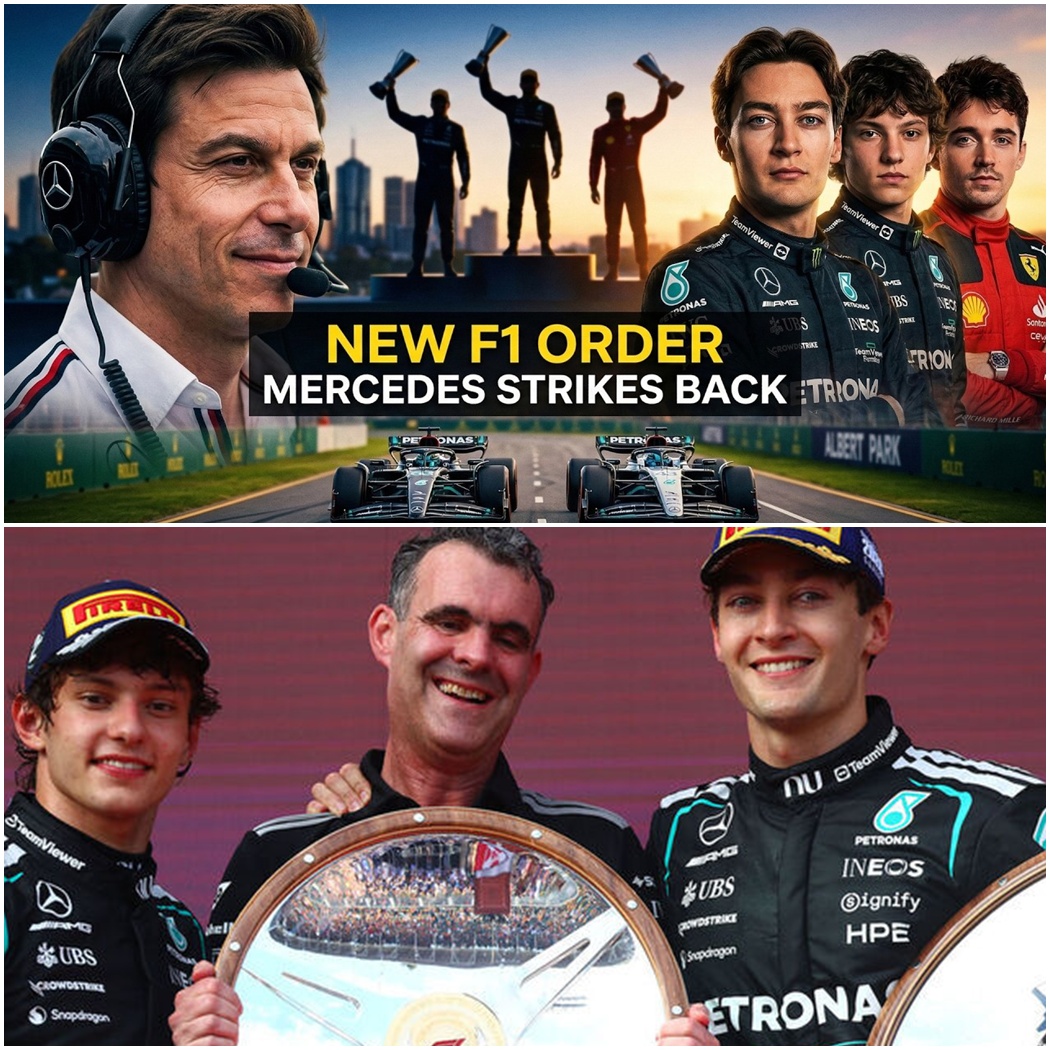
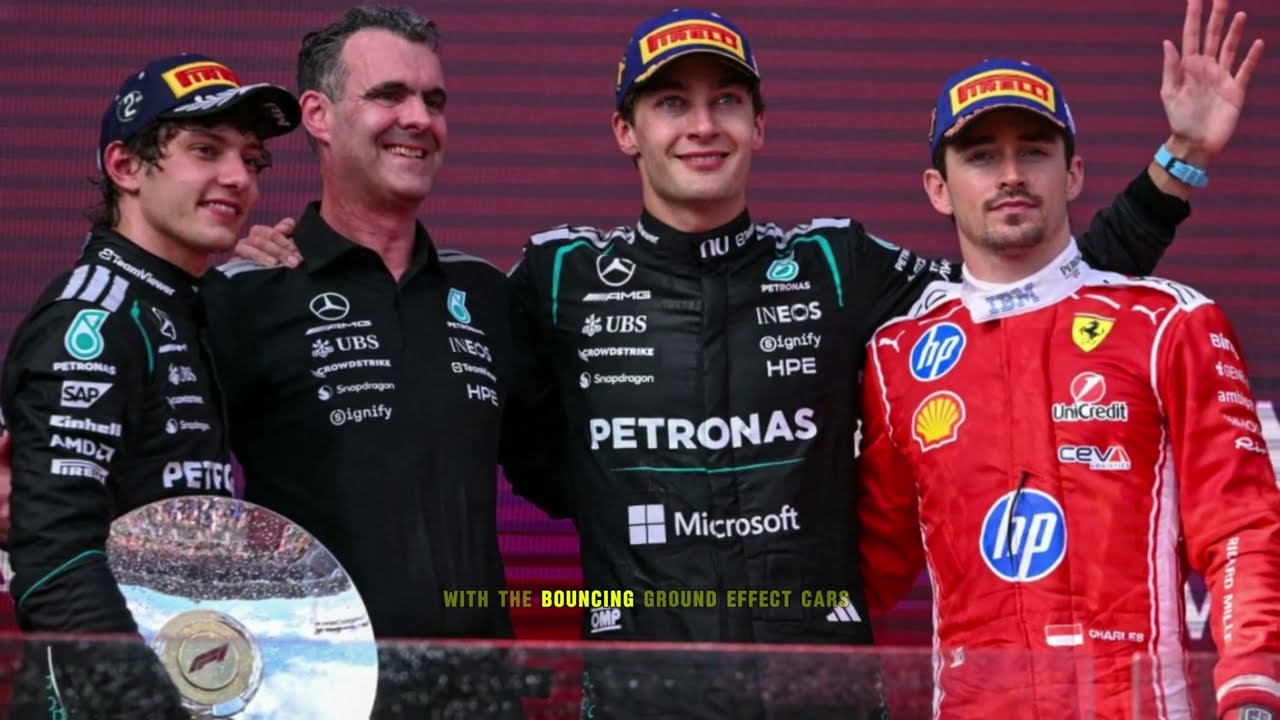
The 2026 Australian Grand Prix was always going to be more than just a race. It was a baptism of fire for the most radical regulatory shift in Formula 1 history. After months of speculation, secretive winter testing, and political bickering over engine compression ratios and battery weights, the lights finally went out at Albert Park. What followed was a brutal message from a team that had spent the last four years in the wilderness. Mercedes didn’t just win; they reclaimed their throne with a clinical one-two finish that felt like a haunting echo of their 2014 dominance. As George Russell and his teenage teammate Kimi Antonelli crossed the line, the message to the rest of the paddock was loud, clear, and utterly devastating.
Mercedes: The Sunrise of an Empire
For years, Toto Wolff spoke of “false dawns” and “small steps” toward recovery. In Melbourne, the sunrise was blinding. The Mercedes W17 is clearly the class of the field, possessing a power unit that manages energy harvesting and deployment with a precision its rivals can’t yet touch. While others struggled with battery management and the “lifting and coasting” necessitated by the new rules, Russell and Antonelli looked like they were playing a different game entirely. They used winter testing to hide their true hand, qualifying to show their raw pace, and the race to demonstrate their bulletproof execution.
Antonelli’s performance was particularly poignant. After a heavy crash in FP3 that threatened to derail his debut weekend, the young Italian bounced back with the poise of a seasoned veteran. His second-place finish isn’t just a trophy; it’s a declaration that the post-Hamilton era at Mercedes is in very safe hands. This was a “2014 moment” for the Silver Arrows—a reset that has placed them a step ahead of every other manufacturer on the grid.
Ferrari: The Chase is On
The Scuderia entered the weekend with a mix of hope and trepidation. Charles Leclerc’s P3 and Lewis Hamilton’s P4 provide a solid baseline for the SF26, confirming Ferrari as the clear second-best force. However, the data reveals a sizable gap. Leclerc admitted post-qualifying that he had to check his telemetry twice because he couldn’t believe the speed Mercedes was finding in the traction zones. The “mushroom boost” of their hybrid system is impressive, but it lacks the sustained efficiency of the Mercedes package.
For Lewis Hamilton, this was a weekend of heavy emotional adjustment. Wearing the scarlet suit for the first time in a race, the seven-time champion played the role of the “anchor.” He wasn’t the fastest man on track, but his experience in managing a car that still needs work on energy deployment was invaluable. The Hamilton-Ferrari partnership is off to a professional start, but the “magic mode” that propelled his old team to the front is currently missing in Maranello. Ferrari leaves Australia as winners for their baseline performance, but losers for realizing how far they still have to climb.
The Aston Martin-Honda Nightmare
If Mercedes was a dream, Aston Martin’s weekend was a waking nightmare. The highly anticipated partnership between Lawrence Stroll’s team and Honda hit a catastrophic wall at Albert Park. The core issue? Violent vibrations from the Honda power unit were so severe they were physically shattering the battery units. This isn’t just a reliability glitch; it’s a fundamental hardware integration failure that threatens to derail their entire development cycle before it even starts.
To make matters worse, the political fallout has already begun. Adrian Newey, now leading the technical side at Aston Martin, was reportedly quick to point the finger at their Japanese partners. Publicly blaming an engine partner at Round 1 is a dangerous game—one that brings back uncomfortable memories of the failed McLaren-Honda era of a decade ago. With both Fernando Alonso and Lance Stroll retiring after compromised races, the “super team” looks fragile and fractured. If they cannot fix these structural vibrations immediately, they risk burning through their limited cost-cap components and their team morale simultaneously.
The Newcomers: Audi and Cadillac
In contrast, the debutants found reason to be optimistic. Audi, despite Nico Hulkenberg missing the start due to a technical failure, saw Gabriel Bortoleto score hard-earned points on his debut. It was a credible, professional entry into the 2026 midfield that silenced some of the skeptics who thought the German manufacturer would be lost at sea. They are not on the level of the front-runners yet, but they are firmly in the game.
Cadillac also earned their stripes. Just getting two cars on the grid was a victory for Mario Andretti’s project, but seeing Sergio Perez cross the finish line in the black-and-white MAC26 was a significant milestone. Cadillac proved they belong on the grid, qualifying comfortably and showing they have a platform they can actually develop. For a moonshot project that many in the paddock tried to block, this debut was a quiet triumph of persistence over politics.
Red Bull Ford: A Respectable Transition
The “Red Bull Ford Powertrains” project faced immense pressure. Could a team that had never built its own engine compete with the giants of the industry? The answer, surprisingly, is a resounding yes. Max Verstappen’s P6 might look poor on paper, but considering a qualifying crash and his subsequent recovery drive, the car has legitimate pace. The Red Bull Ford was quick enough to fight McLaren for third-best on the grid, and rookie Isack Hadjar’s P3 in qualifying was a shock to the system. Hadjar’s race-ending engine failure was a blow, but the raw speed suggests Red Bull Ford won’t be in the wilderness for long. They are learning the hard way that Mercedes has set a brutal reference, but they are at least in the fight.
Williams and the Weight of 2026
While many celebrated, the mood at Williams was somber. The Grove-based team is currently fighting a two-front war: reliability and weight. The new Williams is significantly overweight, a structural deficit that is incredibly difficult and expensive to fix under the cost cap. With Alex Albon and Carlos Sainz missing crucial practice time due to reliability issues, Williams leaves Australia as one of the biggest losers of the weekend. For a team that has been rebuilding under James Vowles, this is a painful early sign that 2026 could be a season of firefighting rather than progress.
The Rookie Revolution
Perhaps the most heartening takeaway from Melbourne was the performance of the youth. In a set of regulations that are counterintuitive and physically demanding, rookies like Arvid Lindblad, Oliver Bearman, and Franco Colapinto didn’t just survive; they thrived. Lindblad’s point-scoring debut for Racing Bulls at just 18 years old was a highlight, as was Oliver Bearman’s P7 for Haas.
Franco Colapinto also earned praise for his split-second reflexes at the start, swerving to avoid a slow-starting Liam Lawson and preventing what could have been a massive multi-car pile-up. These young drivers handled the complex start procedures and energy management cycles with a maturity that suggests the future of the sport is brighter than ever. However, the near-miss at the start serves as a warning to the FIA: the complicated 2026 start procedures need to be studied and potentially adjusted before a more serious accident occurs.
Conclusion: A Long Road Ahead
The 2026 Australian Grand Prix has set the stage for a fascinating, if daunting, season. Mercedes has set a brutally high bar, showing that they understood the assignment better than anyone else. Ferrari is in the hunt, but they are currently chasing a silver shadow. Meanwhile, the struggles of Aston Martin and Williams serve as a stark reminder of how unforgiving this new era can be.
As the paddock packs up for China, the questions are many. Can Honda fix the vibrations before they destroy Aston Martin’s season? Can Ferrari find the “ghost power” Mercedes seems to have discovered? And can the veterans like Verstappen and Hamilton find a way to tame cars that seem designed to frustrate them? The 2026 era has begun, and the message from the Silver Arrows is loud and clear: Catch us if you can.








