A New Empire or a Technical Scandal? The FIA Steps in as Mercedes’ Shocking 2026 Pace Leaves the Formula 1 Paddock in Turmoil
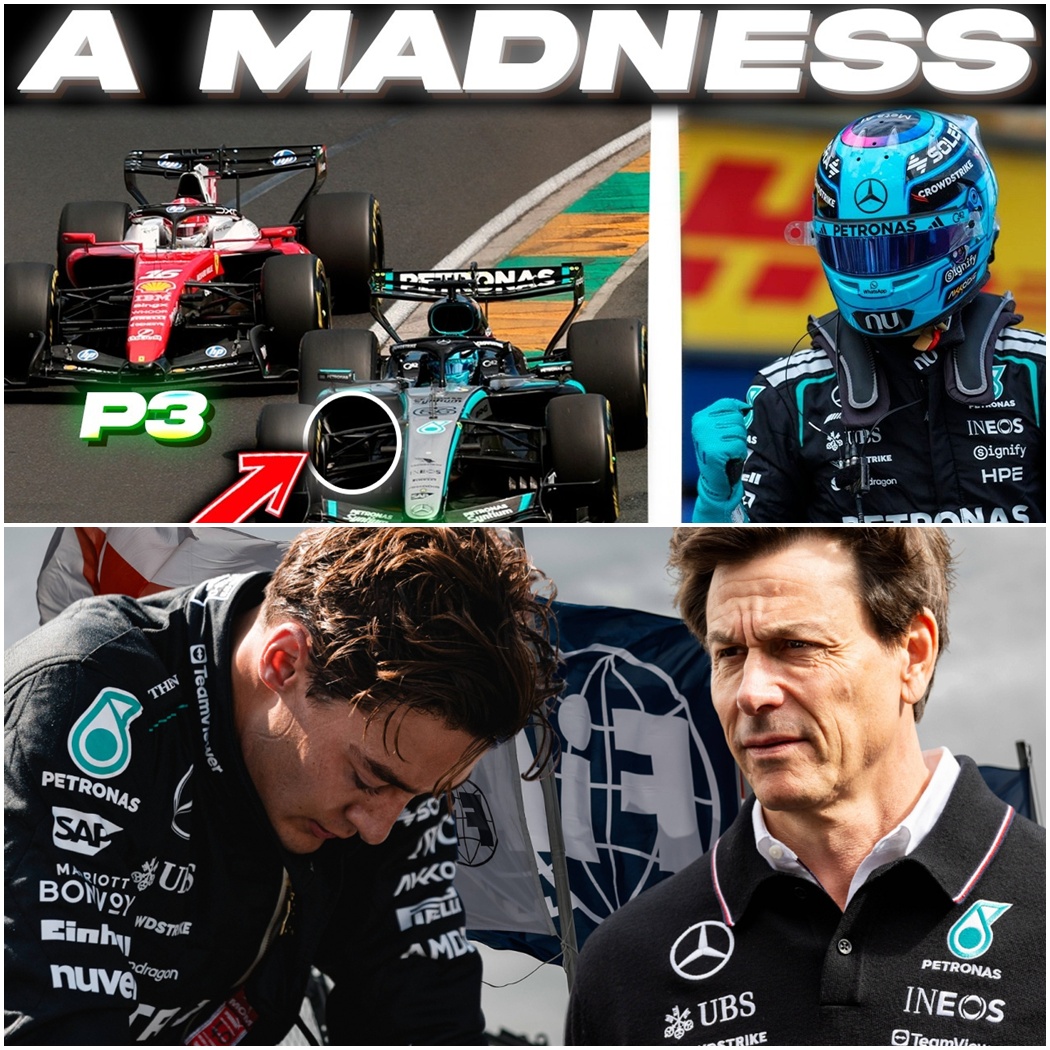
The 2026 Formula 1 season was marketed as the ultimate reset. With radical new engine regulations, a heavy shift toward electrical power, and entirely redesigned chassis, the sport promised a level playing field where every team would start from zero. The goal was simple: stop the cycles of dominance and bring the grid closer together. But as the sun set over the Albert Park circuit in Melbourne following the first qualifying session of this new era, that promise felt like a distant memory. Instead of a hard-fought battle decided by milliseconds, the world witnessed a performance so dominant that it has already triggered an immediate intervention from the FIA.
George Russell didn’t just take pole position in Australia; he sent a shockwave through the pit lane that has left rival engineers scrambling for answers. Stopping the clock at a blistering 1:18.518, Russell claimed the first pole of the 2026 era with a margin that defied every simulation and expectation. He was three-tenths of a second clear of his own teammate, the highly-touted rookie Kimi Antonelli, and nearly a full second ahead of the best non-Mercedes car on the grid—Isack Hadjar’s Red Bull Ford. In a sport where performance is usually measured in hundredths, a gap of eight-tenths is an eternity. It is a margin that suggests one team has found a secret that everyone else missed.

By the time the post-qualifying press conferences began, the atmosphere in the paddock had shifted from excitement to deep suspicion. Paddock murmurs quickly turned into hushed meetings behind closed doors. Rival teams weren’t just impressed; they were concerned. According to insiders, multiple engineers spent the night reviewing Mercedes’ telemetry and onboard footage, trying to pinpoint exactly where the W17 was finding its time. The disturbing reality was that the advantage didn’t seem to come from just one area. The Mercedes was a rocket on the straights, yet remained incredibly stable in the high-speed kinks of Albert Park. It accelerated out of corners with a violence that made the Red Bull and Ferrari units look underpowered.
The central mystery lies within the 2026 hybrid system. These new regulations have fundamentally changed the balance of power, tripling the electrical output while significantly reducing the role of the traditional internal combustion engine. Energy management—how a team recovers, stores, and deploys that electrical surge—is now the holy grail of F1 performance. The suspicion is that Mercedes has discovered a “regulatory loophole” or a “technical gap” in the way energy can be deployed throughout a lap. While others seem to struggle with “clipping” at the end of long straights, the Mercedes W17 continues to pull, suggesting a level of thermal and electrical efficiency that the rest of the field simply hasn’t reached.
The FIA’s decision to take a closer look at the Mercedes case is not yet a formal accusation of cheating, but in the political theater of Formula 1, it is a massive signal. The governing body has reportedly begun collecting additional technical data from the Brackley-based team to ensure that their interpretation of the energy maps complies with the spirit of the new rules. This isn’t the first time Mercedes has pushed the boundaries; memories of the 2020 DAS system (Dual Axis Steering) still linger in the minds of rival principals. However, a potential engine-based advantage is far more difficult to rectify mid-season and could lead to another long cycle of Silver Arrows dominance.

Adding to the tension was the data from Friday’s long runs. It is one thing to have a “glory lap” in qualifying, but Russell’s race pace was equally terrifying. During his simulations on the hard compound tire, the Mercedes was able to clock consistent 1:23.138 laps with almost zero degradation. This level of consistency suggests that the W17 isn’t just fast—it’s efficient. It doesn’t need to abuse its tires or its battery to maintain a lead; it simply operates at a higher structural frequency than its competitors. For teams like Red Bull and Ferrari, who have invested hundreds of millions into their own 2026 programs, seeing such a gap in race one is nothing short of a nightmare.
The weekend wasn’t without its operational hiccups for the German squad, either. In a moment of high-pressure chaos in the pit lane, Kimi Antonelli was released from his box with the cooling system still attached to his car. While it resulted in a quick fine from the stewards and was dismissed by the team as a minor human error, it gave the paddock something to talk about other than the car’s pace. Some observers wondered if the technical complexity of the W17 is putting even the most experienced mechanics under strain, while others saw it as a momentary lapse in an otherwise military-grade operation.
Historically, whenever a new regulation set is introduced, one team often finds the “key.” We saw it with Brawn GP’s double diffuser in 2009 and Mercedes’ own split-turbo hybrid in 2014. In both cases, the championship was essentially decided before the European leg of the season even began. The fear circulating in Melbourne is that 2026 is a repeat of 2014. If Mercedes has truly found a structural advantage in their energy recovery system, it could take the rest of the field months, if not a full year, to catch up. By then, the trophies will already be in the cabinets at Brackley.
Mercedes, for their part, has remained remarkably calm. Team representatives insist that their performance is the result of thousands of hours of simulation and a perfect integration of the power unit and the chassis. They argue that they simply understood the balance between the heat engine and the electrical system better than their rivals. But in the world of F1, silence is rarely accepted as an answer. Rival teams have already requested technical clarifications from the FIA regarding energy deployment maps, a move that is often the precursor to a formal protest.
As the cars head to the next round, the spotlight on George Russell and the W17 will only intensify. If the car maintains this massive lead on more traditional circuits, the pressure on the FIA to intervene with a technical directive will become immense. Formula 1 is a sport built on the edge of the rules, where the line between “innovation” and “illegality” is often thinner than a carbon fiber wing. Whether Mercedes has built a masterpiece or a scandal, the 2026 era has begun with the kind of drama that only this sport can provide. One thing is certain: the Australian Grand Prix was not just a race; it was the start of a technical war that will define the next decade of racing.








