From Wooden Hoops to Supercomputers: The Mind-Blowing Evolution of the Formula 1 Steering Wheel
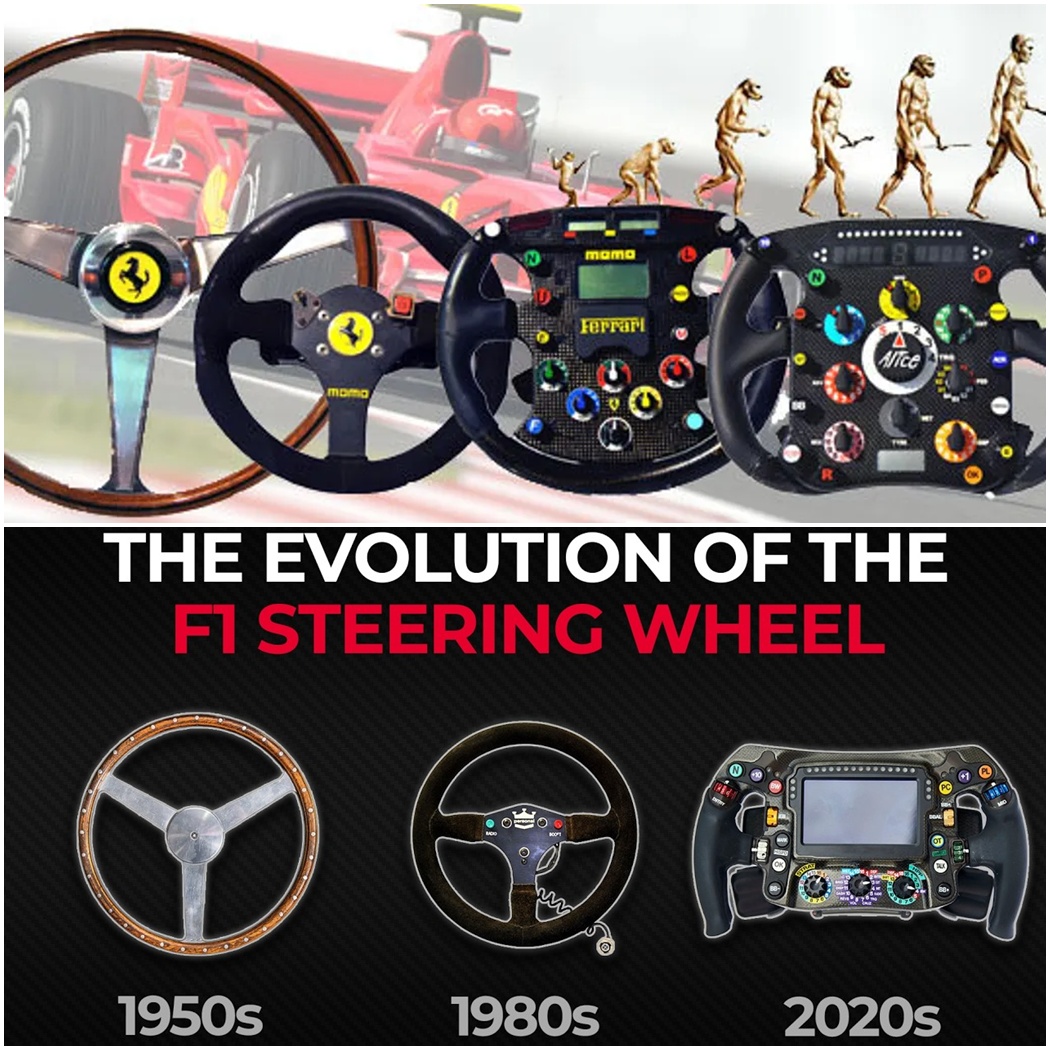
Imagine, for a moment, sitting behind the wheel of a fearsome Formula 1 car in the 1950s. You would not find a high-tech interface or glowing screens; instead, you would be white-knuckling a simple, thin-rimmed wooden circle. It was nothing more than a crude mechanical device used to muscle a heavy, dangerous machine through terrifying corners. Fast forward seventy years to the modern grid, and that same fundamental component is an absolute marvel of engineering. The modern Formula 1 steering wheel is a dazzling carbon fibre command centre that looks far more like a sophisticated handheld games console than a traditional car part. Bristling with buttons, paddles, digital displays, and complex rotary dials, it single-handedly does the work that once required an entire pit crew’s worth of adjustments.
In the rich, relentless history of Formula 1 car engineering, perhaps nothing has undergone a more radical and complete transformation than the steering wheel. Today, we are tracing that spectacular journey from dangerous wood and leather all the way to the most sophisticated handheld device in all of world motorsport.
The story truly begins long before the inception of Formula 1, stretching back to the Benz Patent-Motorwagen of 1885. It is incredibly hard to believe that this exposed, rudimentary contraption was motoring’s genesis. Featuring an enormous lack of bodywork and extremely thin-spoked wheels, it utilised a simple tiller to steer its single front wheel—a mechanism far more suited to a boat than a racing car. It took nearly a decade before Alfred Vacheron bolted a circular steering wheel to his Panhard, and by the turn of the 20th century, tillers were rendered completely obsolete.
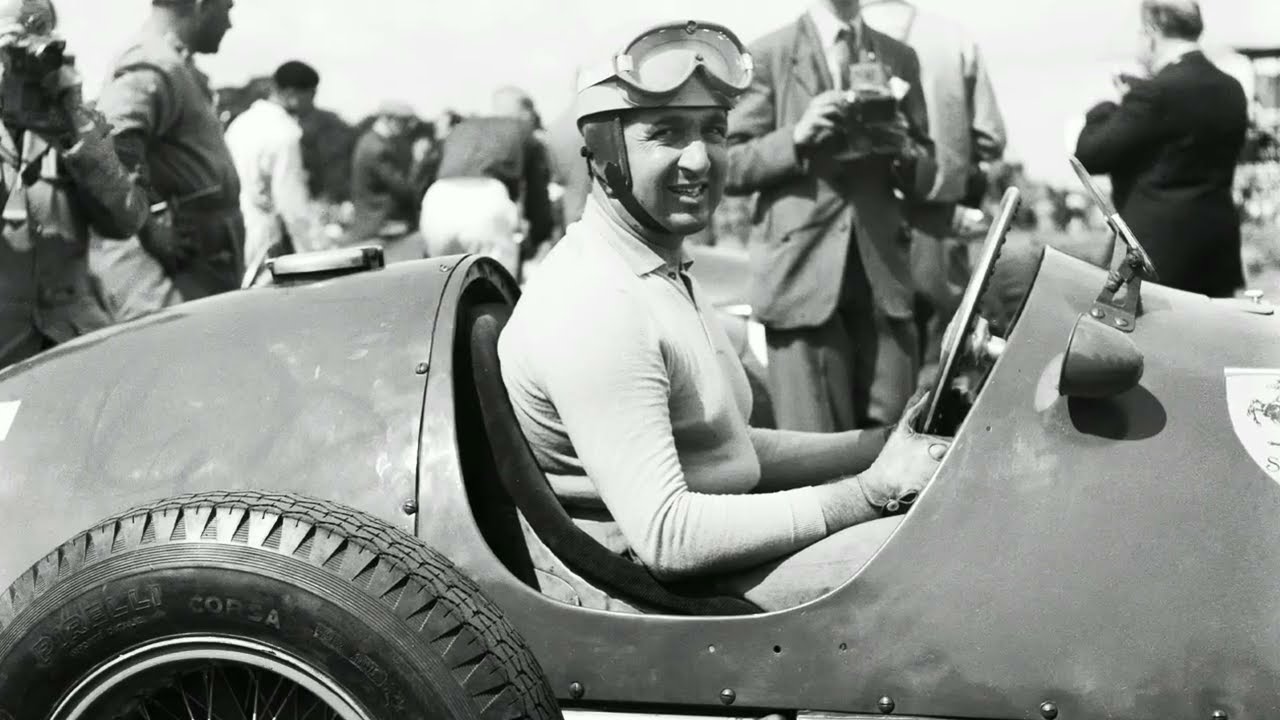
The first truly popular method of physically turning the wheels involved a heavy, mechanical worm and sector steering box. This was the primary design utilised in the inaugural Formula 1 cars of the 1950s. Because these early machines suffered from a near-total absence of aerodynamic downforce, housed massive front-mounted engines, and ran on extremely thin, treaded tyres, the steering was notoriously heavy. To physically compensate for this immense weight, the steering wheels had to be enormous—often up to 40 centimetres in diameter. Drivers had to sit completely upright, elbows jutting outwards, physically wrestling the car around corners. These early wheels were usually constructed from aluminium with a wooden rim. With drivers wearing either thin leather gloves or no gloves at all, painful blistering and nasty splinters were considered a standard part of the job.
Safety, or rather the sheer lack of it, was another terrifying reality. These thin-spoked wheels were not structurally strong and could not be quickly detached without a spanner. Worse still, the steering columns were solid and non-collapsible, effectively turning the driver’s own chest into the car’s primary crumple zone. The legendary Stirling Moss famously bent two solid steering wheels completely out of shape with his knee and head during horrific crashes across his storied career.
A monumental leap forward occurred with the widespread adoption of rack and pinion steering. By replacing the heavy, complex worm and sector boxes with a direct-action gear mechanism, the steering became vastly lighter and far more responsive. As a direct result, throughout the 1960s, F1 steering wheels began to shrink, settling around 30 centimetres in diameter. Paired with the shift towards mid-engined layouts and wider tyres, the front axle lightened significantly. This allowed engineers to shrink the cockpit opening, reclining the driver into a more aerodynamic, streamlined position. Thick, leather-bound rims finally eradicated the dreaded wooden splinters, offering a much more hands-on, tactile feel.
While the advent of aerodynamic wings in 1968 and slick tyres in 1971 revolutionised cornering speeds, the physical wheel itself remained relatively stagnant. However, a major technological turning point arrived in 1975 when Ferrari and McLaren boldly placed the very first button onto a steering wheel. It was a simple, life-saving engine kill switch, designed specifically to be used in the terrifying event of a throttle sticking open.
As the 1970s progressed, a fascinating conflict arose. Aerodynamicists desperately wanted to shrink cockpit openings to improve airflow, while safety regulators demanded larger openings so drivers could escape raging fires. In 1978, the brilliant Emerson Fittipaldi conceptualised a perfect solution by pioneering a detachable steering wheel equipped with a quick-release mechanism. Soon after, the explosive arrival of turbocharged engines brought a second button to the wheel: a boost controller. Leather grips were swapped for rougher suede, granting drivers the crucial grip required to tame these violently powerful, low-traction monsters.
The 1980s saw the wheel’s shape morph dramatically. In 1982, Toleman unveiled the first non-circular, “D-shaped” wheel, flattening the bottom rim to grant the driver much-needed legroom. Then, in 1984, Brabham revolutionised race strategy by developing the first reliable car-to-pit radio. Before this, communication relied entirely on pit boards and frantic hand signals. Despite initial, sometimes comical issues with radio interference—including drivers occasionally picking up chatter from the local circuit catering companies—a dedicated push-to-talk button quickly became a permanent fixture on the wheel.
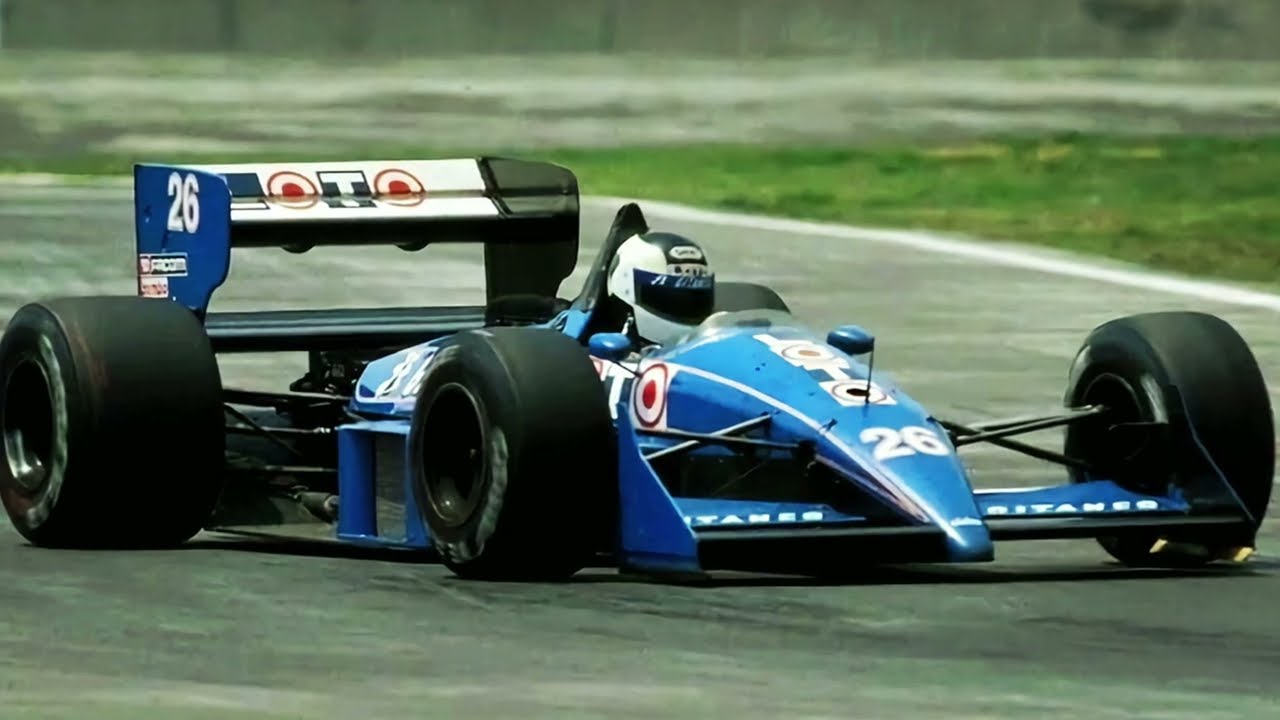
As the physical exertion required to wrestle these increasingly fast cars peaked, Ligier introduced power steering in 1988, massively reducing the steering torque demanded from the driver. But the most significant ergonomic revolution occurred in 1989 when visionary designer John Barnard and Ferrari introduced the sequential semi-automatic gearbox. Before this, drivers relied on manual H-pattern gear levers, meaning they were constantly forced to take one hand off the wheel while hurtling into heavy braking zones. Barnard ingeniously replaced the traditional stick shift with a pair of paddle shifters mounted directly behind the steering wheel. This was an absolute game-changer. Drivers could now keep both hands firmly clamped on the wheel at all times, allowing for mid-corner gear changes and narrower, more aerodynamically efficient chassis designs.
The 1990s marked an explosion of electronic sophistication, though it was tragically marred by the devastating loss of Ayrton Senna in 1994. When Senna joined Williams, he struggled immensely with their aggressively tight cockpit packaging, which left very little clearance for his hands. In a bid to improve comfort and conform to regulations, the team reduced the diameter of his steering column by a mere four millimetres. Following his fatal accident at Imola, intense investigations debated whether fatigue cracks in this thinned column caused it to snap before the impact, or if it broke upon hitting the wall. Regardless of the ultimate cause, the tragedy prompted a massive safety overhaul across the sport.
By 1996, Ferrari catalysed another major visual shift by moving the dashboard HUD (Heads-Up Display) directly onto the face of the steering wheel. Suddenly, rows of LED gear-shift lights and rotary dials controlling brake bias, fuel mixtures, and differentials were right at the driver’s fingertips. The steering wheel rapidly evolved into a complex butterfly shape to accommodate these new digital instruments.
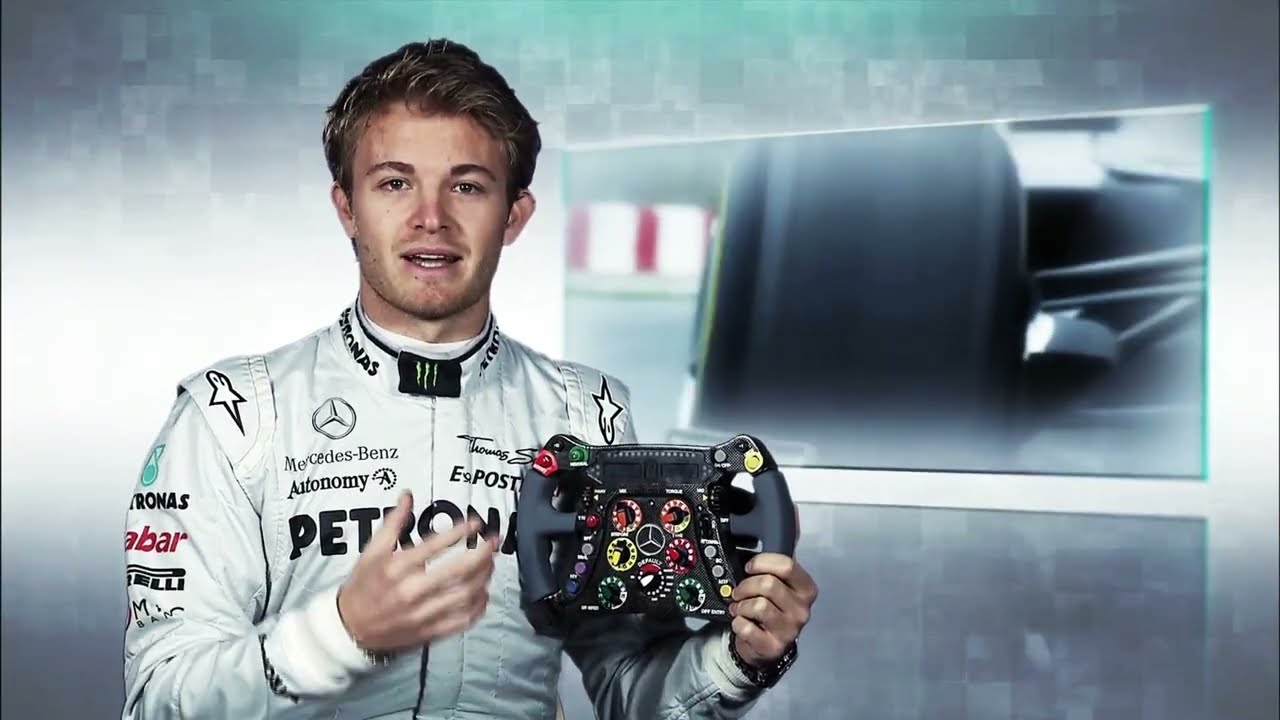
As we transitioned into the 2000s, the level of personal customisation became extraordinary. Grips were meticulously moulded to perfectly match the exact contours of each individual driver’s hands. Drivers like Jacques Villeneuve and Michael Schumacher demanded highly specific, tailored paddle shifter setups to suit their unique driving styles. The sheer volume of buttons multiplied, controlling everything from traction control and differential torque, to activating DRS, KERS, and even adjusting front wing angles mid-race.
The most recent and profound leap in steering wheel technology arrived with the immensely complicated V6 hybrid era in 2014. The relatively simple digital HUDs were entirely replaced by massive, full-colour PCU LCD screens. Suddenly, drivers were tasked with cycling through over a hundred pages of intricate telemetry. Because these new power units rely so heavily on electrical energy harvesting and deployment, the driver has become an active manager of the car’s internal systems.
This complexity birthed ingenious, sometimes controversial innovations. In 2020, Mercedes shocked the paddock with their infamous “DAS” (Dual Axis Steering) system. Onboard cameras caught Lewis Hamilton physically pushing and pulling his entire steering column on the straights. Pulling the wheel backwards brilliantly altered the toe angle of the front wheels, reducing drag for top speed on the straights, before pushing it back in to optimise tyre temperatures for the corners. It was a masterstroke of engineering loophole exploitation, though it was swiftly banned the following season.
Today, as Formula 1 pushes through the highly regulated 2026 era, the steering wheel represents the ultimate paradox of modern racing. Modern F1 cars may be structurally safer, aerodynamically superior, and vastly faster than the lethal machines of 40 or 50 years ago, but the actual, mental job of driving them has genuinely never been harder.
What was once just a simple wooden hoop, asking nothing more of its driver than pure, unadulterated physical courage, has transformed into a bespoke carbon fibre supercomputer. It demands flawless mastery while vibrating violently at over 200 miles per hour. Every single button, every illuminated dial, and every carbon paddle is a complex variable in an aerodynamic equation that never quite solves itself. Because in the relentless, high-stakes world of Formula 1, the perfect, unbeatable lap time is always just one more frantic adjustment away.








