From the Scrapheap to the Silverware: The Billion-Dollar Resurrection of Aston Martin’s Racing Soul
The year was 1960, and the setting was the hallowed, wind-swept tarmac of the Silverstone circuit. For Aston Martin, it was supposed to be a moment of national pride, a chance for the DBR5 chassis to assert British dominance in the world of open-wheel racing. Instead, it became a public execution of an outdated philosophy. While rivals like Cooper had already unlocked the future with nimble, rear-mounted engines, Aston Martin arrived with a heavy, front-engined behemoth that felt like a relic from a previous century. The result was a catastrophic zero points across five official entries. Owner David Brown, a man who valued the brand’s luxury image above all else, did the only thing he felt he could: he pulled the plug. Mechanics packed up the oil-stained green machines, the garage doors were locked, and Aston Martin vanished from the single-seater stage for sixty long years.
For six decades, that exit was viewed as a final chapter—a cautionary tale of what happens when a manufacturer misreads the rapid trajectory of automotive physics. The “British Racing Green” was relegated to the world of sports cars and cinematic spy thrillers, while the Formula 1 grid became a battlefield for Ferrari, Lotus, and eventually, the modern titans of the hybrid era. The DBR5 sat in the shadows of history, a ghost of an ambition that had failed to launch. But as we stand in March 2026, that ghost has not only returned; it has been weaponized by a level of capital and corporate aggression that the sport has never seen before.
The catalyst for this resurrection wasn’t a nostalgic engineer or a fan-led movement. It was the calculated, brute financial force of Canadian billionaire Lawrence Stroll. In early 2020, Stroll orchestrated a high-stakes takeover, acquiring a significant stake in the struggling Aston Martin road car division. But Stroll wasn’t just interested in luxury grand tourers. He already controlled the Racing Point F1 squad, and he saw a marketing vulnerability that could be turned into a billion-dollar asset. With a single stroke of a pen, the “pink Mercedes” branding of Racing Point was dissolved, replaced by the historic green of a brand that had been dormant since the Eisenhower administration.
This wasn’t just a paint job; it was a hostile takeover of the Formula 1 hierarchy. Stroll understood a fundamental truth that had escaped many of his predecessors: in the modern era, a “customer team” is a team that has accepted permanent midfield status. Since their return in 2021, Aston Martin had relied on Mercedes for engines, gearboxes, and rear suspensions. While this provided stability, it also placed an invisible ceiling on their performance. A customer team cannot beat its supplier in a direct title fight because the supplier dictates the very architecture of the car. To win, Stroll knew he had to stop being a customer and start being a “Works” powerhouse.
The first step in this legitimacy campaign was the hiring of four-time world champion Sebastian Vettel. His arrival silenced the critics who claimed the team was merely a vanity project for Lawrence’s son, Lance Stroll. Vettel brought a championship pedigree and a technical discipline that the Silverstone-based squad desperately needed. But even Vettel was just a bridge to the true revolution. As 2026 approached, Stroll executed the ultimate corporate coup: he snatched an exclusive works partnership with Honda away from the reigning champions at Red Bull.
As of March 2026, the transformation is complete. Aston Martin is no longer a guest at the table; they are the ones setting the menu. By moving to an exclusive Honda power unit, the team has taken total control over its aerodynamic philosophy. They no longer have to design their car around Mercedes’ packaging; they are working hand-in-hand with Japanese engineers to create a custom hybrid that is perfectly integrated from the cooling vents to the exhaust tips. This integration is the holy grail of modern F1, and it is a luxury that legendary names like Williams and McLaren currently lack.
The scale of this ambition is visible from the air. Directly across from the Silverstone starting line sits a state-of-the-art technology campus, a $200 million statement of intent. Inside, a proprietary wind tunnel—funded by the massive backing of Saudi oil giant Aramco—is churning through data for the radically new 2026 aerodynamic regulations. This partnership with Aramco goes beyond mere stickers on a sidepod. Their engineers are working inside the campus to develop the specialized synthetic fuels required under the sport’s strict new climate mandates. It is a closed-loop development cycle that turns the team into a sovereign racing nation.
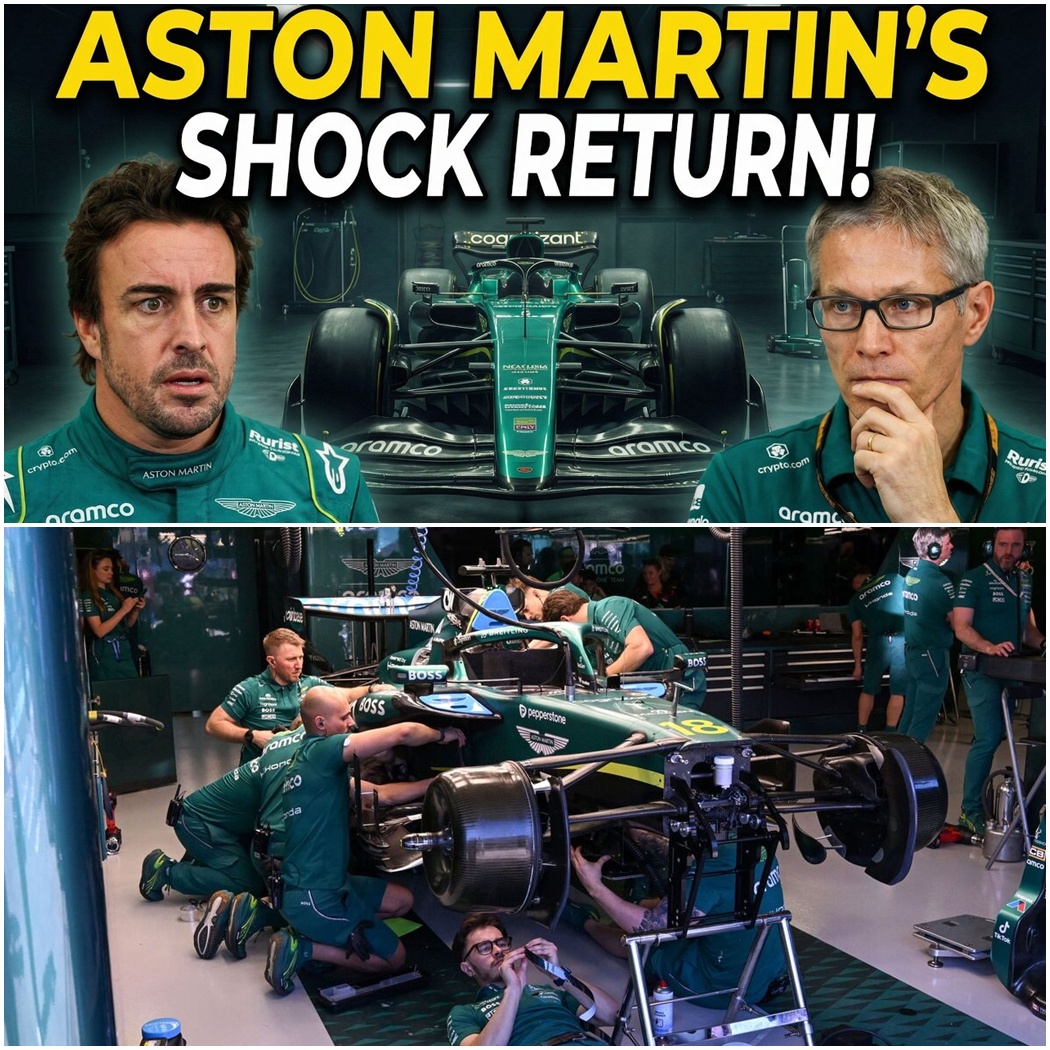
To man this billion-dollar machine, Stroll has conducted a relentless raid on the sport’s top talent. By dangling massive paychecks and the promise of a blank slate, the team poached Dan Fallows and a cadre of elite aerodynamicists from Red Bull and Mercedes. They didn’t just hire people; they bought championship secrets and brought them through the front door. And at the center of it all is Fernando Alonso. The legendary Spaniard, known for his uncanny ability to sense where the next winning car will come from, extended his contract specifically to pilot this British-Japanese hybrid. Alonso isn’t betting on nostalgia; he’s betting on the sheer weight of Stroll’s wallet.
The return of Aston Martin has effectively rewritten the business model of the entire sport. The days of the “plucky underdog” or the privateer team scraping by on rented parts are over. The Aston Martin blueprint has proven that extreme vertical integration—owning the campus, the wind tunnel, the fuel partner, and the engine contract—is the only viable path to the podium. This shift has forced the rest of the grid to react. Audi’s total takeover of the Sauber franchise is a direct response to the “Stroll Method.” The paddock has transitioned from a collection of racing enthusiasts into a high-stakes battlefield for multinational automotive conglomerates.
Looking back at the grainy archival photos of the abandoned 1960 DBR5, it is almost impossible to reconcile that failure with the juggernaut we see today. The original program misread the physics of the era, arriving years late to the grid because executives insisted on winning at Le Mans first. Today, there is no such delay. The 2026 chassis was rolled out with a relentless focus on the new regulations, unburdened by corporate bureaucracy or the fear of embarrassment.
The failure of 1960 ultimately paved the way for the most well-funded comeback in history. It provided the blank slate that Lawrence Stroll needed to build a modern racing corporation. Whether this unprecedented expenditure results in a World Championship trophy or remains an incredibly expensive marketing exercise is the question that currently hangs over the 2026 season. But one thing is certain: the “British Racing Green” is no longer a ghost. It is a predator at the front of the pack, proving that in Formula 1, sixty years of absence can be erased if you have the courage to spend more than anyone else. The grid is no longer a place for the faint of heart; it is a territory where only the wealthiest and most aggressive survive. We are not just watching a new season; we are watching the birth of a new kind of racing dynasty.