The Checkered Glass Ceiling: How Formula 1 is Finally Demolishing Decades of Silence and Sexism
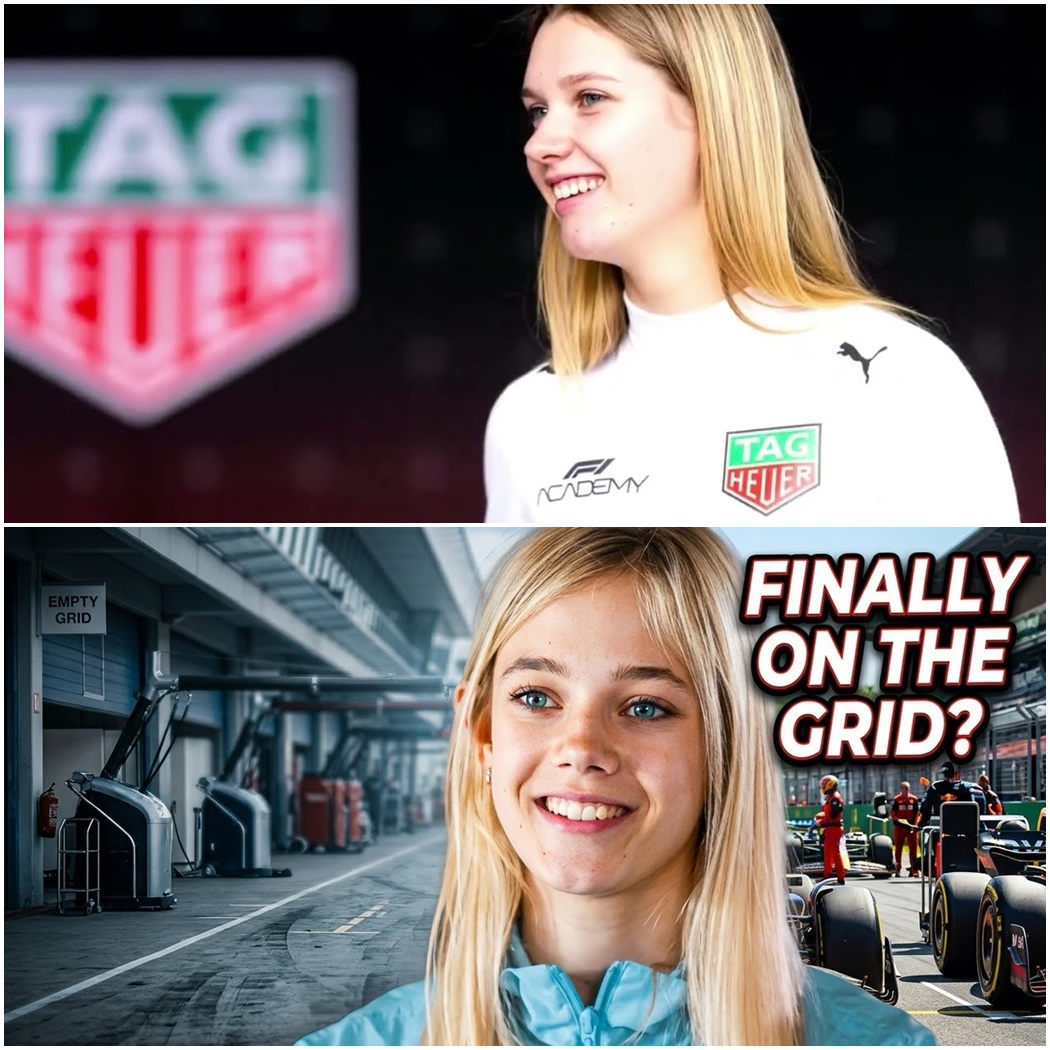
For decades, Formula 1 has sold itself to the masses as the absolute pinnacle of motorsport. It is a world built on superlatives: the fastest cars, the smartest engineers, the most fearless drivers, and the most cutting-edge technology on Earth. It is a spectacle of speed and precision, wrapped in an aura of exclusive prestige. However, beneath the glamorous veneer of Monaco yachts, champagne podiums, and billion-dollar sponsorships lies a brutal and uncomfortable truth. For generations, women have barely existed within this elite ecosystem. They were not excluded by a specific rulebook or an official mandate, but rather by something far more insidious: the deeply entrenched culture of the paddock. It was a culture defined by an unspoken consensus, reinforced by silence, that girls simply did not belong in the driver’s seat.
This was not a matter of biological capability or a lack of raw talent. The absence of women in Formula 1 was the result of a pipeline that was deliberately designed to remain closed to them. To understand the magnitude of this exclusion, one only needs to look at the history books. The last woman to start a Formula 1 Grand Prix was the legendary Italian driver Lella Lombardi in 1976. Think about the sheer scale of that chronological gap. Lella Lombardi raced in an era before carbon fibre dominance, before hybrid engines were even a concept, and before onboard cameras became a standard broadcasting feature. It was a completely different century, both technologically and culturally. For nearly fifty years, the highest tier of motorsport has been an exclusive boys’ club, leaving generations of female drivers stranded in the lower categories, starved of funding, and systematically overlooked.
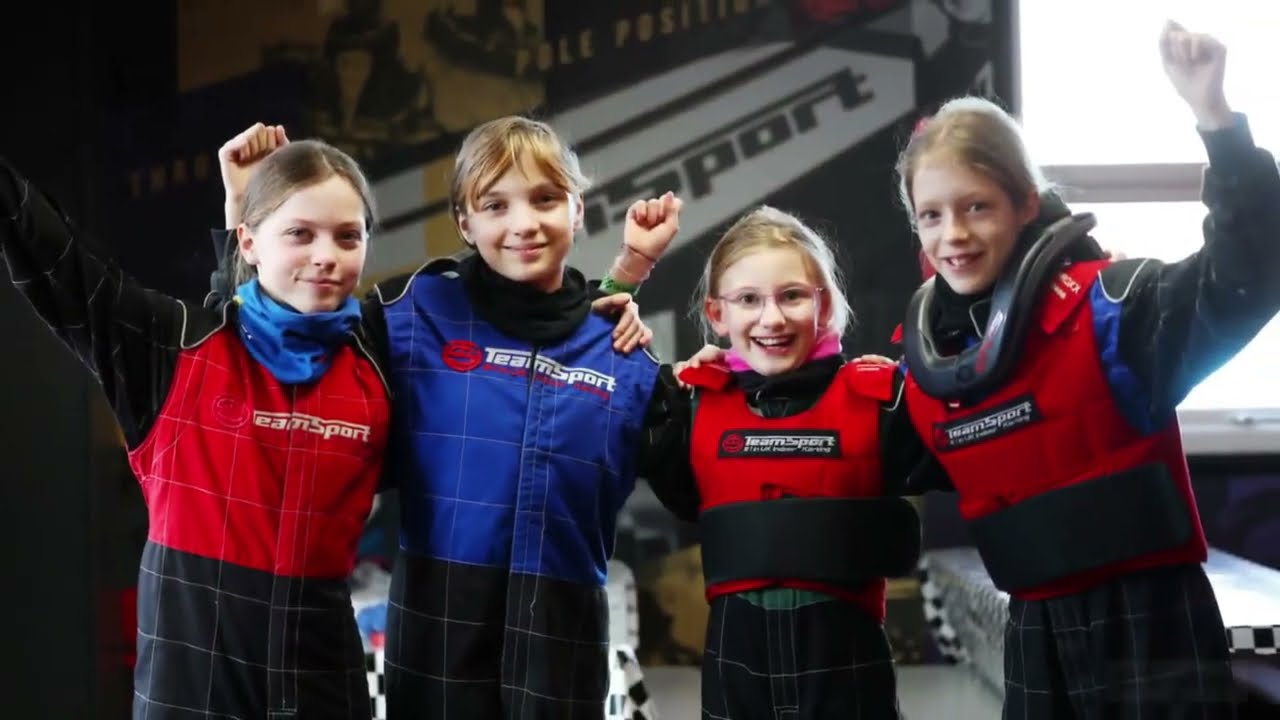
The deeper you venture into the brutal world of junior motorsport, the worse the statistics become. The journey to Formula 1 begins in karting, a fiercely competitive and extraordinarily expensive environment. Single-seater racing is a ruthless meritocracy, but only for those who are given the opportunity to compete on equal footing. Sponsors demand absolute certainty before parting with their millions, and historically, the motorsport industry has always invested in young boys long before girls ever got a chance to prove their worth. When young female drivers bravely entered the karting scene, they were rarely treated as future professionals. Instead, they were treated as outsiders, novelties, or intruders in a space that fiercely protected its masculine identity.
Consider the harrowing experiences of Rachel Robertson. As a young karting driver, she vividly remembers the crushing pressure of being the only girl on the track. Imagine the psychological weight of that isolation at just fourteen years old. You have your helmet on, your engine is screaming at thousands of revolutions per minute, and you know that every single mistake you make will be magnified tenfold simply because of your gender. Robertson recalls that the boys would deliberately race her much harder than they raced each other. They were determined to push her out entirely. If she made an error or lost a race, she was ruthlessly mocked. But when she won, she was met with something far more chilling: absolute silence. That silence was profound. Losing to a girl challenged something much deeper than the results on a timing screen; it fractured their fragile understanding of the racing hierarchy.
Esme Costerman’s journey echoes this exact same systemic bias. Growing up in the Netherlands, she heard the phrase “it’s not for girls, it’s not your sport” more times than she can count. Her story is incredibly powerful precisely because of how ordinarily it began. When she was young, her brother was taken racing by her father, while she was promptly sent off to dance lessons. It was a classic, stereotypical division of childhood activities. But Esme possessed an inner fire that could not be extinguished by societal expectations. One day, she put her foot down and declared, “No, I want to drive too.” That single, defiant decision changed the trajectory of her entire life, and in doing so, she became part of a larger movement that may eventually change the sport itself.
Formula 1 finally woke up to this systemic failure. The governing bodies and team principals realised they had a massive problem on their hands: raw talent means absolutely nothing without the infrastructure and opportunity to nurture it. You cannot possibly produce female Formula 1 drivers if the junior categories systematically eliminate them before they even reach the Formula 3 level. This stark realisation birthed the F1 Academy in 2023. Critics were quick to label it a publicity stunt, but the reality is that the F1 Academy functions as an essential repair project. It is a fast-track development system designed specifically to keep female talent alive in the sport long enough for them to physically and mentally grow. It provides the crucial elements that male drivers have traditionally taken for granted: significant funding, extensive track time, elite coaching, and global visibility.
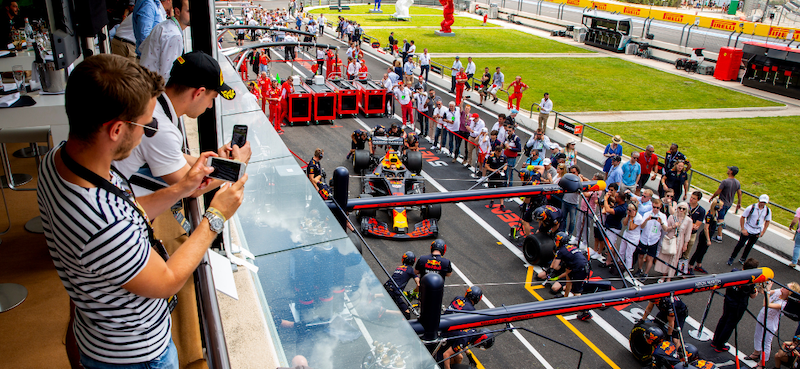
However, the creation of the F1 Academy does not magically erase the immense pressure placed on these young women. In fact, the pressure is built directly into the structure of the championship. Drivers typically only get a maximum of two seasons to prove their worth. Two years is a blink of an eye in motorsport development. One bad campaign, one missed sponsorship opportunity, or one unfortunate string of mechanical failures, and the ladder to the top can completely disappear beneath them. For these women, every single race weekend transforms from a test of performance into a desperate battle for career survival.
Yet, despite the overwhelming odds, we are finally seeing the fruits of this cultural shift. Enter Alba Hurup Larsen. Her story might be the clearest and most inspiring sign that Formula 1 is undergoing a massive internal transformation. Ferrari, arguably the most prestigious and historically significant team in the sport, noticed her. This is a monumental development because the Scuderia does not casually invest in drivers. Their development programmes are strictly tied to the future of the team. Astonishingly, Larsen only discovered karting during the global COVID-19 lockdowns; prior to that, she was a dedicated handball player. Now, she is proudly carrying the iconic Ferrari branding into one of the most-watched female racing categories in the entire world. This incredible transformation happened at breakneck speed, and psychologically, it changes the landscape for every young girl watching from the grandstands or on television. Representation only truly matters when it suddenly feels reachable. It is no longer just a fantasy or an inspirational poster on a bedroom wall; it is a tangible, achievable reality.
But the moment the Formula 1 paddock truly stopped and paid attention occurred on the seventeenth of April, 2026, at the legendary Silverstone circuit. Mercedes, the dominant force of the modern hybrid era, placed Doriane Pin inside an actual Formula 1 car. This was not a slow-speed show run for sponsors, nor was it a staged photo shoot for social media. It was a real, high-intensity test session. Pin completed an astonishing seventy-six laps, covering over two hundred kilometres inside the formidable Mercedes machinery. The detail that sent shockwaves through the engineering debrief rooms was this: her absolute fastest lap of the entire day came at the very end of the session, on lap seventy-six.
To a Formula 1 engineer, that specific data point reveals something absolutely critical about a driver’s potential. It proves that her confidence grew with every passing mile. It showed that her physical adaptation to the brutal G-forces improved, and she inherently found more speed as the physical and mental pressure increased. That is precisely the hallmark of a world champion in the making. Suddenly, the entire conversation in the paddock changed. There was now undeniable, backed evidence of a female F1 Academy champion handling a Formula 1 car professionally within a Mercedes environment. This was no longer a symbolic gesture; it was developmental momentum. Once the major teams begin investing serious capital and engineering resources into female drivers, the entire motorsport ecosystem is forced to evolve alongside them.
Consider the physiological and mental demands required to pilot a Formula 1 car. The braking forces tear at the neck muscles, the sheer speed demands superhuman reaction times, and the strategic complexity requires a mind capable of processing infinite variables while under extreme duress. For years, detractors lazily leaned on the argument that women simply did not possess the physical stamina or aggressive instinct required to wrestle these machines around street circuits and high-speed sweepers. Yet, the data from rigorous testing sessions is completely dismantling this archaic narrative. Modern sports science, tailored training regimens, and the sheer grit displayed by the current crop of F1 Academy drivers are proving that endurance and precision are not gender-exclusive traits. When a driver like Doriane Pin steps out of a Mercedes after seventy-six blistering laps looking ready for another stint, the physical argument evaporates into the exhaust fumes.
Furthermore, the commercial landscape of Formula 1 is undergoing a seismic shift that perfectly aligns with this cultural awakening. Sponsors and global brands are no longer solely interested in the traditional demographics of motorsport. The modern audience is younger, more diverse, and highly engaged with the personalities behind the visors. A female Formula 1 driver would not just be a competitor; she would be a global icon, a marketing juggernaut that would redefine the commercial viability of the sport. The team that successfully nurtures and promotes the first female driver since Lella Lombardi will cement themselves on the right side of history, reaping unimaginable rewards both on and off the track. This economic reality is a massive driving force behind the sudden surge in support from major constructors. It is a perfect storm of ethical progress and commercial opportunity.
Of course, this story of progression is not universally accepted. The critics are loud, and they are not going away anytime soon. Some traditionalists argue that the F1 Academy cars are simply too slow to properly prepare anyone for the physical demands of Formula 1. Even three-time world champion Max Verstappen has publicly questioned whether the category’s current format offers a legitimate stepping stone to the pinnacle of the sport. Others argue that separating women into their own exclusive championship creates an artificial distance instead of fostering true equality. To be fair, these concerns are not entirely irrational. Eventually, talent must survive and thrive against everyone, regardless of gender. That is the ruthless reality of Formula 1.
However, supporters of the initiative offer a compelling and logically sound counter-argument: you cannot possibly demand equal performance when the starting conditions were never equal to begin with. The F1 Academy is not trying to create shortcuts for female drivers; it is desperately trying to stop their talent from being suffocated too early in their careers. That is the real battleground. It is about levelling the playing field just enough so that raw ability can actually shine through the financial and cultural barriers that have blocked the way for half a century.
Now, the paddock’s attention turns to Montreal for the next crucial chapter. Suddenly, this championship feels incredibly different. The abstract concepts of progress and representation have been replaced by very real, tangible pressure. Rachel Robertson is desperately searching for validation in a sport that tried to reject her. Esme Costerman is fighting for her professional survival. Alba Hurup Larsen is carrying the immense weight of justifying Ferrari’s historic belief in her. And every single mistake these women make will be analysed, dissected, and criticised far more harshly than the identical mistakes made by their male counterparts. That is the uncomfortable truth of being a trailblazer. These women are not just racing against their opponents on the asphalt; they are actively racing against the deeply ingrained perception of an entire global industry.
Montreal matters immensely because the heavyweights of Formula 1 will be watching closely. Mercedes is already deeply invested in developing Doriane Pin. Ferrari is putting its legendary weight behind Larsen. The infrastructure supporting female drivers is growing stronger by the day, which means the next massive breakthrough could arrive much faster than the old guard expects. It may not happen tomorrow, and it may not even happen next season, but for the first time in fifty long years, the pathway to the Formula 1 grid no longer feels like an impossible dream.
There is something profoundly powerful and deeply moving about hearing a young female driver confidently state, “When I was eight years old, I wrote that I wanted to be an F1 driver. Not an influencer, not a celebrity. A Formula 1 driver.” For decades, girls wrote down dreams that the sport never, ever planned to support. Now, that massive, seemingly impenetrable wall is finally starting to crack. Perhaps the most important part of this entire narrative is not whether one of these specific drivers eventually reaches Formula 1. The true victory lies in the fact that the next generation of young girls watching motorsport will grow up genuinely believing that they can. That belief changes everything. The checkered glass ceiling is shattering, and the roar of the engines will never sound the same again.








