The Illusion of Competition: The Untold Truth Behind Mercedes’ Terrifying 2026 Formula 1 Dominance

Formula 1 has always been a high-stakes arena built entirely on smoke and mirrors. In the frantic buildup to the highly anticipated 2026 engine regulations, and throughout the entirety of preseason testing, Mercedes played a masterful psychological game. They were desperately pointing the finger at every other team, downplaying their own expectations, and convincing the world that they were on the back foot. However, as the dust settles on the opening rounds of the new era, a chilling reality has emerged. Mercedes has executed what can only be described as a genuinely flawless start to the 2026 season. They have conquered every single race, dominated the sprint, and comfortably locked out the front row in every qualifying session. Yet, if you listen to the official broadcasts, you might mistakenly believe we are witnessing a closely fought championship.
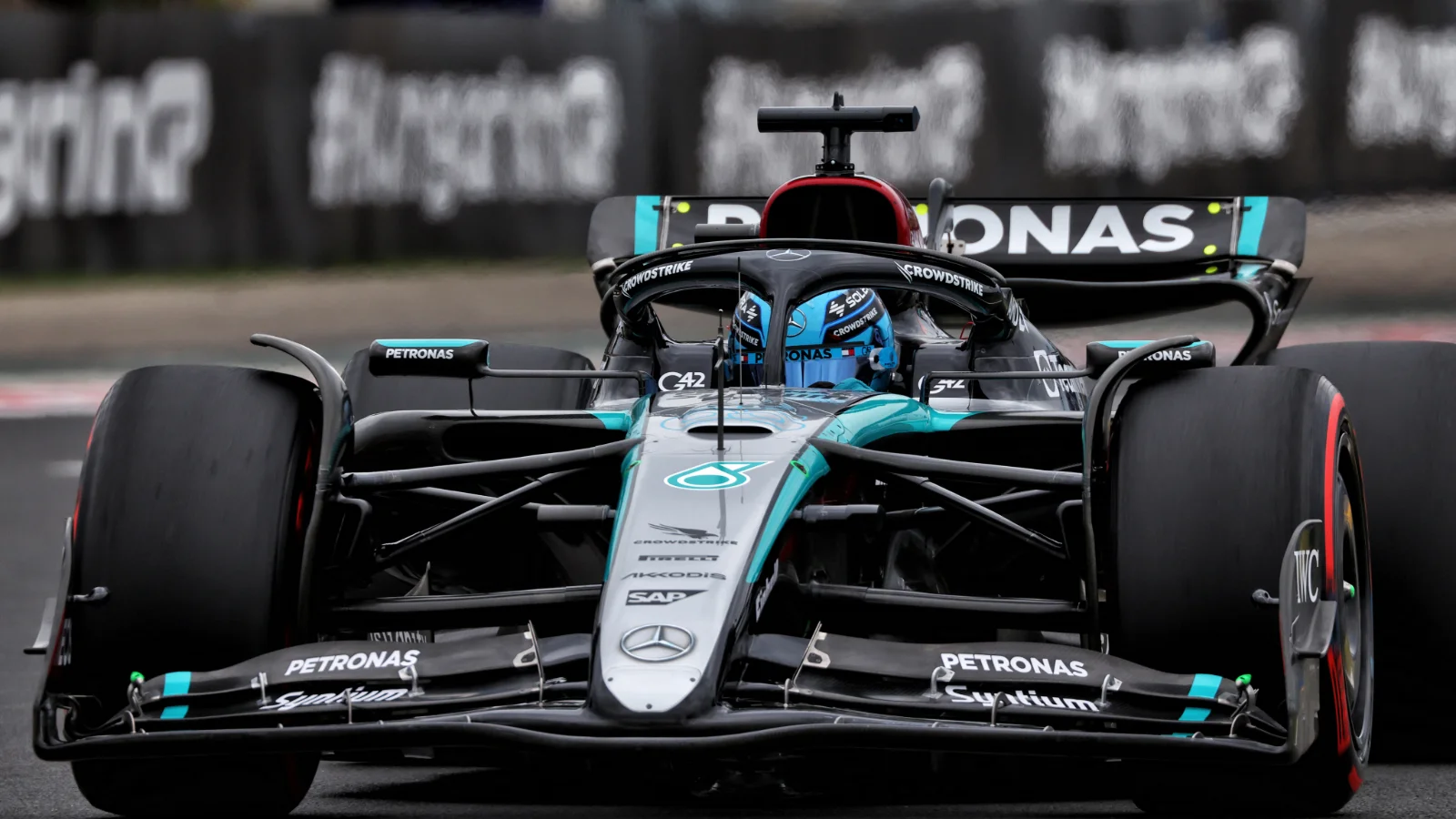
There is a deeply disingenuous narrative currently plaguing Formula 1. Broadcasters and the sport’s executives are actively avoiding the word “dominance” because it completely contradicts the carefully crafted image that the 2026 rules have made the sport more unpredictable and exciting. While we have witnessed some fleeting on-track battles between Mercedes, Ferrari, and McLaren, the cold, hard truth is that the Mercedes W17 is operating on a completely different planet. By refusing to acknowledge this utter domination, the sport is not only misleading the fans, but it is also unfairly stripping Mercedes of the massive credit they deserve for engineering a technological masterpiece.
To truly understand the sheer scale of the W17’s advantage, we must look back at the last major power unit reset in 2014. Back then, Mercedes tore the rulebook apart, routinely qualifying with massive advantages. In 2026, the gap might not look quite as catastrophic on paper, but it is every bit as lethal. While the qualifying advantage dropped from nearly eight-tenths of a second in Australia, Mercedes still commanded a very comfortable three-and-a-half-tenth gap over the rest of the field in China and Japan. When the lights go out on Sunday, the gap only widens. In China, young sensation Kimi Antonelli obliterated the grid, winning by over 25 seconds. In Japan, despite McLaren’s Oscar Piastri leading the opening stint, Antonelli used superior strategy and devastating pace to leapfrog him in the pits, building a massive 14-second advantage in just 25 laps.
Ironically, to understand why the W17 is so unstoppable, we must first examine its single glaring weakness—a vulnerability that has unintentionally created a false sense of competitiveness for the viewers at home. The W17 has a severe, chronic problem with race starts. Despite locking out the front row at every single race this season, neither Kimi Antonelli nor George Russell has managed to lead the pack into Turn 1. This issue has been particularly punishing for Antonelli, who has hemorrhaged a combined 18 places on the opening laps across just three races.
It is utterly absurd to suggest that two world-class drivers have suddenly forgotten how to launch a Formula 1 car off the grid. Furthermore, we know this isn’t simply a fundamental power unit hardware issue, because McLaren, who runs the exact same Mercedes customer engines, has experienced flawless launches. Ferrari also enjoys blistering starts, aided by a specific hardware advantage involving a smaller turbocharger. So, what is the problem at Mercedes? It all points to highly complex, bespoke software. The way Mercedes has aggressively programmed its electrical deployment is clearly clashing with the drivers’ launch procedures. The team has remained entirely tight-lipped about this, desperately working behind closed doors to rewrite the code.
This starting weakness is the only reason we are seeing any racing at all. If a rival car can jump the Mercedes off the line, the heavy turbulent “dirty air” makes it difficult for the W17 to unleash its true, devastating potential. However, once Antonelli or Russell breaks free into clean air, or if they manage to orchestrate an overtake, the illusion of competition shatters, and they disappear into the distance.
So, what is the dark magic hidden beneath the carbon fiber of the W17? The true secret to Mercedes’ 2026 supremacy lies in a brilliant, interconnected web of energy harvesting and deployment. Despite sharing identical power unit hardware with McLaren, Mercedes enjoys a monumental performance advantage. The reason is startlingly simple yet incredibly complex to execute: Mercedes is harvesting electrical energy far more efficiently without sacrificing precious lap time.
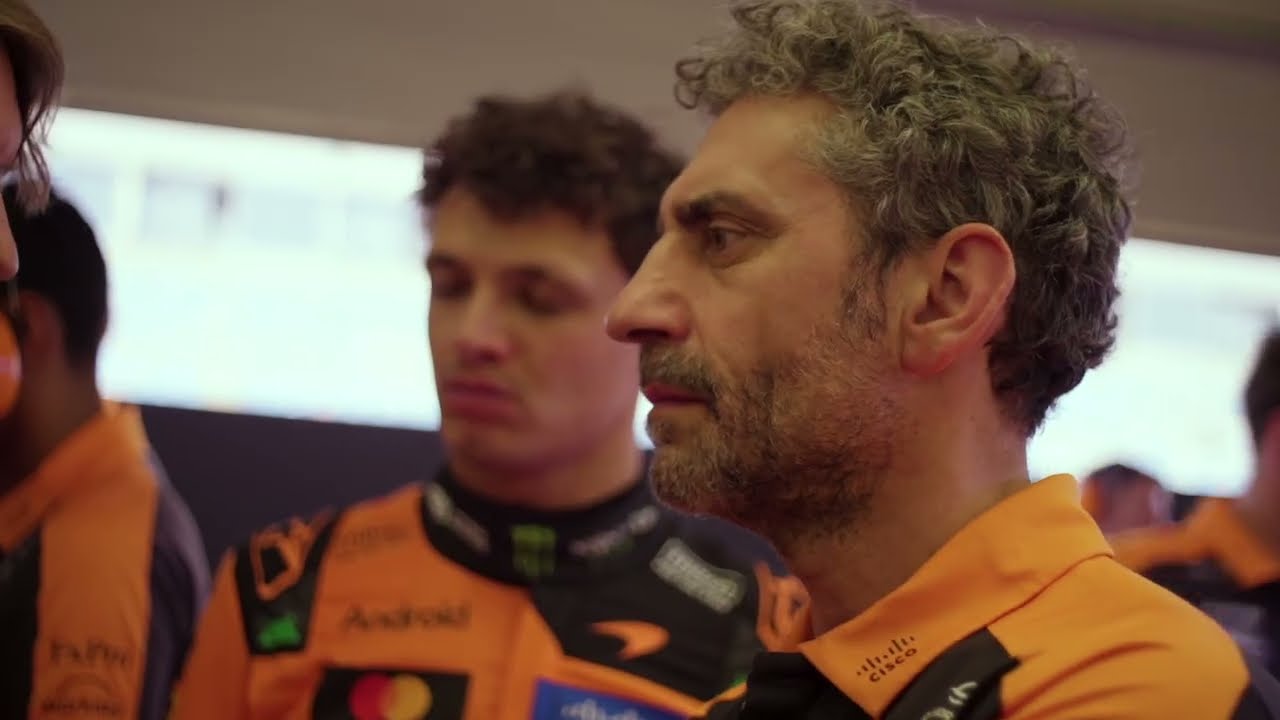
This advantage naturally multiplies on energy-starved circuits like Australia and Japan, where there are fewer heavy braking zones to recharge the battery. When other drivers complain about a lack of power—as Lewis Hamilton vividly noted over the Ferrari team radio after the Japanese Grand Prix—they aren’t actually down on combustion horsepower. They are experiencing a devastating lack of electrical deployment. Their batteries are violently draining out on the straights, while the Mercedes W17 simply keeps surging forward. When McLaren’s Team Principal Andrea Stella was asked how Mercedes is achieving this with the exact same engine, he bluntly admitted they simply do not know. If they did, they would copy the software immediately.
Under the 2026 regulations, which removed the MGU-H, teams rely heavily on three harvesting methods: heavy braking, lifting and coasting, and a controversial technique known as “super clipping” at the end of long straights. The FIA capped super clipping recovery at 250 kW for safety reasons, while heavy braking allows for a full 350 kW recovery. Ferrari has opted for a conservative strategy, favoring “lift and coast” to save fuel and recover energy. This allows for great corner exits but drastically slows their approach to braking zones. Mercedes, however, has gone entirely the other way. They are violently super clipping and braking incredibly late and deep into the corners.
When you analyze the telemetry between Lewis Hamilton’s Ferrari and Kimi Antonelli’s Mercedes in China, the brutal reality becomes clear. Down the massive straights, the Mercedes reaches a much higher top speed and holds that speed significantly longer. As Hamilton’s Ferrari runs completely out of electrical juice and begins to lose momentum, Antonelli’s Mercedes just keeps deploying, allowing him to brake later and attack the apex first. To sustain this aggressive, deep-braking driving style without suffering from catastrophic understeer, Mercedes had to design a perfectly balanced chassis from day one. The W17 was meticulously built to complement this exact battery software, proving that their dominance is a masterclass in holistic engineering.
But the technical warfare does not stop there. Mercedes has ruthlessly exploited the gray areas of the 2026 rulebook. The paddock is well aware of their controversial engine compression loophole, which rumors suggest is handing them up to 13 extra horsepower. We will only discover the true value of this loophole in June, when the FIA introduces strict new rules forcing teams to measure engines at an ambient 130 degrees Celsius. Furthermore, Mercedes (alongside Red Bull) has discovered a brilliant software trick involving the MGU-K ramp-down. Instead of gracefully reducing electrical deployment by 50 kW per second at the end of a straight as intended by the rules, they have programmed the system to instantly brutally cut the power from 350 kW to absolutely zero in a fraction of a second. This incredibly harsh cutoff buys them precious extra milliseconds of maximum power on every single straight, accumulating into a massive lap time advantage.
These known loopholes are just the tip of the iceberg; there are likely dozens of hidden innovations buried within the W17 that rival engineers haven’t even begun to comprehend. Combined with the immense, inherent advantage of being a factory team with superior institutional knowledge over its engine customers, Mercedes has birthed an absolute monster.
Whether this crushing dominance will hold for the entire grueling 2026 season remains the ultimate question. The current unforeseen one-month break in the calendar will undoubtedly frustrate the Silver Arrows, halting their terrifying momentum right before power-hungry tracks like Jeddah and Bahrain. Ferrari and McLaren are phenomenal racing institutions armed with brilliant minds, and they will undeniably fight back to win races this year. However, overcoming this massive deficit, unraveling Mercedes’ secret software codes, and out-developing the mighty W17 to steal the World Championship from Kimi Antonelli and George Russell? That, unfortunately for the rest of the grid, seems entirely impossible.








